
What the campaign decides
Which searches you appear for, what the ad says, what it costs and how often it shows. This is the part most people mean by advertising.
Websites, SEO and ads for small businesses$1,497 for a professional websiteYou own your domain and hostingNo monthly fees to us
Digital advertising
Traffic is not the goal, and a click that lands somewhere unconvincing is money spent on a bounce. We build the campaign, the message and the page it arrives at as one piece, and we make sure you can see what happened after the click.
Scoped and quoted per business. Advertising budget is paid to the platform, not to us.
Most advertising that disappoints was not badly bought. It was bought well and then sent somewhere that could not finish the conversation.
The campaign controls who arrives. The page controls what happens next, and the page is usually the part nobody looked at. A homepage that has to serve every visitor cannot answer the specific question that made somebody click on a specific ad, and the gap between those two things is where budget goes.
This is the reason we do not sell campaign management on its own. Handing back a lower cost per click while the enquiries stay flat is a report, not a result.
Which searches you appear for, what the ad says, what it costs and how often it shows. This is the part most people mean by advertising.
Whether somebody who arrived interested stays interested. Relevance to the ad, clarity about what you do, and how hard it is to make contact.
Whether either of the above can be improved. Without it you are optimising toward clicks, which is the one number that is always available and rarely the one that matters.
These three have to agree. When they do not, the disagreement is almost always visible in the numbers before anybody can name it.
Somebody searching for an emergency repair and somebody researching a full replacement are worth different amounts, will accept different amounts of friction, and need different pages. Sending both to the same place means one of them is being asked the wrong question.
So campaign structure follows intent rather than convenience. Groups of searches that mean the same thing get their own ads, and those ads get a page that continues the sentence the search started.
What somebody actually typed, and what it says about how ready they are.
A message that matches that specific search rather than the business in general.
A page that answers what the ad promised, in the first screen, without hunting.
One obvious next step: call, request an estimate, or ask a question.
Which search, which ad and which page produced that action, kept so the next decision has evidence.
Six things, and the order matters less than the fact that none of them is optional.
Which of these a project needs depends on what is running now. Some accounts need rebuilding; some need the campaign left alone and the landing page fixed.
How searches are grouped, what each group is worth, and where budget goes. Structure is what makes an account improvable later.
Which searches to appear for, which to exclude, and how much readiness each one implies. Negatives matter as much as the list itself.
What the ad says, tested against what the search asked. Relevance is both cheaper and more persuasive.
Making the page continue the ad. Sometimes that is a new page, sometimes it is changing the first screen of one that exists.
Configuring the analytics and events so a form submission or a call can be attributed to what produced it.
Reading what the data says, changing one thing at a time, and being able to explain why.
Which platforms a campaign uses is part of the conversation rather than something to decide from a page. Where a channel is not the right fit for a business, we say so before it is bought.
Already running ads and not sure they are working?
Tell us what is running and where it sends people. We will say what we would change first.
Every pound of ad spend passes through the site. Whatever the site does to a visitor, it does to all of them.
A ten percent improvement in how well a page converts is worth the same as a ten percent cut in what a click costs, and it is usually easier to get. It also keeps working on the organic traffic, the referrals and the people who typed the name in directly, which the click discount does not.
That is why campaigns we run are almost always accompanied by a conversation about where they land. Sometimes the answer is a dedicated page. Often it is that the existing page needs to say, in its first screen, what the ad said.
If the site is the constraint, we will tell you that before we take money to advertise it.
Sixteen concepts from the studio, built from the same five directions. A campaign is only as good as the page at the end of it, and these are the kind of page that finishes the sentence an ad started.

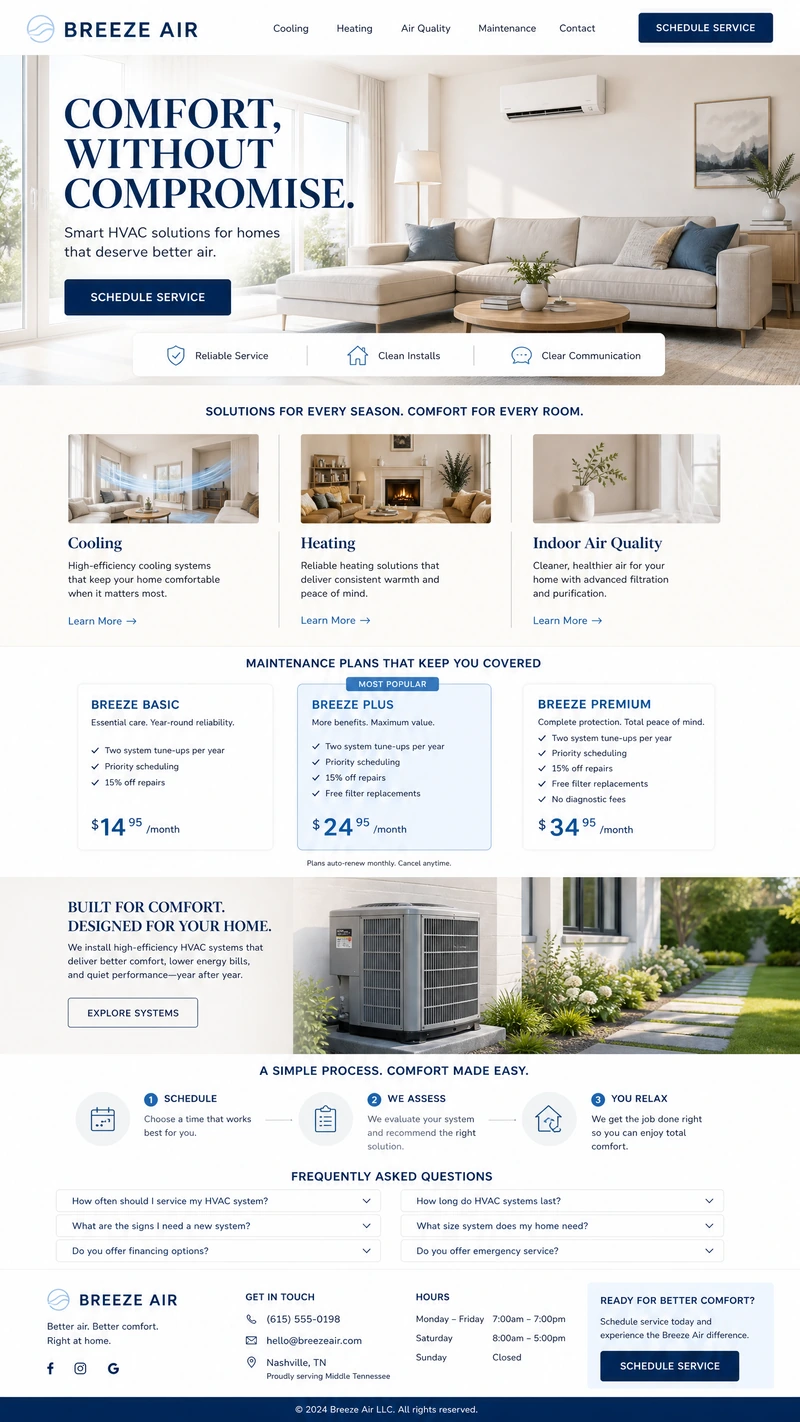
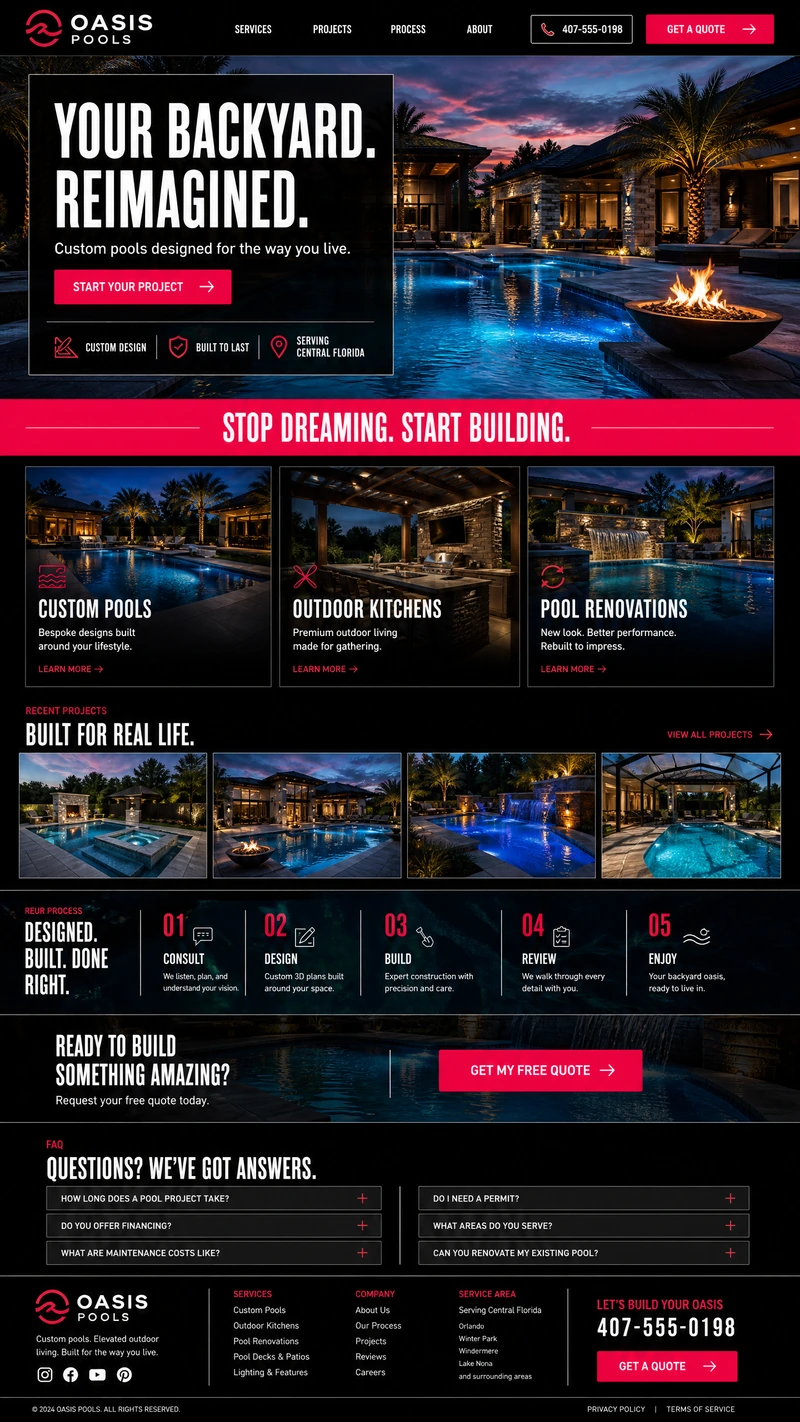
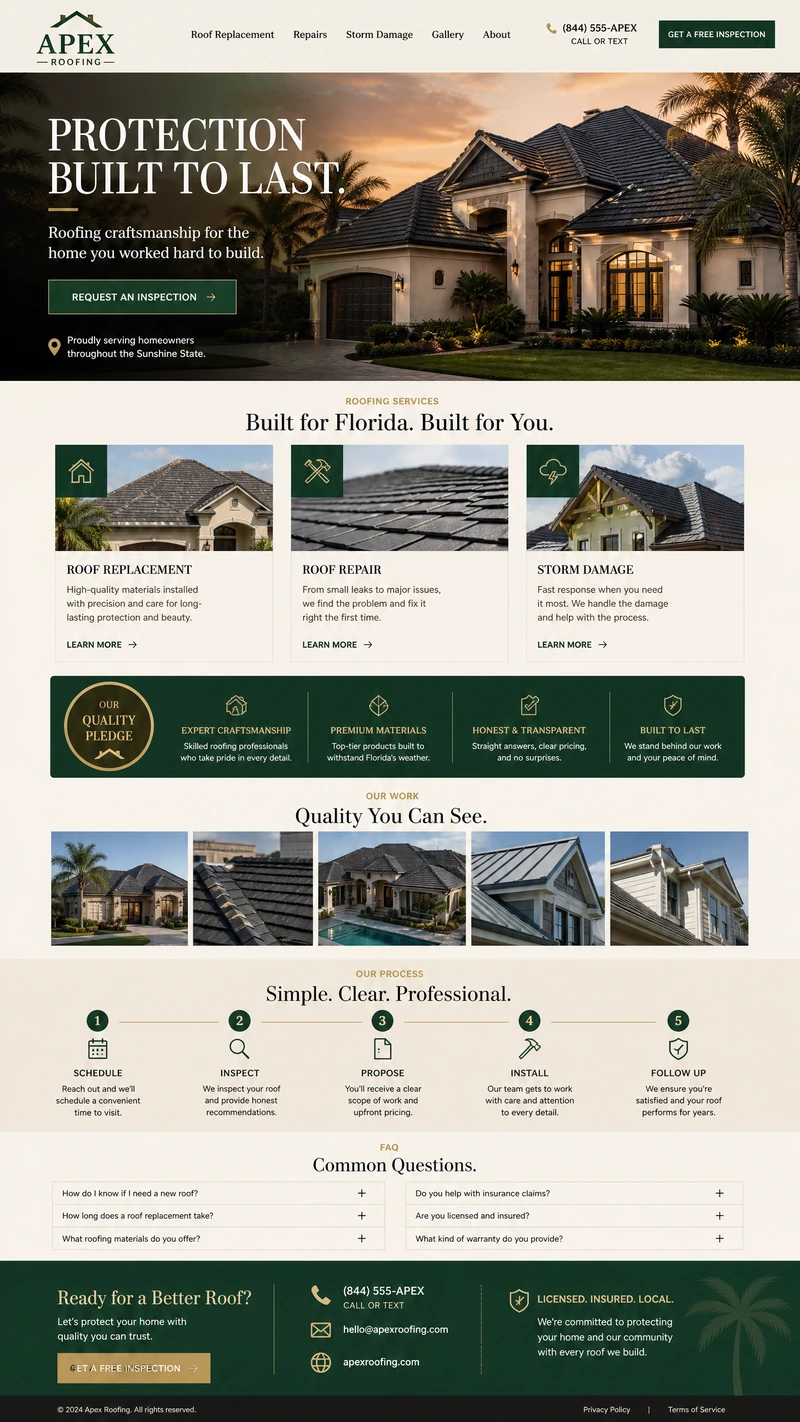
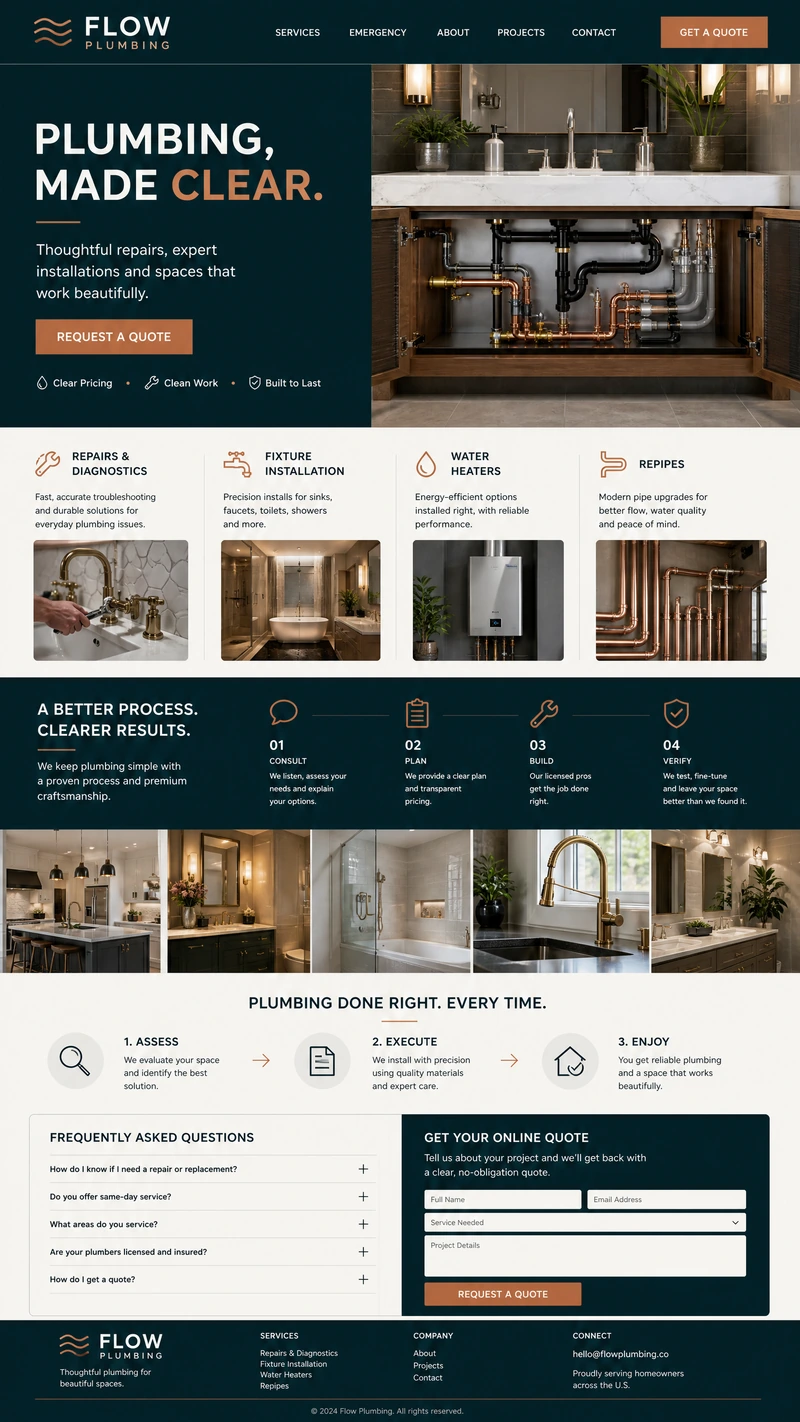
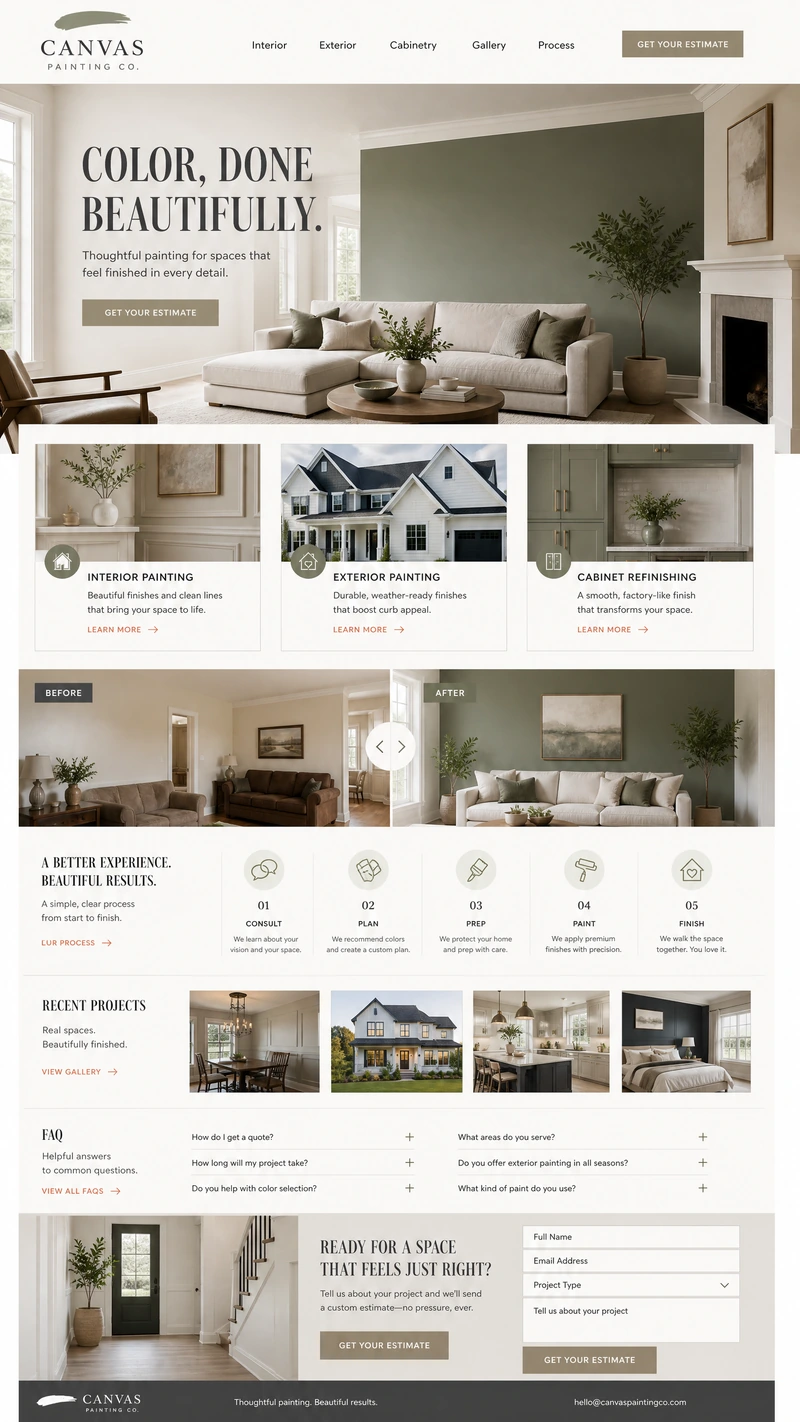
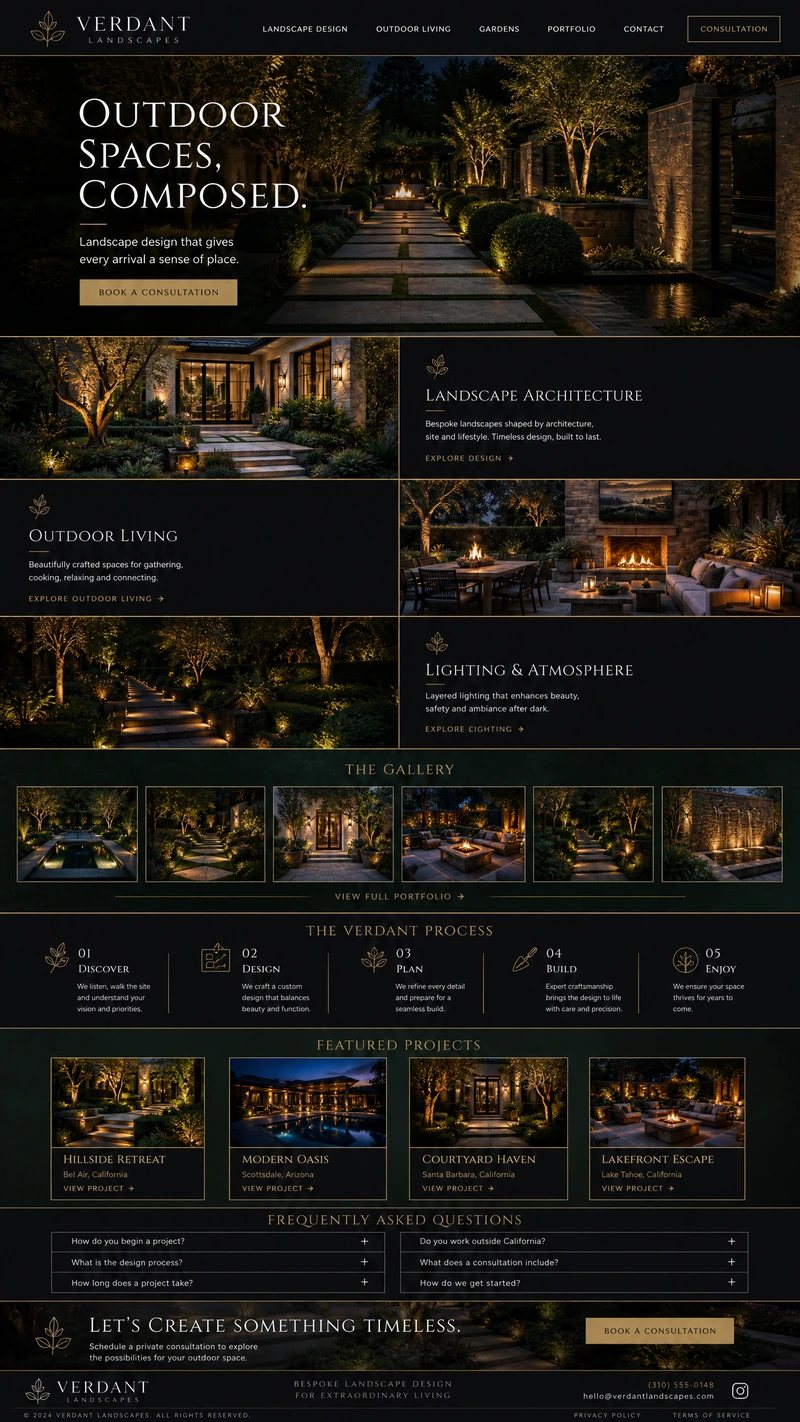
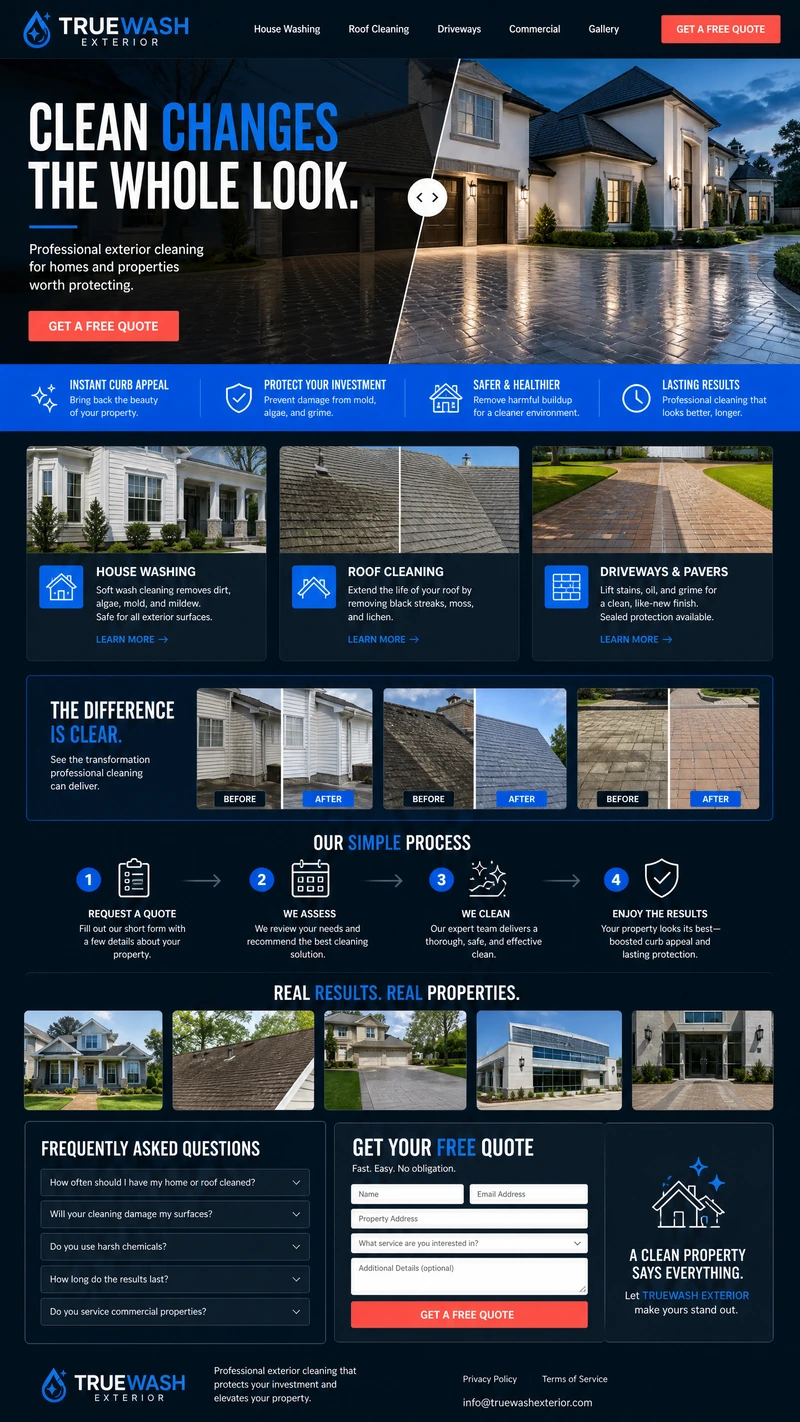
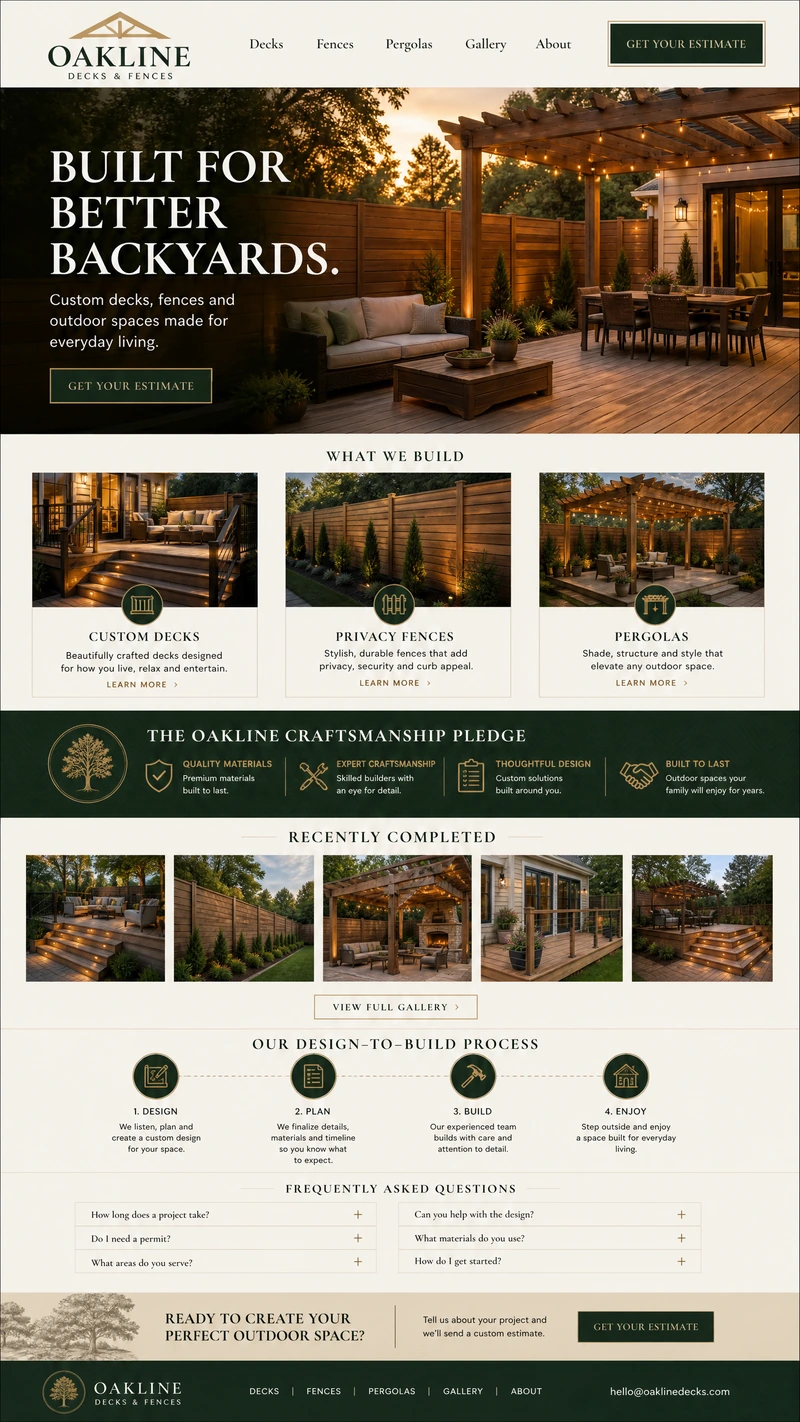
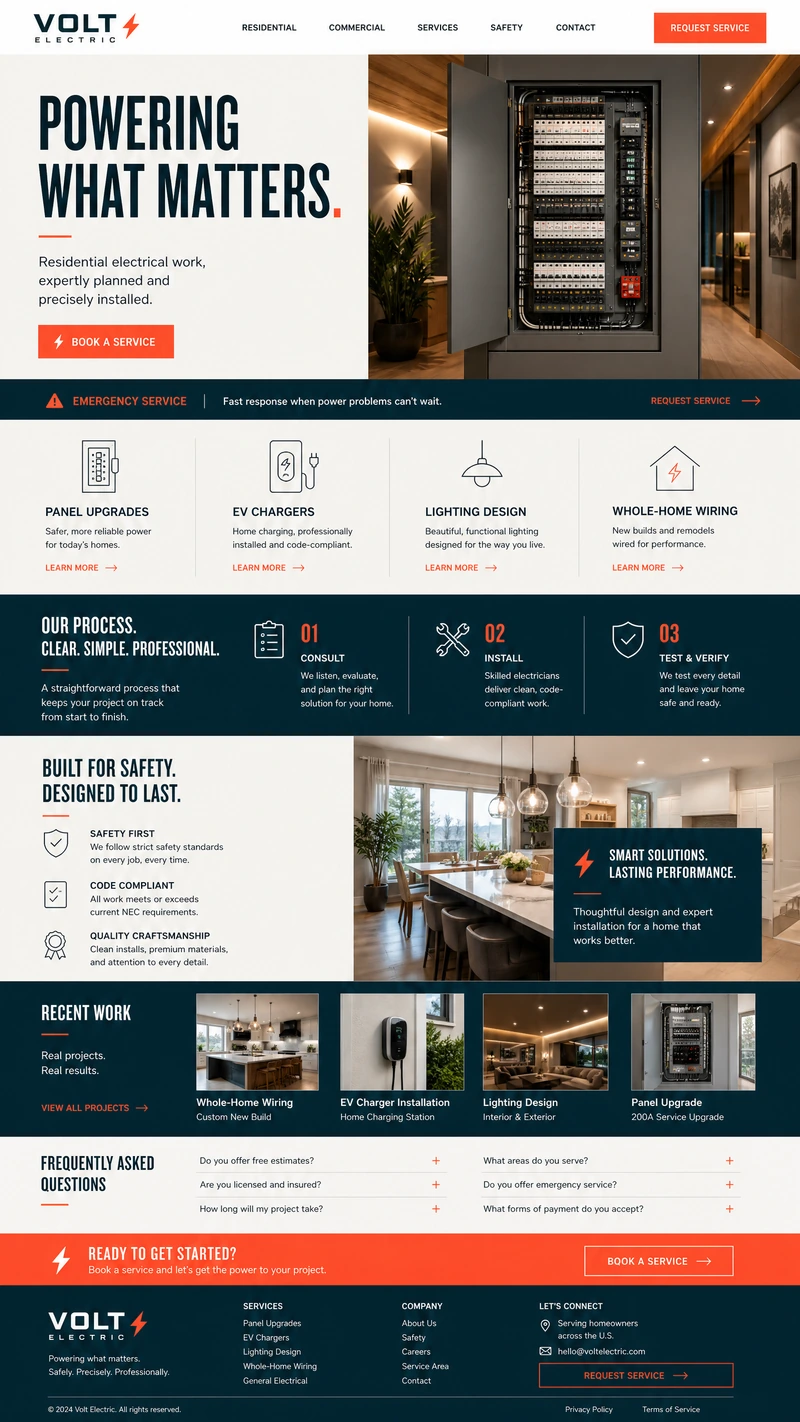
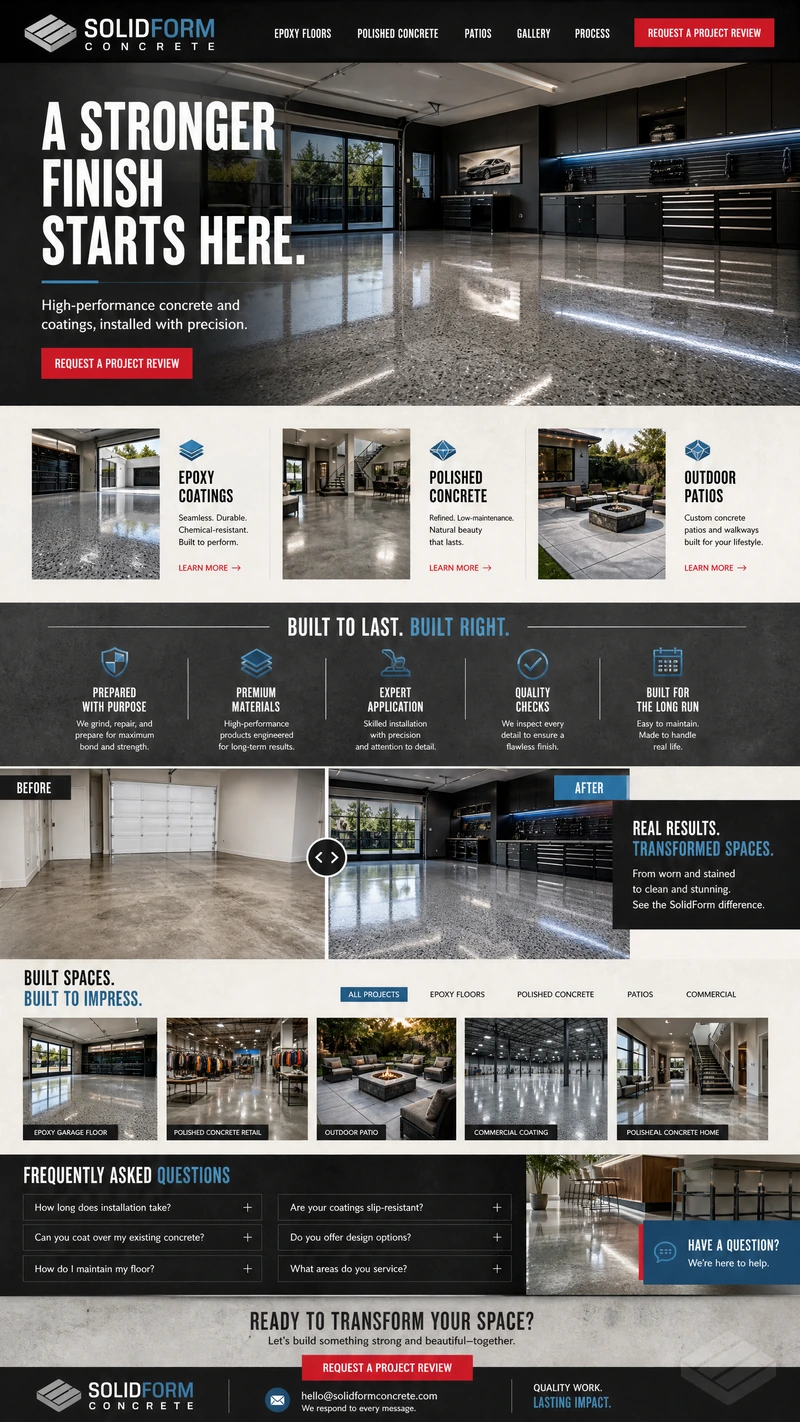
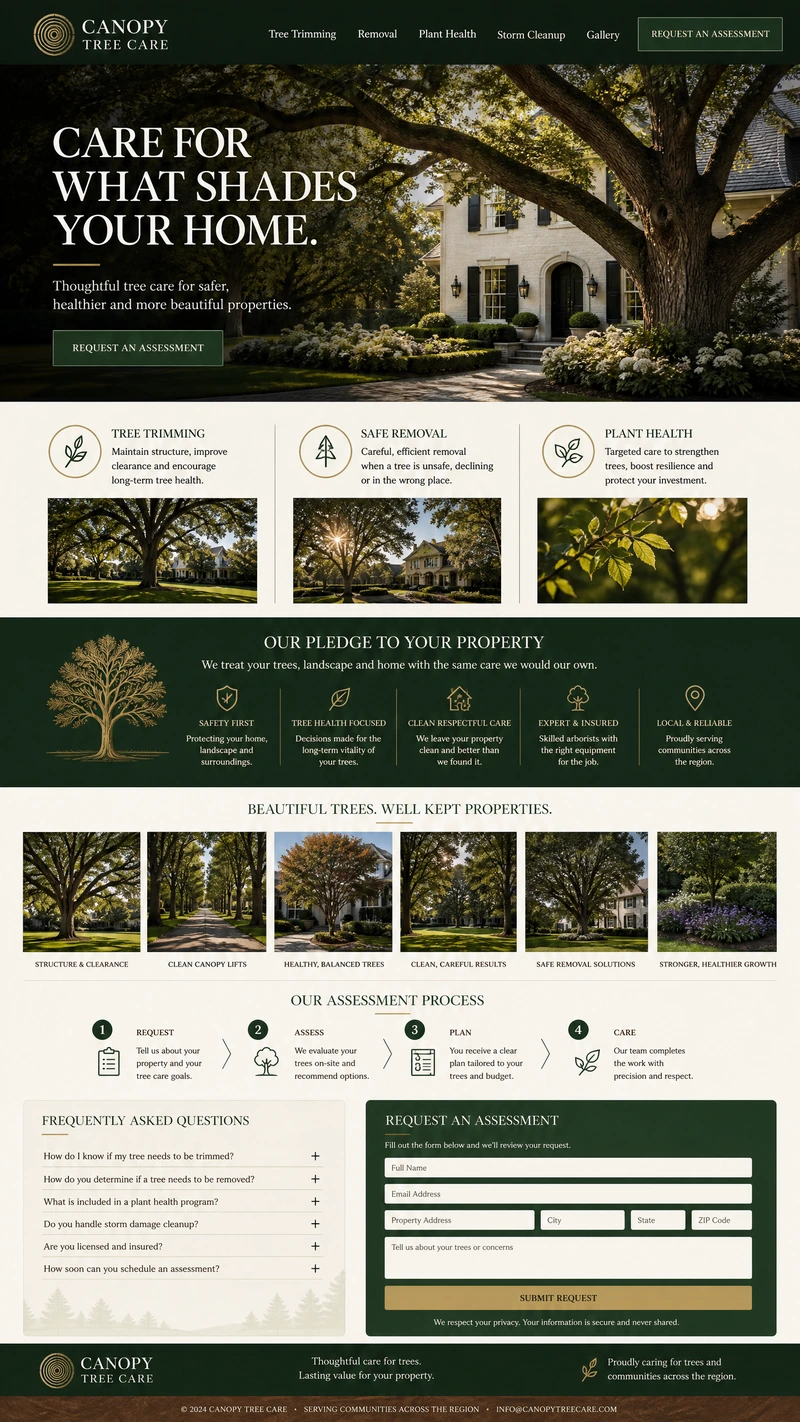


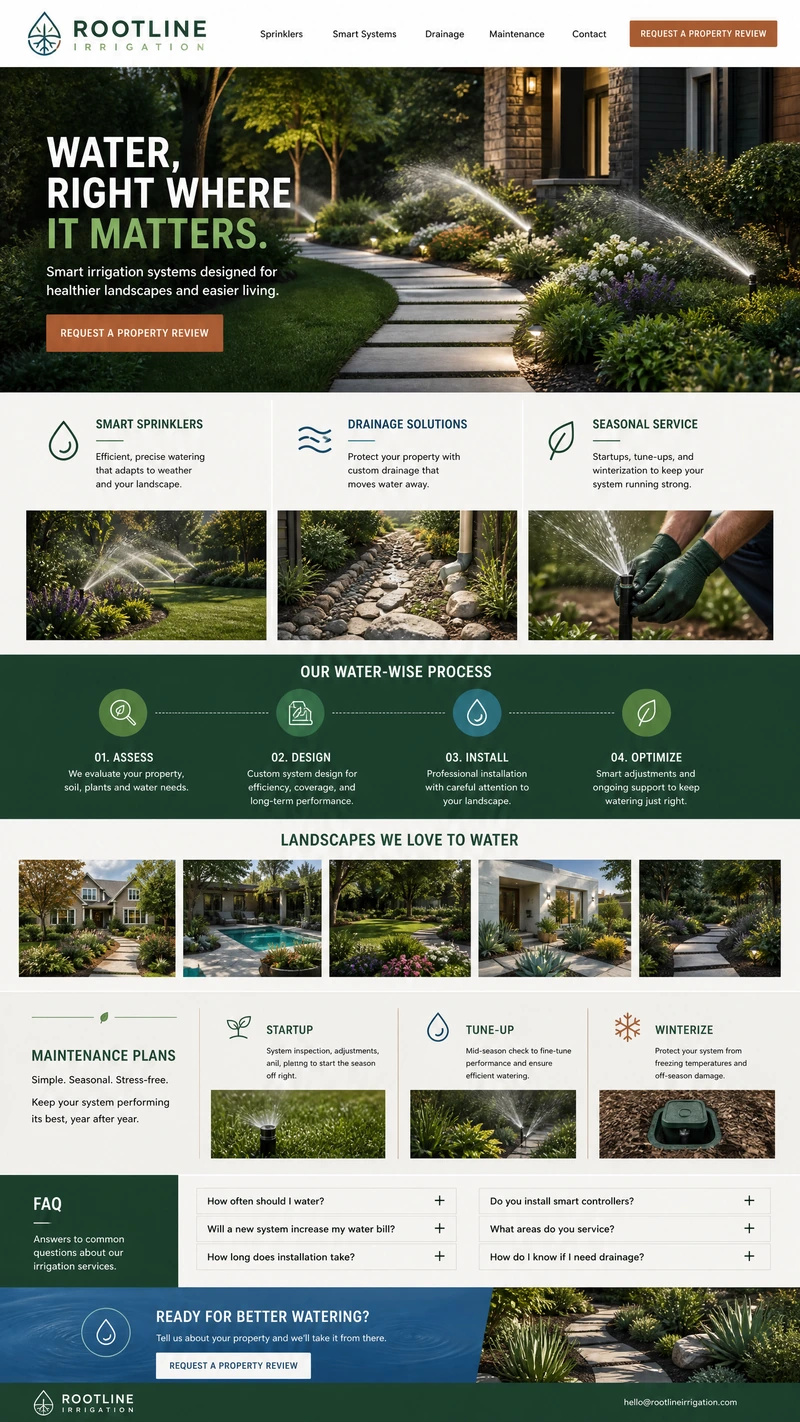
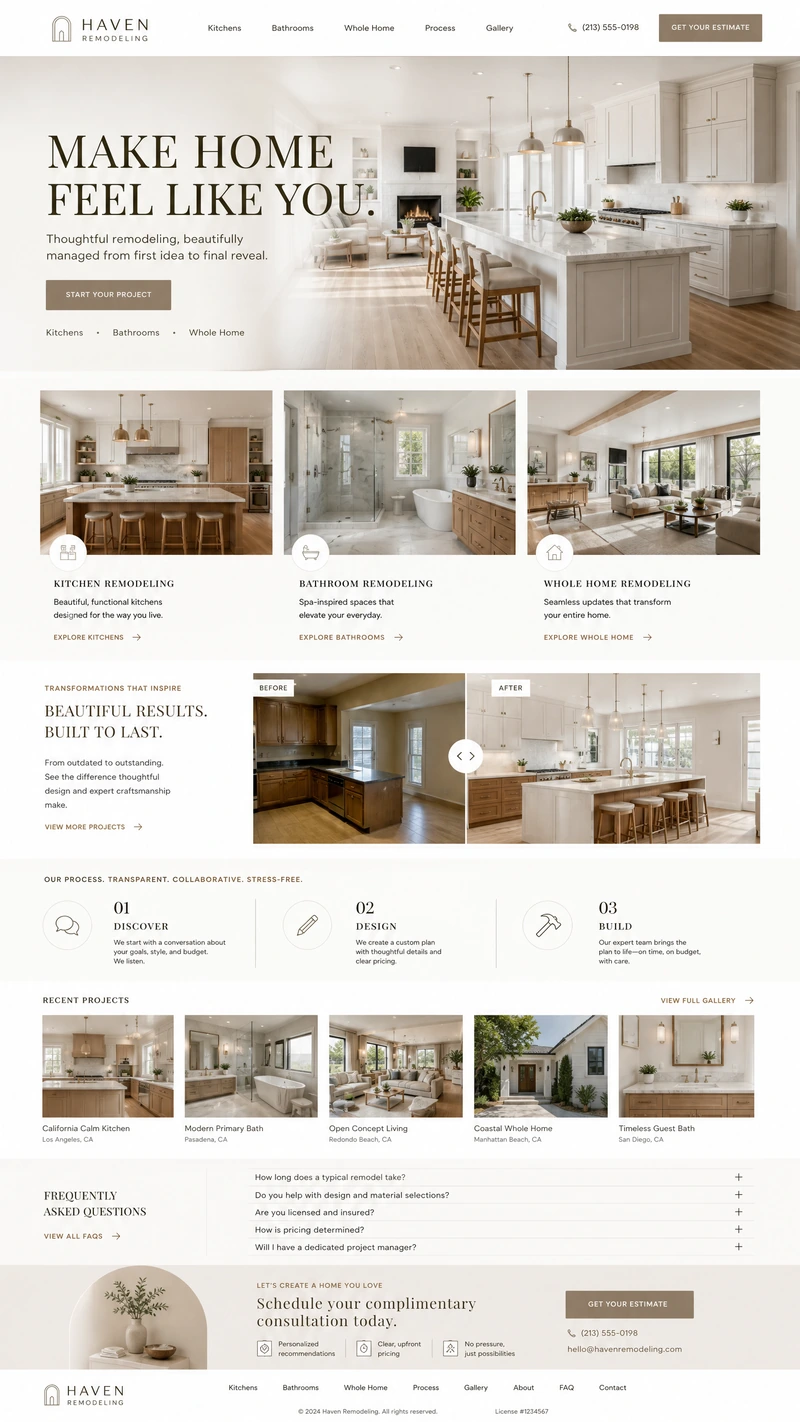
Design concepts produced in the studio, not client projects. Yours would be built for your business, from the same five directions.
Advertising creates paid visibility that starts today and stops when the budget stops. SEO develops organic visibility that arrives slowly and keeps working.
The useful part is what each one gives the other. Advertising produces, within weeks, real evidence about which searches convert and which messages land, which is information organic work would take a long time to gather. Organic positions reduce how much of your demand has to be bought.
Neither replaces the other, and choosing between them is usually a question about time. If you need enquiries this month, that is advertising. If you are building something that costs less every year, that is SEO. Most businesses want both eventually and should start with one.
Immediate, controllable, measurable, and it ends when spending ends.
Slower to arrive, compounds over time, and does not switch off.
Where both of them land, and the reason either one converts.
Advertising is the most measurable thing a small business can spend on, provided the measurement is set up before the spending starts.
The platform reports impressions, clicks, cost and position on its own. Those describe the buying, not the outcome. The numbers that describe the outcome, which form was submitted and which call came in, only exist if conversion tracking was configured.
Where it is, the useful question stops being what a click costs and becomes what an enquiry costs, and which searches produce the enquiries worth having. That is a question a business can act on.
Where tracking does not exist yet, setting it up is part of the work and we say so at the start rather than reporting on clicks as though they were customers.
Enough for the data to mean something, which depends on what a click costs in your industry and area.
In a competitive trade a small budget produces too few clicks to learn from, and learning is most of the value early on. We would rather talk about what a realistic starting budget looks like for your market than name a number here.
Fees are quoted per business rather than as a fixed percentage.
Advertising budget goes to the platform directly and is separate from what you pay us. That split is stated in the quote so there is no question about which is which.
Campaigns can be live within days, and the first enquiries often follow quickly. Whether they are the right enquiries takes longer to establish.
The first few weeks are mostly about learning which searches and messages work. That period is normal, it is not wasted, and it is why the tracking matters more than the launch date.
Usually, and we will tell you honestly if it is the thing holding the campaign back.
Often the fix is smaller than a rebuild: making the first screen of one page answer what the ad promised. Sometimes a dedicated landing page is the better answer.
Paid search is usually where we start, because someone searching for a service has already told you what they want.
That is a different starting point from an audience who was interrupted, and for most small service businesses it is where the money works hardest. Which platforms make sense beyond that depends on the business, and it is part of the conversation rather than something to settle from a page.
Not to start. The two do different jobs and it is reasonable to begin with one.
If you need enquiries soon, advertising is usually the right first move. If you are building something that costs less to run each year, that is SEO. Doing both makes each easier, but it is not a requirement.
What you sell, where you work, and whether anything is running now. We will come back with what we would do first and what it would take.