
Are finishes shown as choices?
Side by side, at a size where the texture reads. A single hero shot of a driveway is not a finish gallery.
Websites, SEO and ads for small businesses$1,497 for a professional websiteYou own your domain and hostingNo monthly fees to us
Concrete contractor website design
Concrete is bought on two things: whether the finish is good and whether you can handle the size of the job. A homeowner is looking at the first. A general contractor is checking the second. The site has to answer both without pretending to be two companies.
Up to seven pages, $1,497 total, on your own domain and hosting.

One site, two very different readers, and a structure that lets each one get to their own evidence.
The residential customer wants a driveway or a patio and is looking at finish, colour and what it will look like against their house. They are comparing your photos against two other contractors' photos and they are not thinking about your equipment at all.
The commercial or builder customer barely looks at the photos. They want to know what you can pour in a day, whether you have done work at their scale, whether you carry the insurance their project requires, and whether you will hit a schedule. Those are not things a residential-looking site communicates, which is why so many concrete companies lose bid work their crews could easily have done.
Not every concrete contractor does all of this, and the site should not imply otherwise. We build the list around what you actually pour and finish.
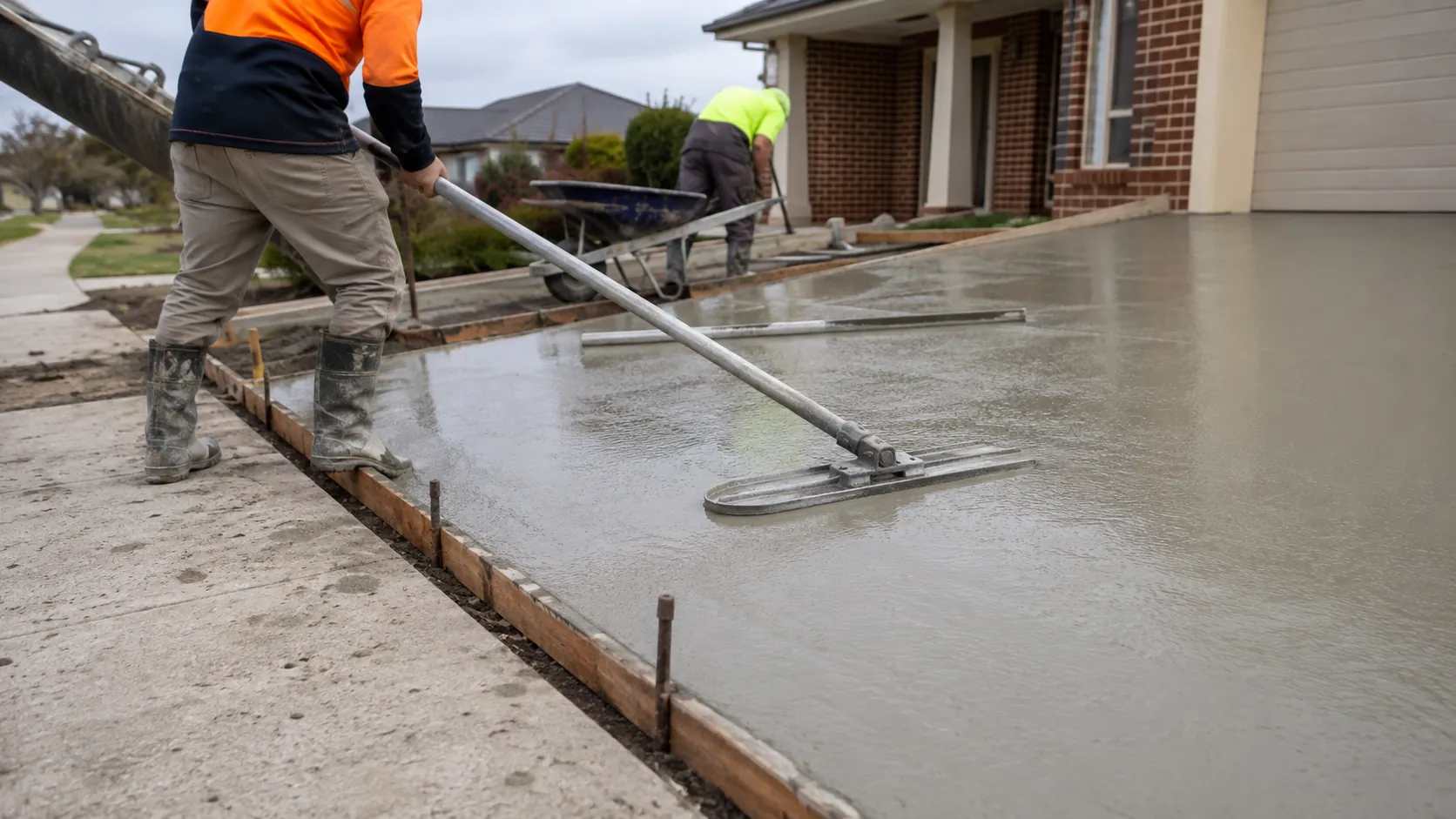
The finish is the product. A photograph of the pour says more than a photograph of a dry slab.
A homeowner is choosing a finish and is worried about how the driveway will look. A general contractor is checking whether you can pour on schedule at the right volume. Those are not the same visitor and one page cannot serve both without annoying one of them.
On the residential side the sale is visual and material. Broom, exposed aggregate, stamped, polished: these are choices, and a homeowner deciding between them wants to see them side by side rather than read a paragraph naming them.
On the commercial side almost none of that matters. What matters is capability, scheduling, the size of pour you can handle and whether you turn up. A page written for homeowners tells a general contractor nothing they need.
Side by side, at a size where the texture reads. A single hero shot of a driveway is not a finish gallery.
Capability, volume, scheduling. It does not have to be long, it has to exist.
Site access and square footage decide whether a job is even viable. Asking on the form saves both sides a visit.
A wet slab being floated says more about workmanship than a photograph of a finished slab.
Two routes from the top of the site cost nothing and stop both audiences reading past the half that is not theirs.
Recognise any of those?
Tell us which ones apply and we will say what we would do about them. No obligation and no sales sequence.
Project photography is the residential sale, and it needs to be grouped by what the job is, not by when you did it.
Someone pricing a driveway replacement wants to see driveways. A chronological feed of everything you have poured makes them do the filtering, and most will leave rather than scroll. Grouping by project type is a small structural decision with an outsized effect.
Scale is worth showing too. A photograph of a finished residential patio and a photograph of a commercial pour tell different stories to different visitors, and having both on the site is how a general contractor works out that you are worth calling.
Driveways, patios and walkways, presented so a homeowner can find work that resembles their property.
Slabs and footings, where the buyer is a builder rather than a homeowner and the questions are about schedule and spec.
The work that shows scale. Often the least photographed and the most useful for winning bid invitations.
Finish is where the margin is and where homeowners have the least vocabulary, so the site should teach it rather than list it.
Most people cannot name the difference between stamped, stained, exposed aggregate and a broom finish, but they have opinions the moment they see them. Showing each finish with a photograph and a sentence about where it suits turns an unfamiliar decision into a browsable one, and it moves conversations toward decorative work rather than a plain grey pour.
Where you offer stamp patterns or colour options, presenting a selection on the site saves a visit with a sample board. It also sets expectations early about what a decorative finish involves, which is usually the point where a budget conversation has to happen.
All sixteen start from the same five directions. Concrete is a materials sale, so the direction has to handle a finish gallery well: broom, exposed aggregate, stamped and polished all need to read as choices rather than as a texture background.

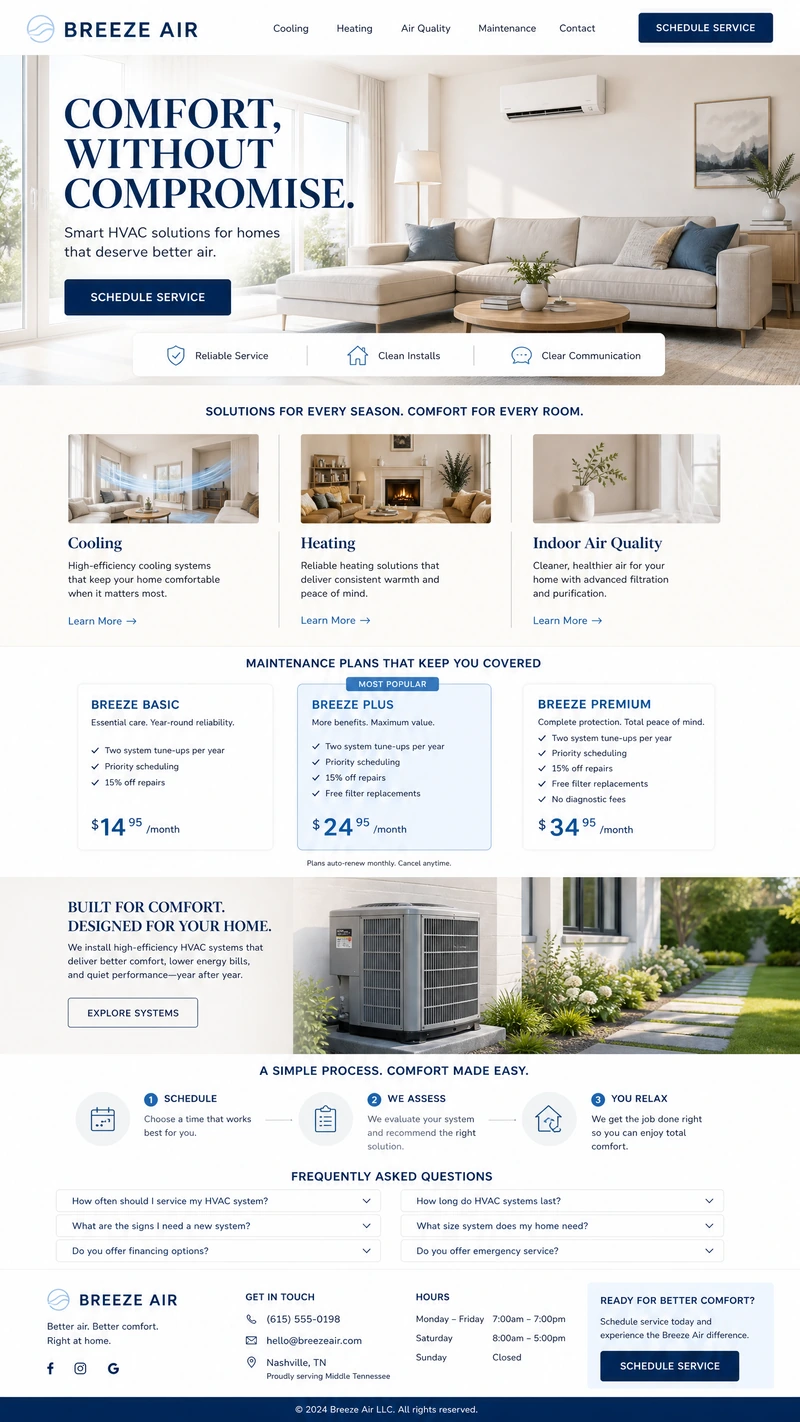
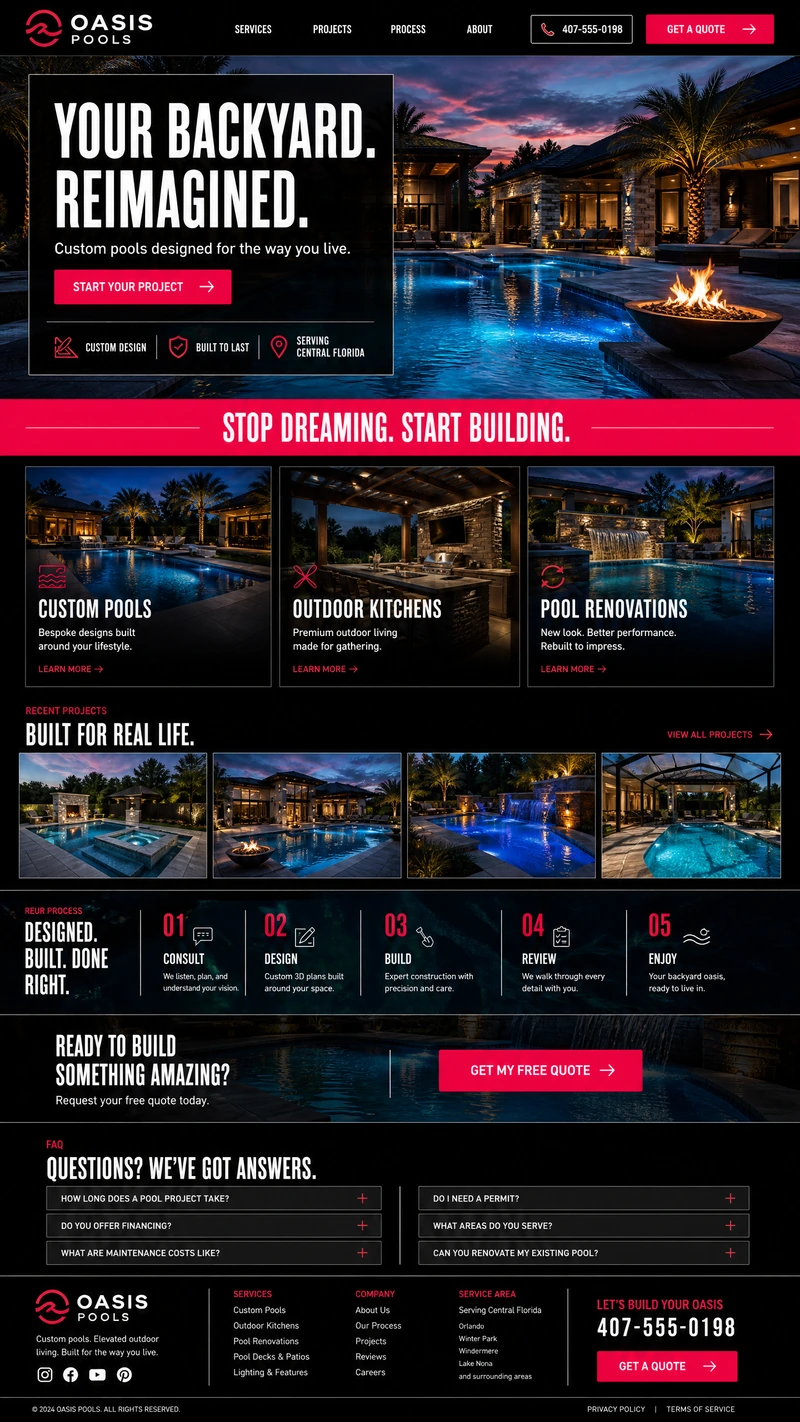
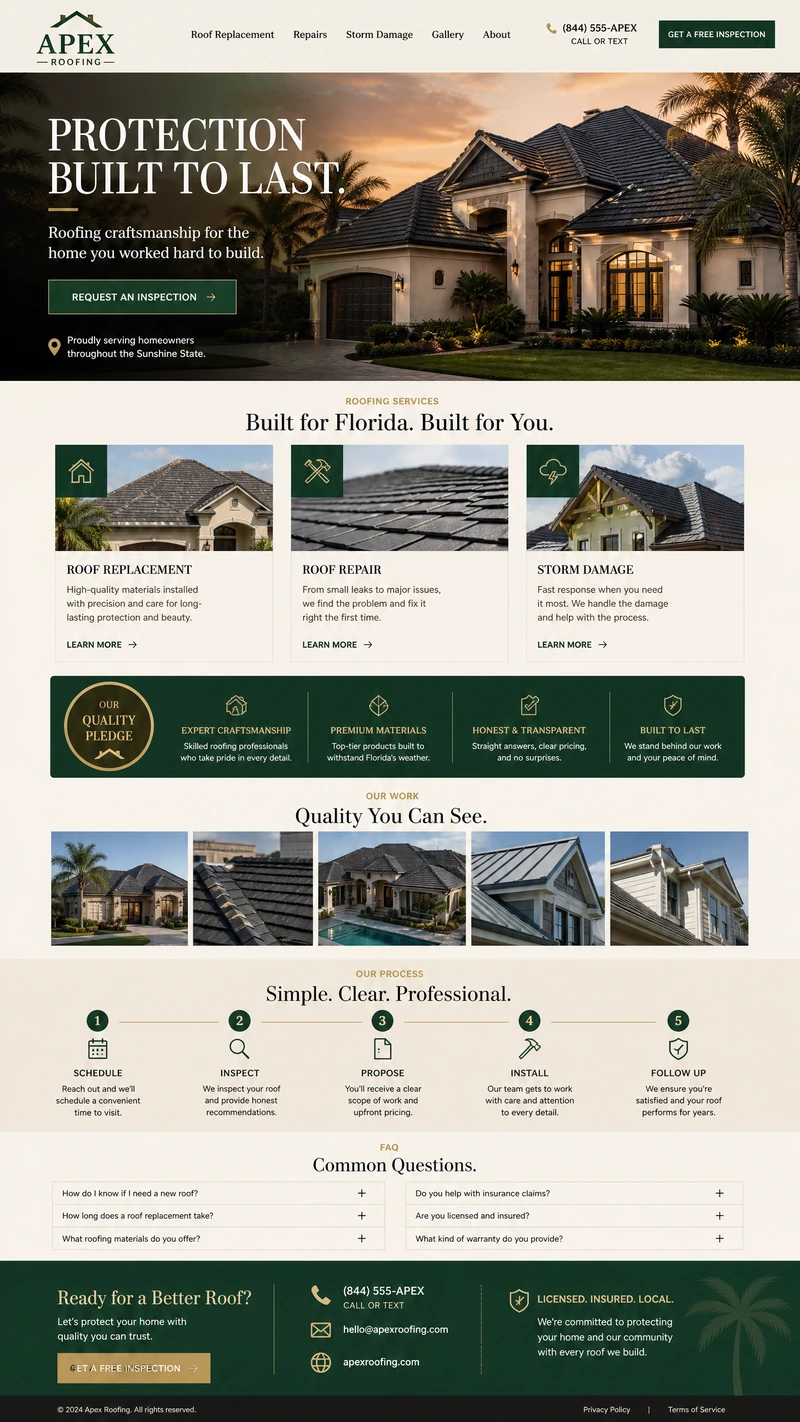
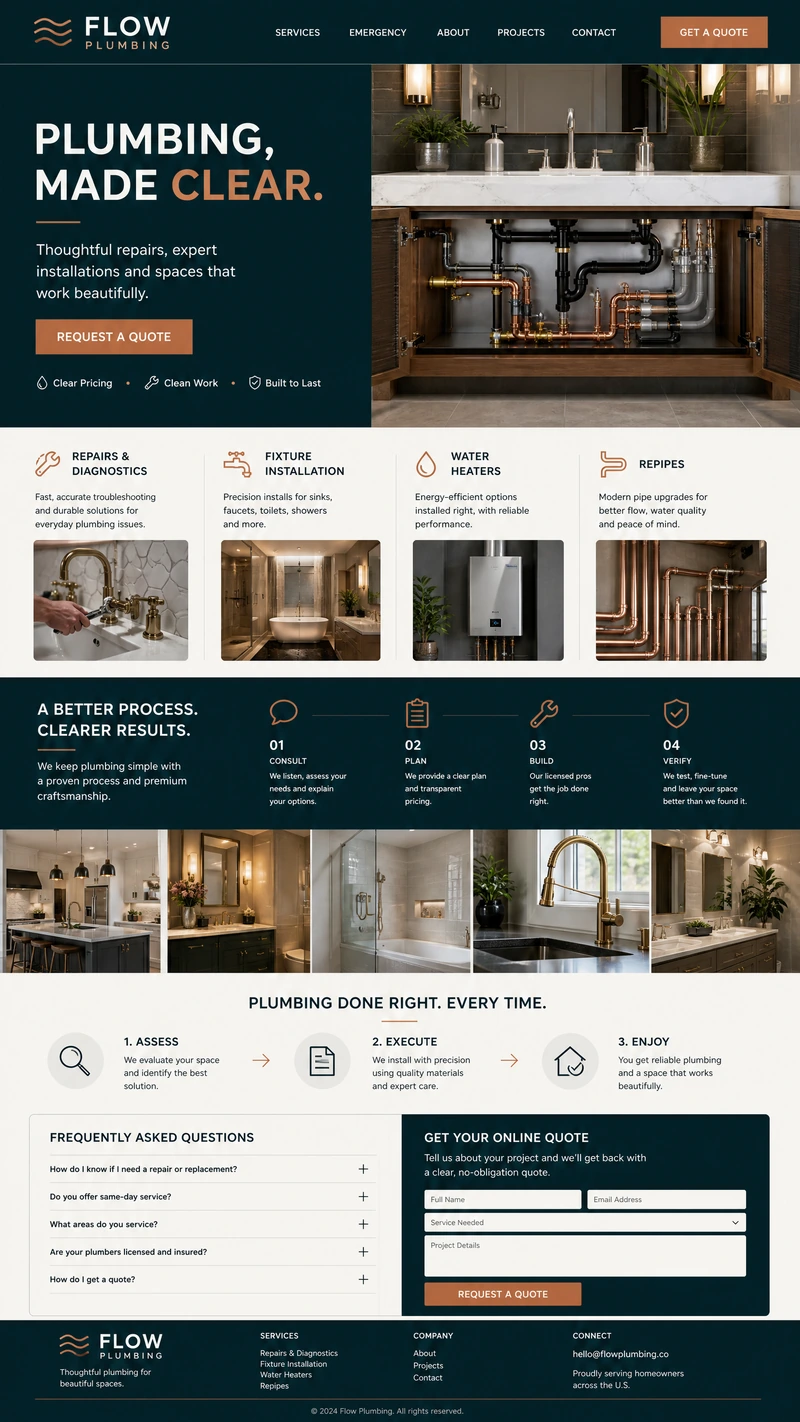
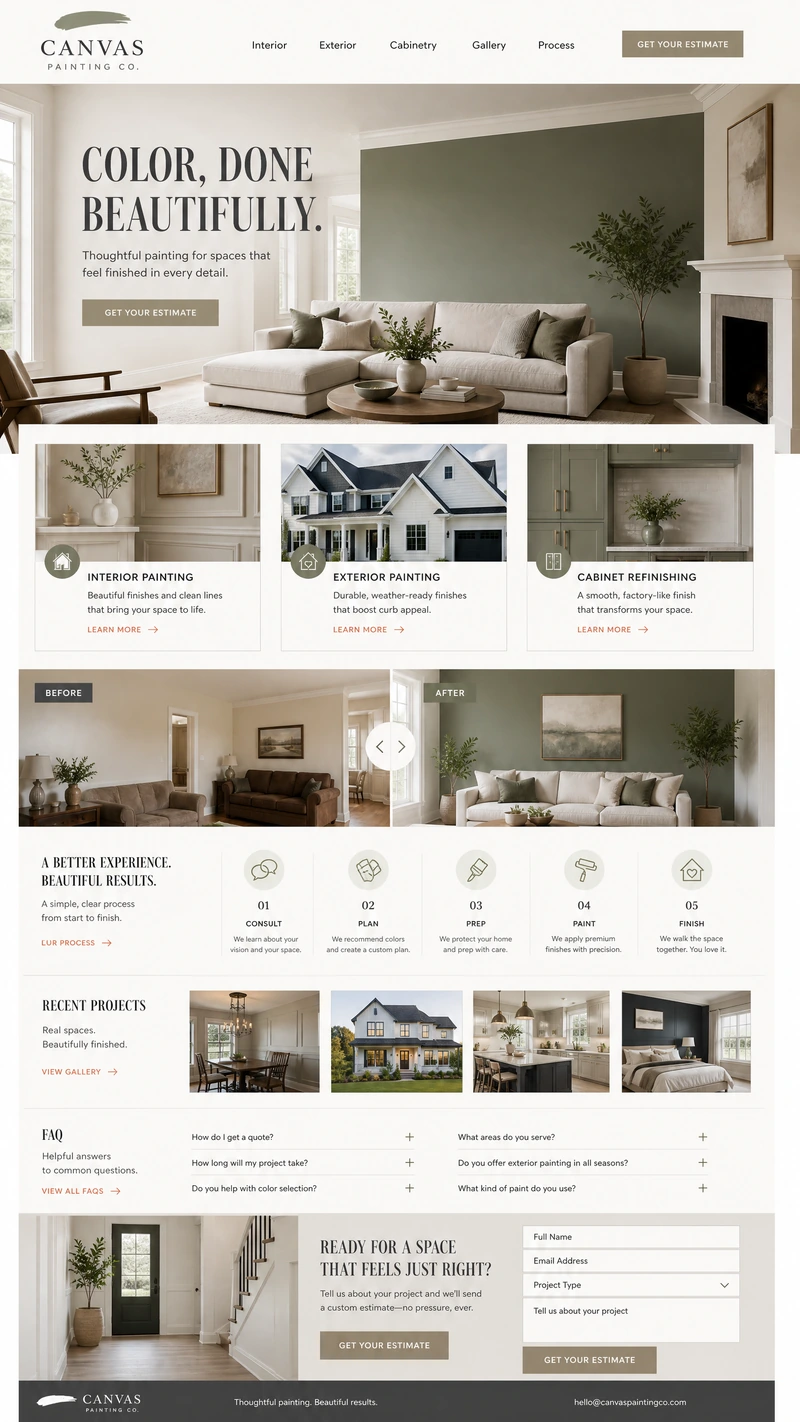
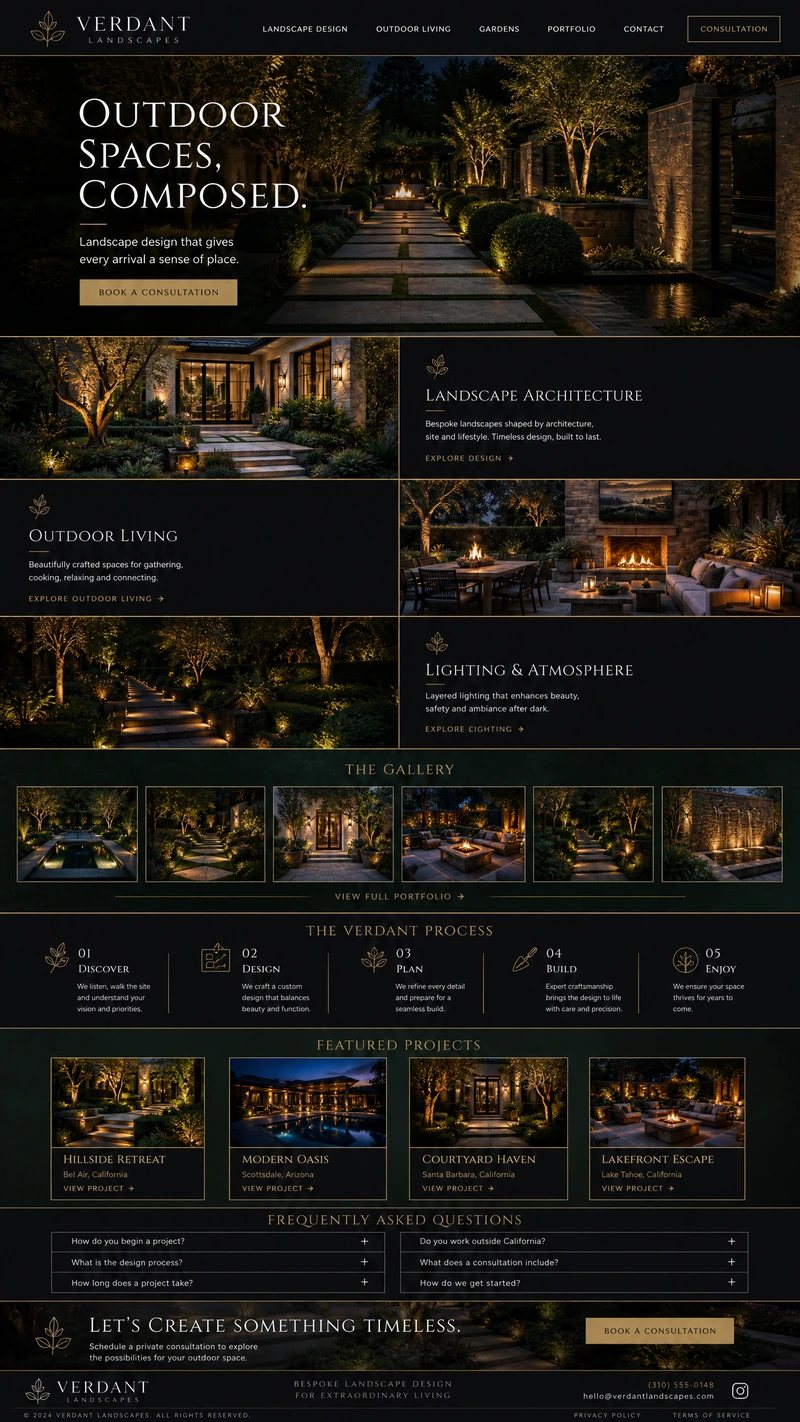
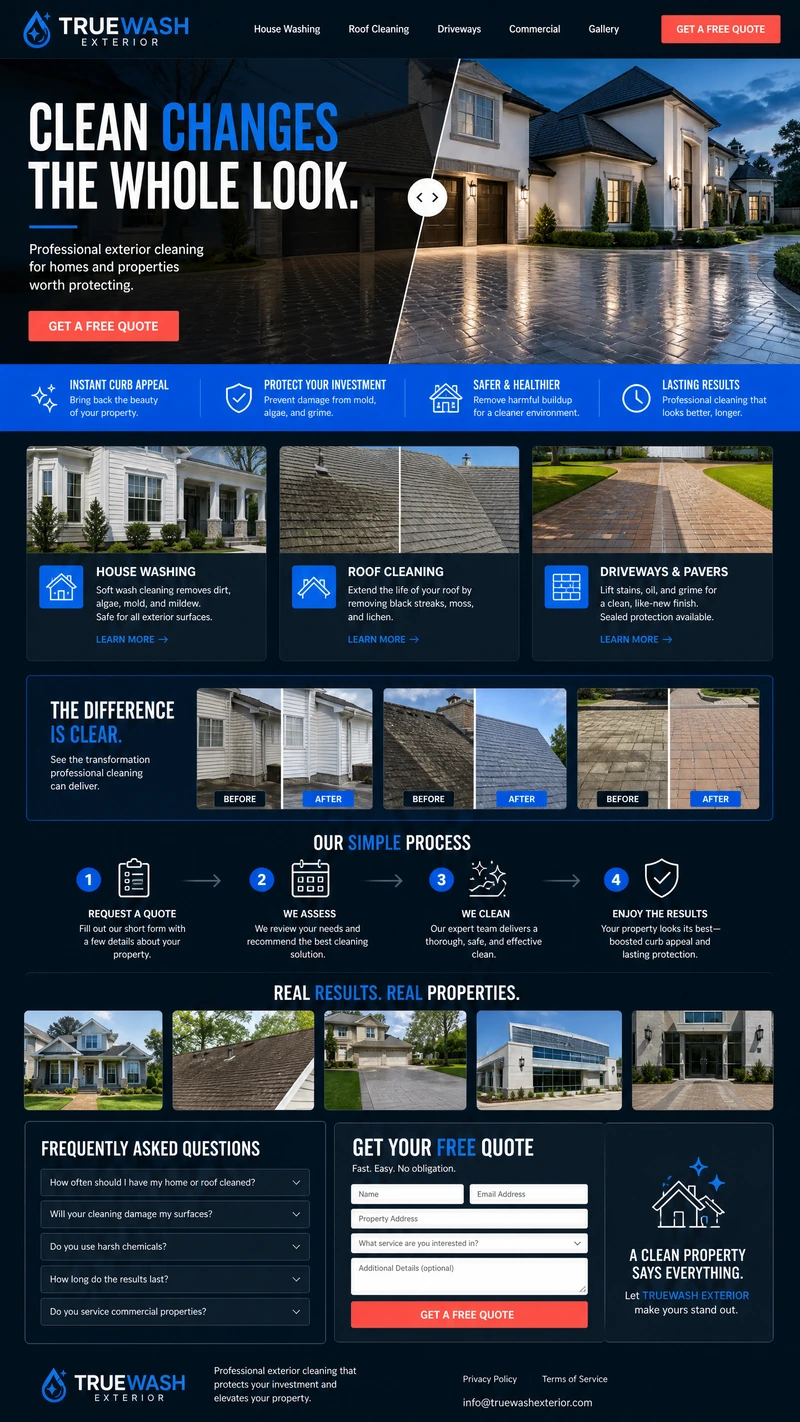
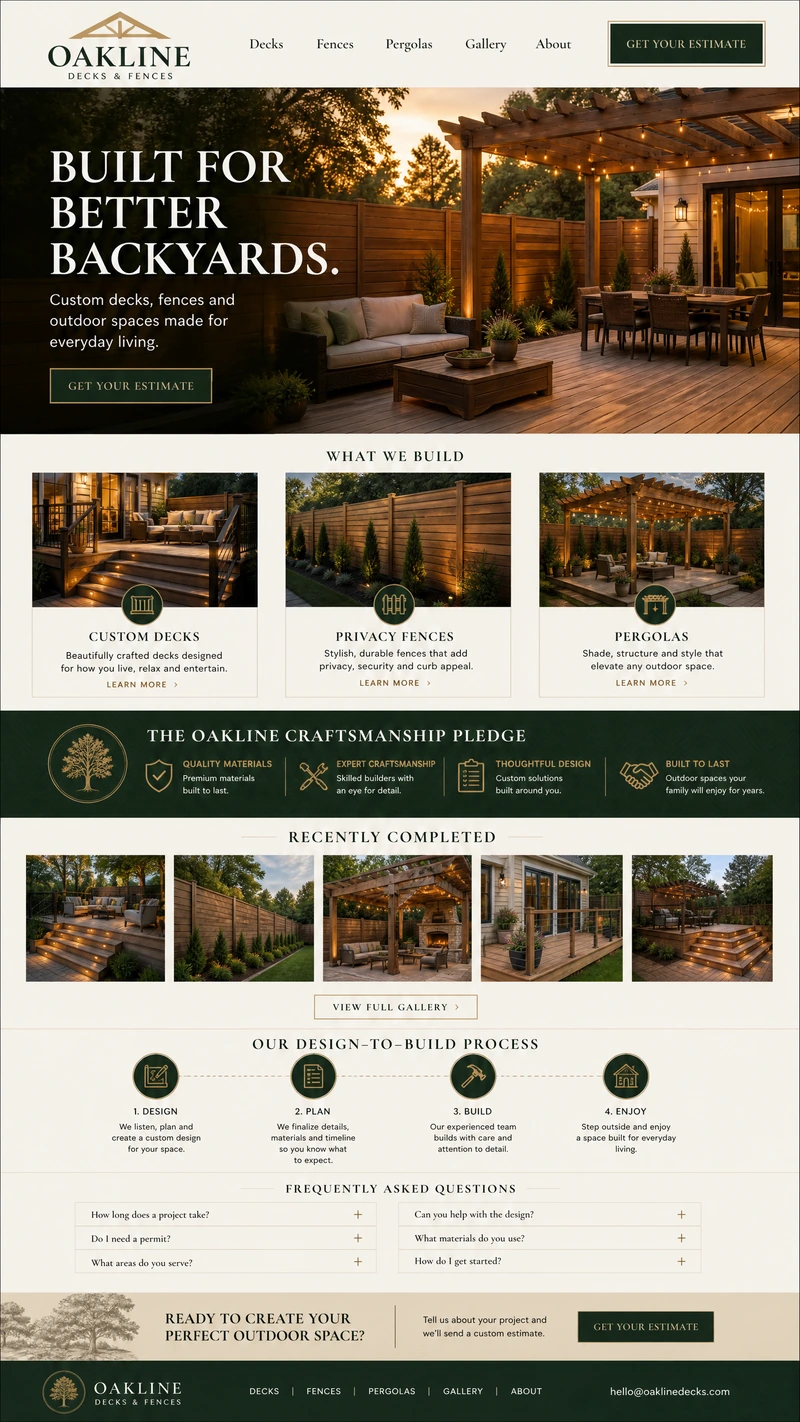
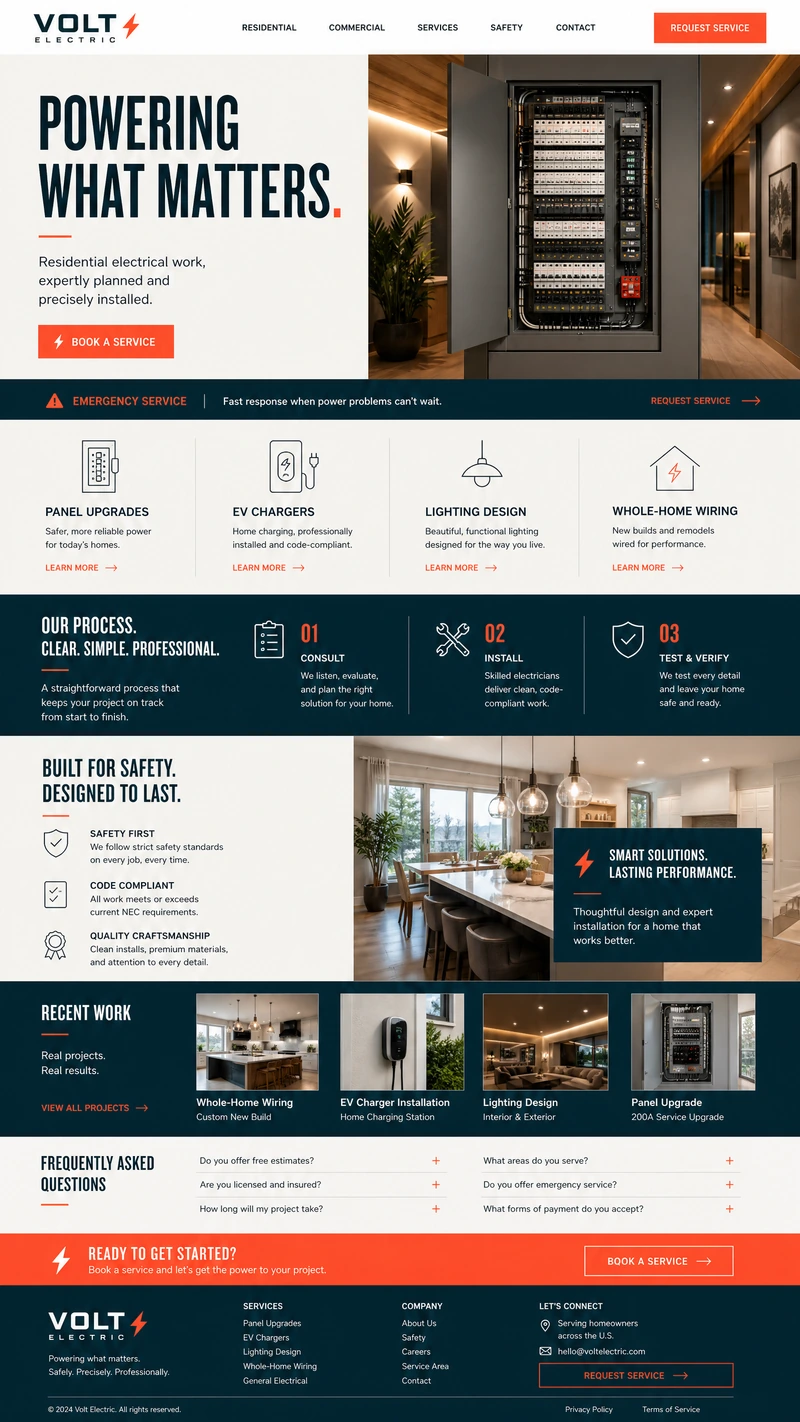
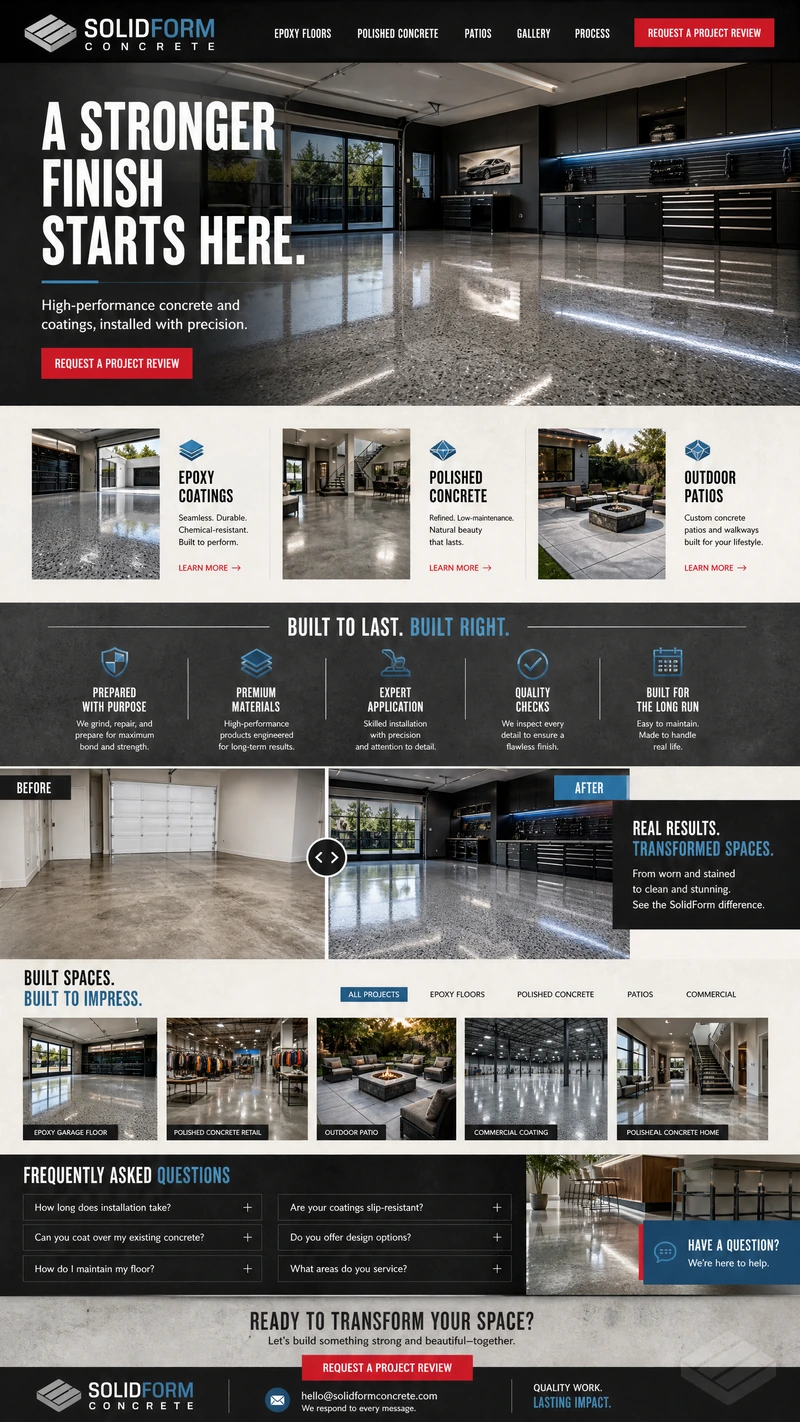
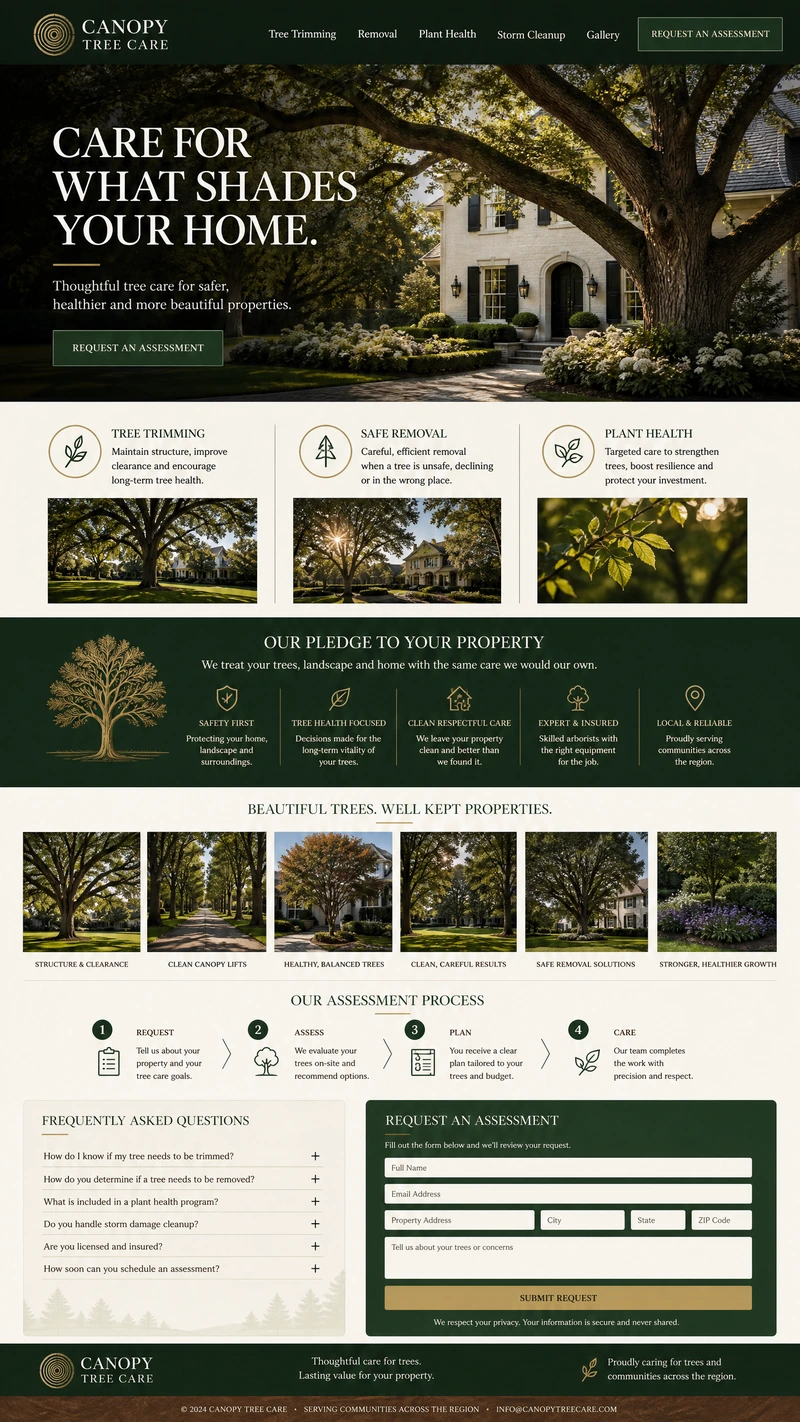

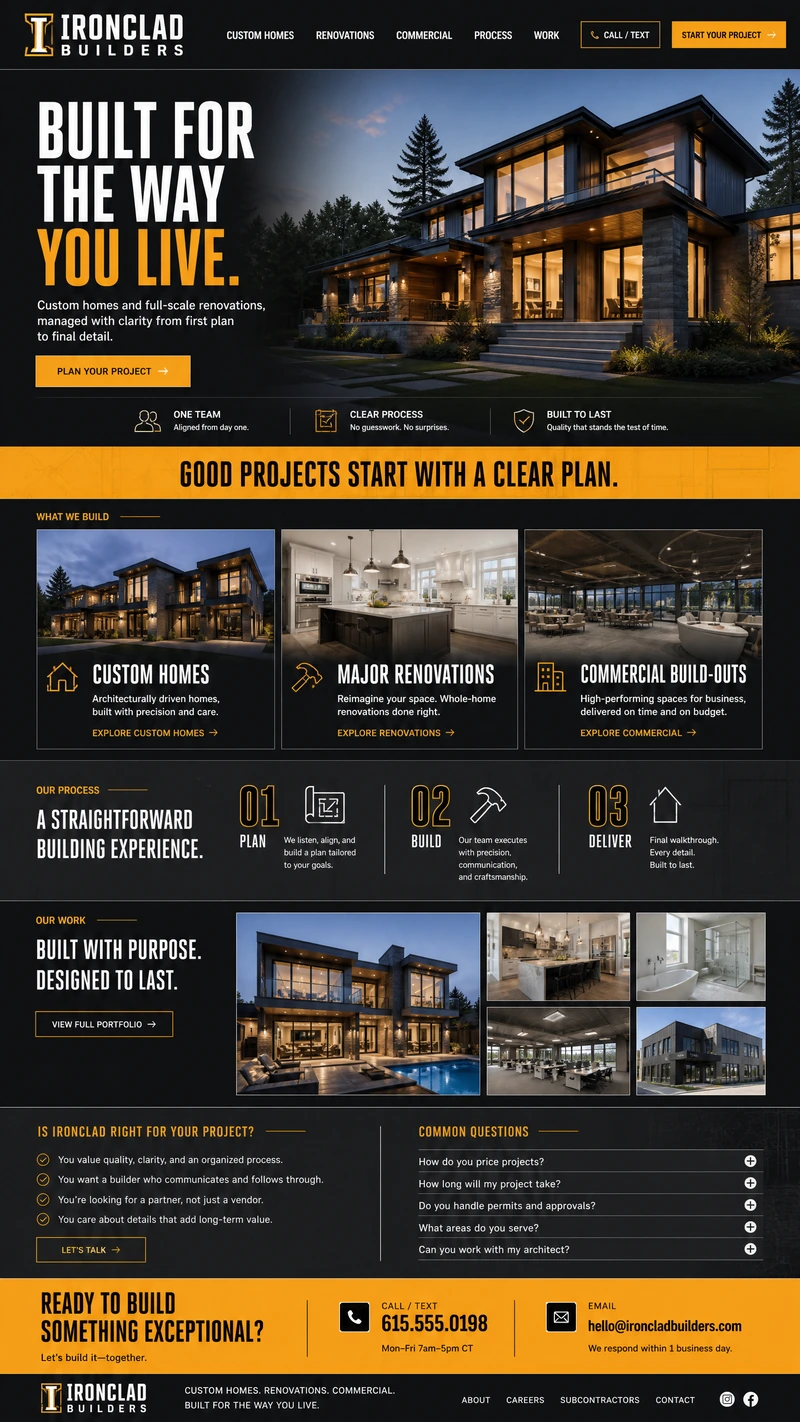
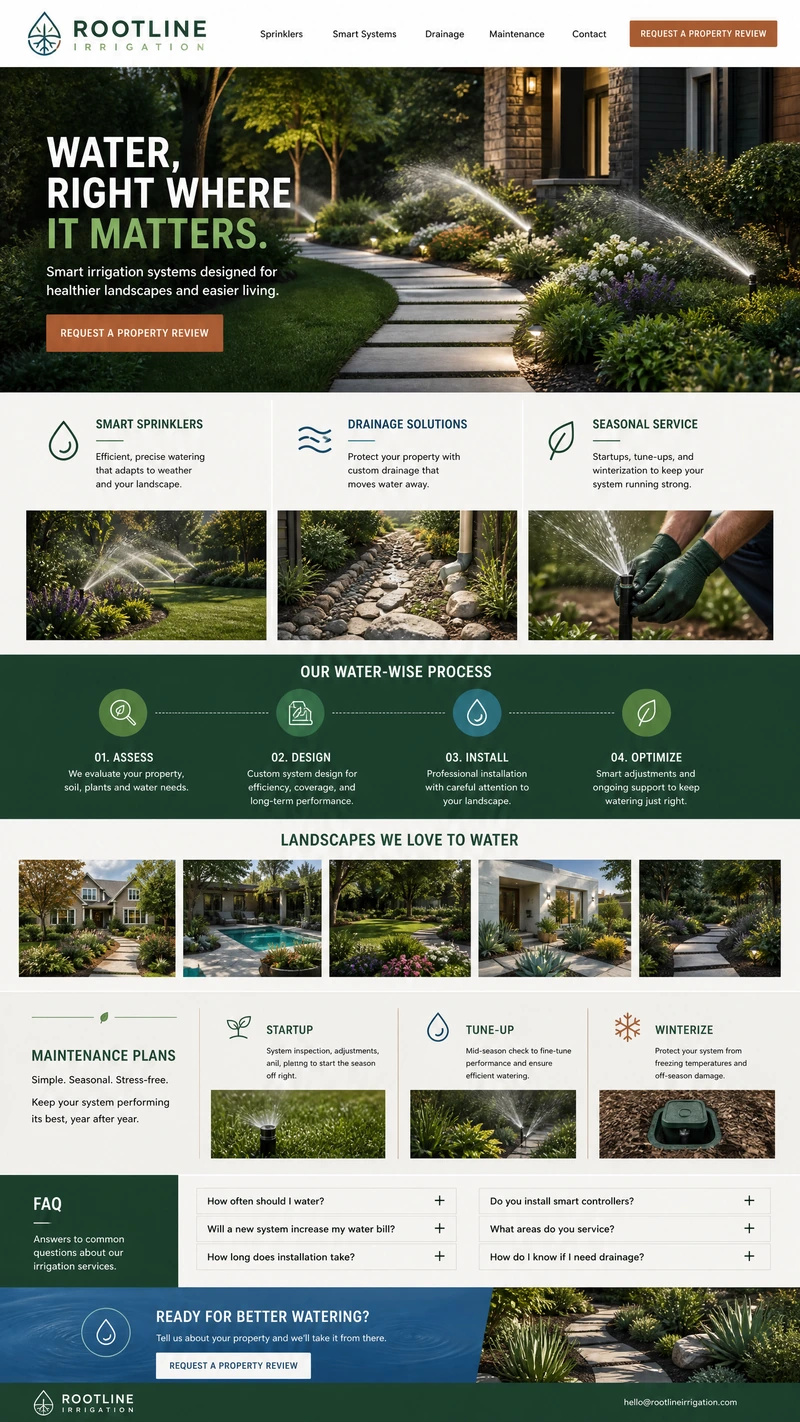
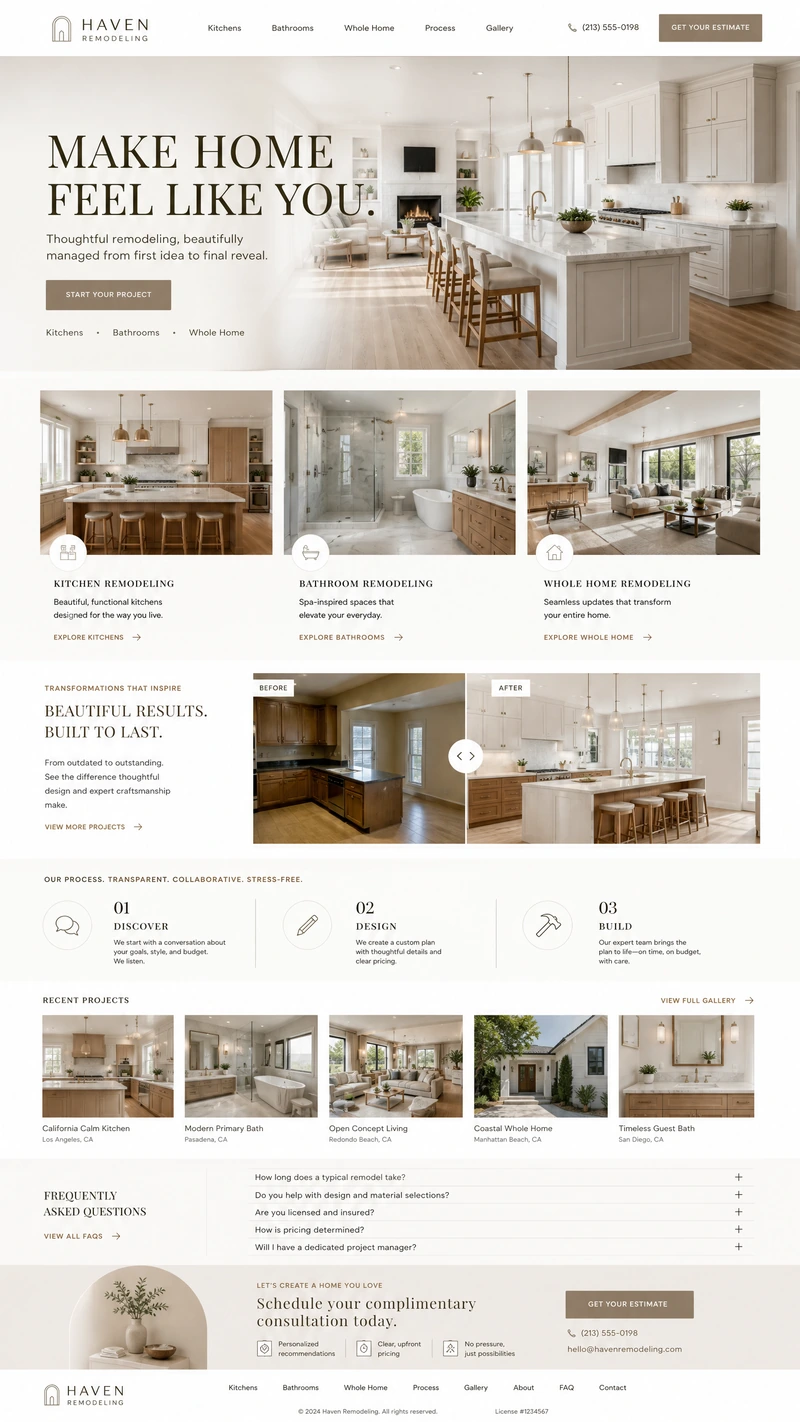
Design concepts produced in the studio, not client projects. Yours would be built for your business, from the same five directions.
For commercial and builder work, capability is the sale, and it belongs on the site in plain terms rather than being inferred from photographs.
Years in the trade, the size of jobs you take, whether you run your own crews or subcontract, the equipment you own, your insurance and bonding position: these are what a general contractor scans for before adding you to a bid list. None of it is glamorous and all of it is decisive.
Service area matters here more than in most trades, because concrete is heavy and travel time is real cost. Writing out the counties and metro area you cover, and being clear about how far you will go for a large job, prevents the enquiries that were never going to work.
We publish the experience, insurance position and capability you give us. We do not estimate crew capacity, we do not verify bonding, and nothing on the site will state a job size you have not confirmed you can handle.
A concrete quote depends on things a form can actually collect, so collecting them up front saves a site visit that leads nowhere.
The useful questions are the practical ones: where the job is, what it is, roughly how many square feet, whether there is existing concrete to remove, and how a truck would get to the pour. Access is the one most contractors wish they had asked, because a back yard with a narrow gate changes the entire job.
For commercial enquiries the same form can ask for the project timeline and whether drawings exist. That single question sorts a serious bid invitation from someone who is still guessing.
That request form is on your finished site, for your customers. The form at the bottom of this page reaches us.
$1,497 total. $500 to start and $997 after final approval, before the site is published.
First preview within five business days of the initial payment clearing and your briefing and materials being approved for production. Three consolidated rounds of revisions after that, sent together rather than one at a time.
The site is built on your domain and your hosting, there is no monthly fee to us, and nothing about it is rented.
You tell us the services you sell, the area you cover and what you want the site to do. This is a form, not a meeting, and it is where the structure gets decided.
Photographs of your own work, your license and insurance details, and anything that has to appear on the site.
We draft the page plan and write the words from your briefing. You see both before anything is designed.
The complete site, within 5 business days of the initial payment and an approved briefing.
You review the whole site and send your notes together. Up to 3 consolidated rounds are included.
You approve the final version, pay the $997 balance, and we deploy to your hosting on your domain.
That is the whole process.
If it fits, the $500 initial payment starts it. If you would rather ask something first, the form is a few lines below.
Yes, and it usually needs a page each rather than a blended services page.
The two buyers read for completely different things. Seven pages is enough to give each a proper page and still cover finishes and projects.
Yes, as a presented selection with photography.
What is not in the standard build is an interactive configurator where a visitor combines a pattern with a colour and sees a preview. That is custom work.
Only if you are prepared to stand behind a range publicly.
Concrete pricing moves with material costs, access and finish. Some contractors publish a starting range with conditions attached and find it useful. We publish only what you confirm.
It can present the information general contractors look for, which is capability, insurance, past work at scale and how to reach your estimator.
Whether that turns into bid invitations depends on your pricing, your capacity and who is buying, so the site presents the information and stops short of promising the outcome.
Enough to cover the project types you want work in.
A handful of good photographs per category beats a large library of similar driveways. Commercial pours are usually the gap worth filling first, because they are the least photographed and the most persuasive.
If you offer it, yes.
Repair, resurfacing and replacement are different sales from a new pour and are worth presenting separately, because the customer searching for them is describing a problem rather than planning a project.
Up to seven pages covering your project types, your finishes and the scale of job you take, with a quote request that reaches your inbox.
$1,497
One-time project price
This is the website price. SEO and advertising are separate services, quoted on their own.
The 5 business days start once your payment is in and you have sent us what we need to begin.
Chasing commercial bid lists as well as homeowners?
Tell us what you pourResidential, commercial or both, the finishes you offer, and the size of job you are set up for. We will come back with a page plan.