
Do the two sides have their own routes?
Not two bullets in one list. Two doors, from the top of the site.
Websites built around your businessSEO & digital advertisingStrategy with a human touch
Landscaping website design
Most landscaping companies are running two businesses on one website. One sells a project that happens once. The other sells a contract that renews every year. Presenting them as a single list of services makes both harder to buy.
Scoped and quoted for your landscaping business, on a domain and hosting account you own.
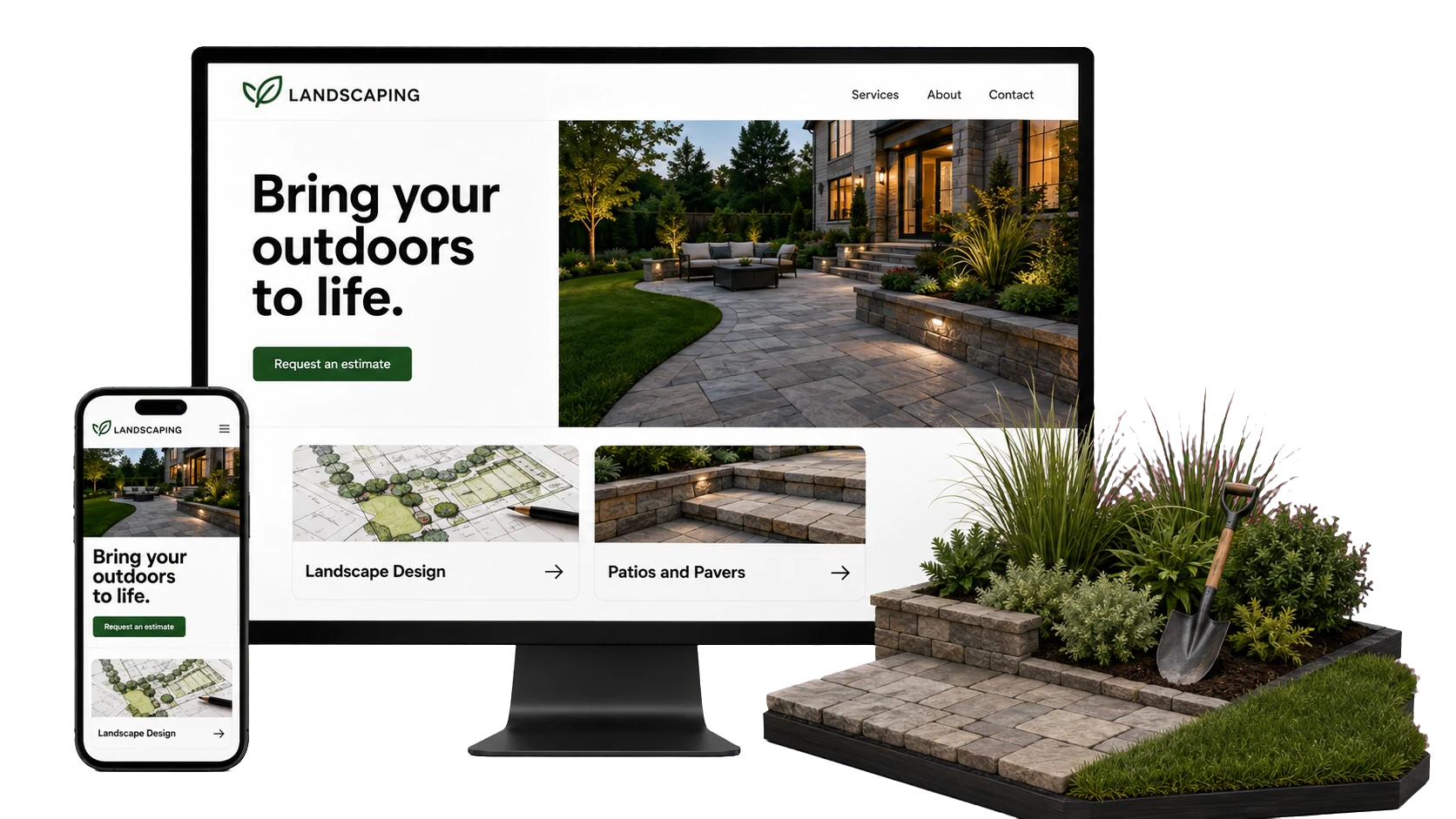
Two revenue lines, two customers, one site that has to serve both without blurring them.
The design and build customer is planning something: a new patio, a full yard redesign, an outdoor kitchen. They browse for weeks, they save images, and they want to see finished properties before they call. The maintenance customer has a different problem entirely. They want to know that you cover their street, what a visit includes, and what it costs per month.
A site that treats those as one thing tends to serve the project buyer and lose the maintenance one, because maintenance ends up as a line item at the bottom of a services page. Recurring maintenance is steady revenue for many landscaping companies, so it deserves its own place in the structure.
Good landscape website design starts with that decision: which side the site leads with, and how a visitor gets to the other one. Lawn care companies, design and build firms and full-service outdoor living businesses each answer it differently, and the page plan in your proposal follows how yours works.
Hardscaping lives here as part of the outdoor living offer rather than on a page of its own. If pools are your main business rather than the yard around them, our pool builder page is the better fit.
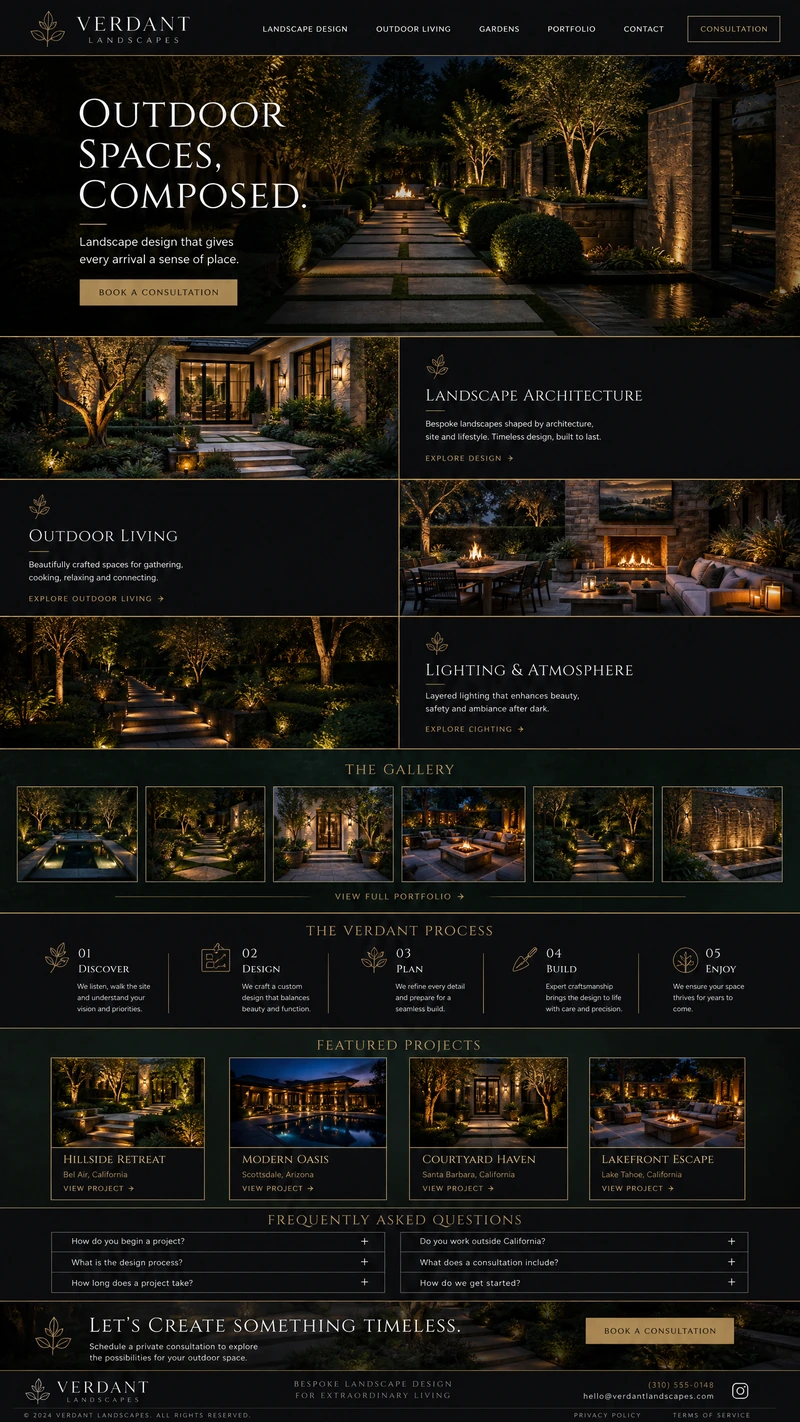
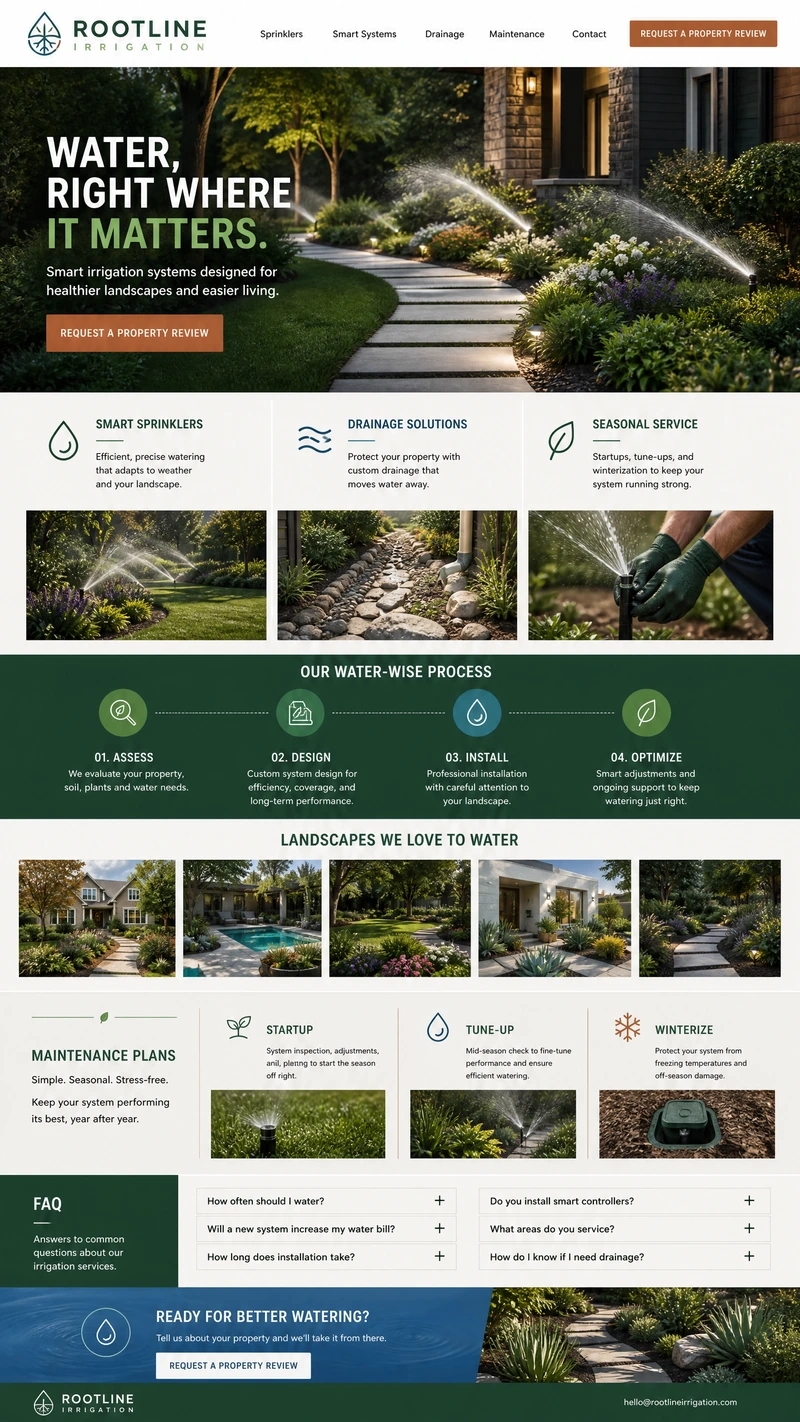
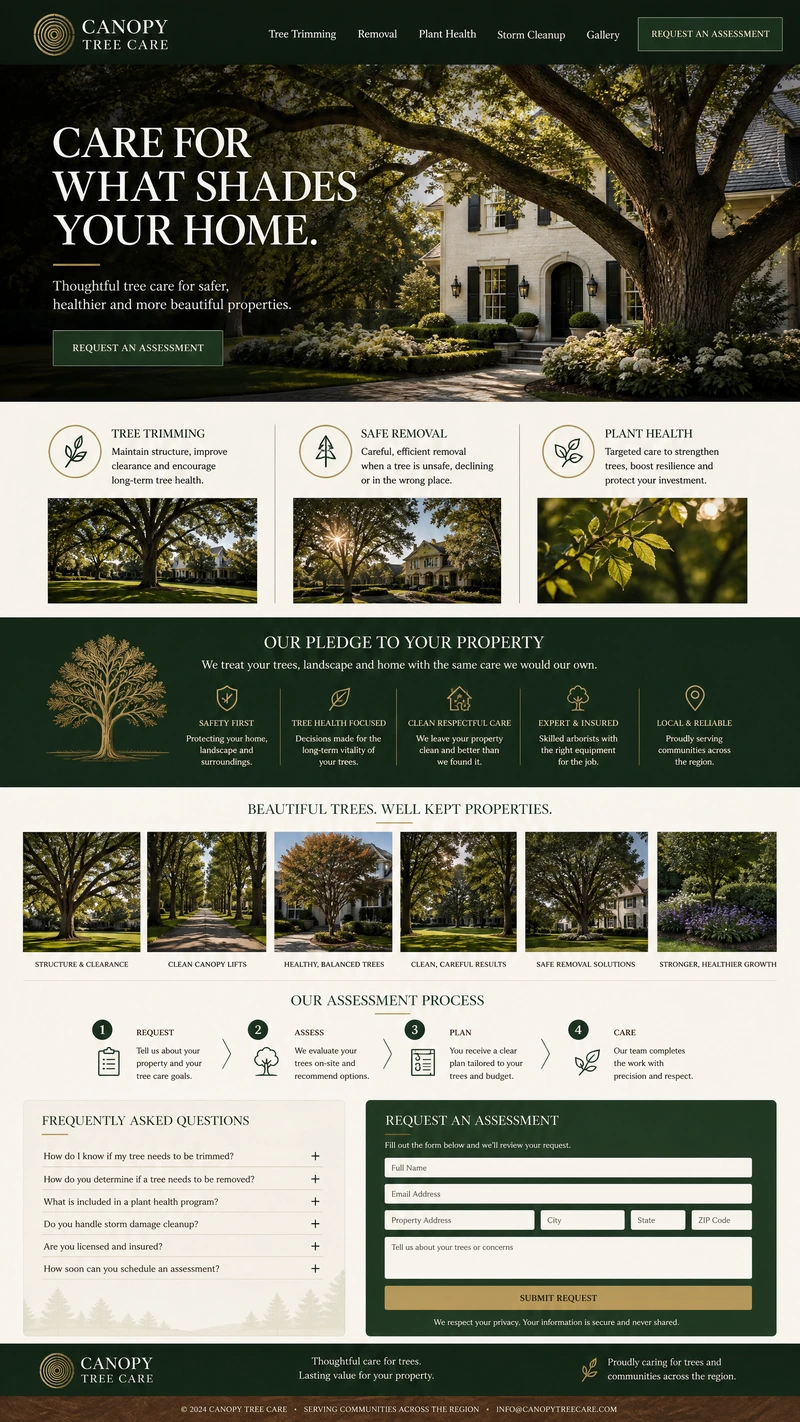
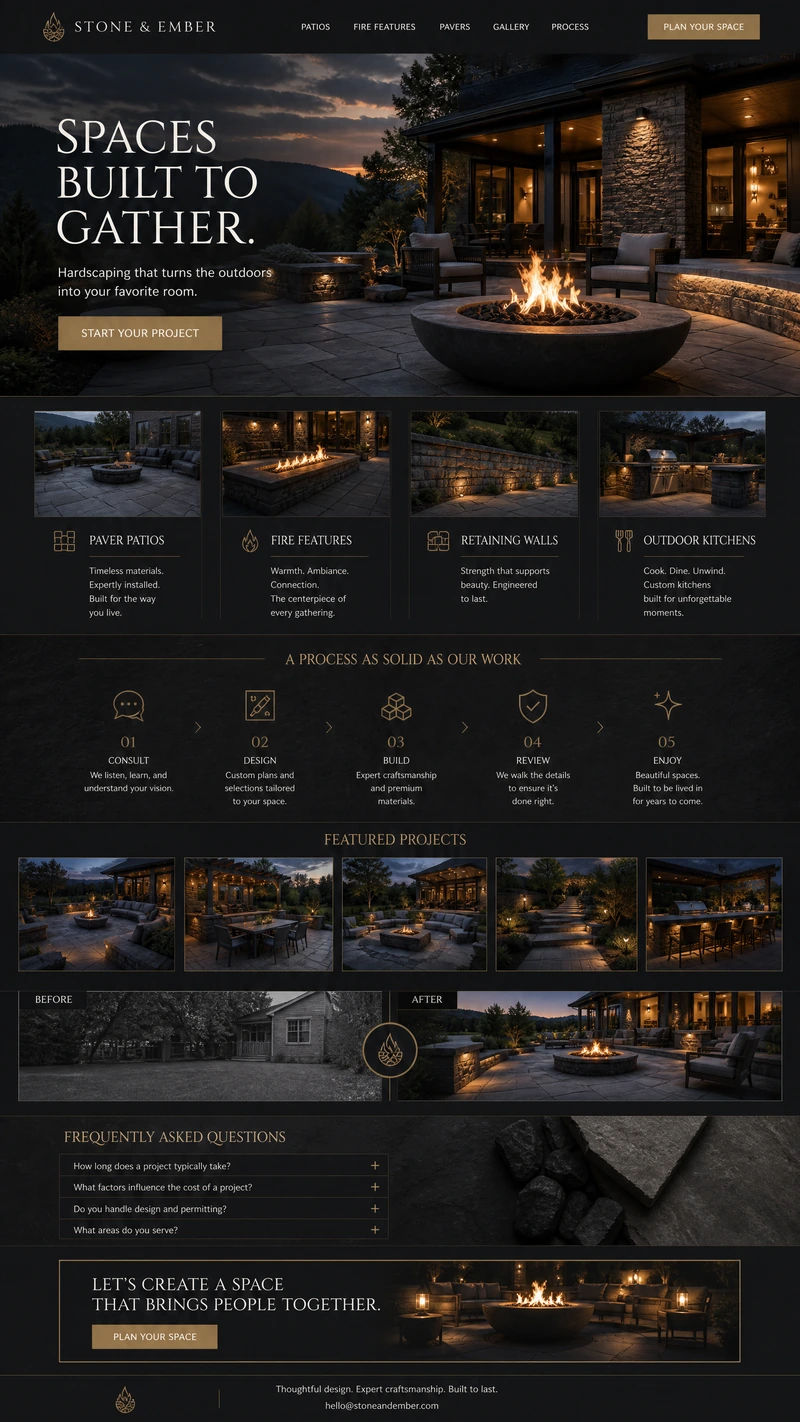
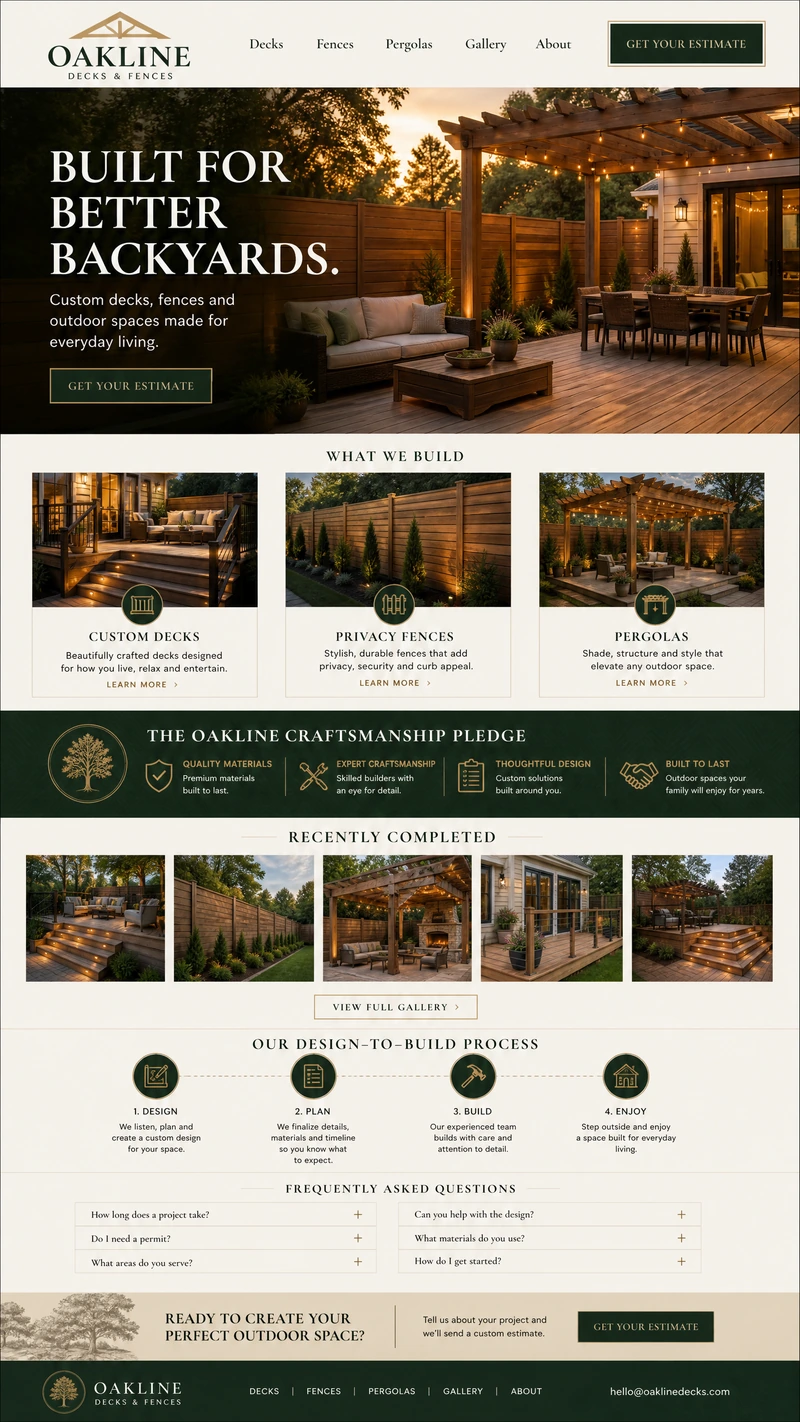
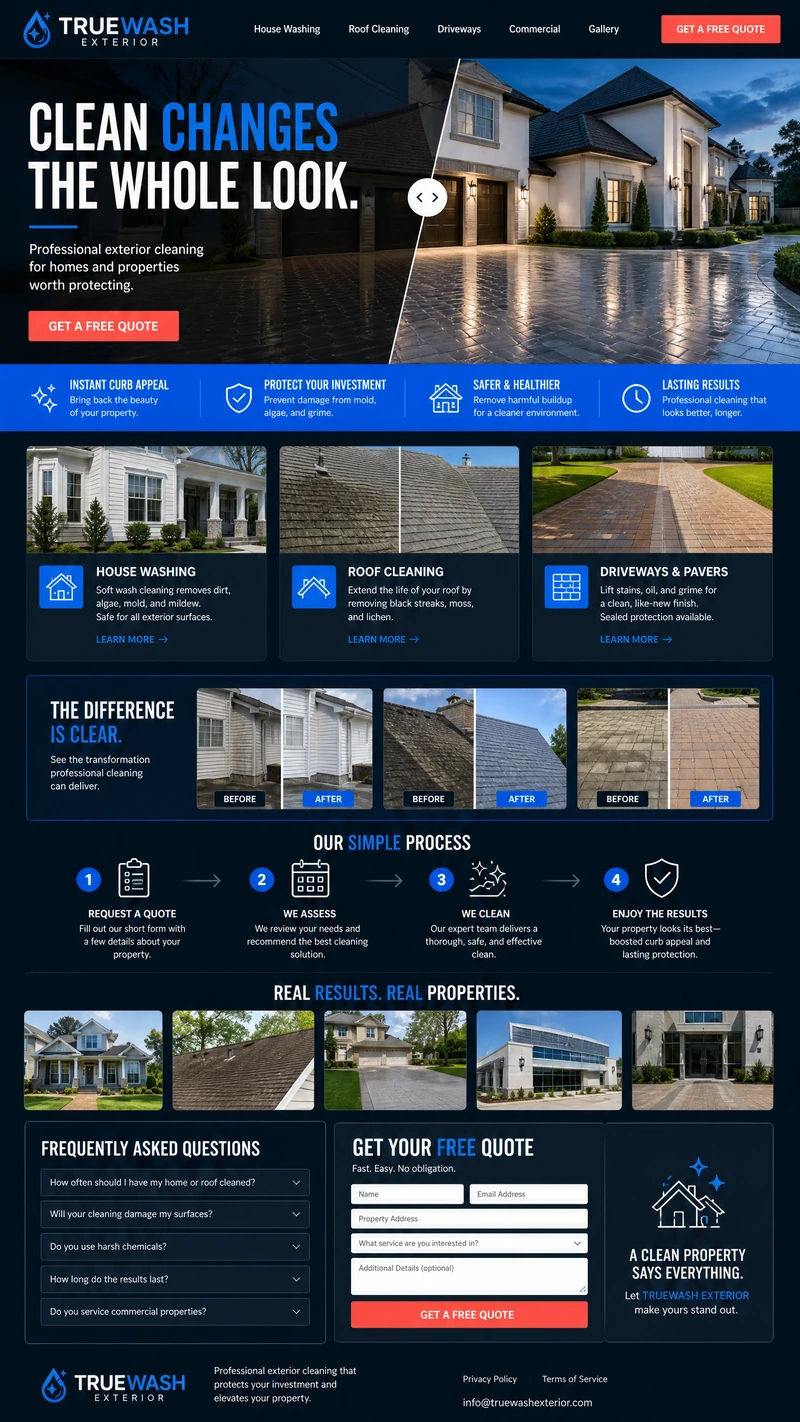
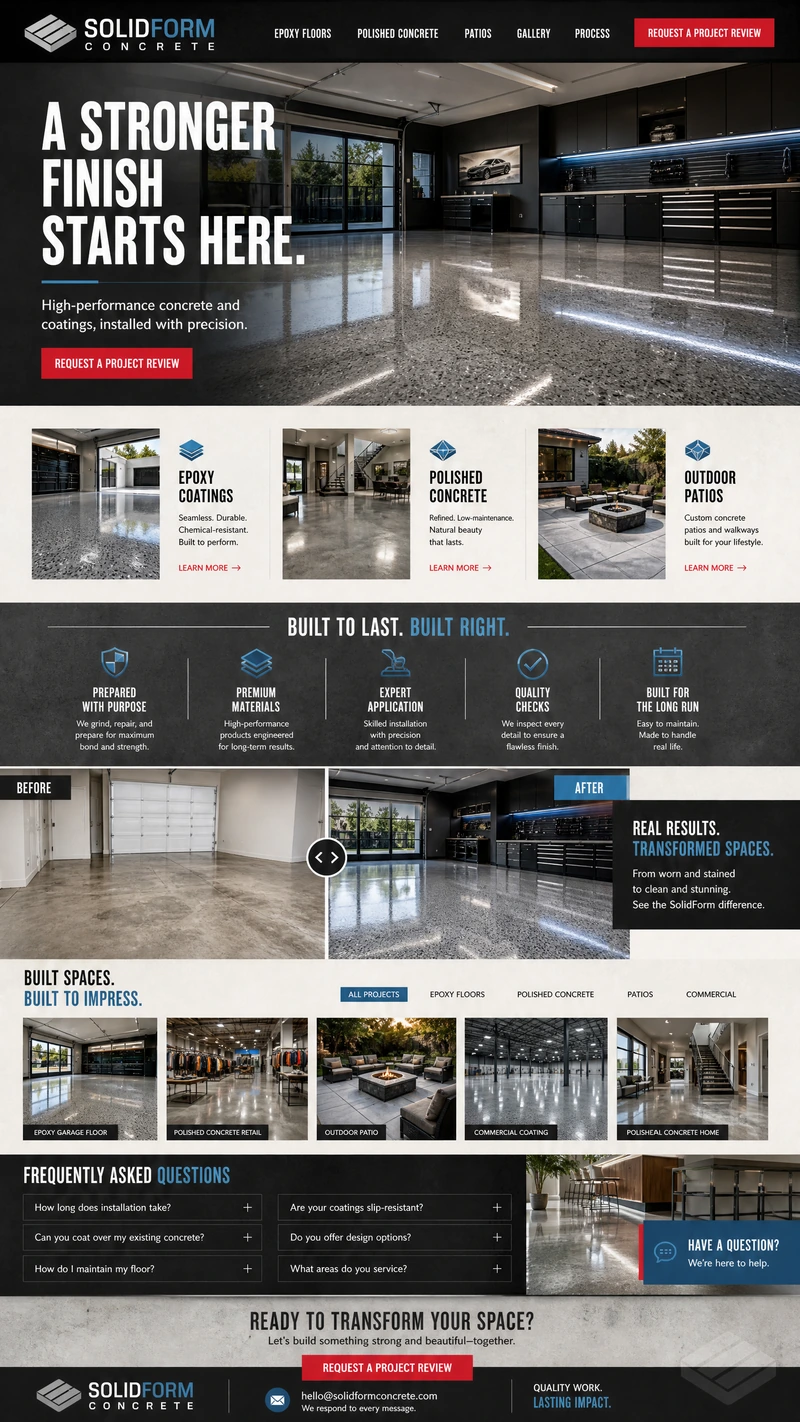
Website concepts from the studio, shown as full pages. Yours would be designed around your own properties, projects and maintenance routes.
Both sides of the business, on one site
Tell us how design and build and maintenance split in your company, and which one should lead.
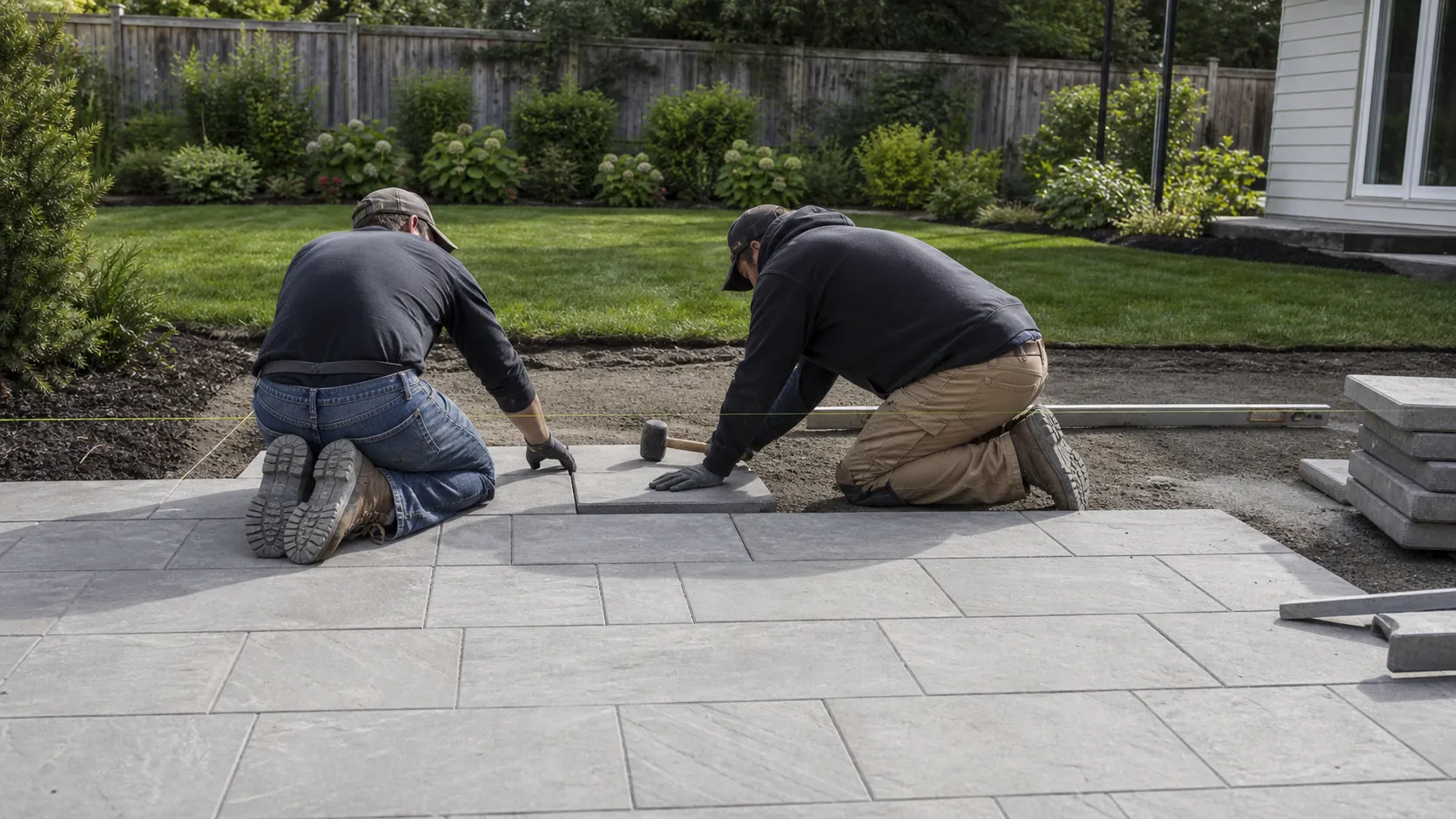
Hardscape mid-install shows the craft. The finished shot alone shows only the result.
Design and build is a project sale that can take weeks to close. Maintenance is a contract somebody can agree to quickly. They are different customers, different money and different urgency, and many landscaping sites run them through the same page.
The result is a services list where a patio installation sits next to weekly mowing, and a visitor who wanted one has to read past the other. It also makes the inquiry wrong for both: a maintenance customer does not want to describe their vision, and a design-build customer will not be served by a form that asks for lawn size.
Seasonality sits on top of this. What you want on the front of the site in March is not what you want there in September, and if the site is hard to edit it will still say March in October.
Not two bullets in one list. Two doors, from the top of the site.
By work type rather than by date. A chronological feed makes your oldest job the last thing anyone sees.
It is a smaller decision, and the form should feel like one: a few fields, done on a phone.
A site that is hard to edit keeps saying spring cleanups in October.
Recognize any of those?
Tell us which ones apply and we will say what we would do about them. No obligation and no sales sequence.
Project photography is what sells the design and build side, and it needs organizing by the kind of work rather than by date.
A homeowner looking for a paver patio does not want to scroll past a long run of planting jobs to find one. Grouping projects by type, so hardscape, plantings and full property transformations each have their own place, means a visitor gets to the relevant evidence in one step.
Seasons are worth thinking about too. A yard photographed in October says something different from the same yard in June, and a portfolio that is all one season reads thin. Where you have shots of a property across a year, that sequence is persuasive because it shows the work maturing.
Patios, walls and walkways, where the material and the finish are what a buyer is comparing.
Beds, turf and full property work, shown so the scale of the job is legible.
Whole-property projects, which carry the largest budgets and deserve the most space.
Three kinds of work with three different commitments, so the site says plainly which is which and what each one involves.
Design may be a paid engagement on its own, or it may be folded into an installation contract. Buyers frequently do not know which, and it is a question they will not ask. Saying it on the site removes a stall.
Maintenance is where clarity pays most. What a visit covers, how often it happens, whether it is a season or a rolling agreement, and what falls outside it: these are the things a customer wants to know before they call.
Want your services explained the way you sell them?
Every project starts from one of five directions. A landscaping site has to carry two businesses at once, design and build on one side and maintenance on the other, and the direction we choose is usually the one that can hold that split without the page looking like two websites stapled together.
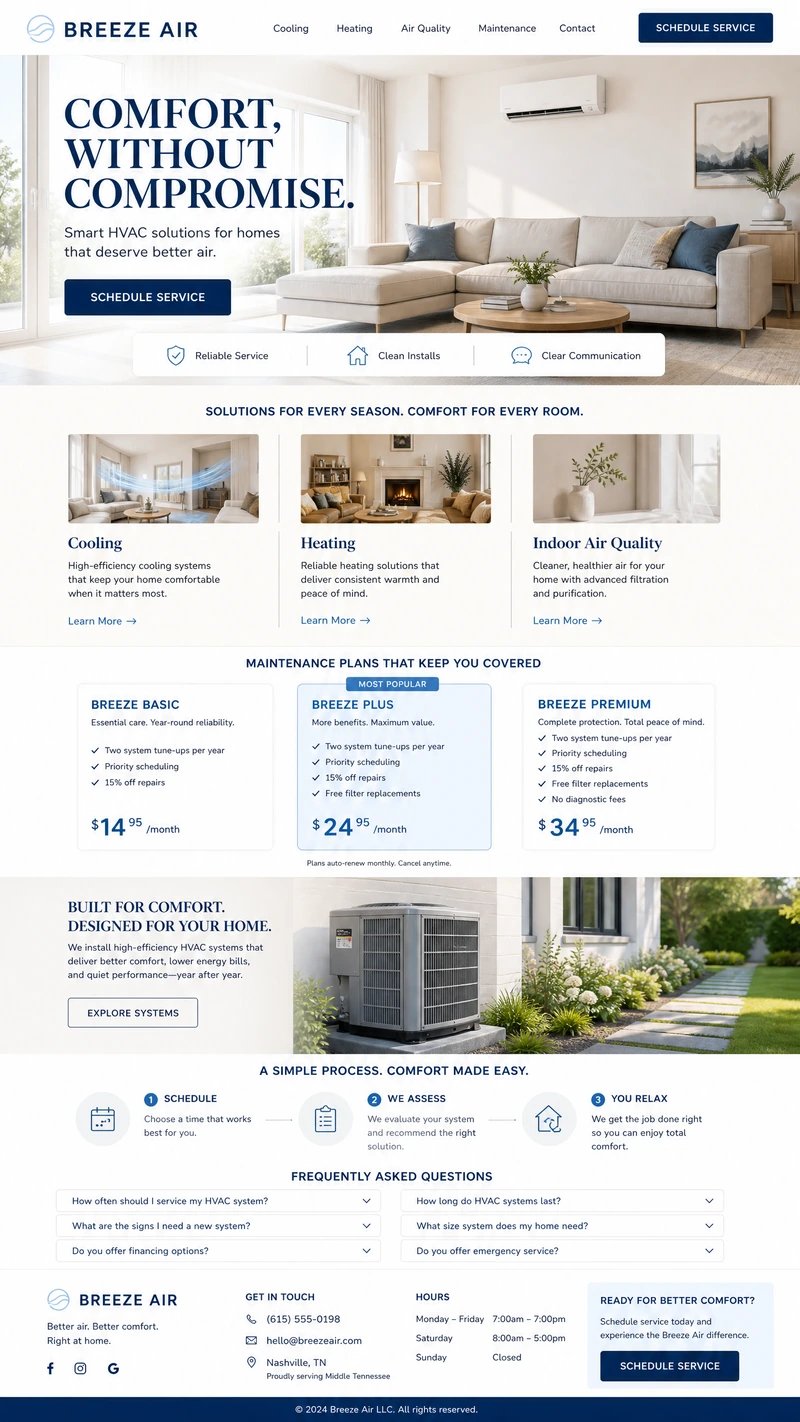
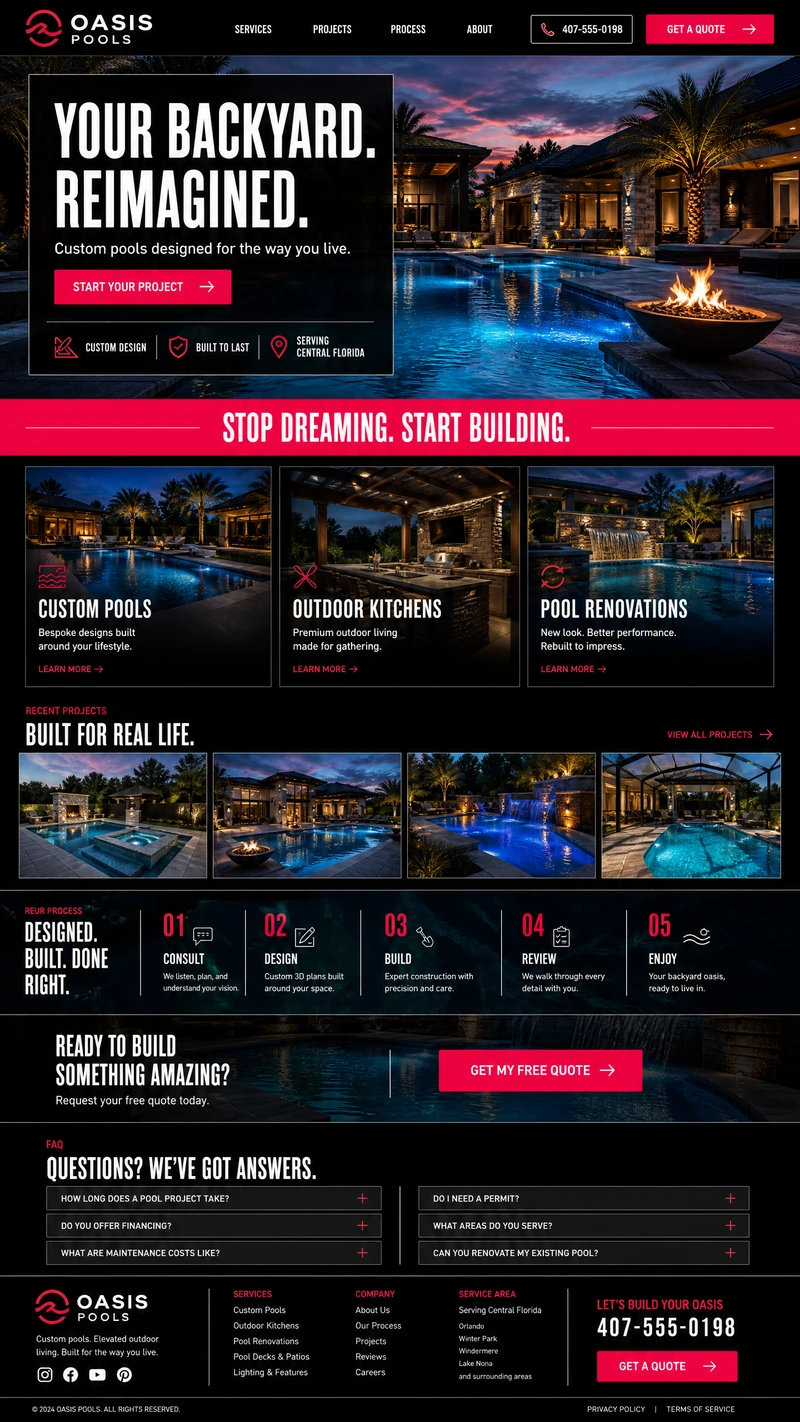
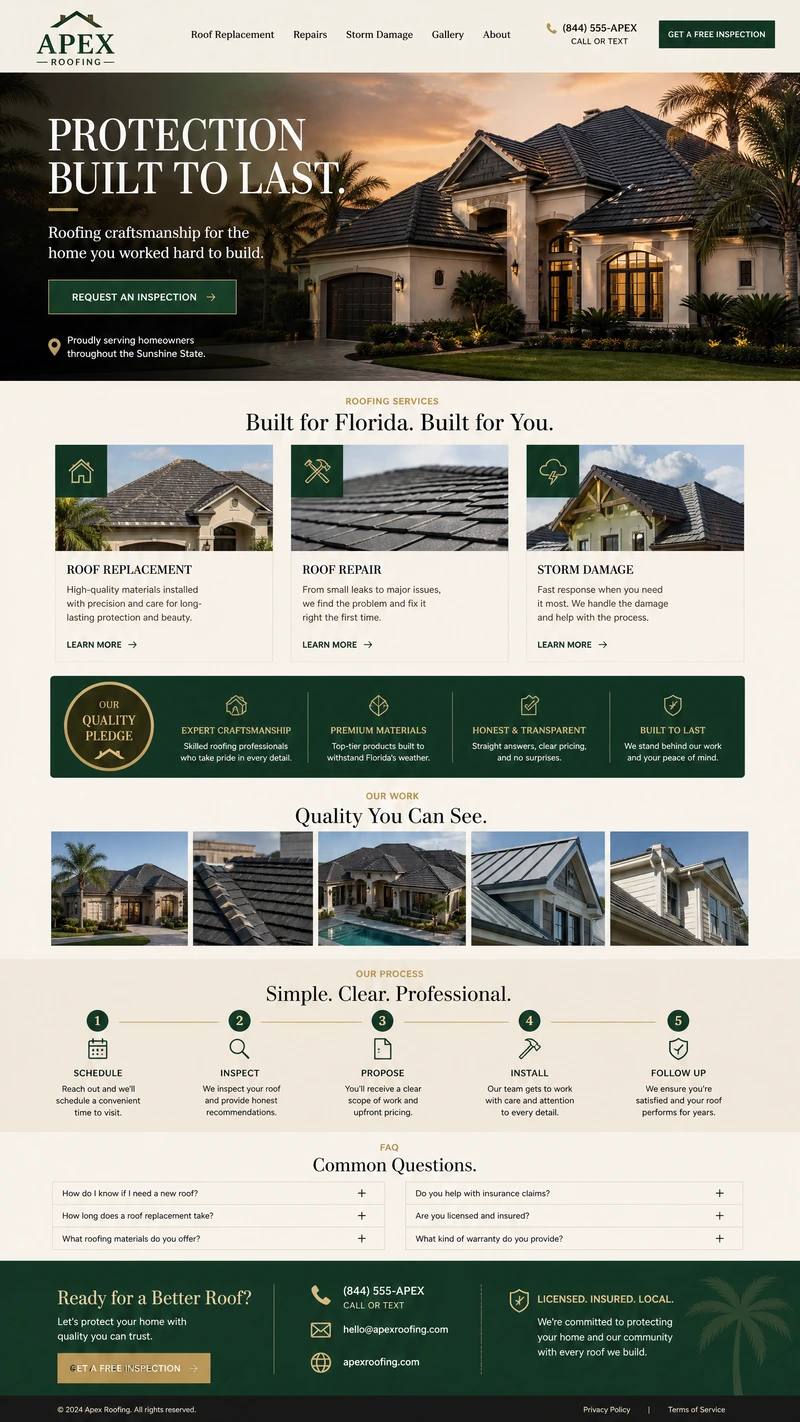
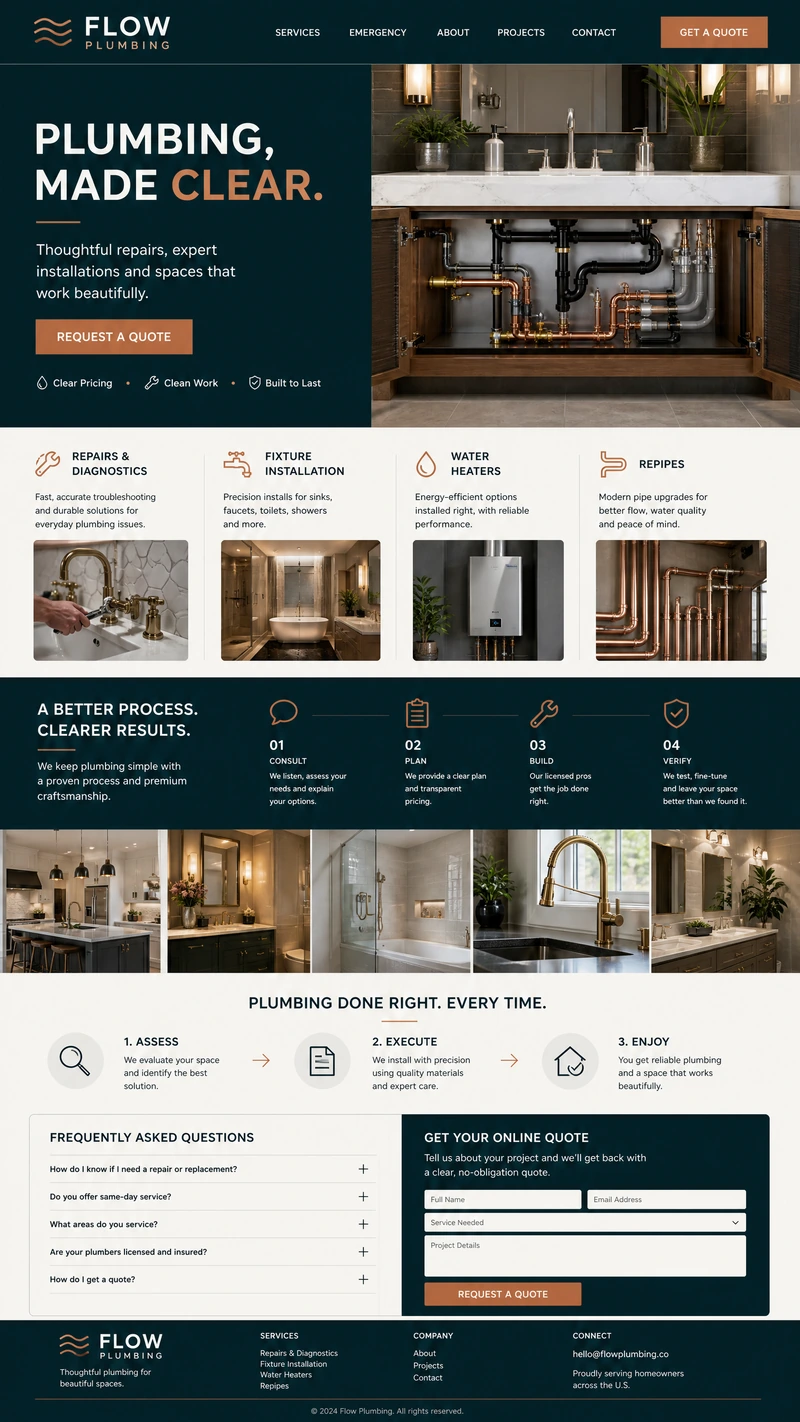
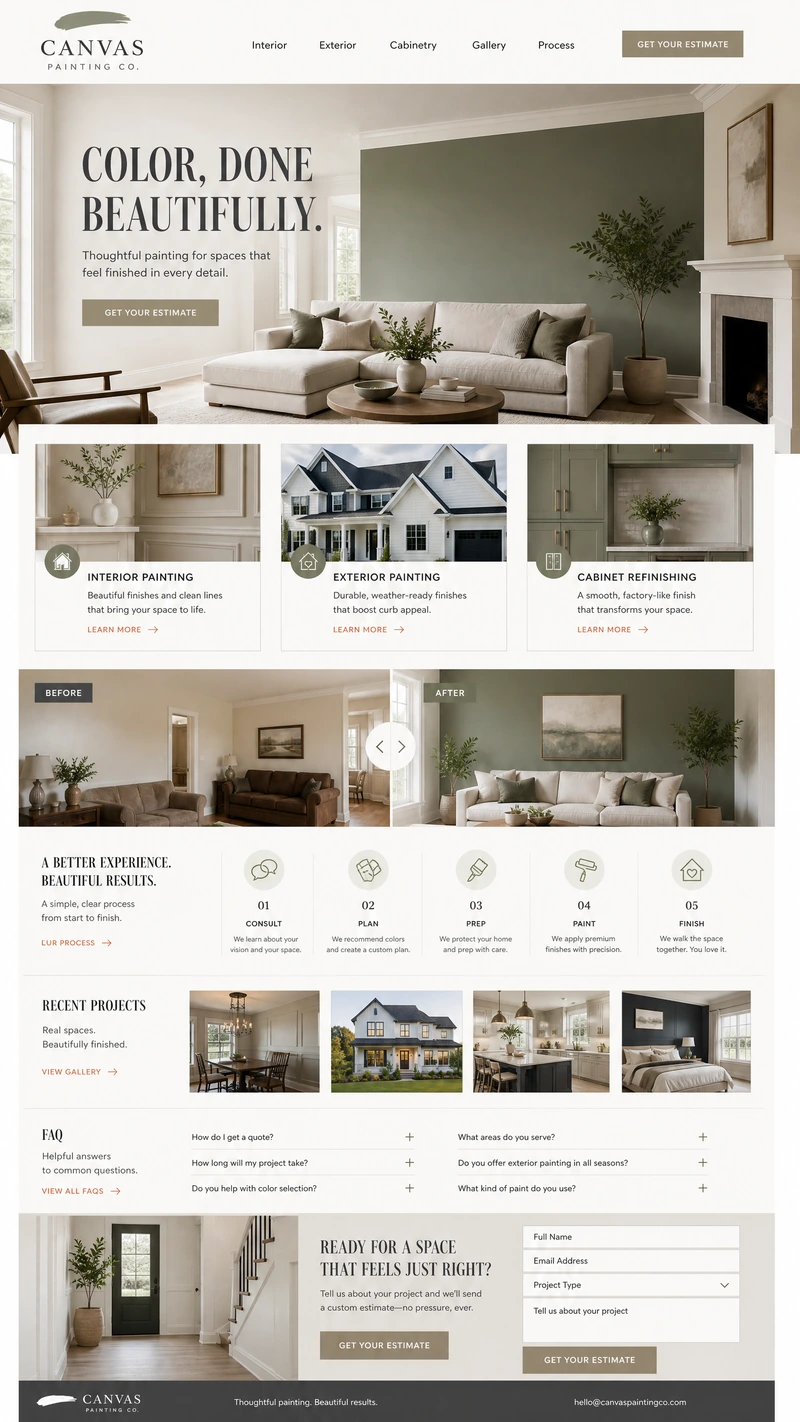
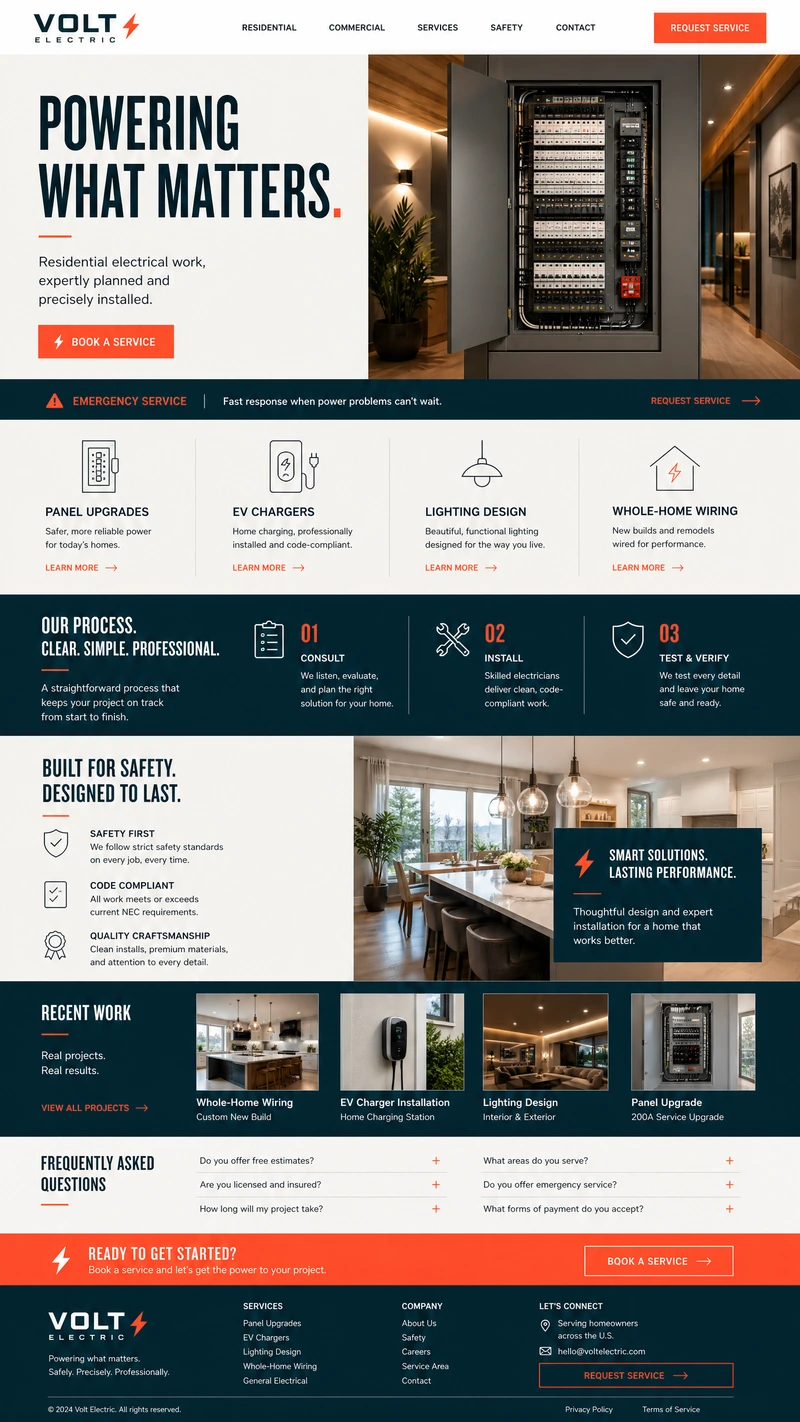
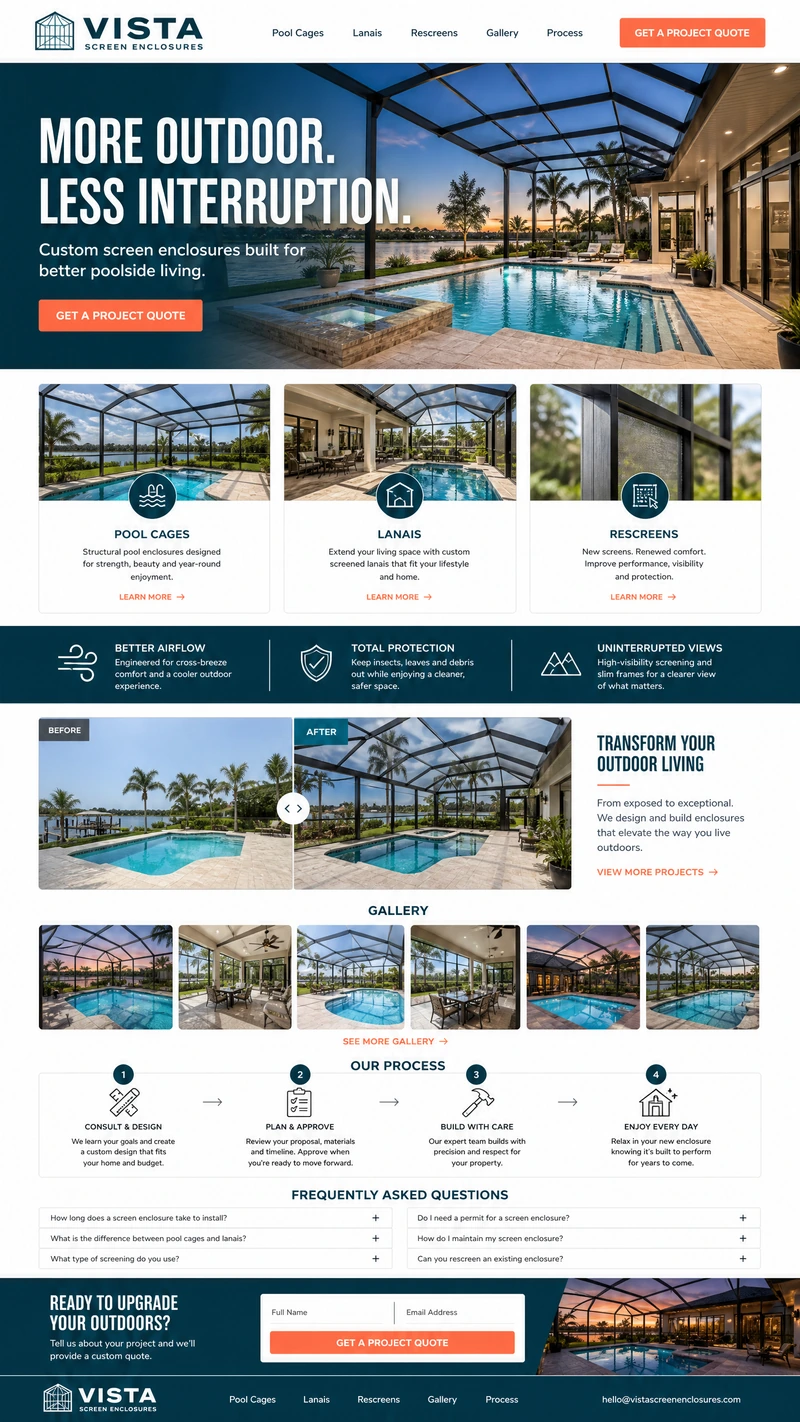
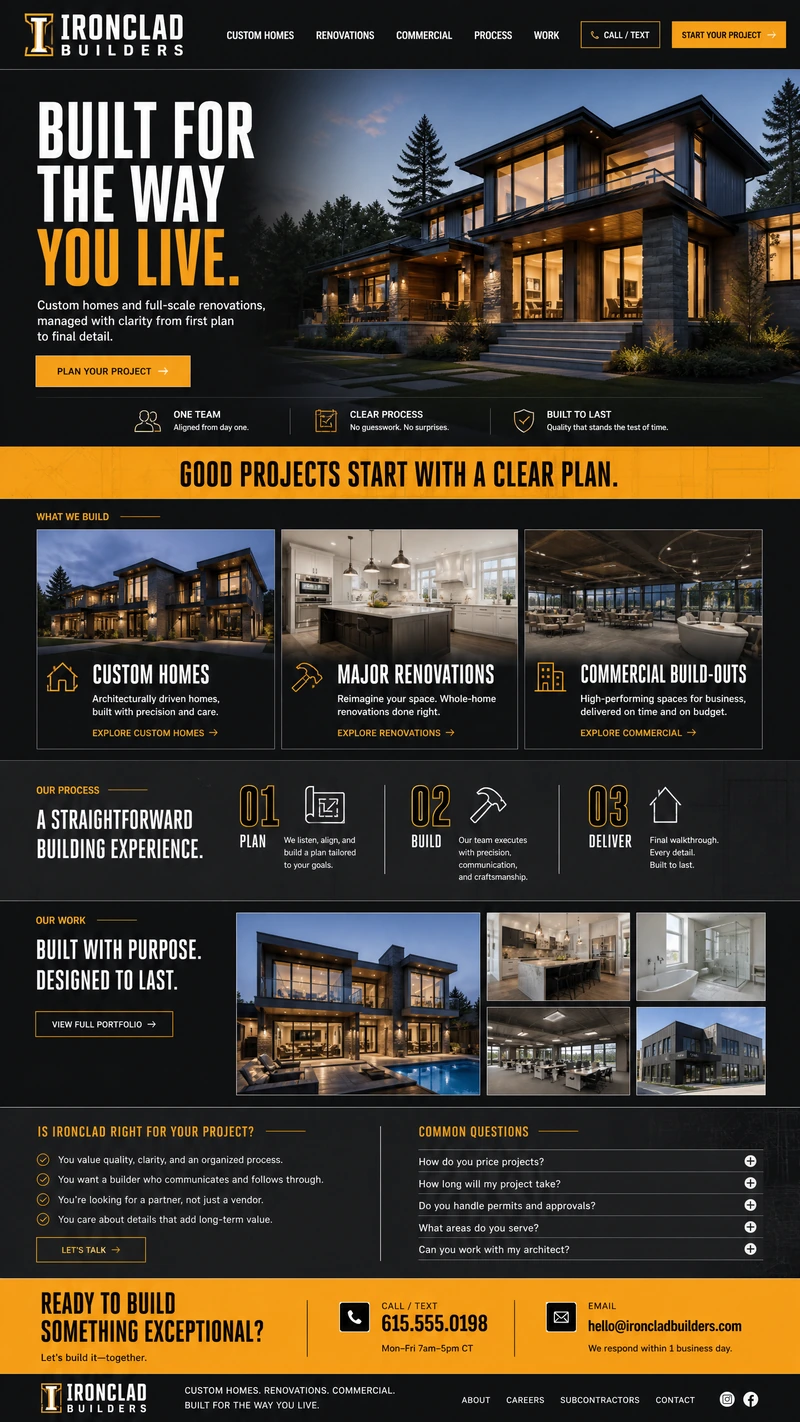
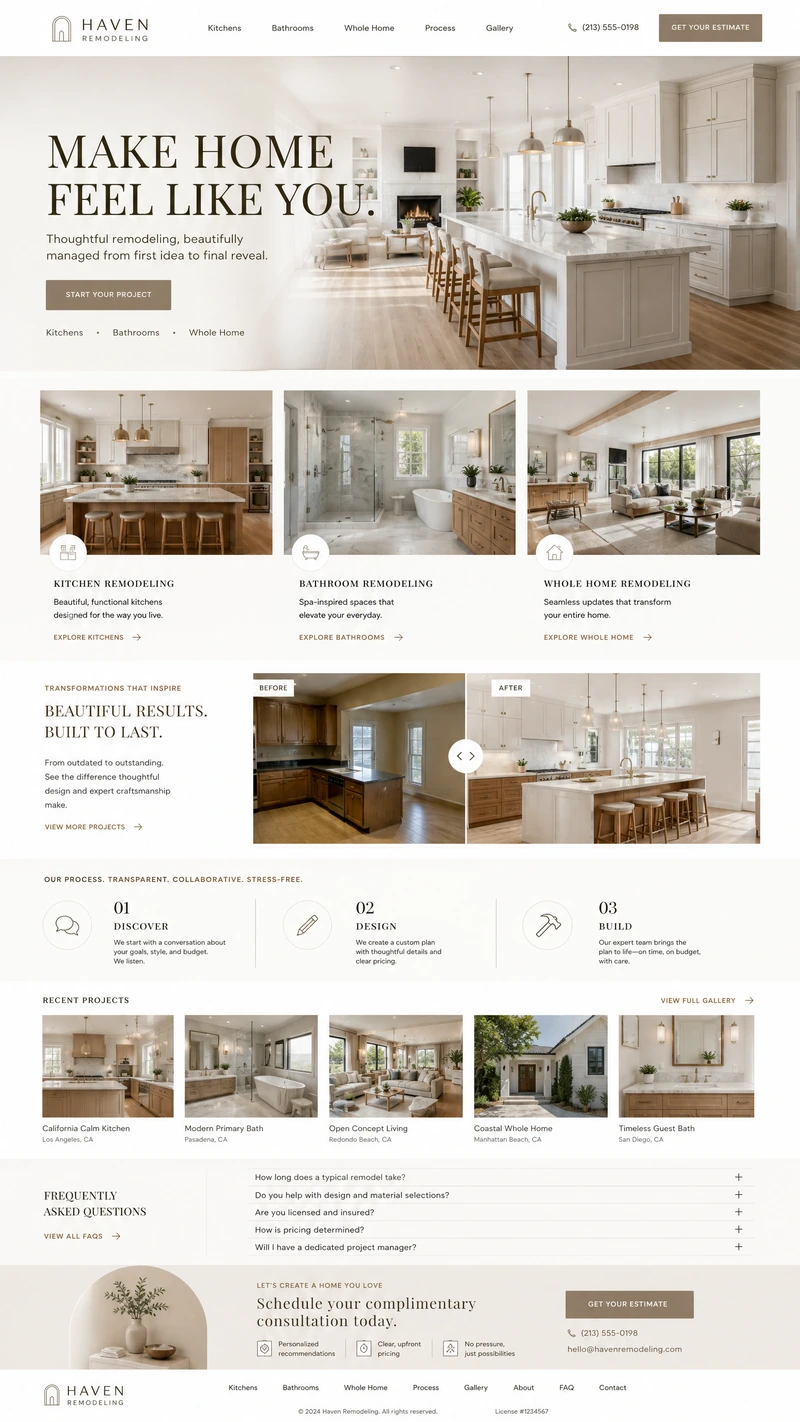
Mand Digital Website Design Collection. Website concepts designed by our studio across five directions. Your site is designed around your own business.
The two sides of the business need two different routes in, because a design consultation and a maintenance quote are not the same conversation.
A design and build inquiry benefits from detail: the property, roughly what they are imagining, a budget range and when they want it done. A maintenance inquiry needs almost none of that. It needs the address, the property size and how often they want you there.
Running both through one generic contact form means the maintenance customer over-explains and the project customer under-explains. Splitting the request, or at least branching it on the first question, makes the inquiries that reach you more useful.
Those inquiry forms are on the site we build for you. To reach us, use the form at the bottom of this page.
People look for a landscaper or a lawn care company in their own town, so the site has to say clearly which towns you cover and which services you run in each.
Landscaping SEO starts with pages that match what people search: design and build, hardscaping, lawn care and maintenance, each described properly, with your service area written out in words rather than shown only on a map. Lawn care website design in particular depends on that, because a maintenance customer filters by street before anything else. The technical fundamentals are part of every site we build.
Seasonal campaigns need landing pages that match them: spring cleanups, a patio offer, a maintenance sign-up season. Ongoing SEO and campaign management are separate services from the website, quoted on their own, and they work alongside any marketing company you already use. We describe the work and never promise rankings or a number of calls.
Every proposal lists exactly what your project includes. For a landscaping company that runs both design and build and maintenance, that usually means the following.
Domain and hosting are bought and owned by you, in your name, and are paid to those providers rather than to us.
Every landscaping website is quoted on its own, once we understand the business. You receive a written proposal with the scope, timeline and price before any work starts.
What shapes the quote is mostly structure: whether design and build and maintenance each need their own pages, how many kinds of project work you want to show, and whether commercial grounds or seasonal services need space of their own. There is no mandatory monthly fee to us for the website, and the domain and hosting stay in your name.
Landscaping is seasonal, so timing matters. Building over the winter for a spring launch gives you a site that is ready when the inquiries start rather than one you are reviewing while the crews are out.
You tell us the services you sell, the area you cover and what you want the site to do. This is a form, not a meeting, and it is where the structure gets decided.
A written proposal with the pages, features, timeline and price. Nothing starts until you approve it.
Photographs of your own work, your license and insurance details, and anything that has to appear on the site.
We draft the page plan and write the words from your briefing. You see both before anything is designed.
The complete first draft, on the timeline set in your proposal.
You review the whole site and send your notes together. The number of revision rounds is set in your proposal.
You approve the final version and we deploy to your hosting on your domain.
That is the whole process.
If it fits, the first step is a quote request. If you would rather ask something first, the form is a few lines below.
If it is a meaningful share of your revenue, yes.
It is a different buyer with a different question, and burying it under design and build costs you the recurring side. Where maintenance is incidental to your business we structure it differently.
You can, and for maintenance it often helps.
A starting monthly figure or a per-visit range filters out properties you do not want. We publish figures you confirm; we do not set them.
They can request one. Taking payment or running a subscription through the site is not part of the standard build.
Recurring billing is custom work with ongoing obligations, and it would be scoped and quoted separately.
It gets a proper section or a page of its own within the site, but not a separate site or its own URL structure. Which of the two is set in your proposal.
For most landscaping companies hardscape is part of the design and build offer, and presenting it that way is both truer and better for search.
Yes, as a seasonal service.
It is worth being specific about what triggers a visit and what your commitments are, because those are the details snow customers ask about.
Yes, if you run that side.
Commercial property managers read for different things: response times, insurance, crew size and account handling. That usually warrants its own page, and the proposal will include it.
It gives SEO something to work with: a page per service, your service area in words and technical fundamentals done properly.
Ongoing landscaping SEO is a separate service, scoped and quoted on its own. Nobody can honestly promise where a site will rank.
Yes, as a separate digital advertising service, with landing pages built for each campaign.
A spring cleanup ad should land on a page about spring cleanups. We plan the campaigns with you and never guarantee a cost per lead.
How your business splits between projects and maintenance, the towns you cover, the photography you have and what your current site gets wrong.
The form at the bottom of this page is enough to start the conversation.
A site planned around how your business actually splits: design and build, maintenance and your project work, each with its own route and an inquiry form that reaches your inbox.
Quoted for your business
A proposal built around your scope
This is the website proposal. SEO and advertising are separate services, quoted on their own.
Your website, your domain, your hosting. No mandatory monthly fee to us.
Also thinking about SEO or advertising for your landscaping business?
Talk to our teamHow the design and build side and the maintenance side split, and which one you want the site to lead with. We will come back with a structure.