
Can a visitor find a project that looks like their yard?
Range matters more than volume. A gallery made only of top-of-range custom builds can tell a homeowner with an ordinary lot that you are out of reach.
Websites built around your businessSEO & digital advertisingStrategy with a human touch
Pool builder website design
Homeowners decide on a pool builder by looking at pools you have already finished. We build the site around that: real project photography, a clear picture of how a build runs, and a quote form that asks for what you need before you can price anything.
Scoped and quoted for your pool business, and the site goes on your own domain and hosting.
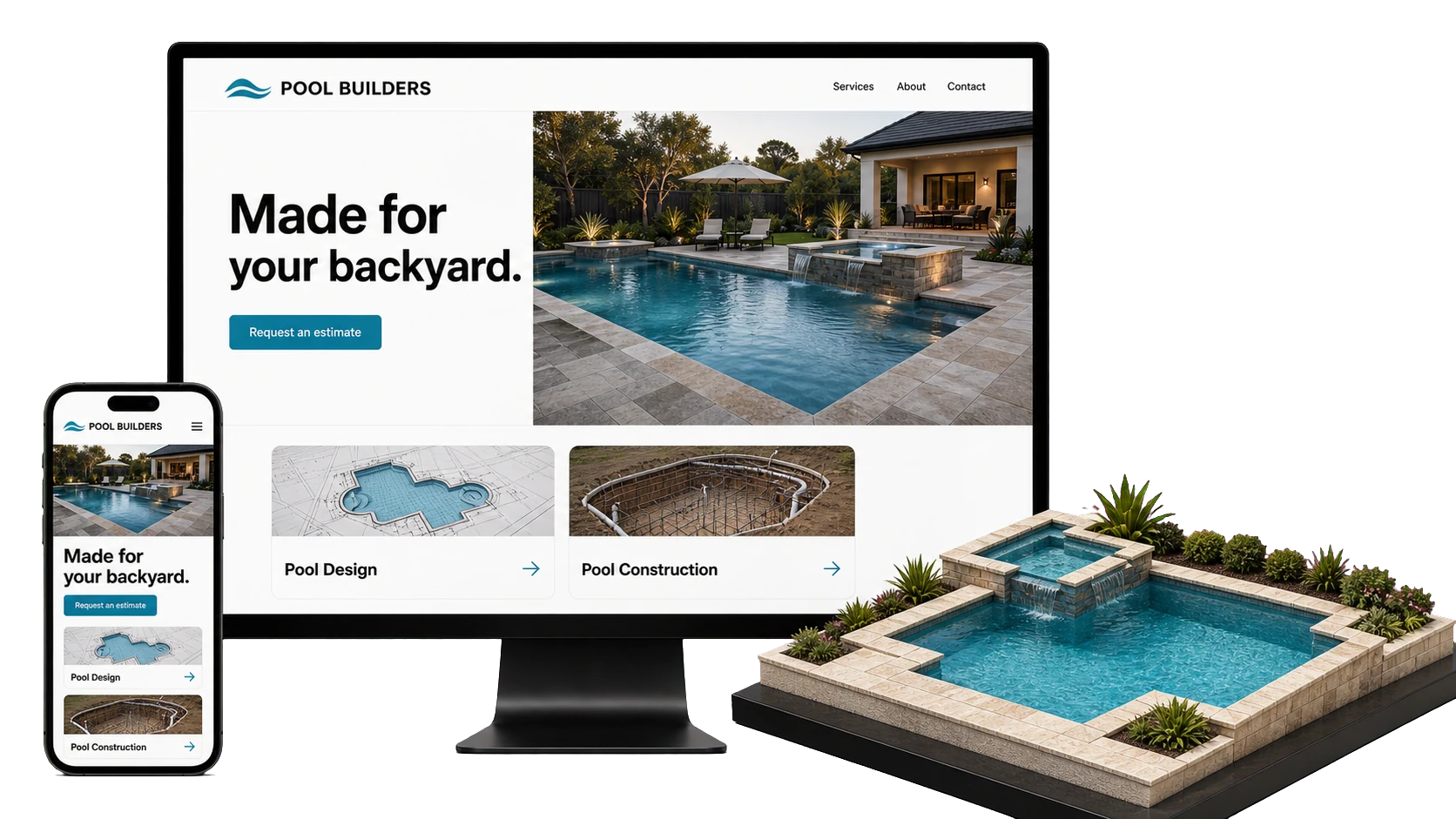
This is a website for a company that designs and builds in-ground pools, not a general contractor template with a pool photo on it.
A pool is one of the largest things a homeowner will buy for their property, and few sign after a single visit. Most browse, save photos, compare a few builders, and arrive at your site already carrying a picture of what they want. The site has to meet them there.
That shapes what belongs on it. Your finished work carries most of the weight. The design and build process comes next, because a homeowner who has never done this has no idea what the months between deposit and first swim actually look like. Everything else supports those two.
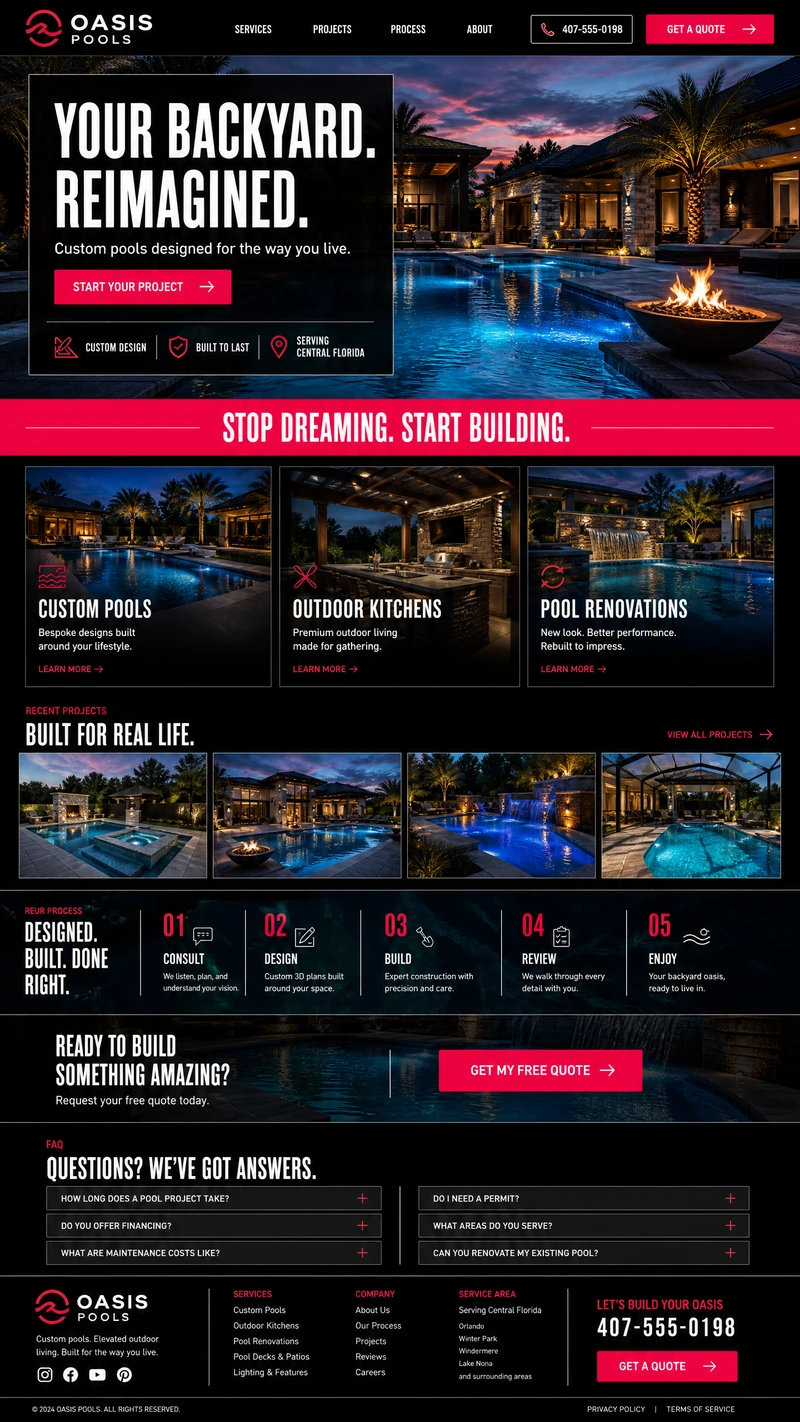
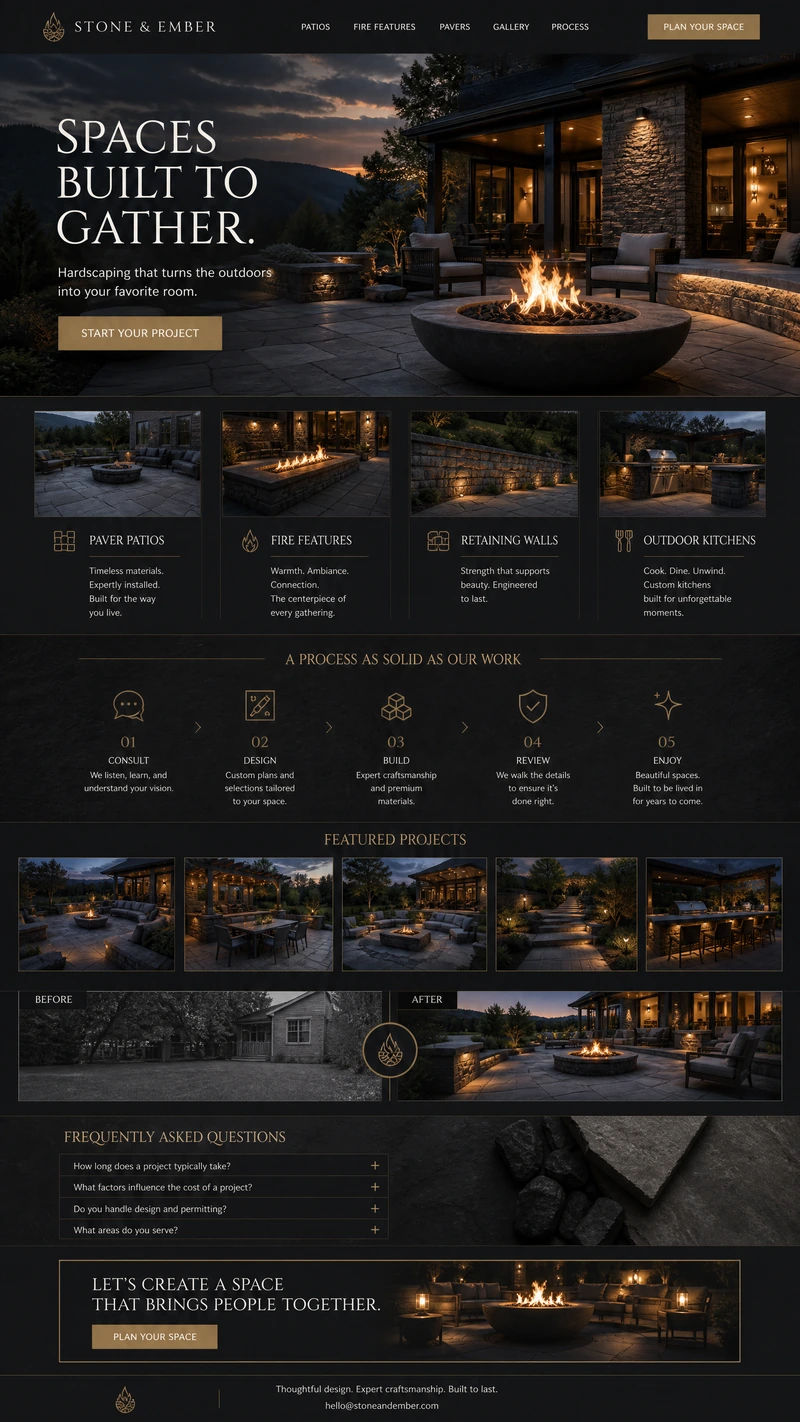
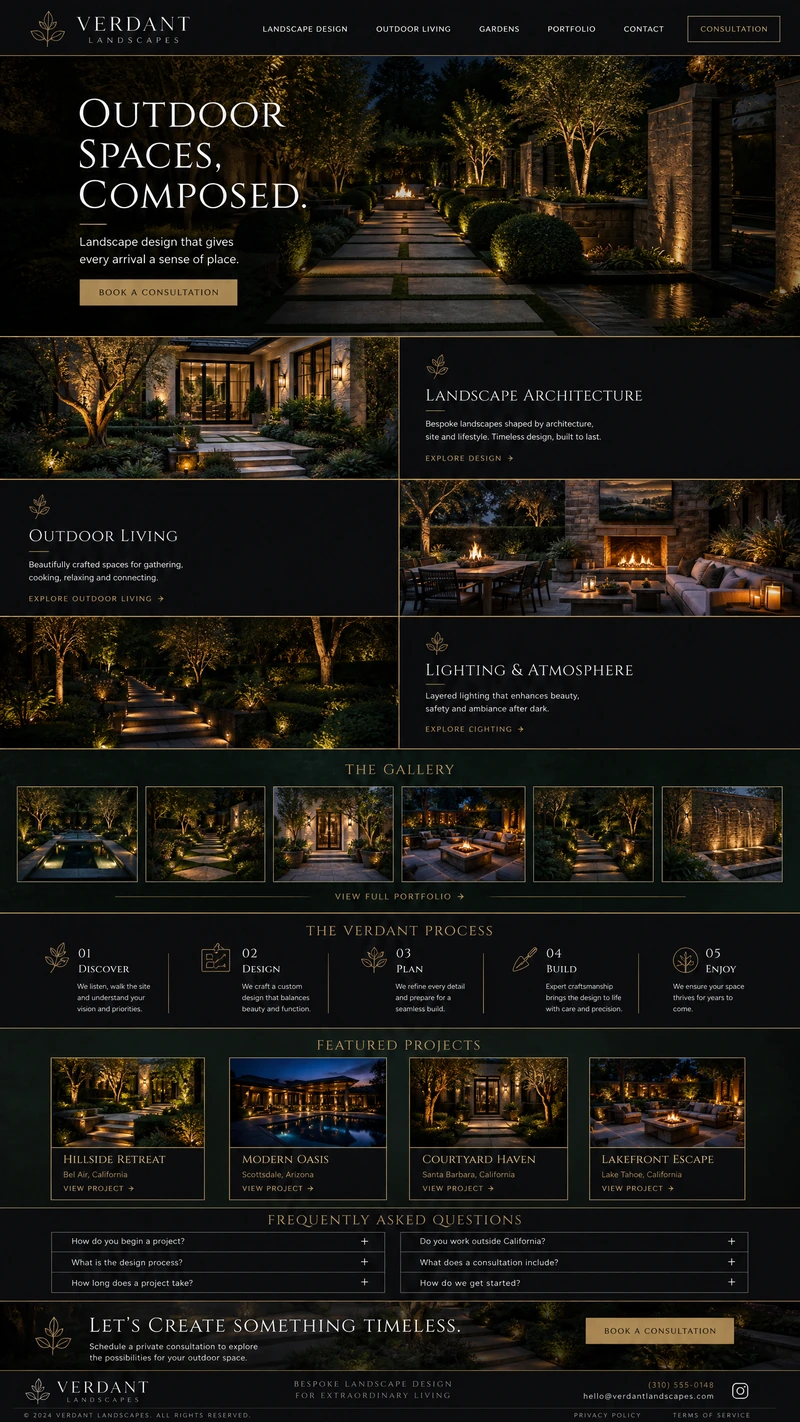
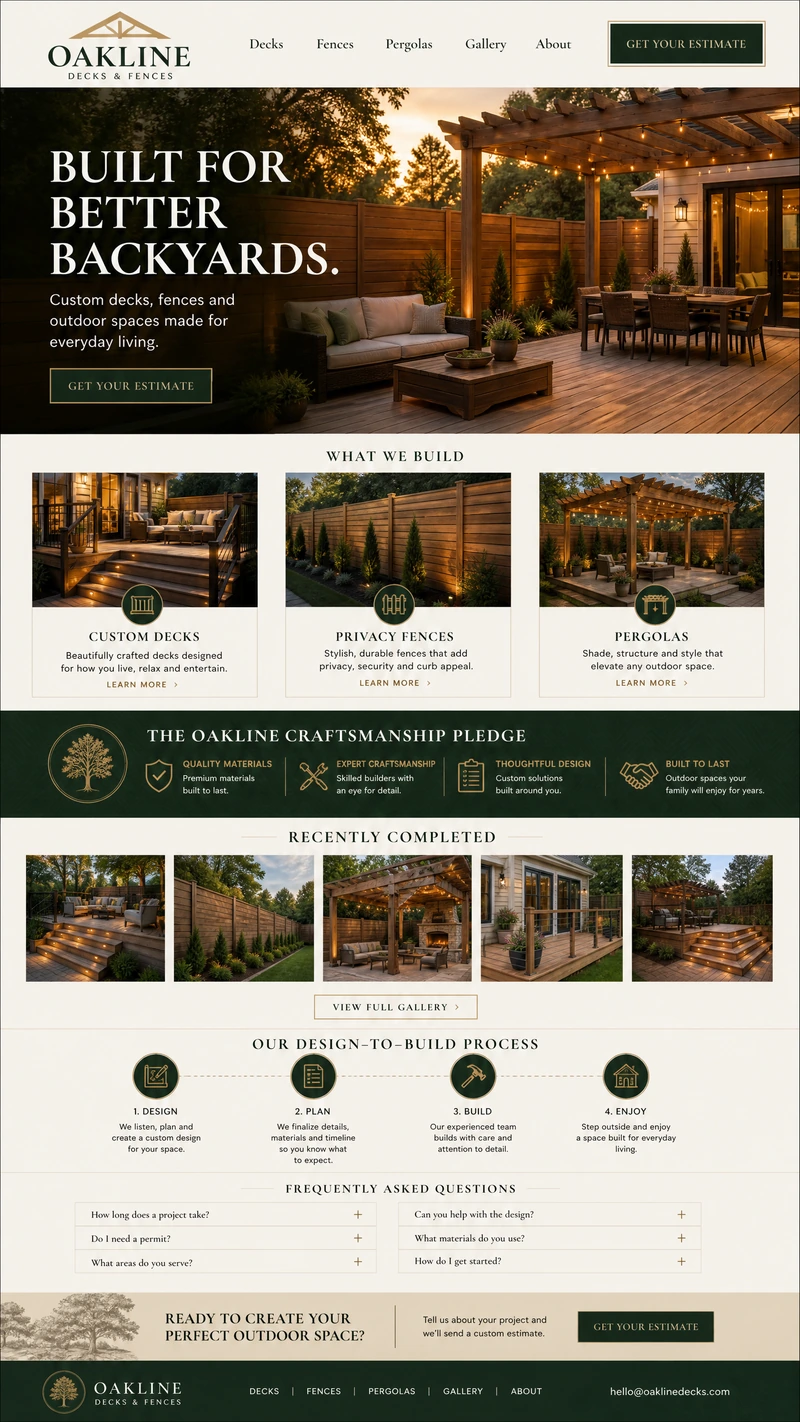
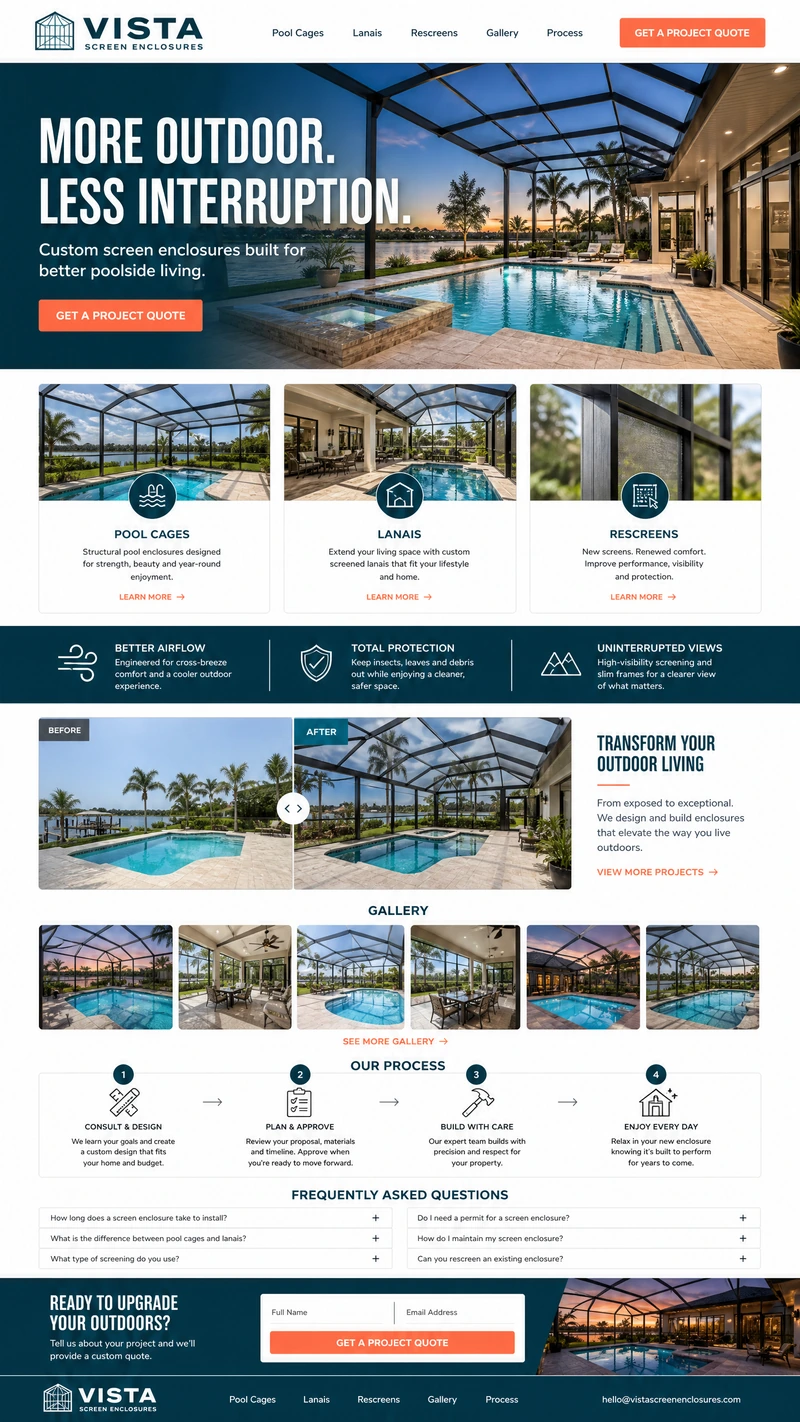
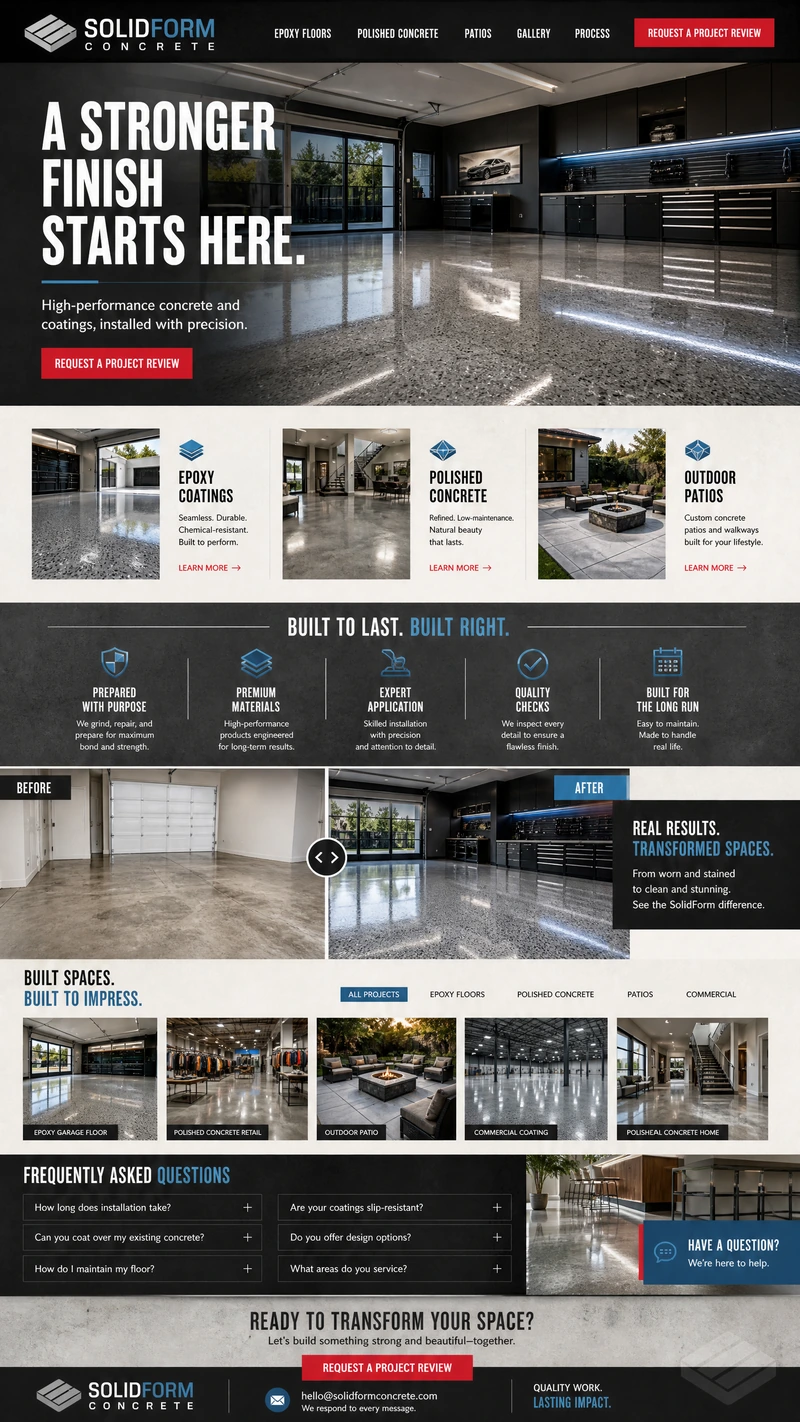
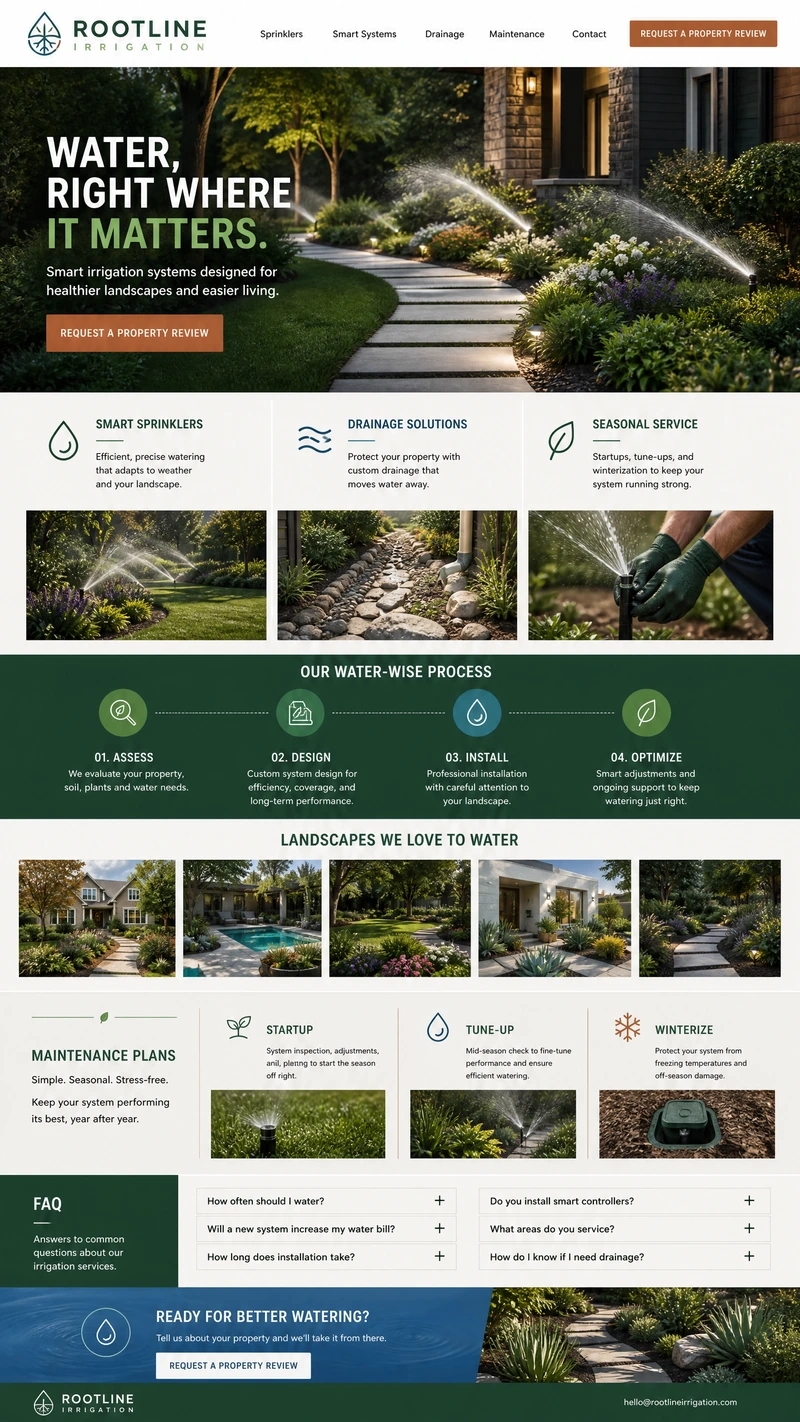
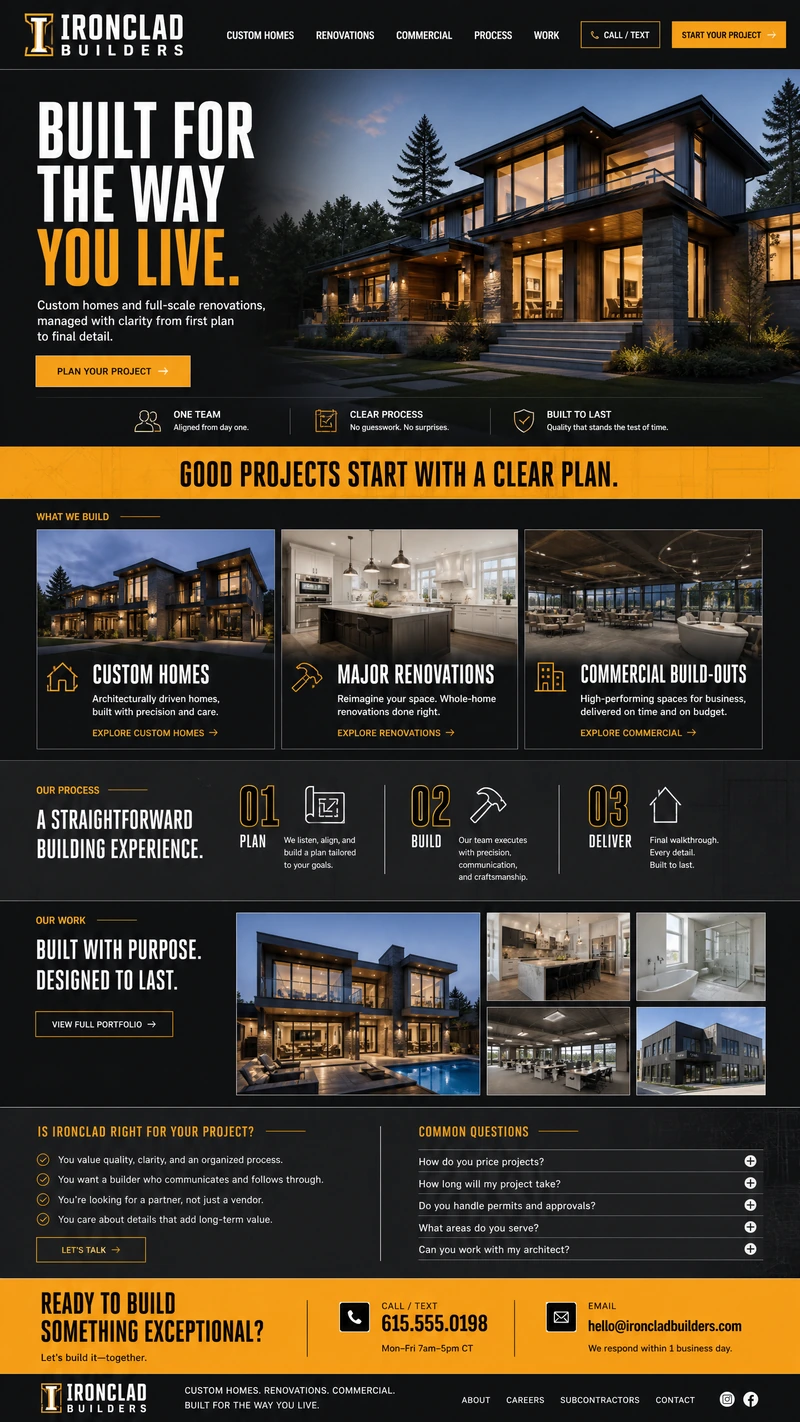
Website concepts from the studio, shown as full pages. Yours would be designed around your own pools and projects.
A website built around your finished pools
Tell us how you build, where you work and what the site needs to show. We will come back with questions or a proposal.
A pool is rarely commissioned on a first visit. Homeowners look, leave, come back later with a partner, and somewhere in there decide which builders to call.
That makes the gallery the site. It is doing the matching: somebody with a particular yard, a particular budget and a particular idea is looking for evidence that you have built something close to it. If everything you show is at the top of your range, a homeowner with a smaller project may quietly conclude you are not for them.
The second thing that decides it is how easy you make the next step from a project they liked. The moment after somebody finds a pool close to what they want is when their interest is highest, and on many sites the only way forward from there is a scroll back to the menu.
Range matters more than volume. A gallery made only of top-of-range custom builds can tell a homeowner with an ordinary lot that you are out of reach.
You do not have to publish prices. A sense of the kind of projects you take on saves both sides from a long conversation that was never going to fit.
A short line under each project, worded to carry the context forward, puts the next step where the interest is.
Galleries are often browsed on a phone after work. Images sized for the screen keep them quick to load and easy to scroll.
Recognize any of those?
Tell us which ones apply and we will say what we would do about them. No obligation and no sales sequence.
The gallery is the most important page on a pool builder's website, so it gets built as a real section rather than a strip of thumbnails at the bottom of the home page.
We set it up so each project can stand on its own: a set of photos, the pool type, the features that went into it, and enough of a caption that a visitor understands what they are looking at. A homeowner comparing a freeform pool with a spa against a straight-line lap pool is not browsing decoration. They are trying to find the one that matches their yard.
You supply the photography. It is the one thing nobody can build for you, and it is worth doing properly: a smaller set of completed projects shot in good light usually serves a gallery better than a large set of quick snapshots.
Pools, spas and outdoor living can be presented as separate groups instead of one long scroll, so someone looking for a spa is not scrolling past thirty pool photos to find one.
A lot of this browsing happens on a phone. Images are sized and loaded so the gallery stays usable on a mobile connection.
A project page that ends with no way to ask about something similar wastes the interest it just created. Each one leads back to your quote request.
We do not supply stock pool photography and we do not present anyone else's projects as yours. If you are still building a photo library, we will design the gallery to look right with the projects you do have.
A page that explains how a pool actually gets built removes a common source of hesitation: not knowing what happens after they say yes.
Most buyers have no reference for this. They do not know that design and permitting come before anything is dug, that excavation and steel and shotcrete and plaster are separate stages with gaps between them, or that weather and inspections move dates. When your site lays that out in your own words, the first conversation starts further along.
It also sets expectations you will be held to later, which is worth more than it sounds. A homeowner who has read your timeline before signing comes to the project with expectations you have already set.
Want your build process explained on your own site?
Tell us how your projects run and we will plan the page around it.
Sixteen concepts, five directions. A pool builder's site is the one where the direction has to get out of the way: the water is the argument, and the design's job is to give it room and keep the inquiry within reach of every project.
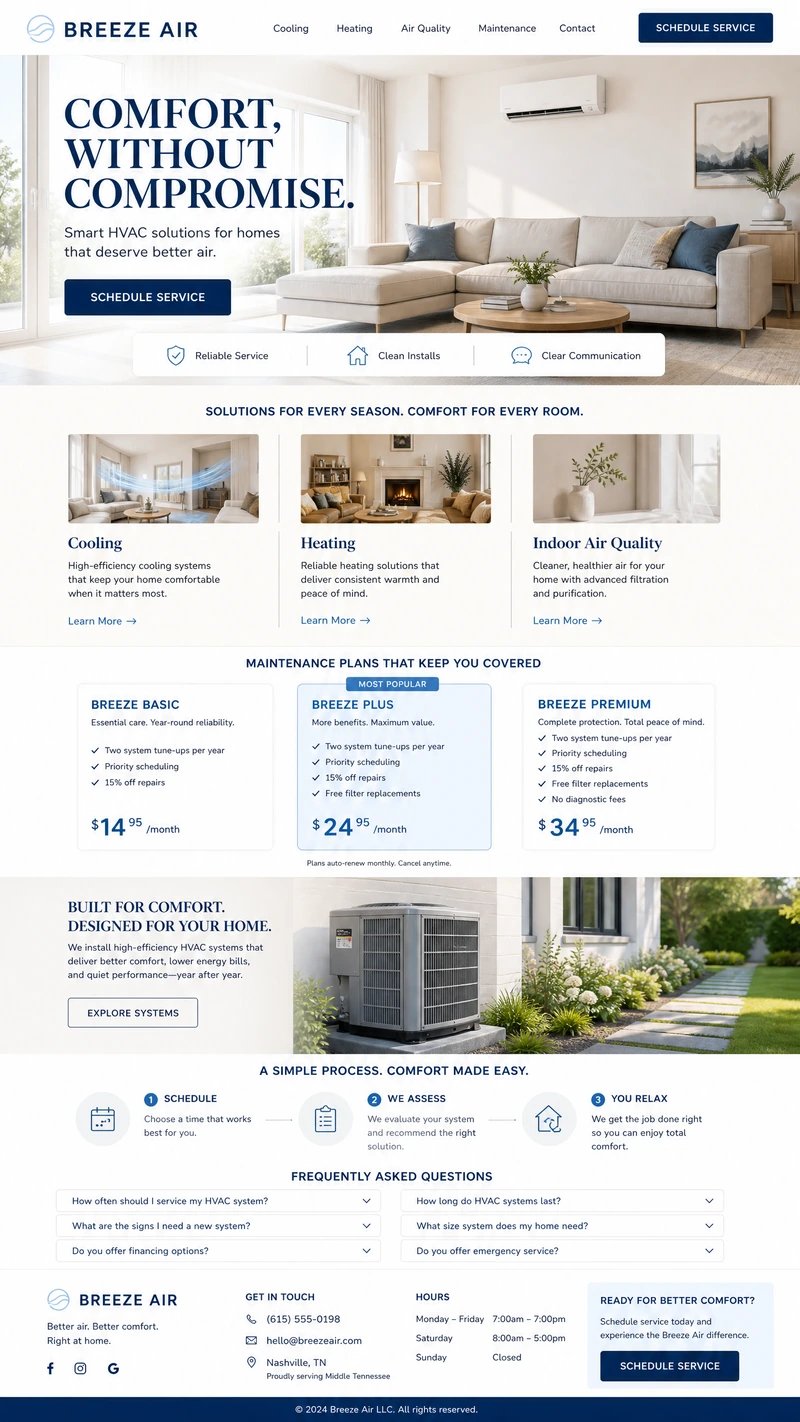
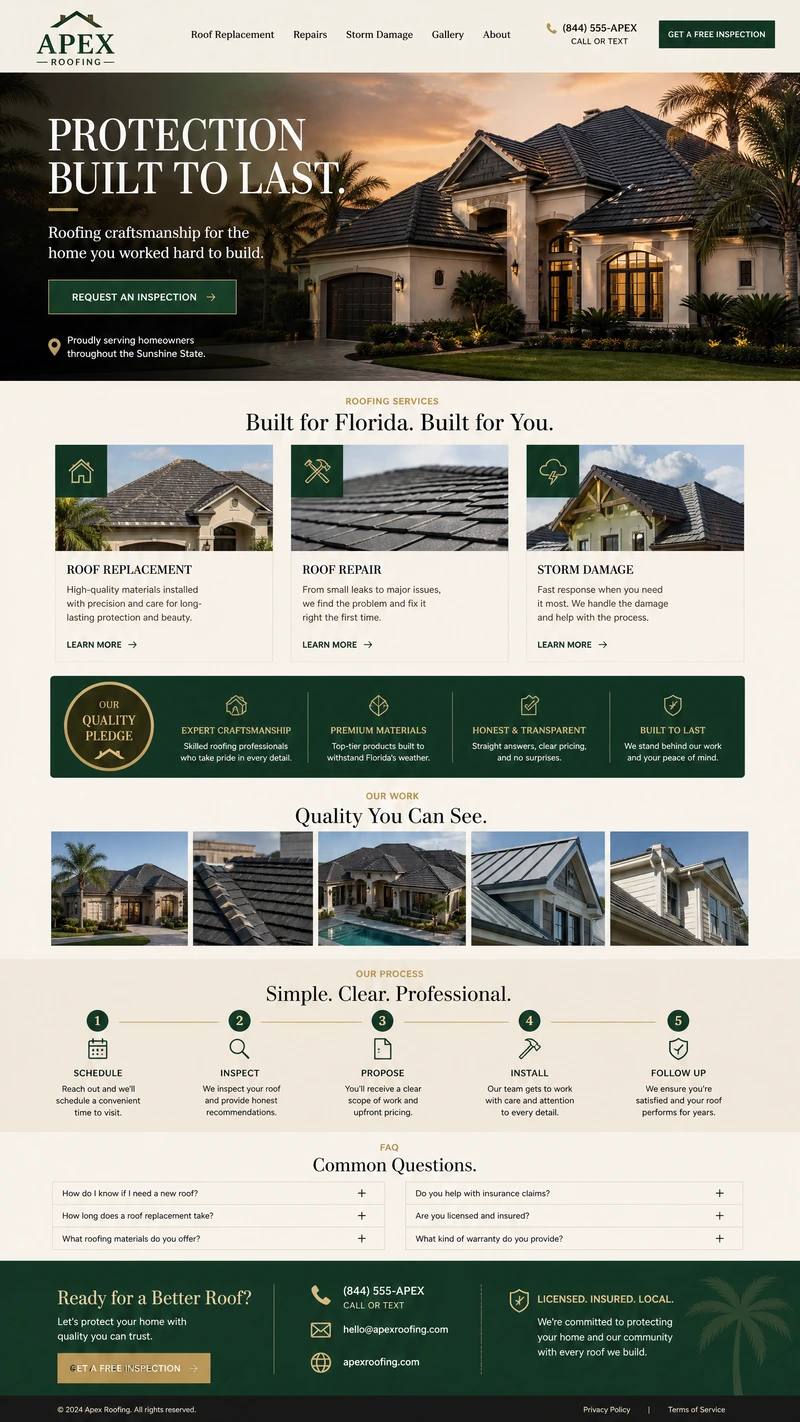
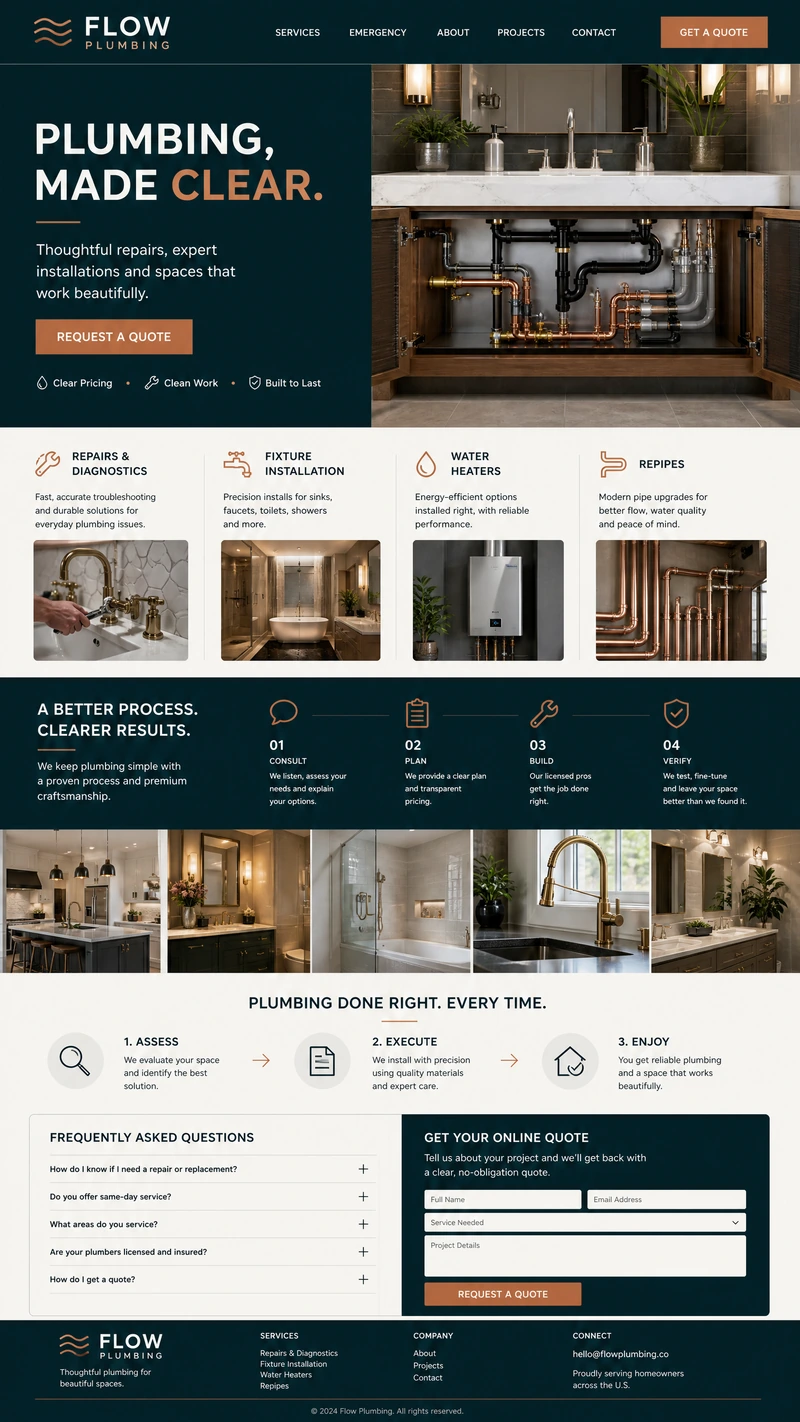
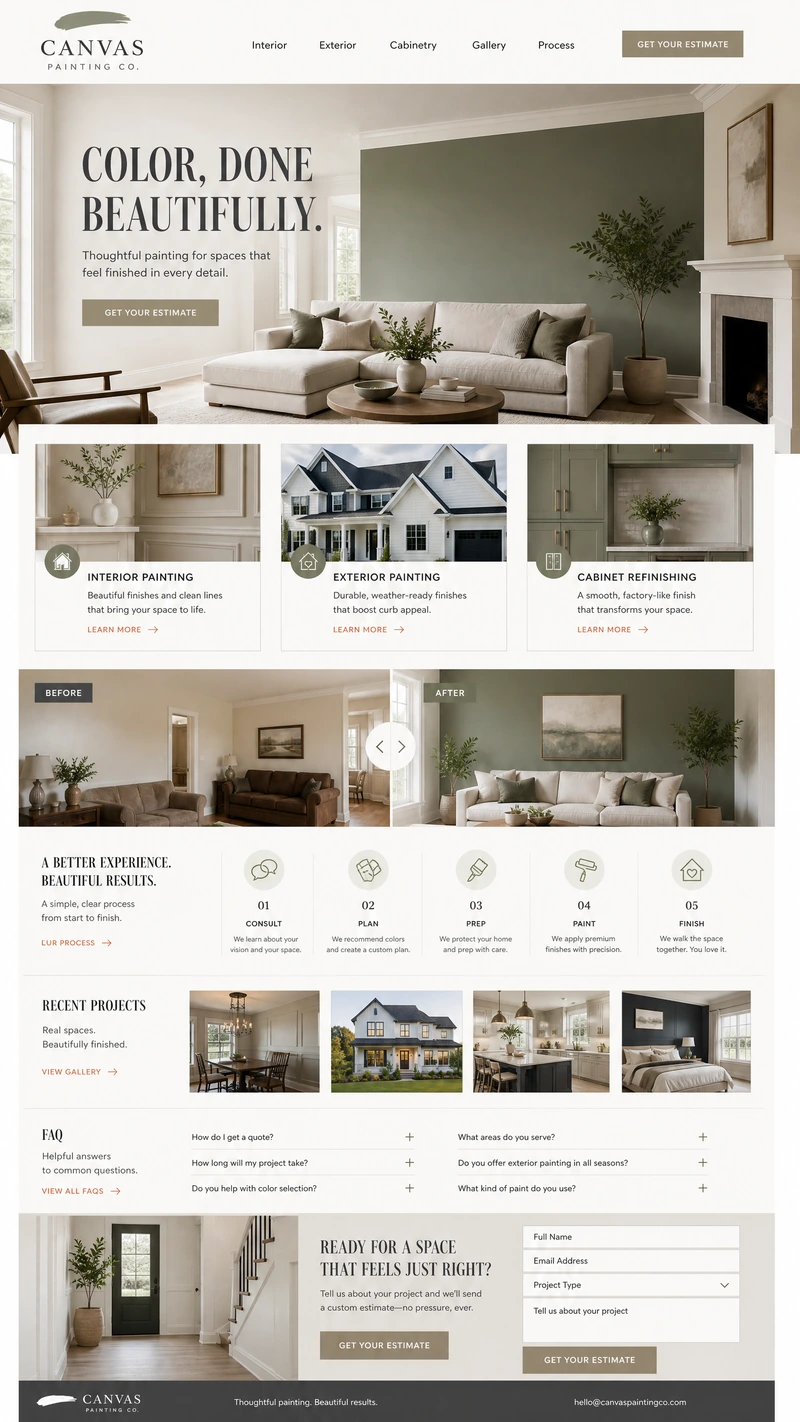
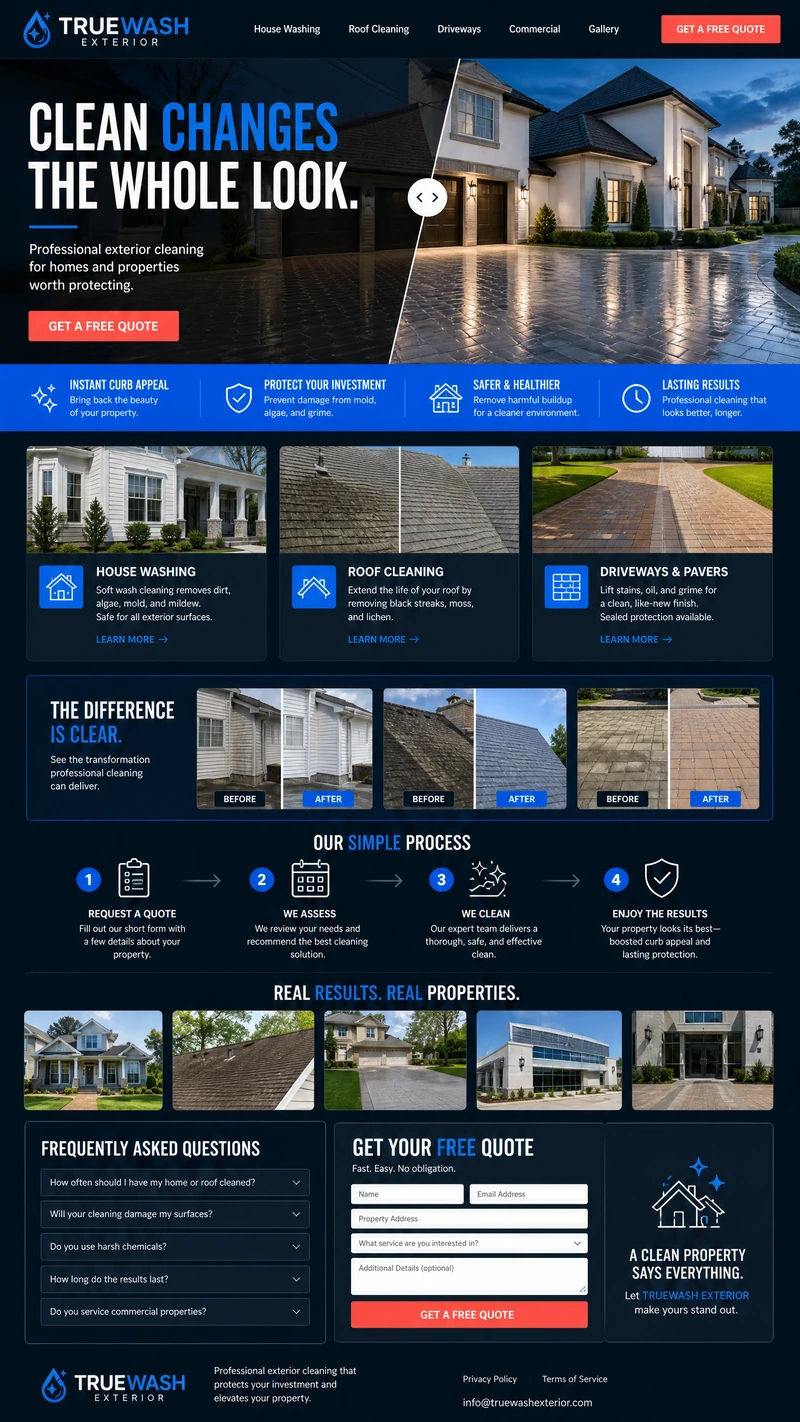
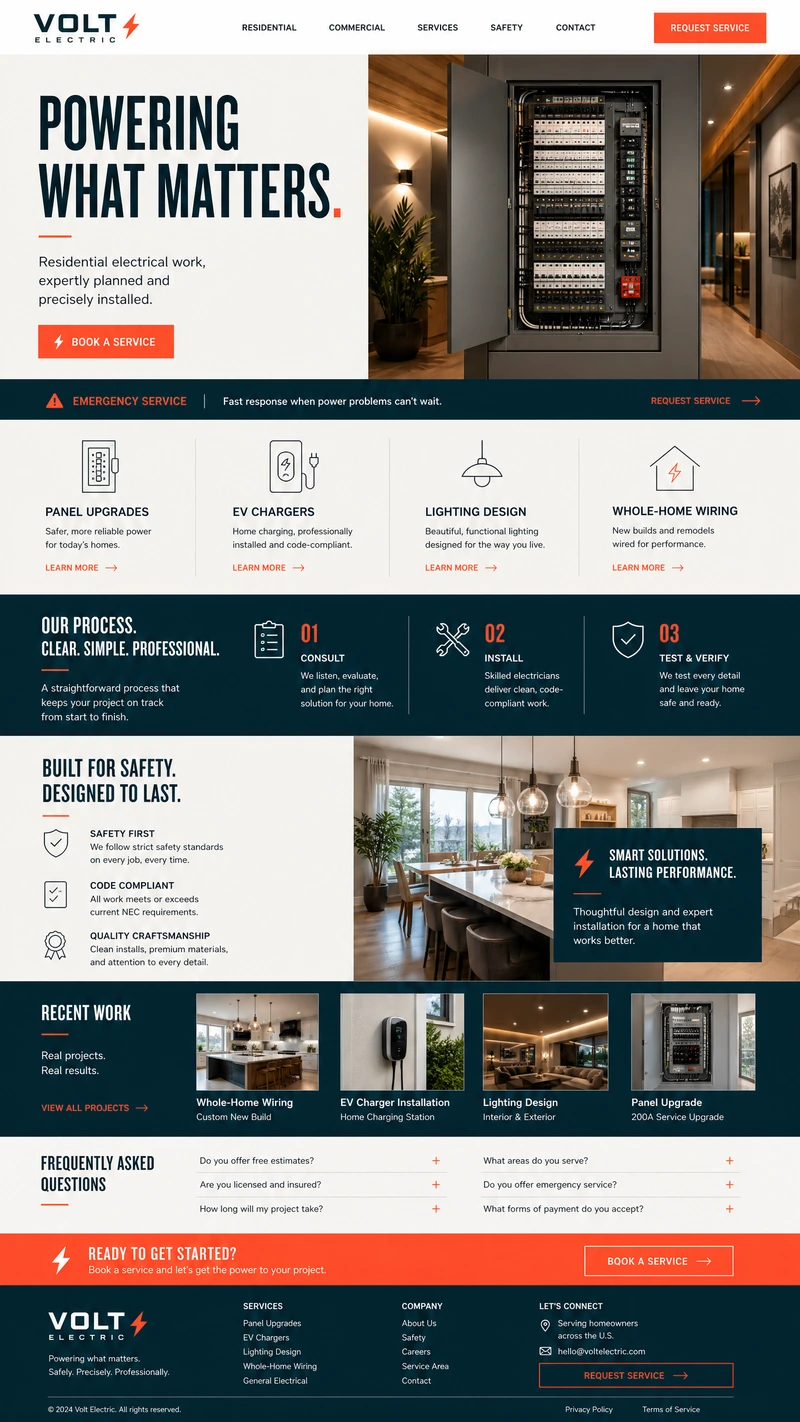
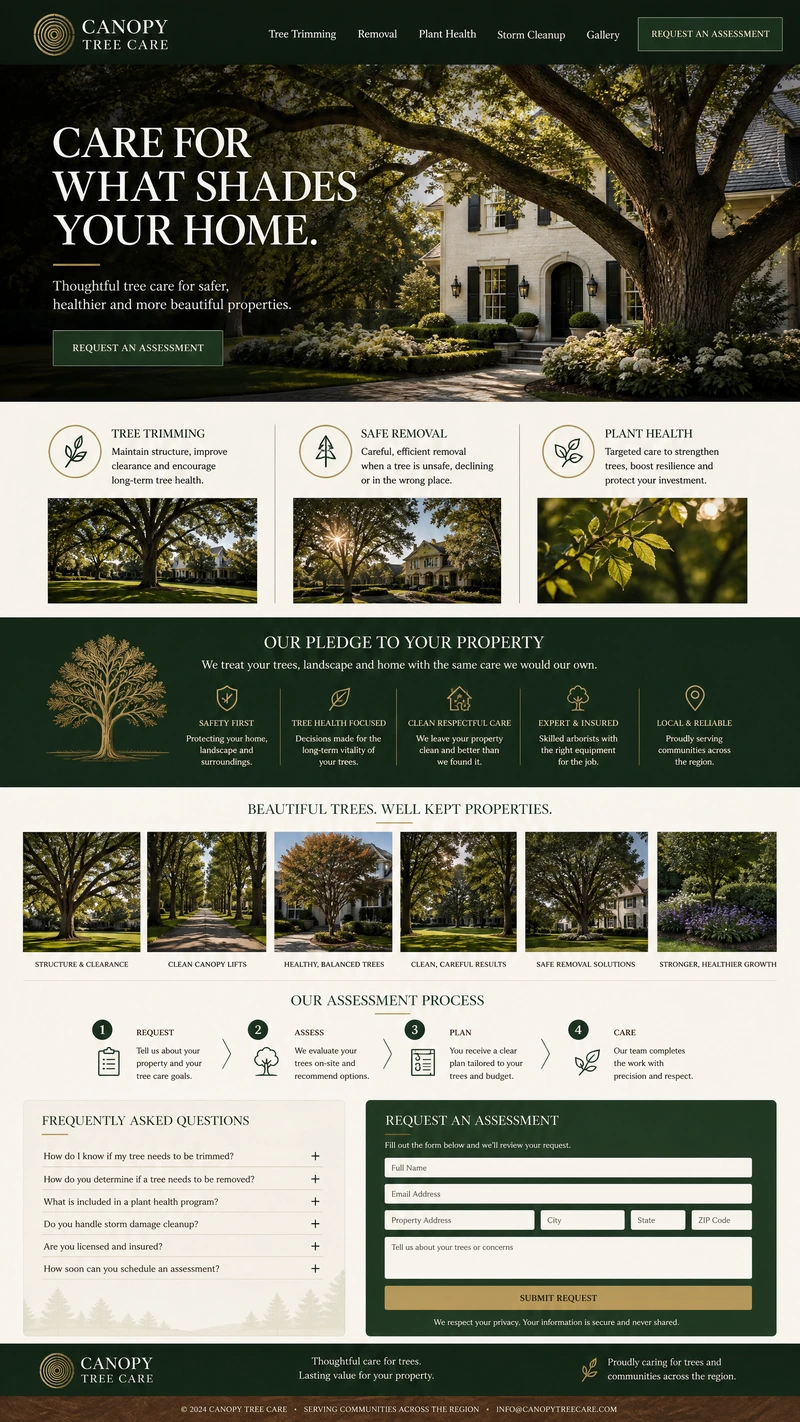
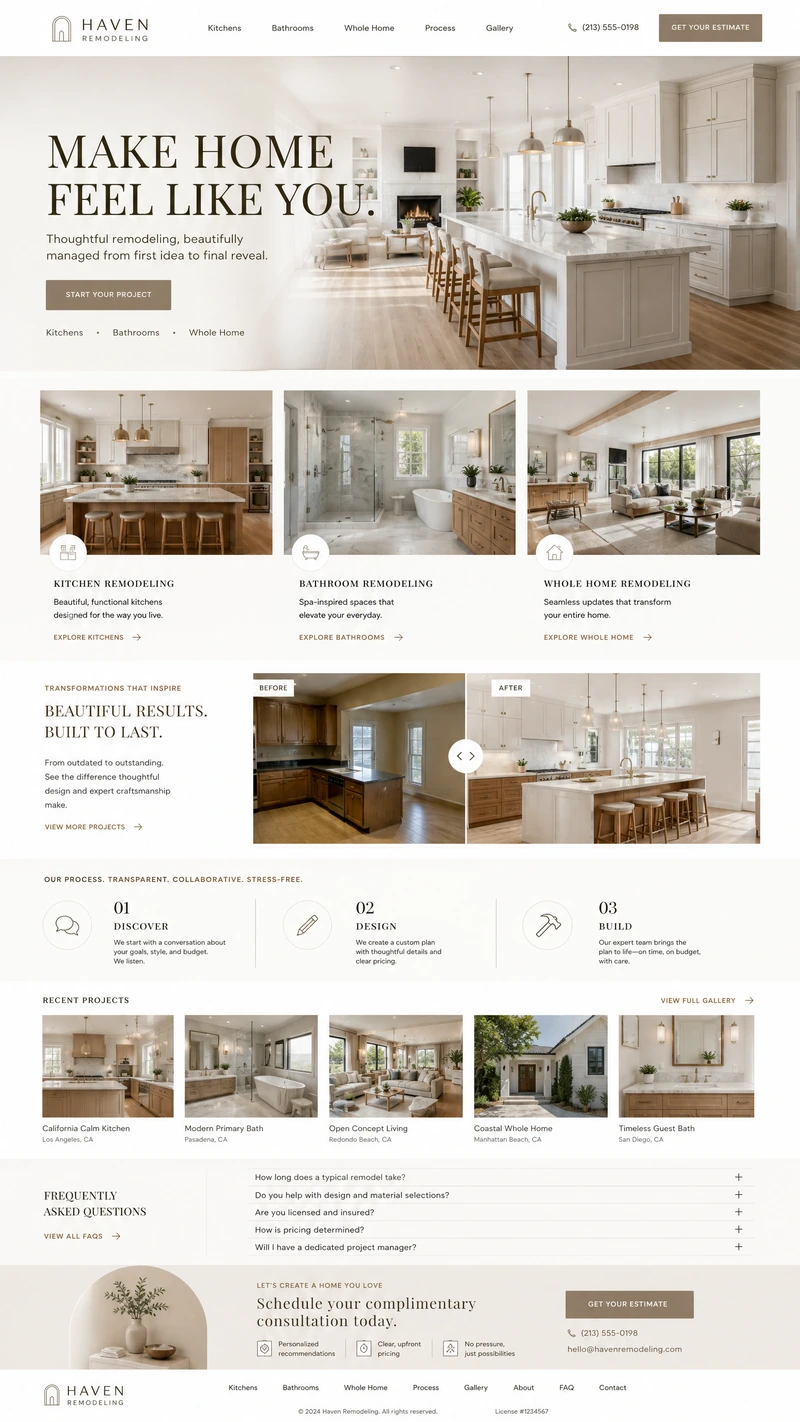
Mand Digital Website Design Collection. Website concepts designed by our studio across five directions. Your site is designed around your own business.
A pool inquiry that arrives as "how much for a pool?" costs you a phone call to get to the starting line. The form on your site can do that work before it reaches you.
We build the request around the things you cannot quote without: where the property is, roughly what they have in mind, whether there is a spa or a water feature in the picture, how they are thinking about budget, and when they want to be swimming. Some builders also ask for a photo of the yard, which answers questions about access and grade that a form field cannot.
It stays short enough that a serious buyer finishes it. The point is not to interrogate anyone. It is to make the first reply you send useful instead of exploratory.
This is the form on the website we build for you, filled in by your customers. It is separate from the form at the bottom of this page, which is how you reach us.
The website is where search and advertising send people, so it is built to give both something to work with: pages for the work you sell, your service area in text, and a quote request close to every project.
Local search starts with the basics the site controls: a clear page for each kind of work, the counties or metro areas you build in written out, business details that match your Google Business Profile, and pages that load quickly on a phone. Setting up or managing the profile itself is not part of a website project unless your proposal includes it.
If you advertise, each campaign needs a page that matches the ad, whether that is a pool type, a feature or a service area, with the quote request within reach. Ongoing SEO and campaign management are separate services, scoped and quoted on their own.
Every proposal lists exactly what your project includes. For a pool builder, that usually means the following, with everything the site needs to work on the day it goes live.
Domain and hosting are not included and are not paid to us. You buy them, you own them, and the site is deployed to them.
Every pool builder website is quoted on its own, once we understand the business. You receive a written proposal with the scope, timeline and price before any work starts.
What shapes the proposal is mostly the gallery: how many projects you have to show, how they are grouped, how much of your design and build process needs explaining, and what the quote form has to ask. Once you have sent us the information and materials we need, we build the complete first draft, and you review the whole site and send your notes together rather than a change at a time.
There is no mandatory monthly fee to us for the website. You own the domain, you own the hosting account, and you can move the site or hand it to someone else whenever you want.
You tell us the services you sell, the area you cover and what you want the site to do. This is a form, not a meeting, and it is where the structure gets decided.
A written proposal with the pages, features, timeline and price. Nothing starts until you approve it.
Photographs of your own work, your license and insurance details, and anything that has to appear on the site.
We draft the page plan and write the words from your briefing. You see both before anything is designed.
The complete first draft, on the timeline set in your proposal.
You review the whole site and send your notes together. The number of revision rounds is set in your proposal.
You approve the final version and we deploy to your hosting on your domain.
That is the whole process.
If it fits, the first step is a quote request. If you would rather ask something first, the form is a few lines below.
A project gallery, a page that explains your design and build process, the pool types and features you build, your service area, and a quote request that asks about the yard.
The final page list is set in your proposal, because it depends on how many projects you have to show and how you sell.
Yes, and it is worth starting anyway.
We design the gallery to look right with the projects you have rather than filling it with stock images. Good phone photography of finished work, shot in decent light, is usable. As you collect better images you can swap them in.
Yes, as part of the page plan.
Grouping by pool type, by feature or by style is a structure decision we make together during the briefing. What a website project does not usually cover is a filterable database with a separate page for every project you have ever built.
We display what you give us. We do not produce pool designs or renderings.
If you already create renderings for clients, those are images and they can go on the site like any other project photography.
Yes, and most builders want it to.
A budget range as a set of options tends to work better than an open field, because it is easier to answer and it does not make anyone feel they are being priced before they have spoken to you.
Yes. Your service area is part of the build.
That means naming the counties or metro areas you cover on the site. It does not mean a separate landing page for each town, which is a different kind of project and would be scoped separately.
Support after launch is covered when your proposal includes it, for the site we built and the scope we agreed.
Beyond that, or for new work such as adding a section that was not in the original brief, we quote it separately. There is no retainer and no monthly fee.
The site gives both somewhere to send people: pages for each kind of work, your service area in text, and a quote request close to every project.
Ongoing SEO and campaign management are separate services. If you want either alongside the website, say so in your request and the proposal will cover it.
A short description of your business: the pools you build, the features you offer, where you work and what you want the site to do.
It also helps to know how many finished projects you can show, whether you want SEO or advertising alongside the website, and your timing. We reply with questions or a written proposal.
Planned around your finished work. The gallery, the design and build process page and the quote request are part of the plan rather than extras.
Quoted for your business
A proposal built around your scope
This is the website proposal. SEO and advertising are separate services, quoted on their own.
Your website, your domain, your hosting. No mandatory monthly fee to us.
Also thinking about SEO or advertising for your pool business?
Talk to our teamHow you build, what you want the site to show, and where you work. We will come back with a straight answer about scope and timing.