
Are before and after shown together, at the same size?
Separately they are two galleries. Together they are the argument.
Websites, SEO and ads for small businesses$1,497 for a professional websiteYou own your domain and hostingNo monthly fees to us
Remodeling website design
A remodeler sells something a homeowner cannot picture. They are standing in a dated kitchen trying to imagine a different one, and the only thing that closes that gap is seeing a room like theirs before you started and after you finished.
Up to seven pages, $1,497 total, on hosting and a domain you own.

Remodeling is bought by someone who already owns the house and has been thinking about the same room for two years.
That is a specific state of mind. They are not comparing you against doing nothing, because they have already decided something has to change. They are comparing you against two other remodelers and against the fear that this will go badly, run long and cost more than they were told.
The site's job is to reduce that fear with evidence and with candour about how a project actually runs. Everything else follows from those two.
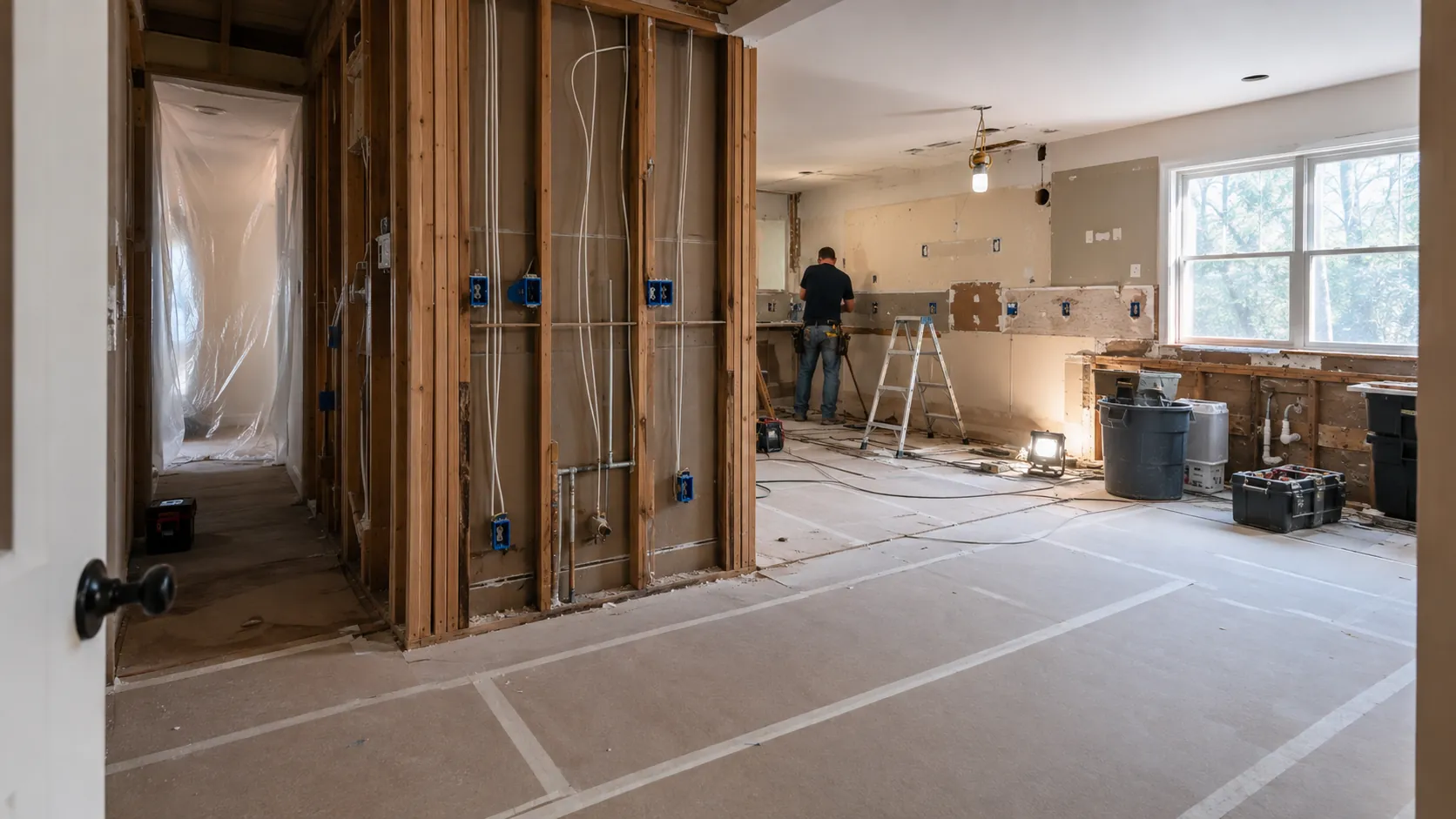
Photographs of the middle of a job answer the question homeowners are too polite to ask.
They are not really wondering whether you can build the kitchen. They are wondering what it is like having you in the house for six weeks.
That is the objection nothing on a normal remodeling site answers. Galleries of finished rooms show the outcome and say nothing about the experience, and the experience is what people have heard bad stories about.
The other half is that a finished room is hard to judge without knowing what was there before. A pair of images does more work than either image alone, and most sites publish only the second one.
Separately they are two galleries. Together they are the argument.
Floor protection, containment, what happens to the kitchen while there is no kitchen. Saying it plainly is a differentiator because so few do.
Not a promise. A range, and what makes it move.
One name, one number. This is a bigger deal to a client than most remodelers realise.
Every one of these is something you already do. The site is where it stops being invisible.
Recognise any of those?
Tell us which ones apply and we will say what we would do about them. No obligation and no sales sequence.
The three main project types are searched separately and bought separately, so they get presented separately.
Someone planning a bathroom is not reading about your kitchen work, and the budget conversation, the timeline and the disruption are different in each case. A single portfolio that mixes all three makes a visitor do the sorting themselves, and most will not bother.
Splitting them also gives each page something specific to say. A kitchen page can talk about layout changes, cabinetry and appliance planning. A bathroom page can talk about waterproofing, ventilation and what is involved in moving plumbing. That specificity is what makes a page worth reading and worth ranking.
Layout, cabinetry, surfaces and the questions that come with moving anything that has a pipe or a vent behind it.
Often the first project a homeowner takes on with a new contractor, and often the audition for the kitchen.
Larger scope, longer timeline, and a buyer who needs much more detail about process before they commit.
A pair is worth more than a portfolio. The before shot is what makes the after shot mean something.
Most remodeling sites show only finished rooms, which is a mistake. A beautiful finished kitchen could have started as a nearly-good kitchen. The same kitchen shown alongside the cramped, dark, dated room it replaced tells a homeowner that you can do this to their house specifically.
The practical part is remembering to take the before shot, which is easy to skip on a job that starts on a Monday morning in someone's house. It is worth building the habit: same angle, same rough framing, before anything comes out. Those pairs become the most persuasive part of your site.
We build the site so pairs are presented properly, side by side and readable on a phone. We do not supply before and after images, and we will not present anyone else's project as yours.
Sixteen concepts from the studio. For a remodeler the direction is mostly a decision about photography: paired before and after images need a quieter frame than a single finished room, and the directions differ more than you would expect on that one point.
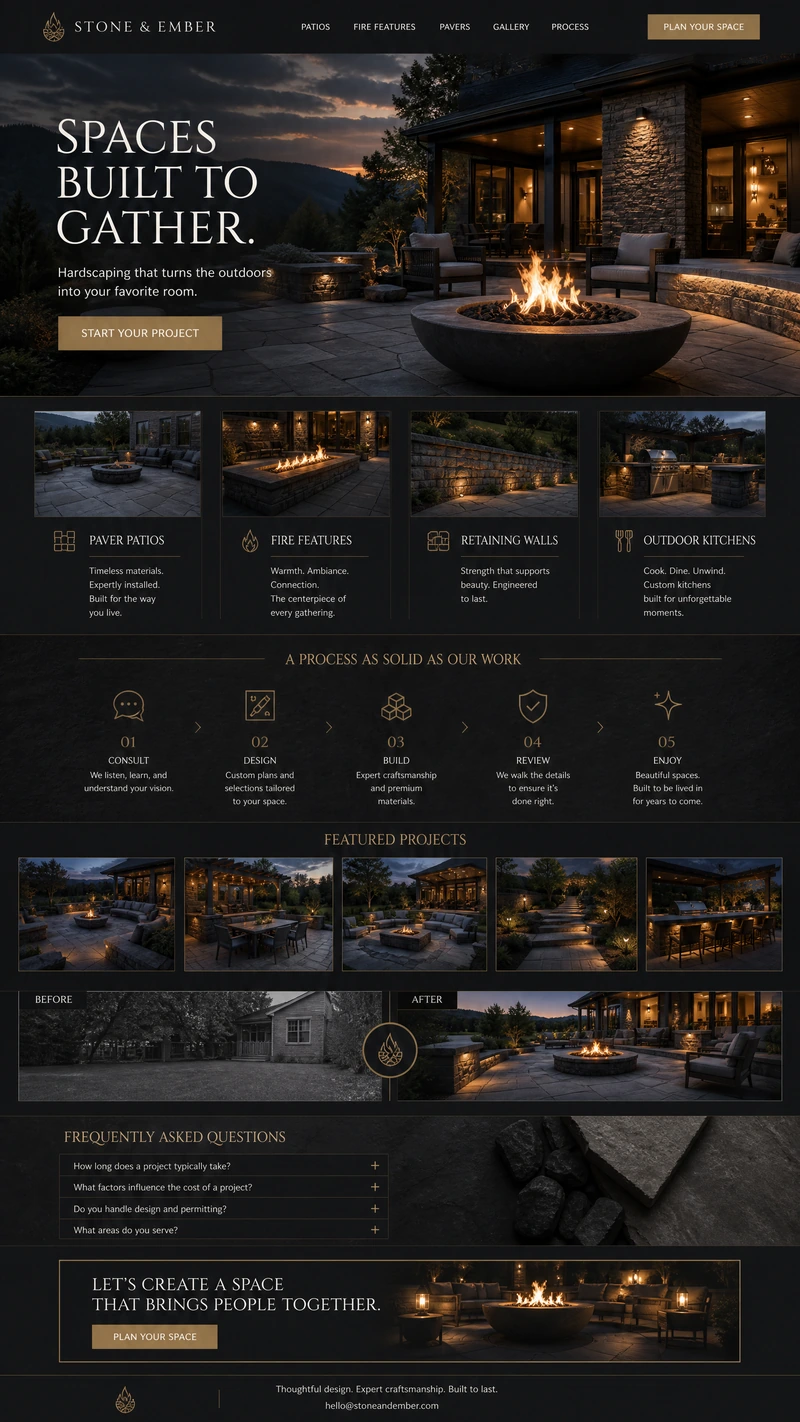
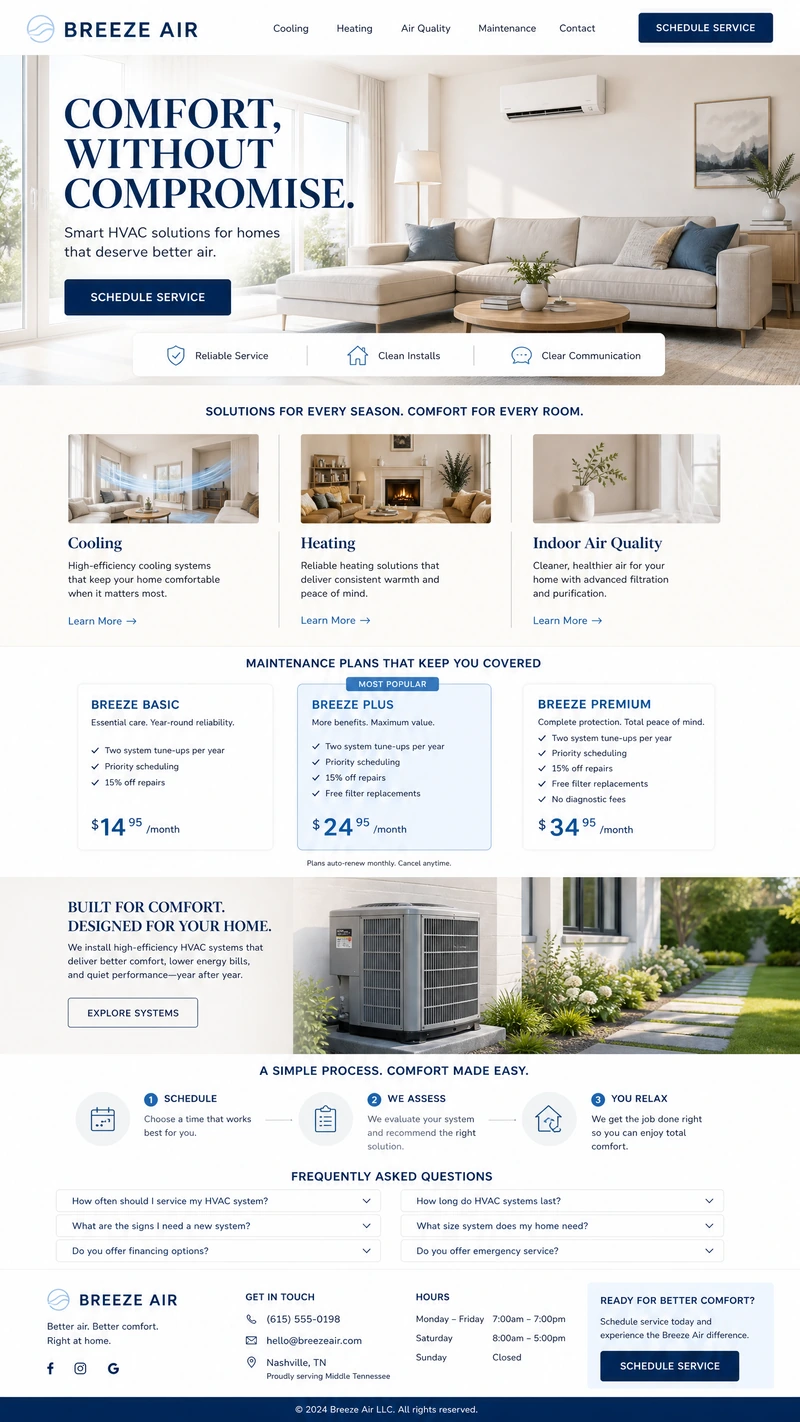
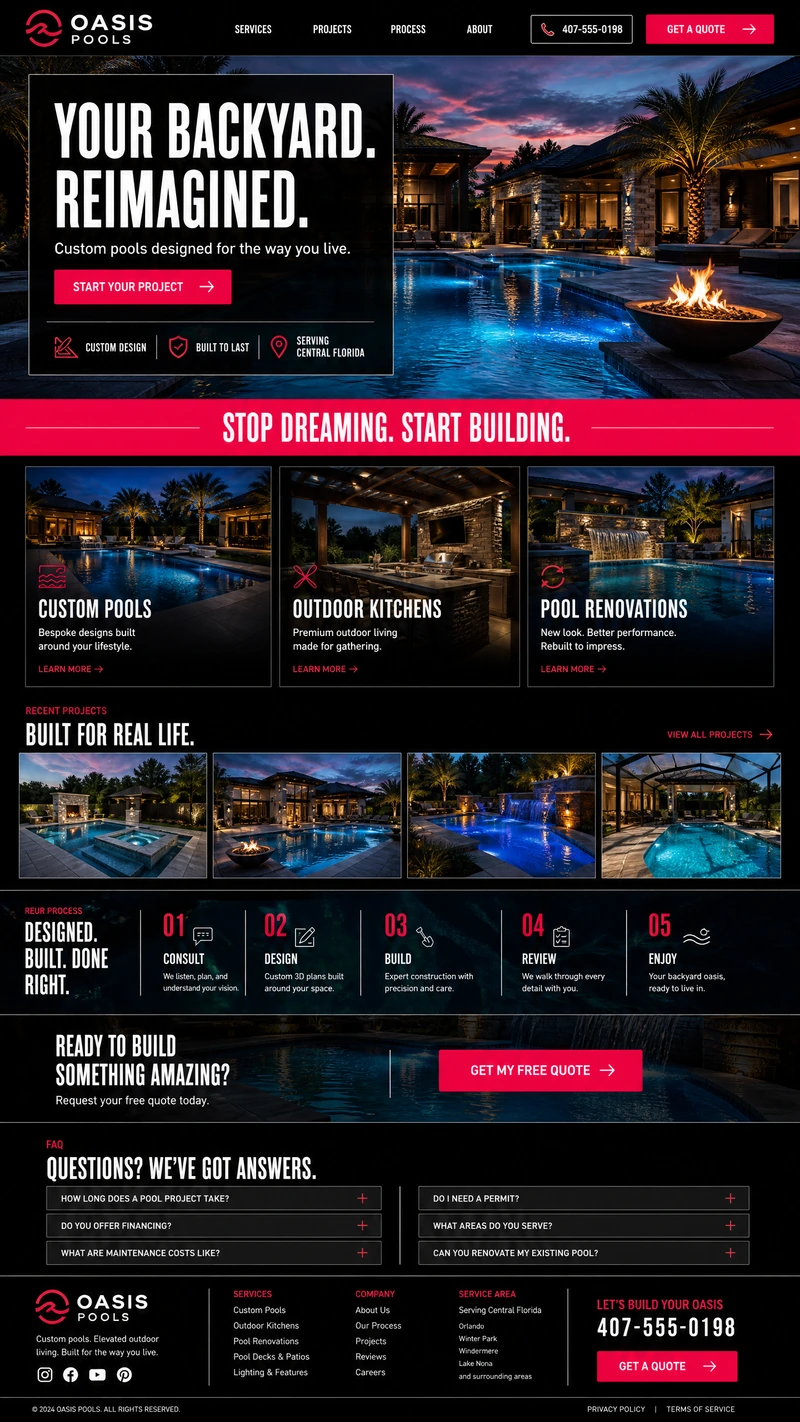
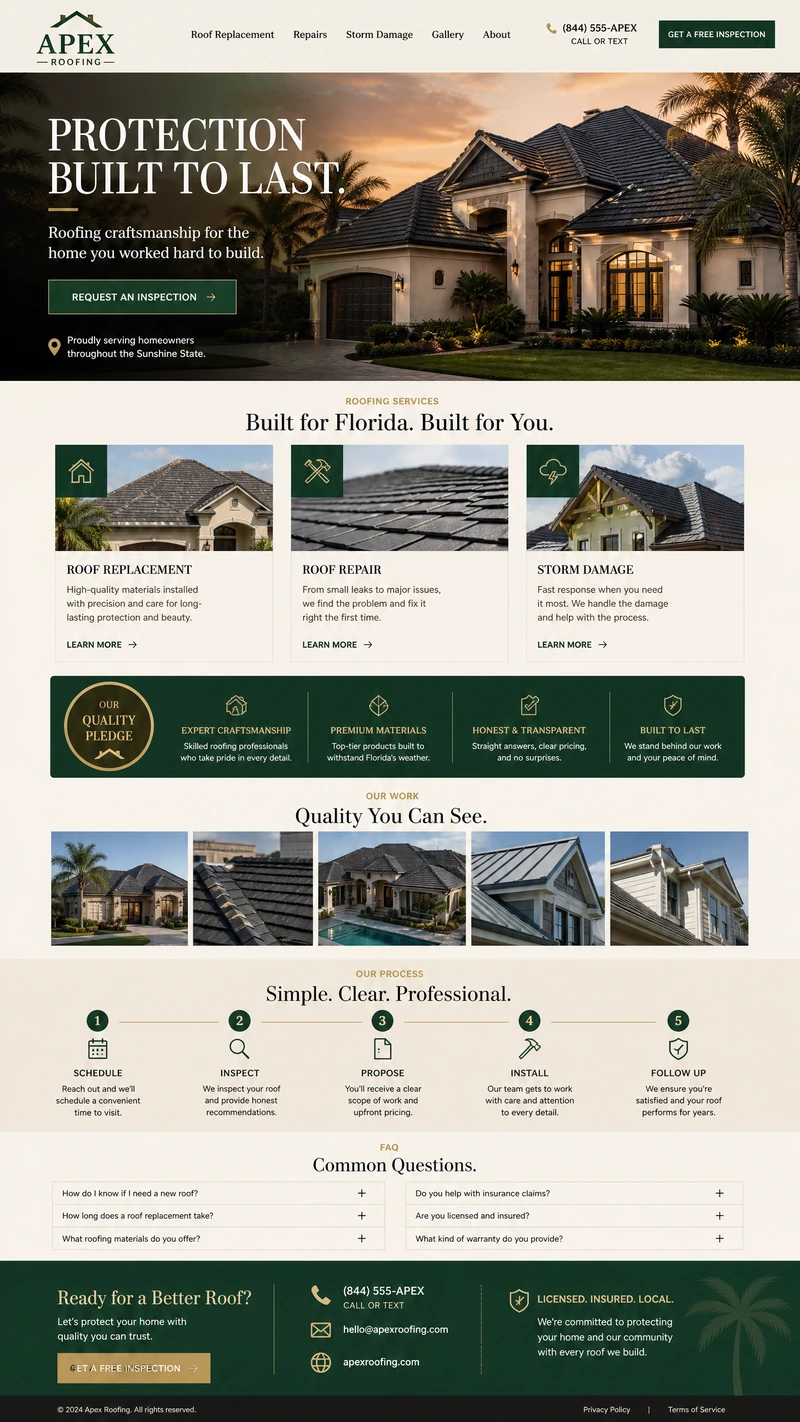
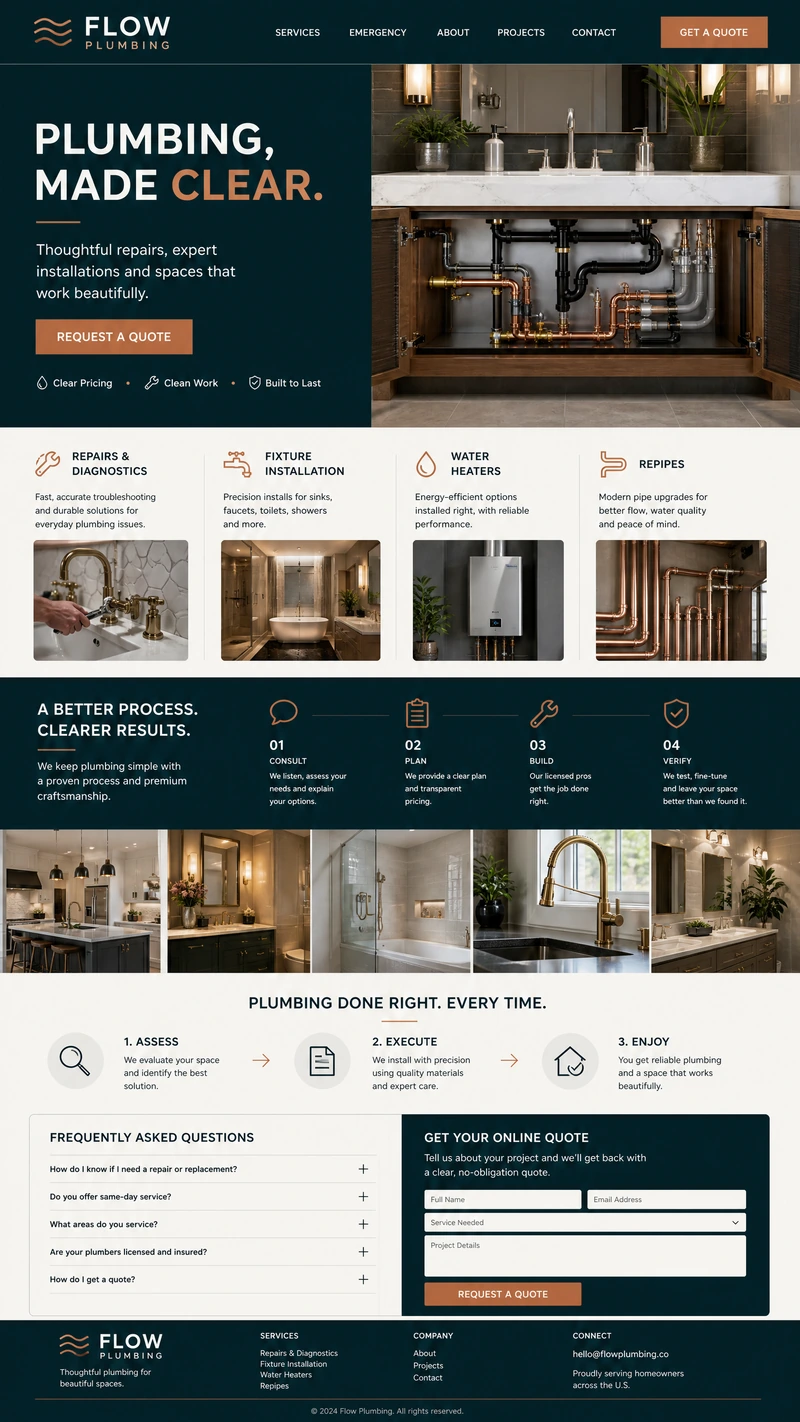
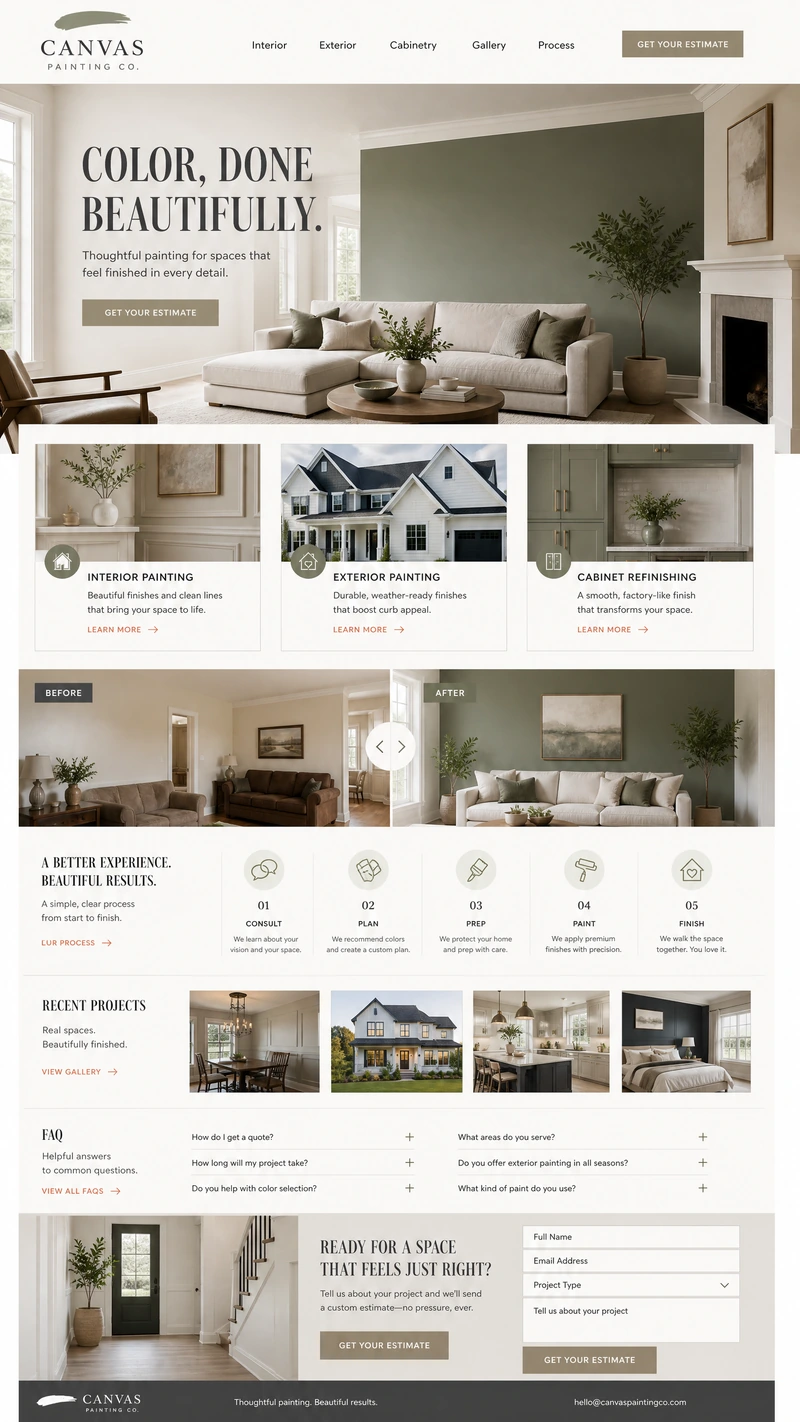
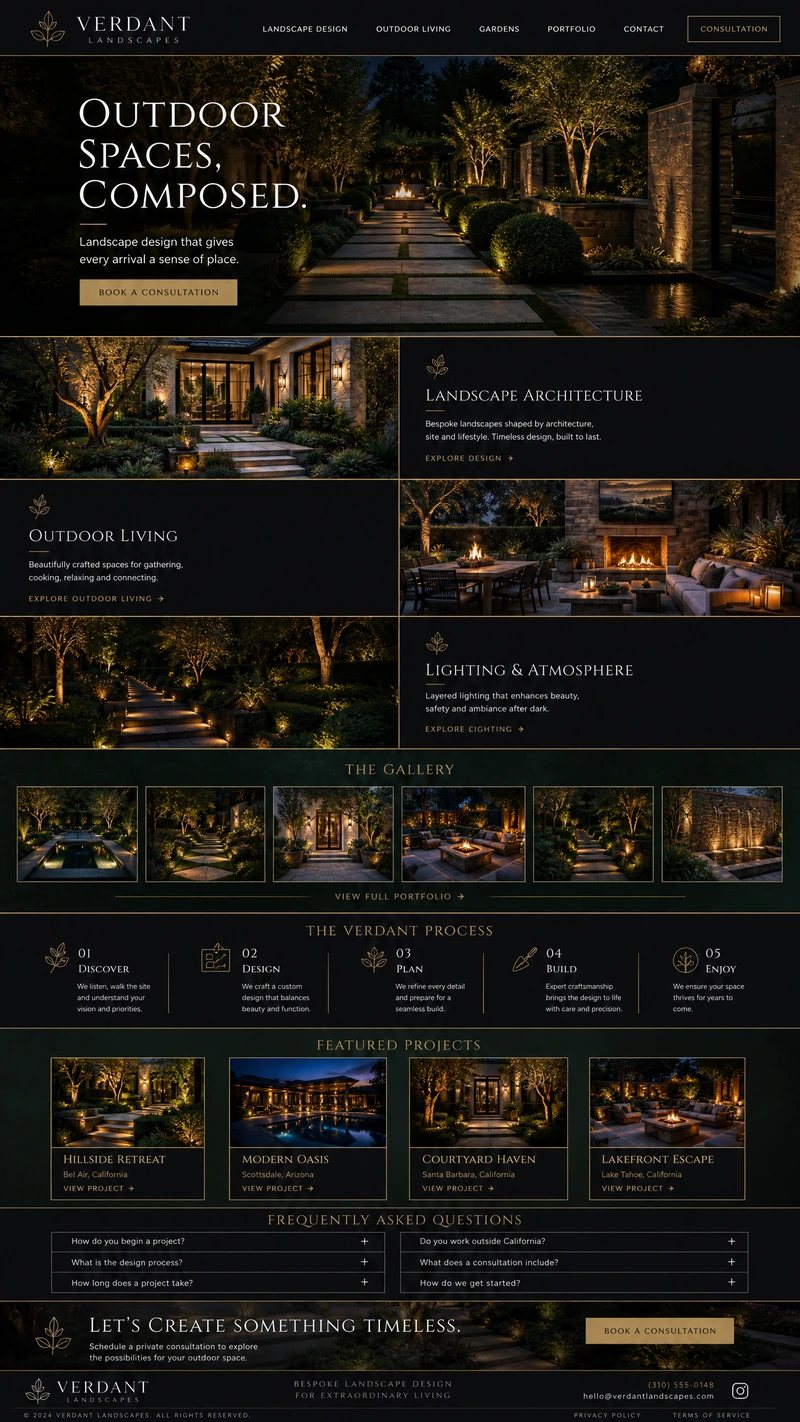
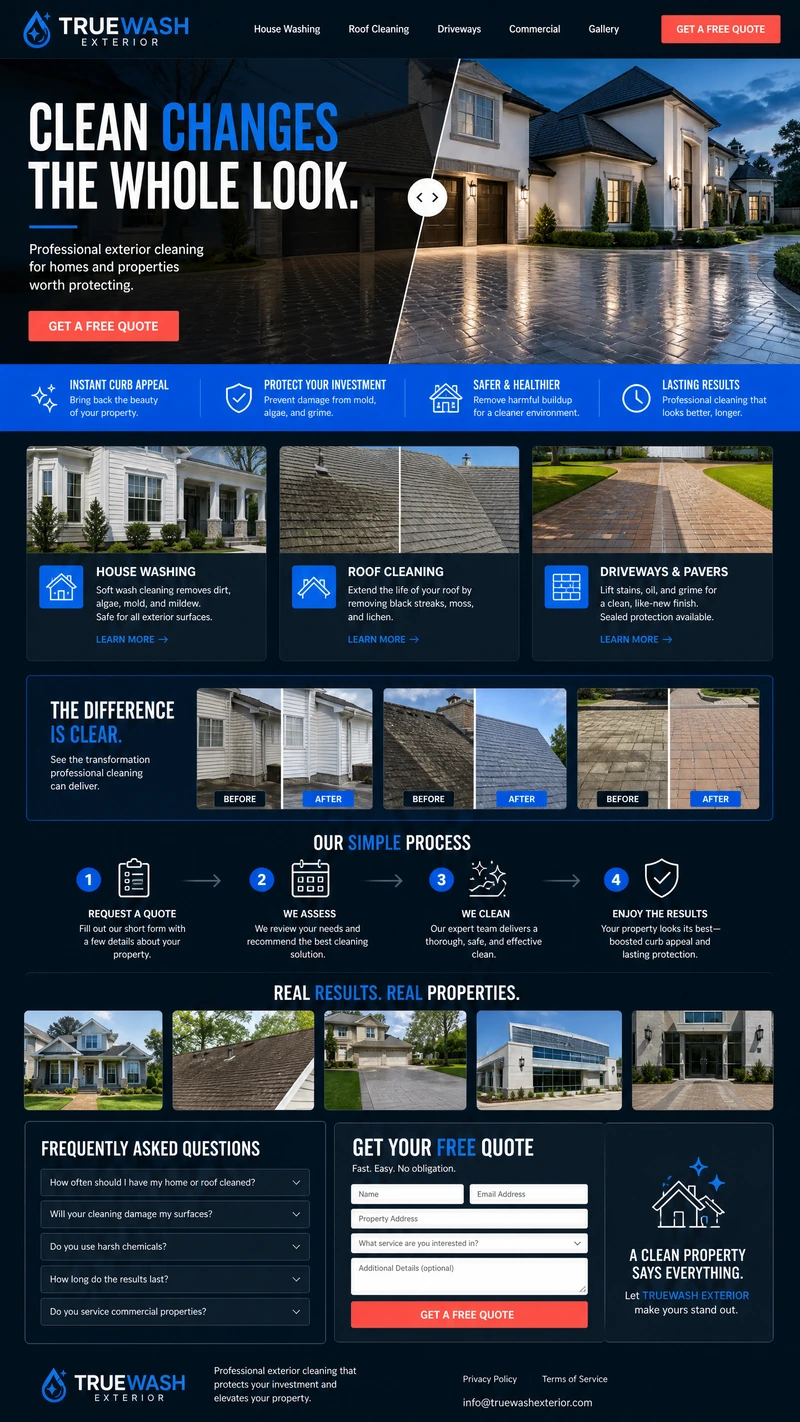
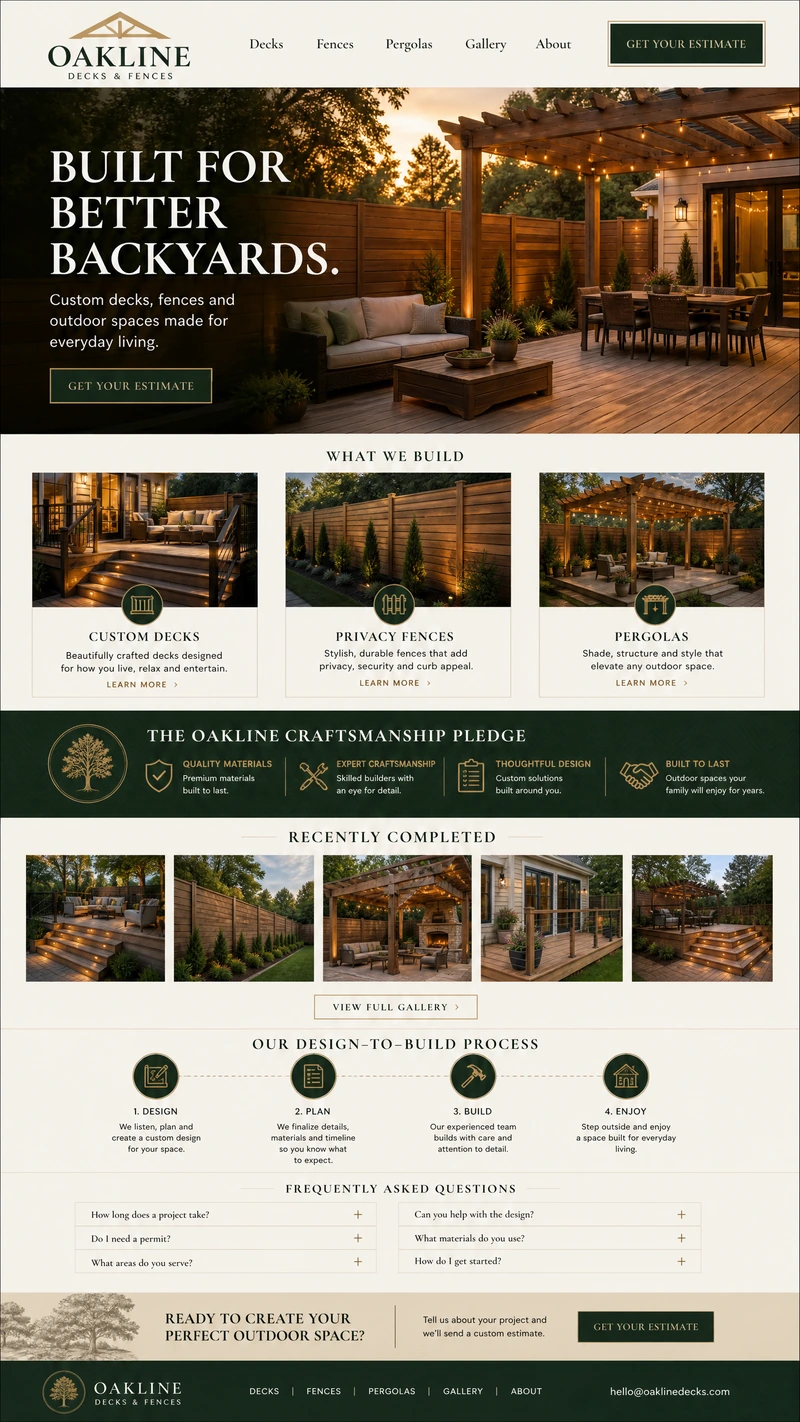
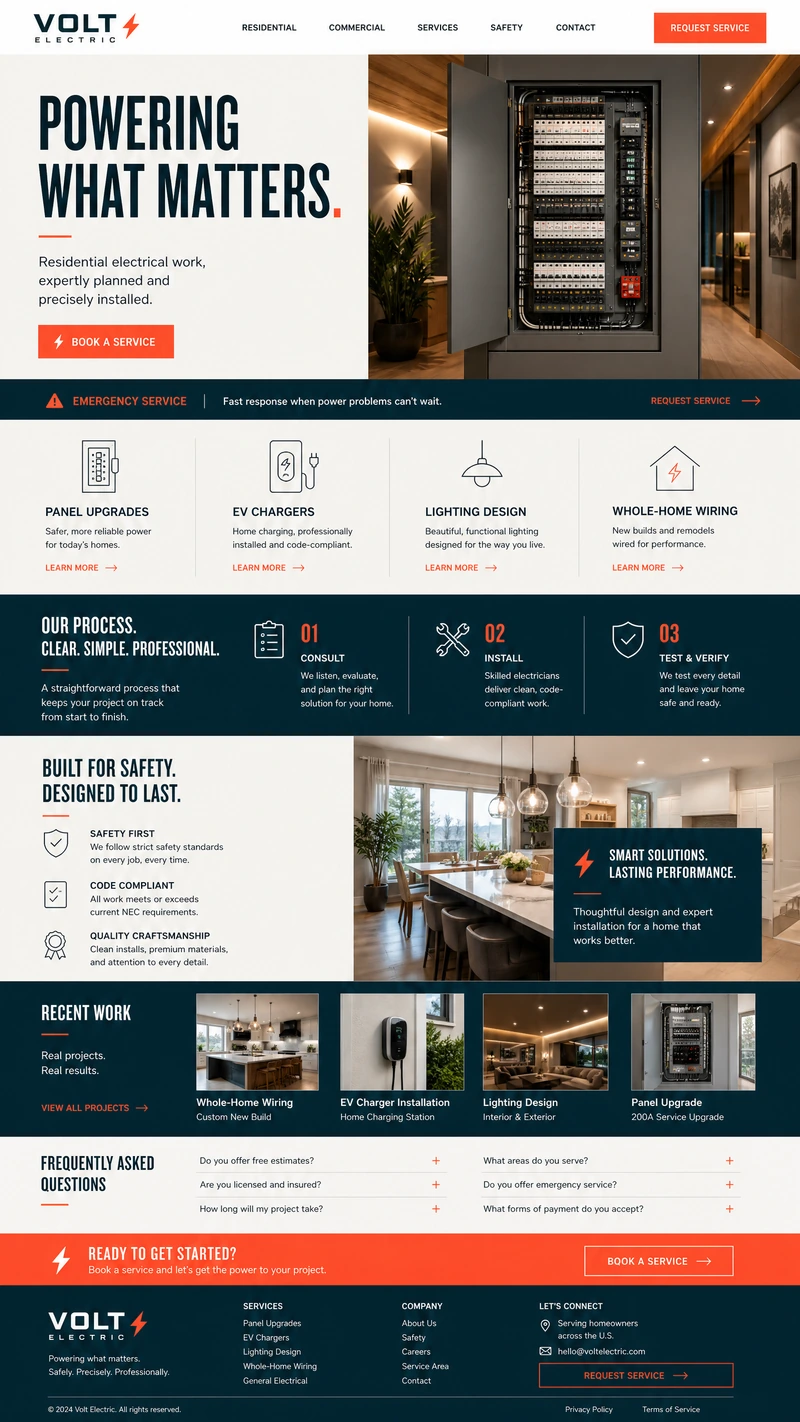
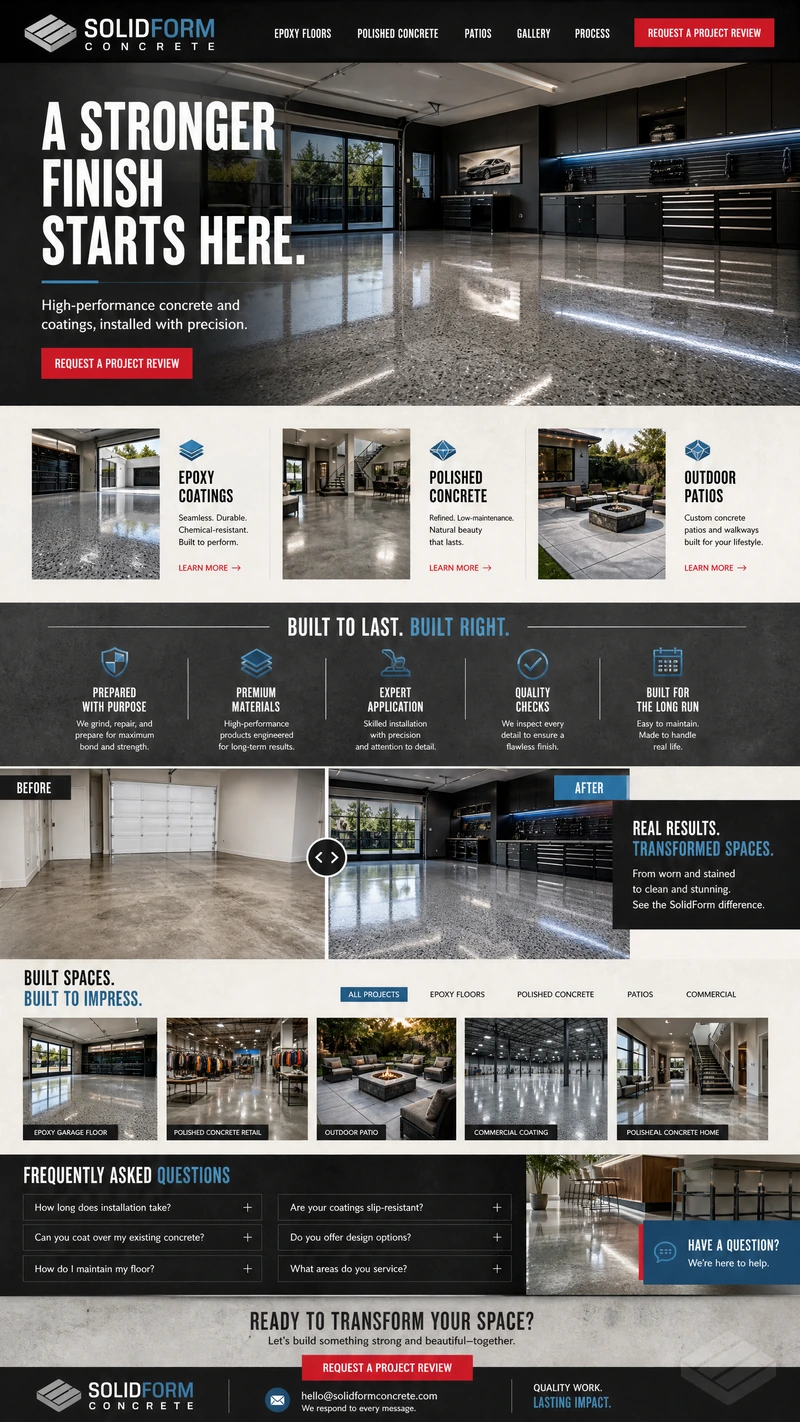
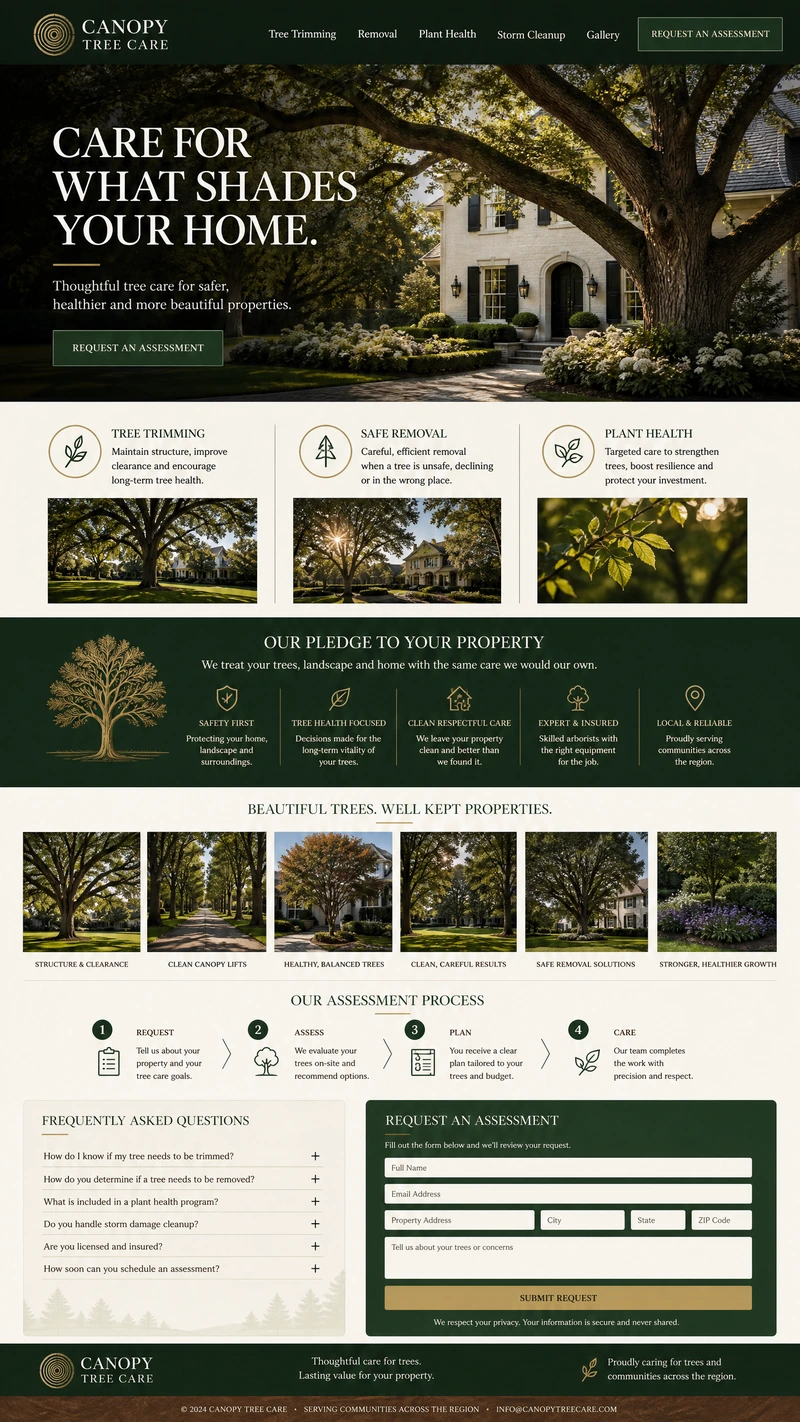
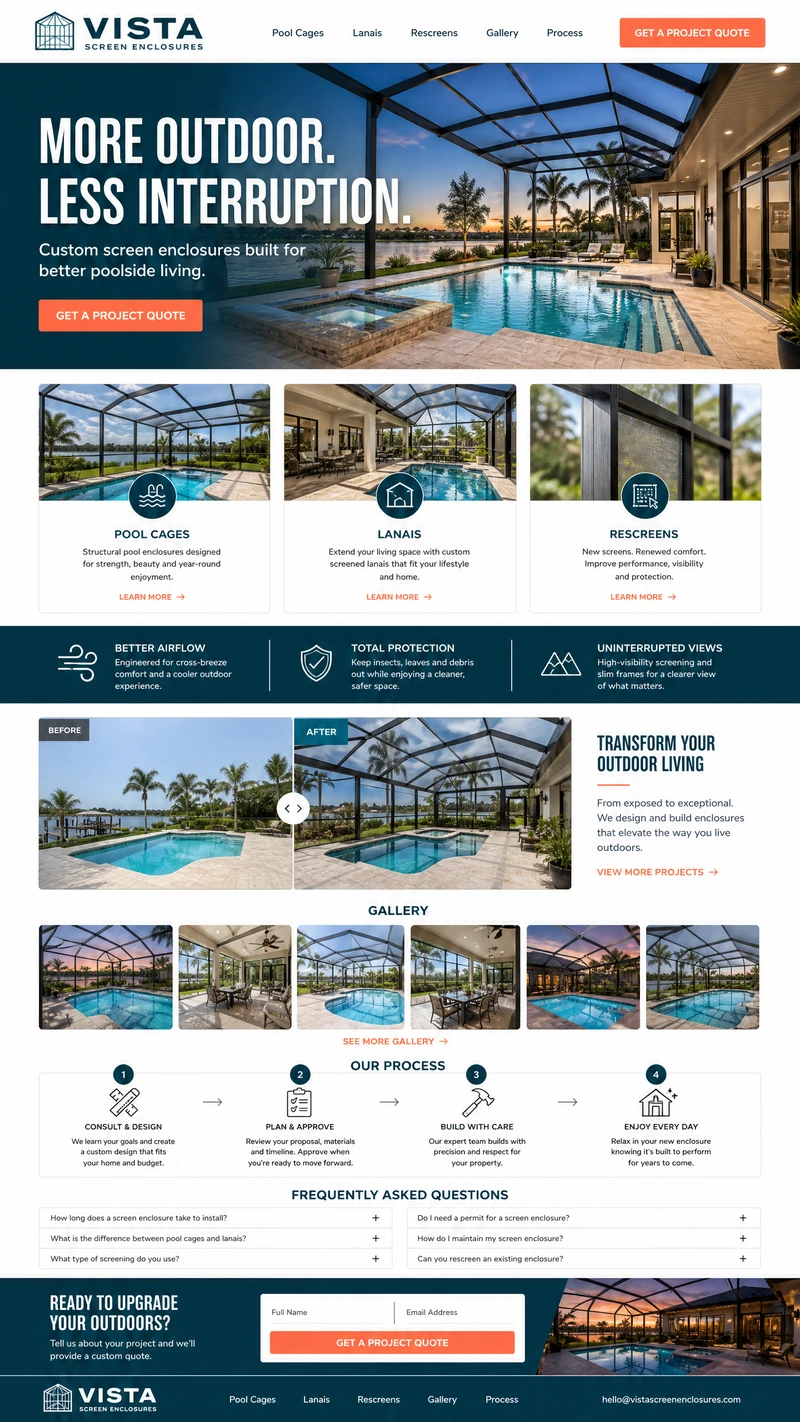
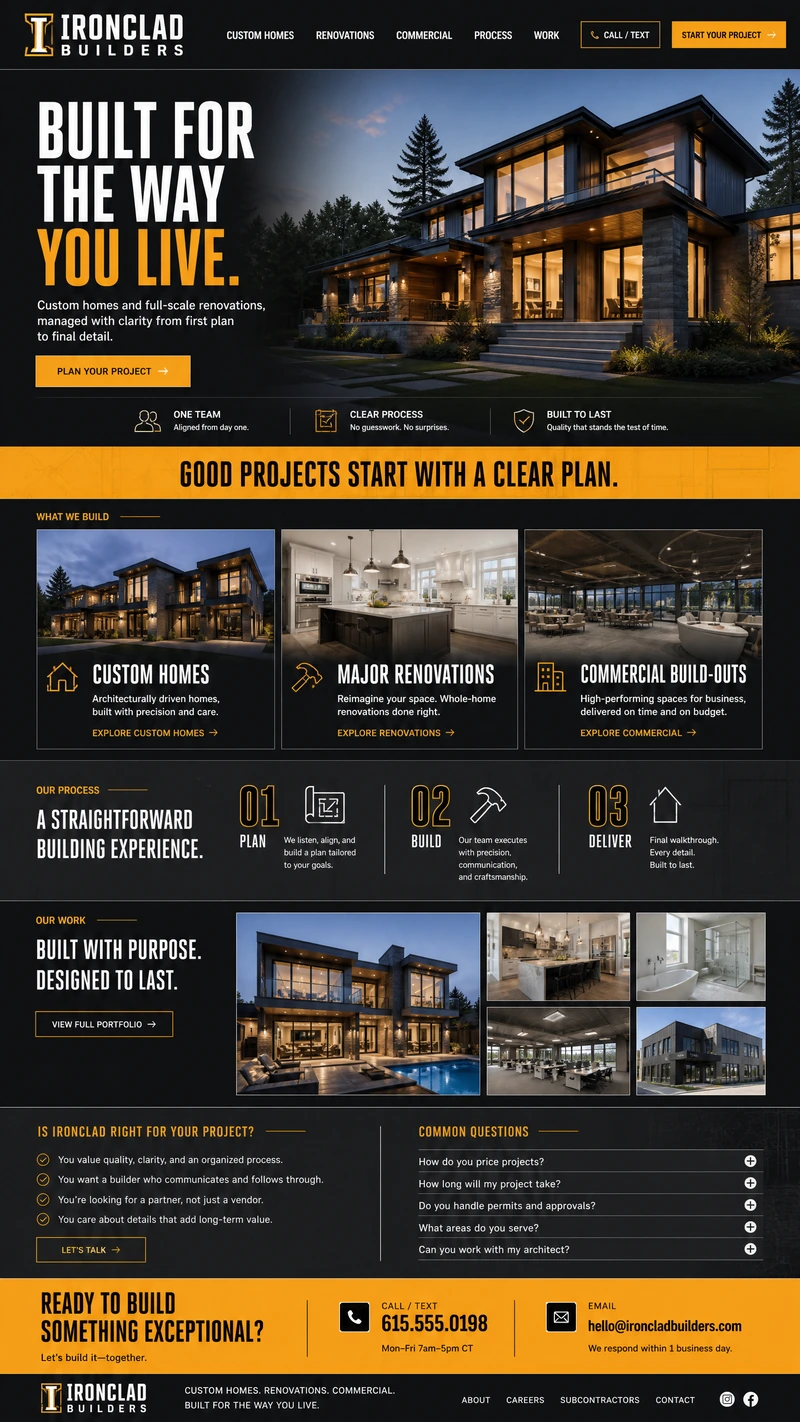
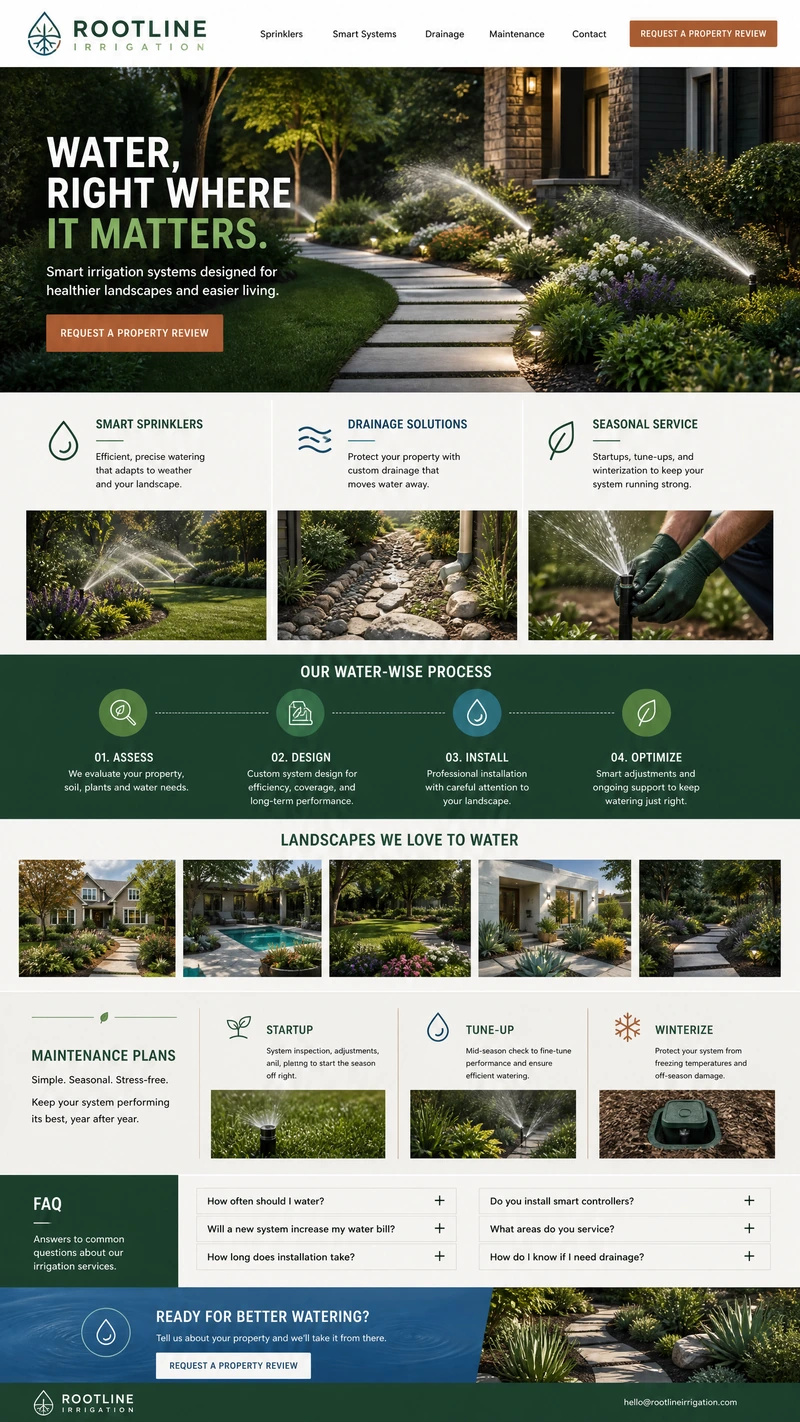
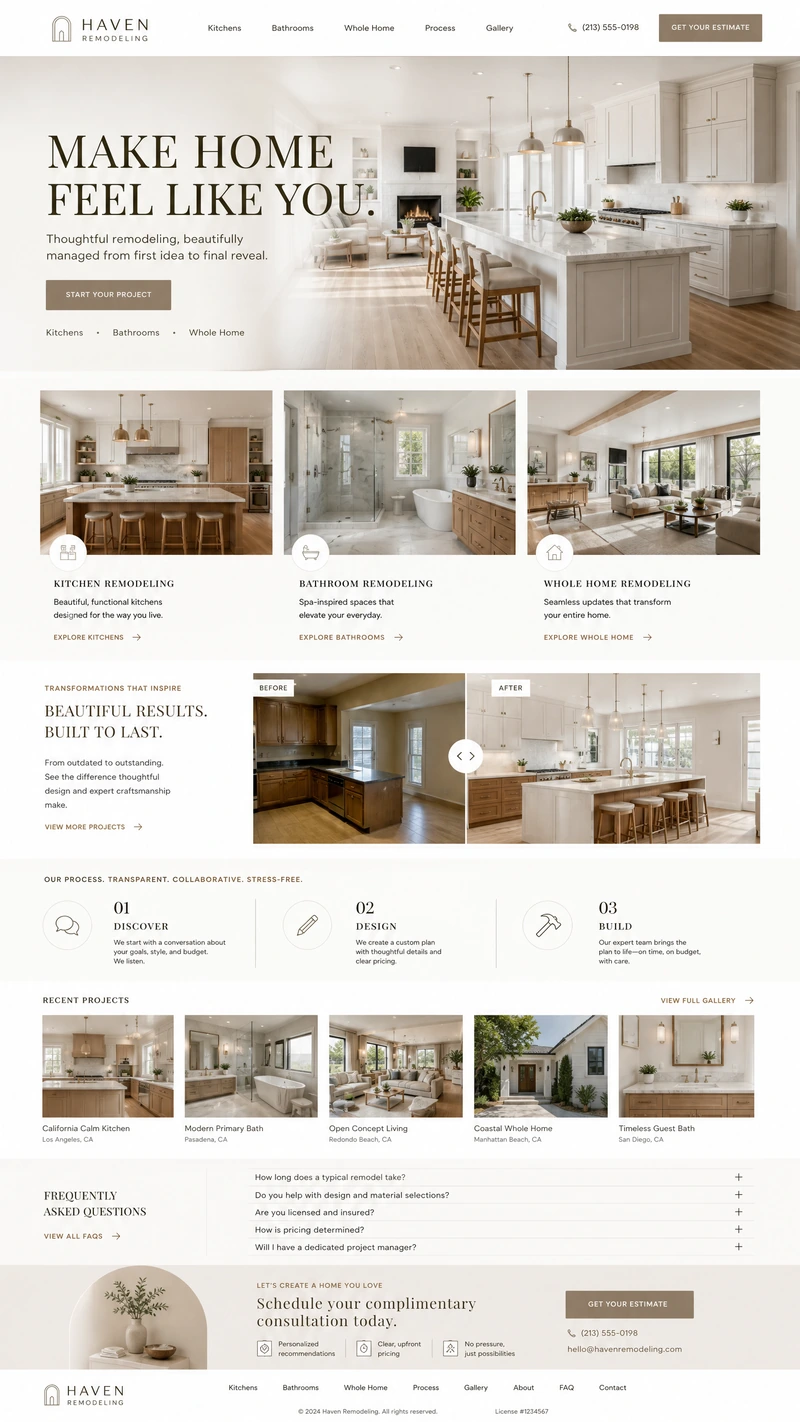
Design concepts produced in the studio, not client projects. Yours would be built for your business, from the same five directions.
The thing that separates remodelers on a website is honesty about what it is like to live through a project.
How long will the kitchen be out of use. Where will the dust go. Will there be someone in the house every day, and from what time. Who orders the tile, and what happens when it arrives damaged. These are the questions that keep a homeowner from signing, and almost no remodeling website answers any of them.
A process section that walks through consultation, design, selections, permits, the build itself and the punch list, in your own words, is a differentiator precisely because it is uncomfortable. It also sets expectations you will be measured against, which tends to make projects run better.
A remodeling enquiry that arrives with a room, a rough budget and a timeline is a conversation. One that says "how much for a kitchen?" is not.
The form on your finished site can ask for the project type, the approximate age and style of the home, what they want changed, when they hope to start and roughly what they have in mind to spend. A budget range as options rather than an open box gets answered far more often.
Some remodelers also ask for photos of the current space. It is a small ask at the point where somebody is already motivated, and it turns your first reply into something useful rather than a request for more information.
That enquiry form belongs to the site we build for you. The form at the bottom of this page is how you get in touch with us.
$1,497 total. $500 to start and $997 after final approval, before the site is published.
First preview within five business days of the initial payment and an approved briefing. Three consolidated rounds of revisions, which means you review the whole site and send notes together.
There is no monthly website fee to us. The domain and the hosting are in your name and the site is yours from the day it launches.
You tell us the services you sell, the area you cover and what you want the site to do. This is a form, not a meeting, and it is where the structure gets decided.
Photographs of your own work, your license and insurance details, and anything that has to appear on the site.
We draft the page plan and write the words from your briefing. You see both before anything is designed.
The complete site, within 5 business days of the initial payment and an approved briefing.
You review the whole site and send your notes together. Up to 3 consolidated rounds are included.
You approve the final version, pay the $997 balance, and we deploy to your hosting on your domain.
That is the whole process.
If it fits, the $500 initial payment starts it. If you would rather ask something first, the form is a few lines below.
It limits the strongest thing the site can do, but it does not stop the project.
We will build the galleries around finished work and design the pairs in so you can add them as you go. Start taking before shots on your next job; within a year the site changes character.
For most remodelers, yes.
They are searched separately and the buying conversation is different. Within seven pages you can usually give each one a page and still cover whole-home work properly.
Only if you are willing to stand behind ranges publicly.
Some remodelers publish a starting range per project type to filter enquiries, and it works. We will publish what you give us. We will not put a number on your work for you.
Yes, and it is worth doing.
Homeowners are often unclear about whether they need a designer, an architect or a contractor. A page that explains how your side works with theirs answers a question people are too embarrassed to ask.
Not in the standard project.
Within seven pages, projects are presented as curated sections rather than a filterable database. A larger portfolio system is custom work and would be scoped separately.
It can, if that is genuinely part of your business.
If new construction is a bigger part of what you do than renovation, our home builder page is probably the closer fit, and we will say so rather than sell you the wrong structure.
Up to seven pages built around your project types and your before and after work, with an enquiry form that asks the right things.
$1,497
One-time project price
This is the website price. SEO and advertising are separate services, quoted on their own.
The 5 business days start once your payment is in and you have sent us what we need to begin.
Short on before photographs right now?
Tell us what you have to work withThe projects you take, whether you design in house, and what photography you have. We will come back with how the site should be organised.