
Are floor plans somewhere a buyer can actually study them?
Plans are the single most-visited content on a builder's site and they are usually a low-resolution image in a gallery.
Websites, SEO and ads for small businesses$1,497 for a professional websiteYou own your domain and hostingNo monthly fees to us
Home builder website design
Nobody buys a house from a website, and that is the point. Your site has one job at the start of a twelve-month decision: show the homes you have finished, explain how building with you works, and make the first conversation easy to start.
Up to seven pages, $1,497 total, deployed to a domain and hosting account you own.
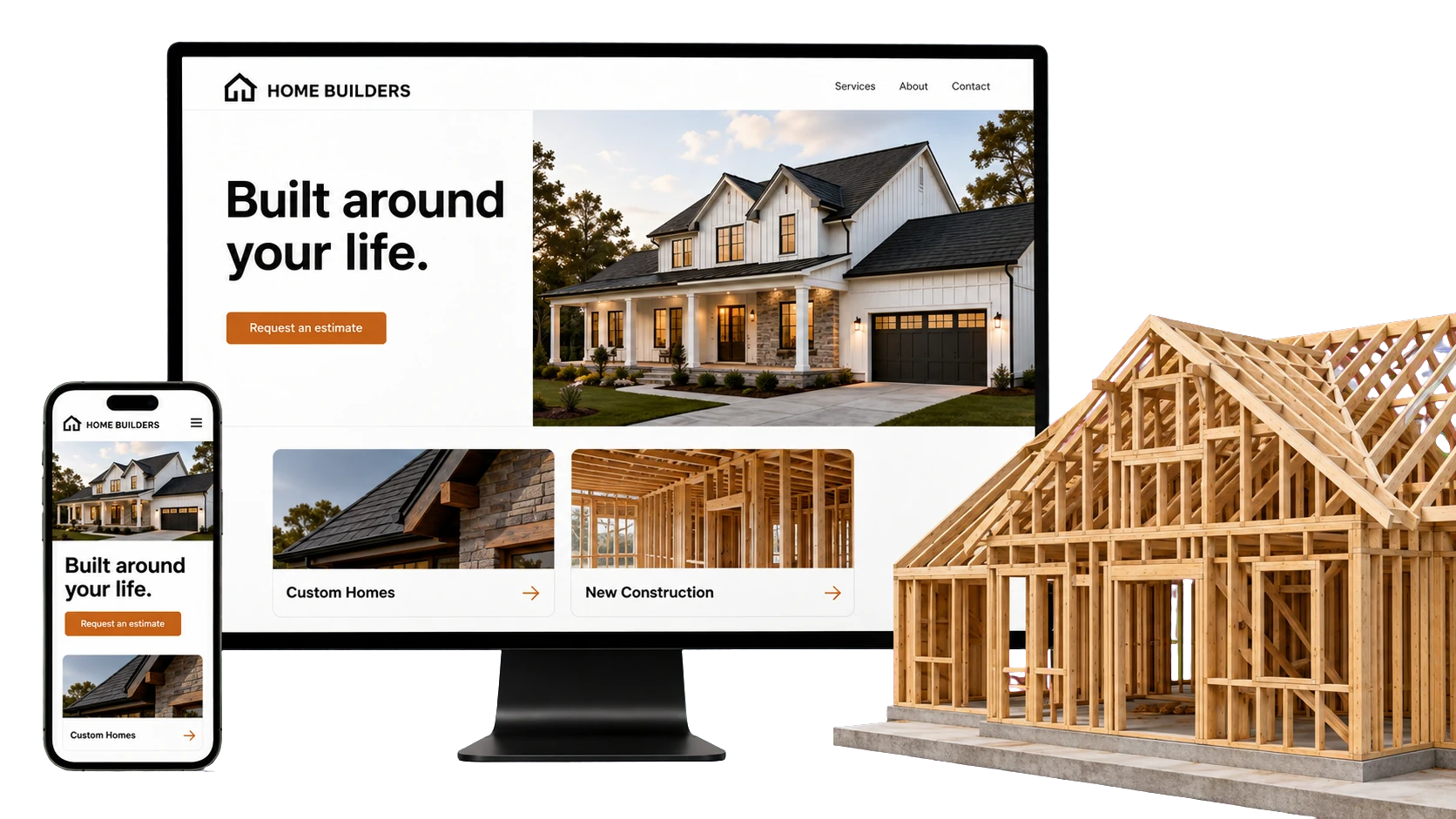
A builder's website is read over months, not minutes, and usually by two people who are discussing it with each other.
That changes what it needs to do. There is no urgency to design around and no single moment of conversion. Instead there is a long, quiet evaluation where a couple returns to your site three or four times, shows it to a parent, and slowly works out whether you are the kind of builder they want to spend a year with.
So the site has to hold up on a second and third reading. Homes you have completed, plans you build, how the process runs and who you are: those four things carry it, and they need to be substantial rather than gestural.
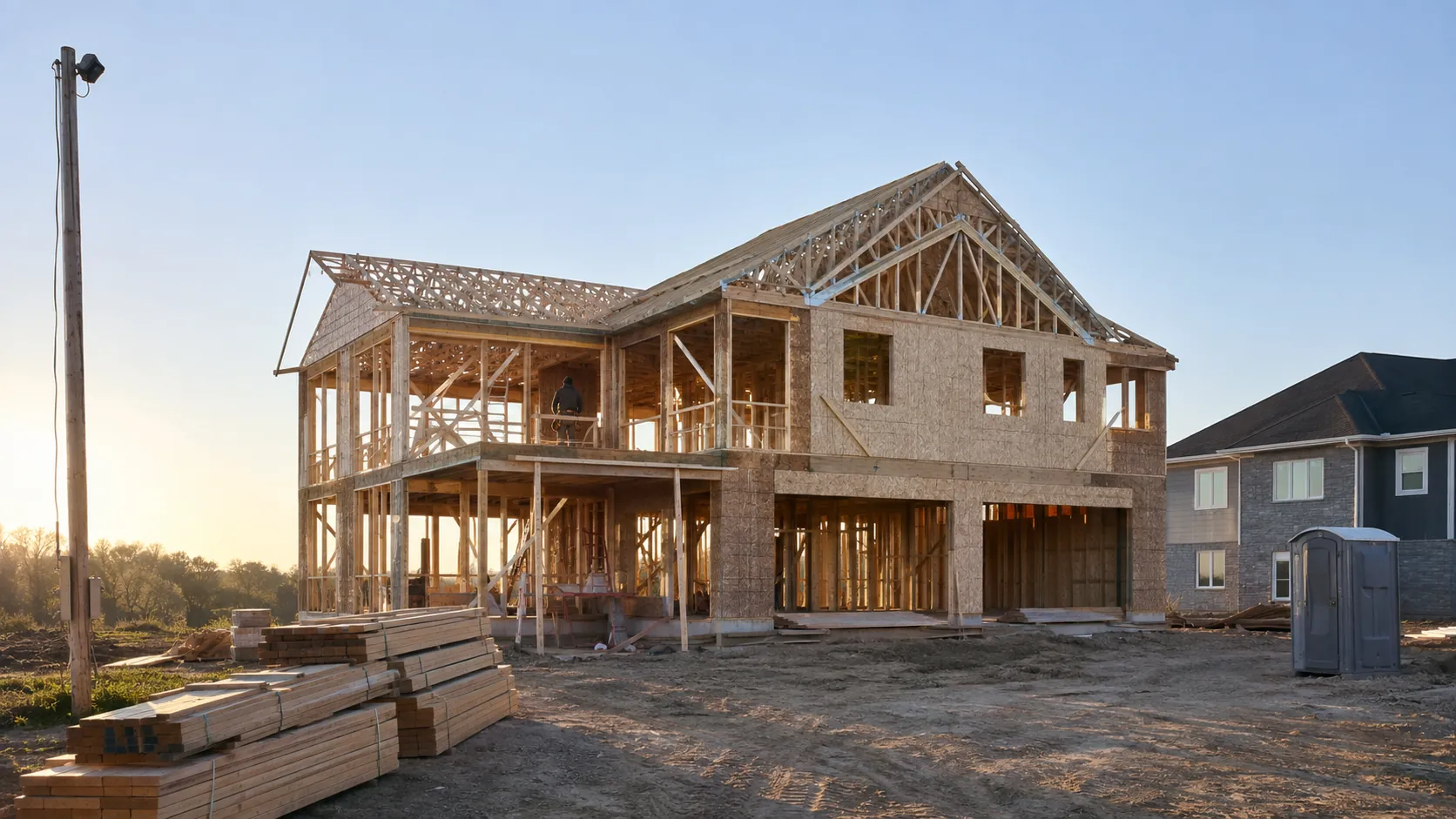
Homes at framing stage tell a buyer more about a builder than a finished exterior does.
A custom home is decided by a couple over a long stretch of time, usually on different devices, usually not in the same room, and usually alongside two other builders.
That changes what a good site is. It has to survive a third and fourth visit. Something that lands hard on the first read and has nothing left on the second is the wrong instrument for this sale.
It also has to be shareable. One of the two is doing the research and sending links to the other. Plans, process and completed homes are the three things that get sent, and they should each have somewhere to live that is worth linking to.
Plans are the single most-visited content on a builder's site and they are usually a low-resolution image in a gallery.
What happens between signing and moving in, and roughly when. Uncertainty is the thing that stalls these decisions.
A framing photograph tells a buyer more about your standards than a staged living room.
At this stage they are asking a question, not requesting a quote. The form should match.
This is the trade where a site earns its keep slowly, which is why the structure matters more than the first impression.
Recognise any of those?
Tell us which ones apply and we will say what we would do about them. No obligation and no sales sequence.
Finished homes prove you can do it. Floor plans let someone imagine living in one. Most builder sites do the first well and the second badly.
A gallery of exteriors tells a buyer you build attractive houses. It does not tell them whether the kitchen opens onto the living space, whether there is a main-floor primary suite, or how the plan handles a family with three kids. Plans answer that, and buyers spend real time with them.
Presenting plans well means square footage, bed and bath counts, the floor plan image itself, and a short honest description of who the plan suits. Where you have built a plan already, connecting it to photos of the finished house is the strongest thing a builder's website can do.
Exteriors and interiors from houses you have actually delivered, grouped so a visitor can browse rather than scroll.
The plans you build, with the specifications a buyer compares on, presented so they are readable on a phone.
Where you are building now, when that is part of how you sell.
A word on scope: within seven pages, plans and homes live in structured sections, not as one page per plan. Builders with twenty plans and six communities usually need more than the standard project, and we would rather say that here than halfway through the build.
The process page is the one that separates builders, because almost nobody has done this before and everybody is nervous about it.
A first-time buyer does not know what happens between signing and moving in. They do not know when selections are made, what an allowance is, who manages the schedule, how change orders work, or what happens if lumber prices move. A builder who lays this out in their own words looks like the one who has done it a hundred times, because they have.
It is also a filter, and a useful one. A buyer who reads your process and is comfortable with it arrives at the first meeting ready. A buyer who reads it and disappears was never going to be a good fit for how you work.
All sixteen come from the same five directions. A builder's site is read over months rather than minutes, usually by two people talking to each other, so the direction we pick is the one that still reads well on a third visit rather than the one that lands hardest on the first.
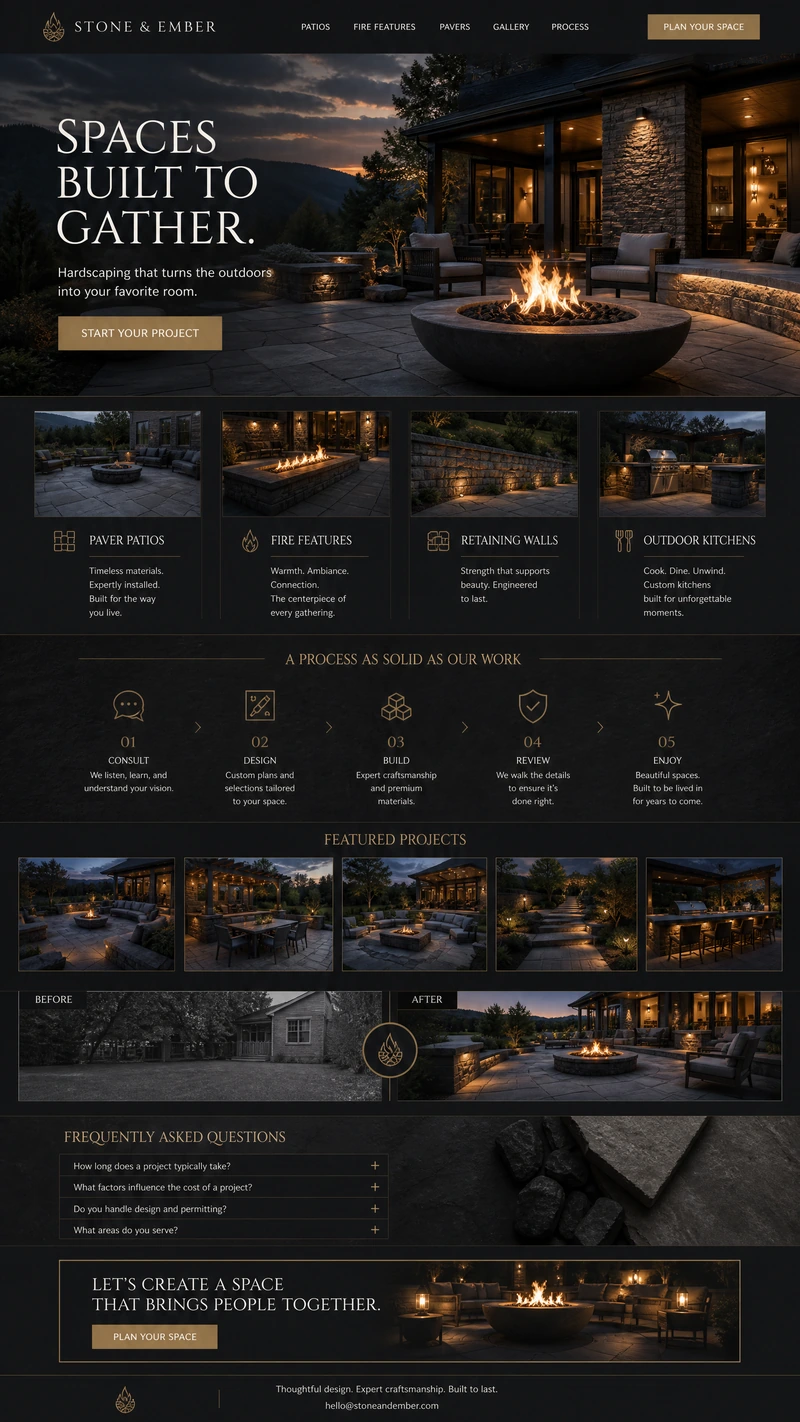
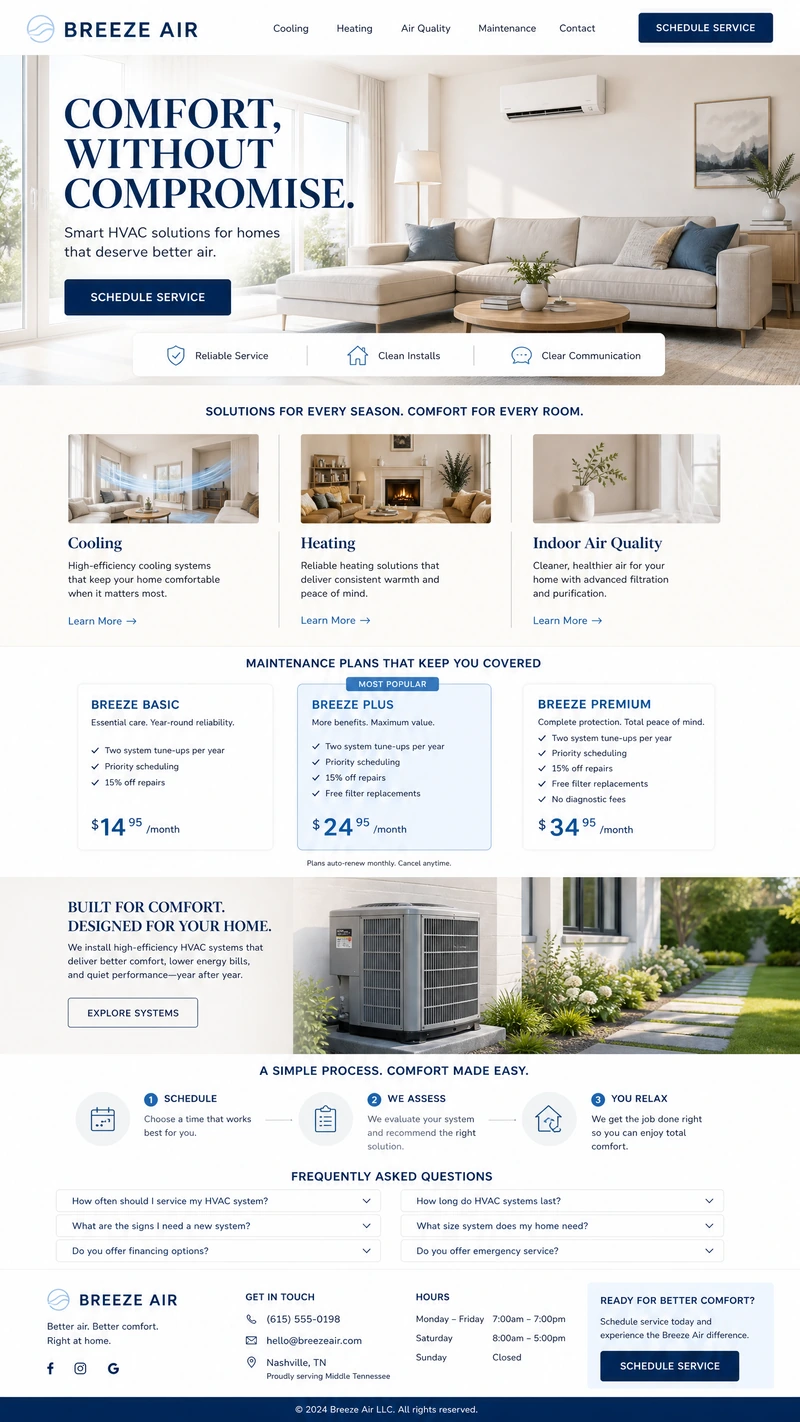
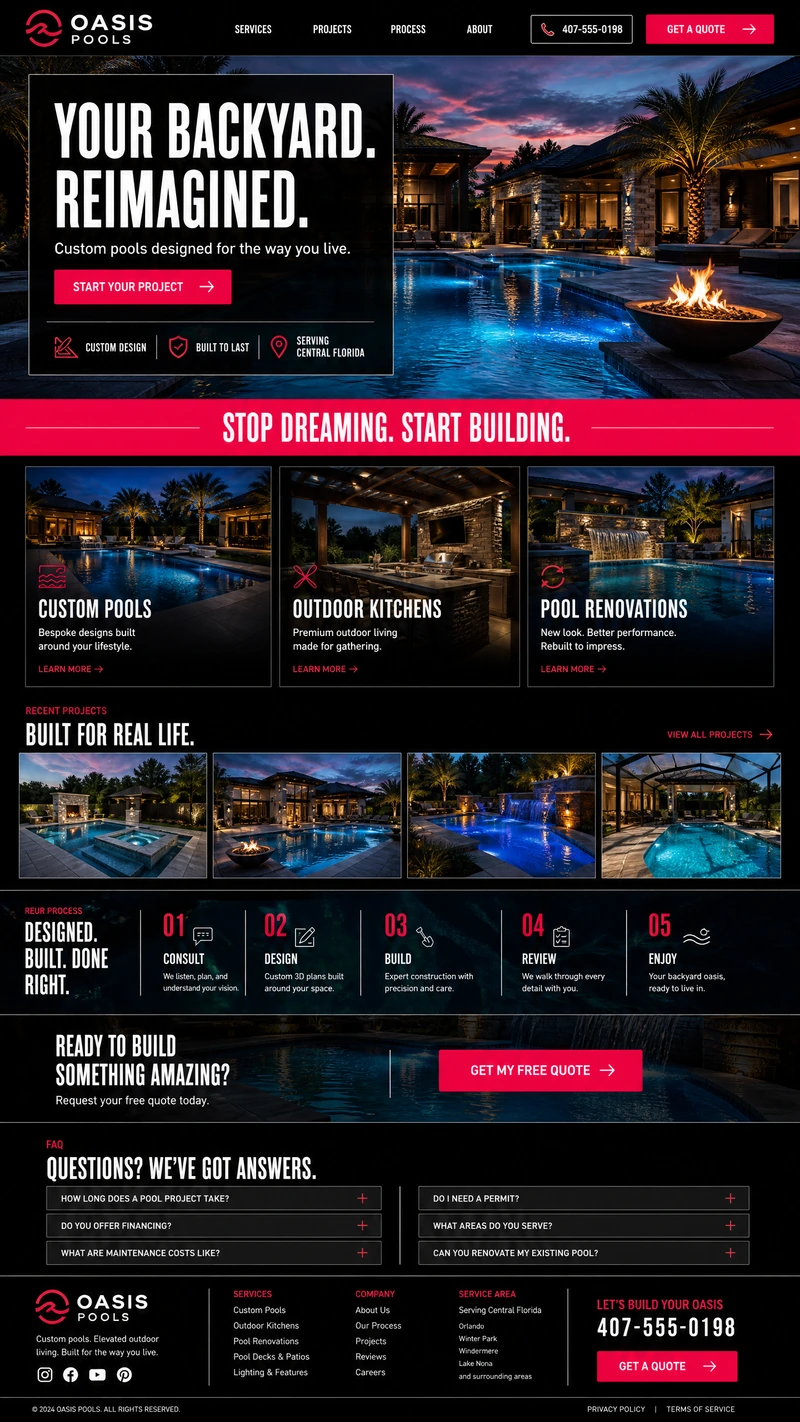
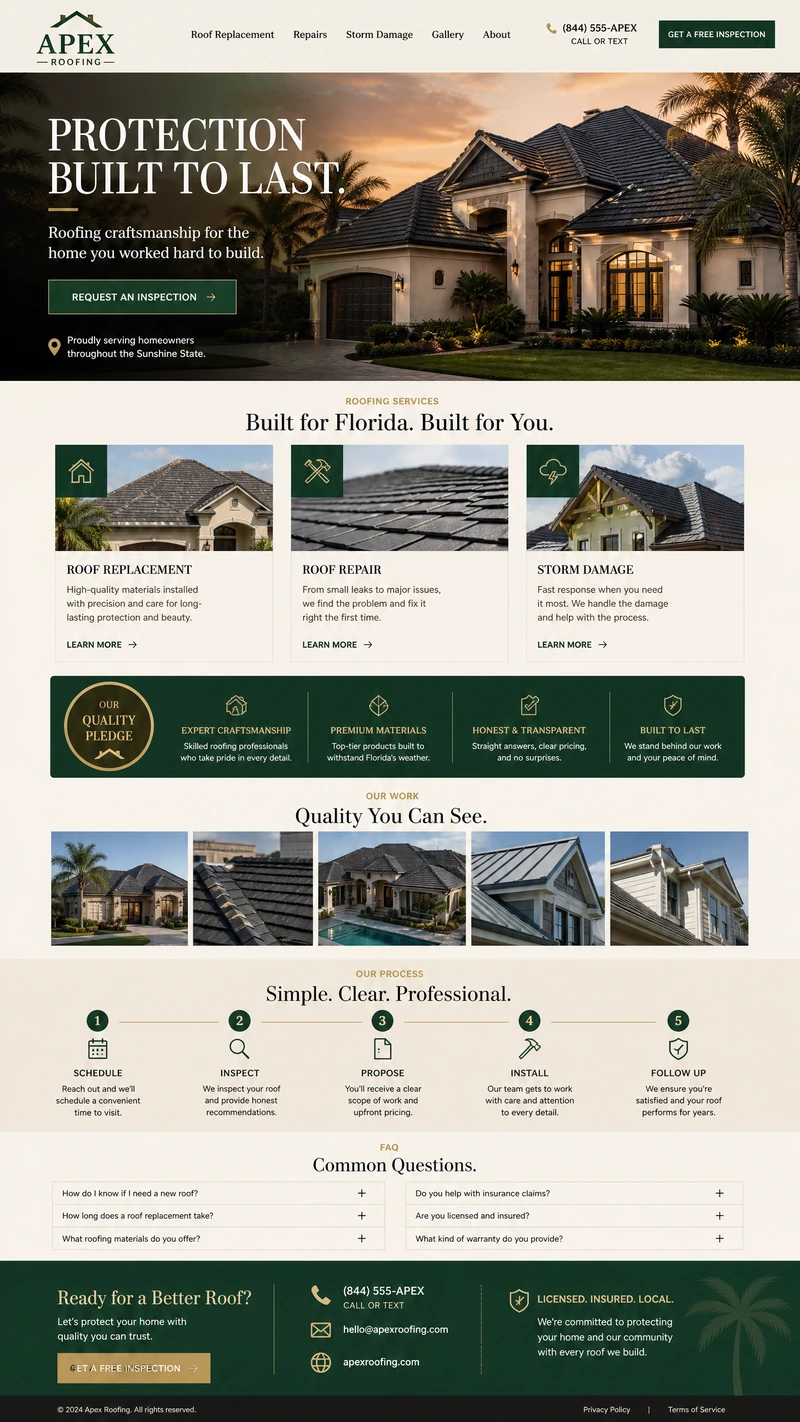
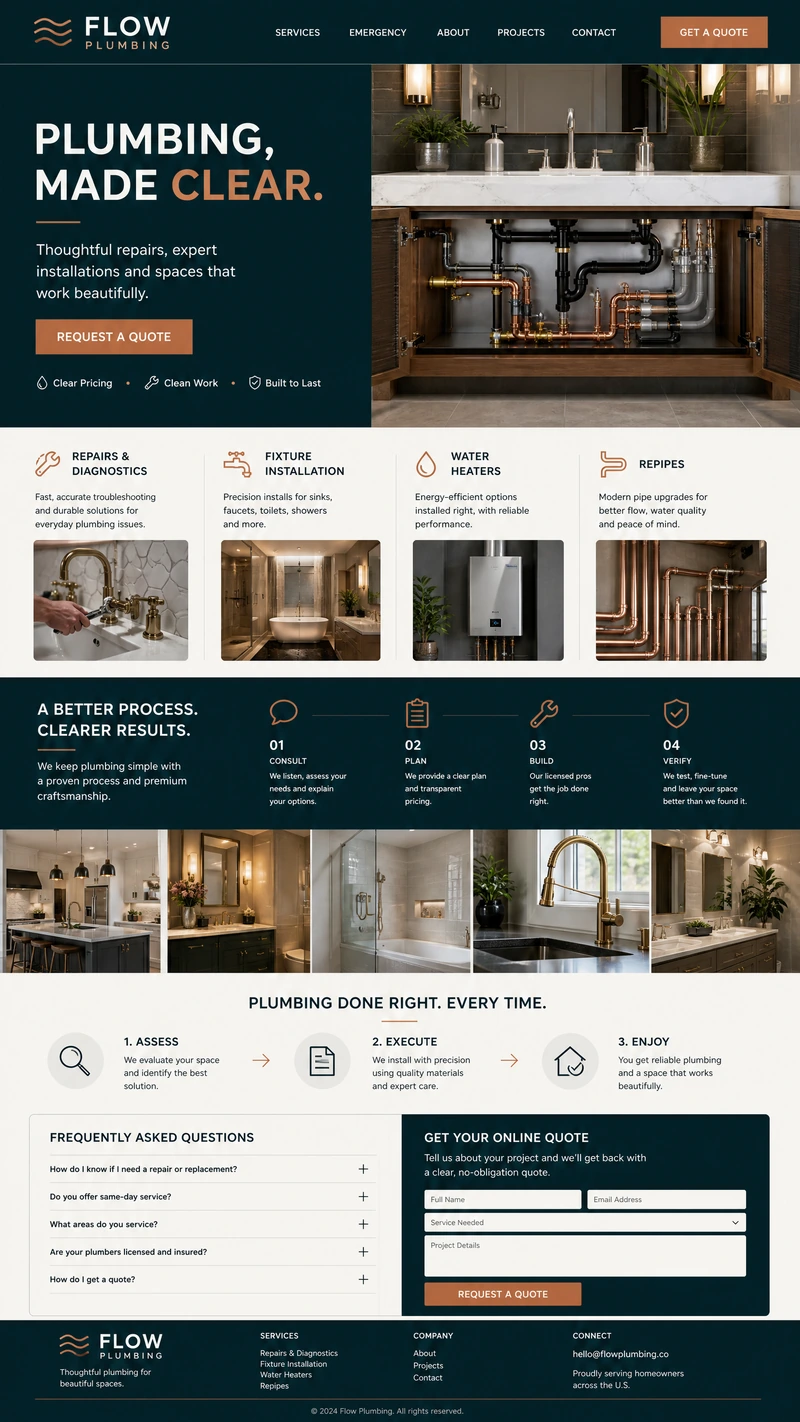
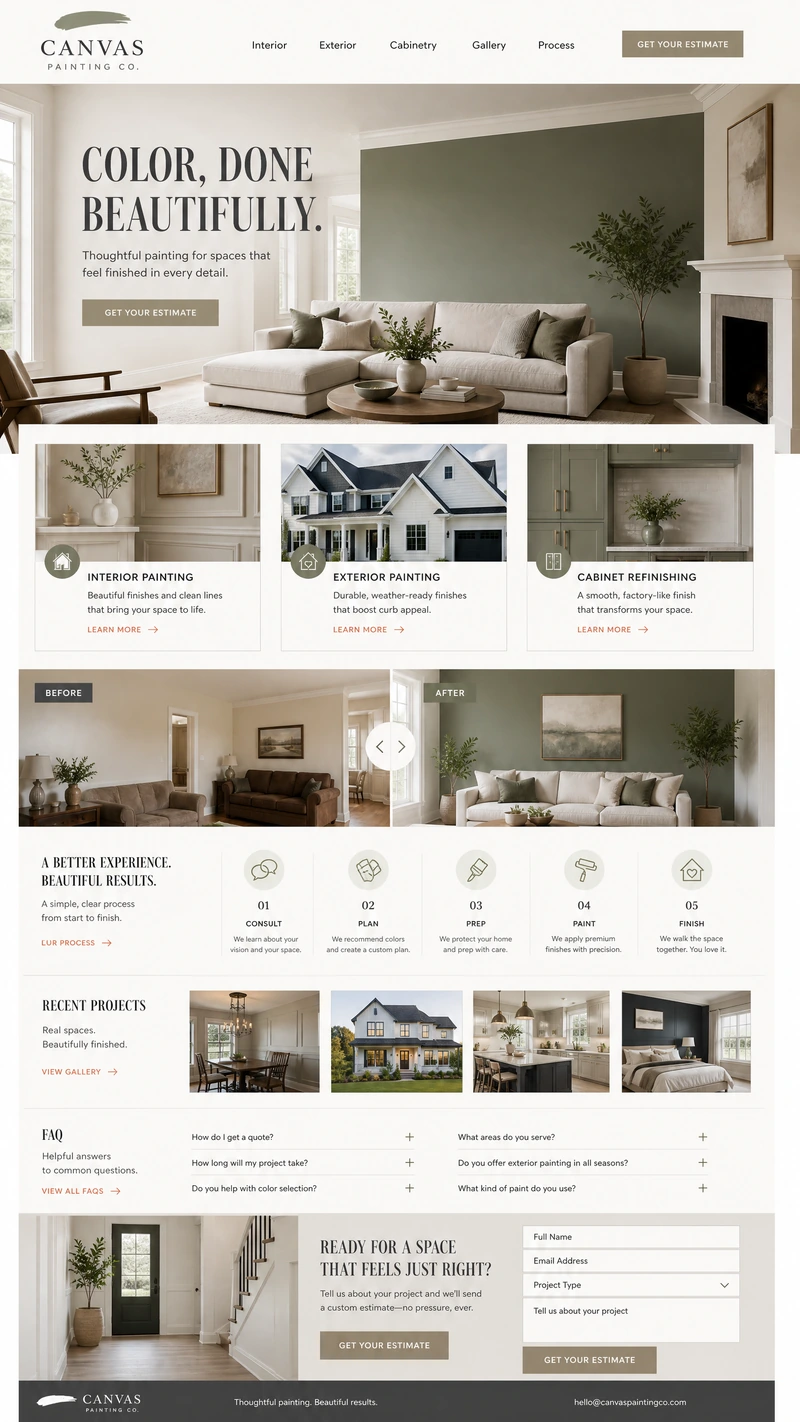
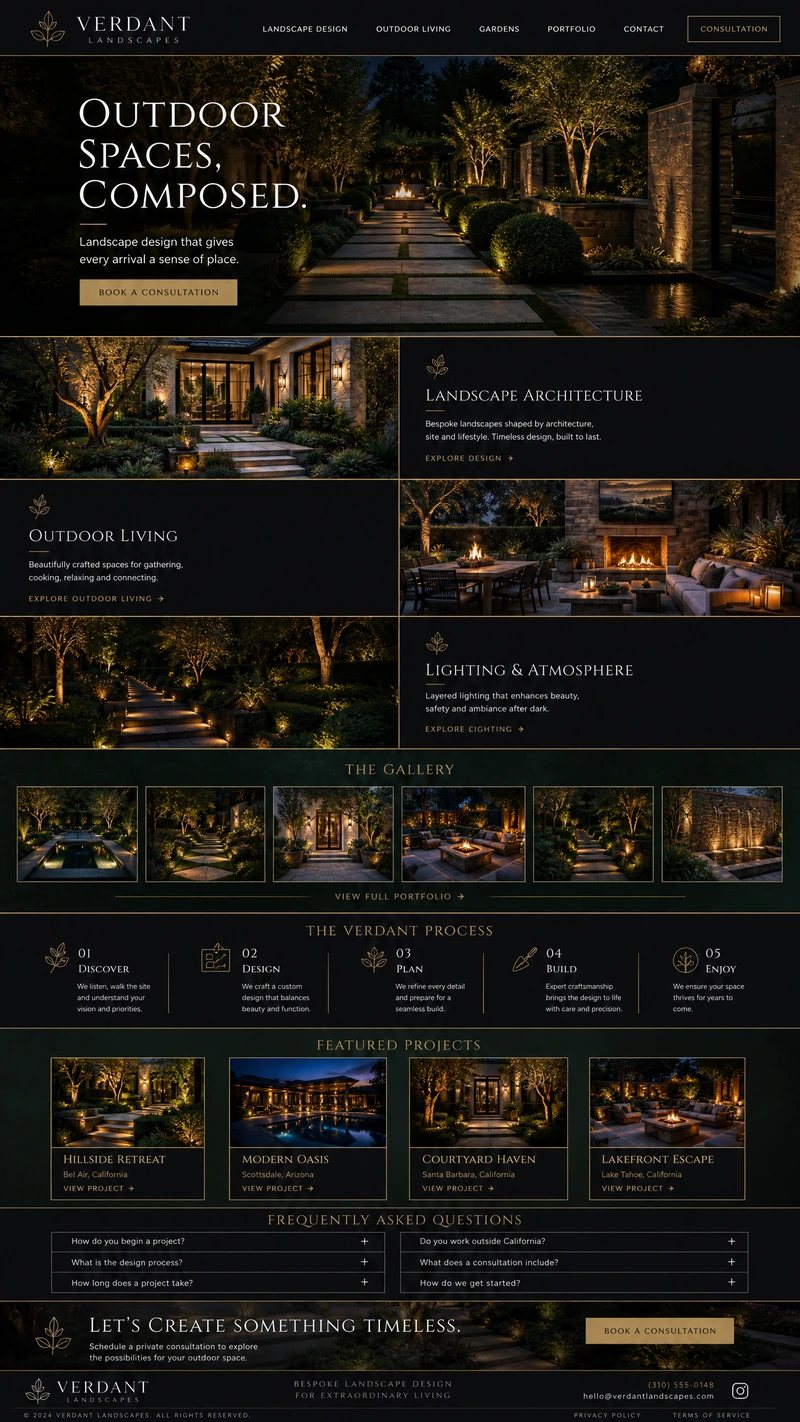
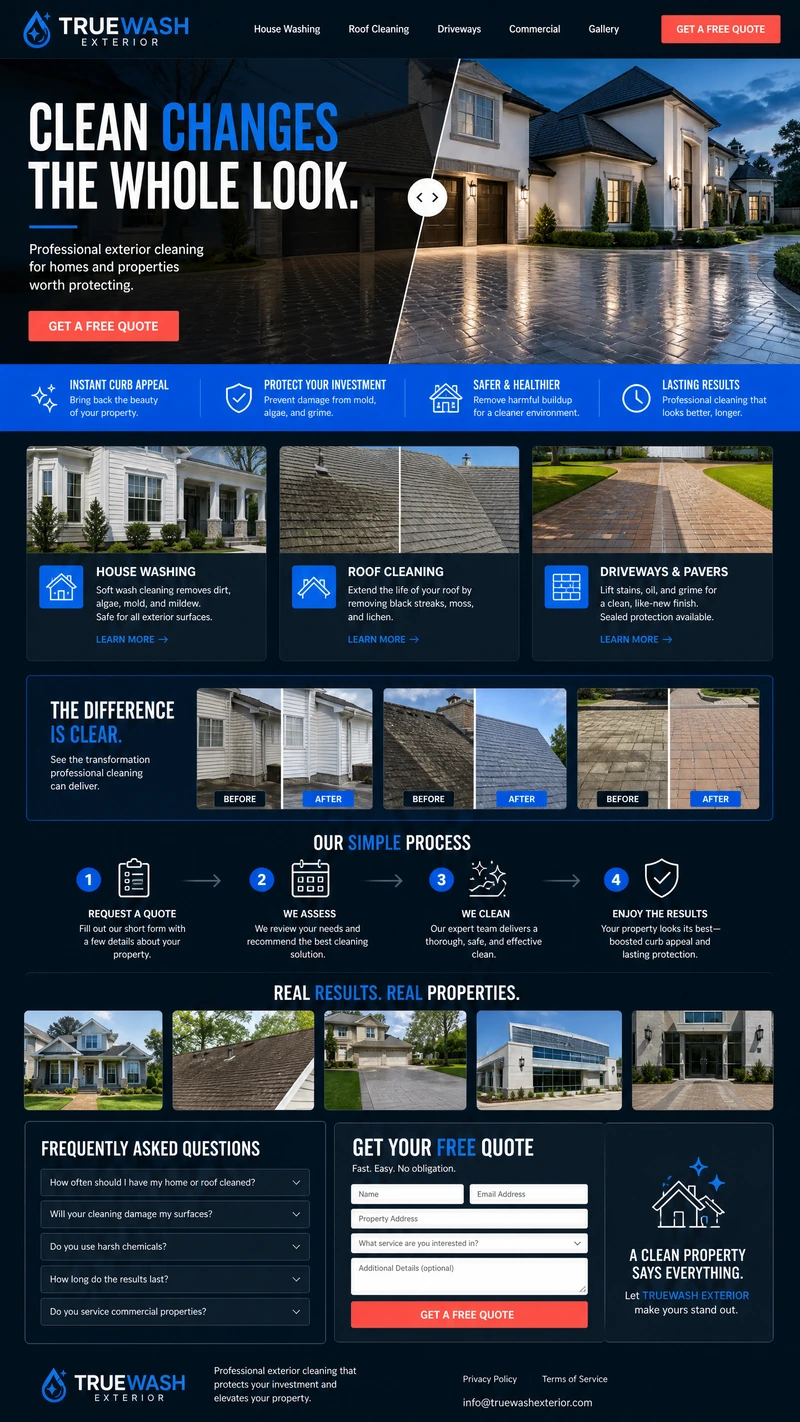
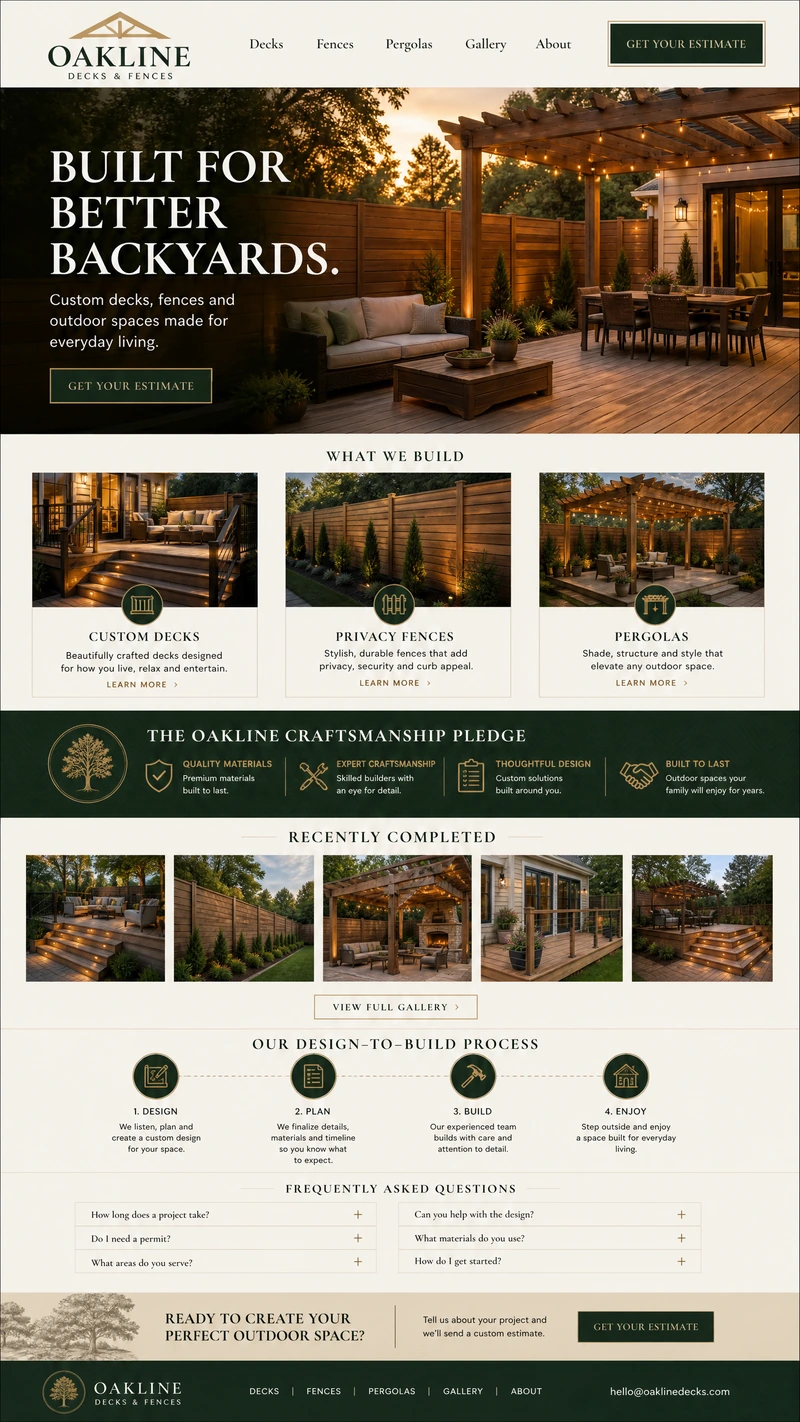
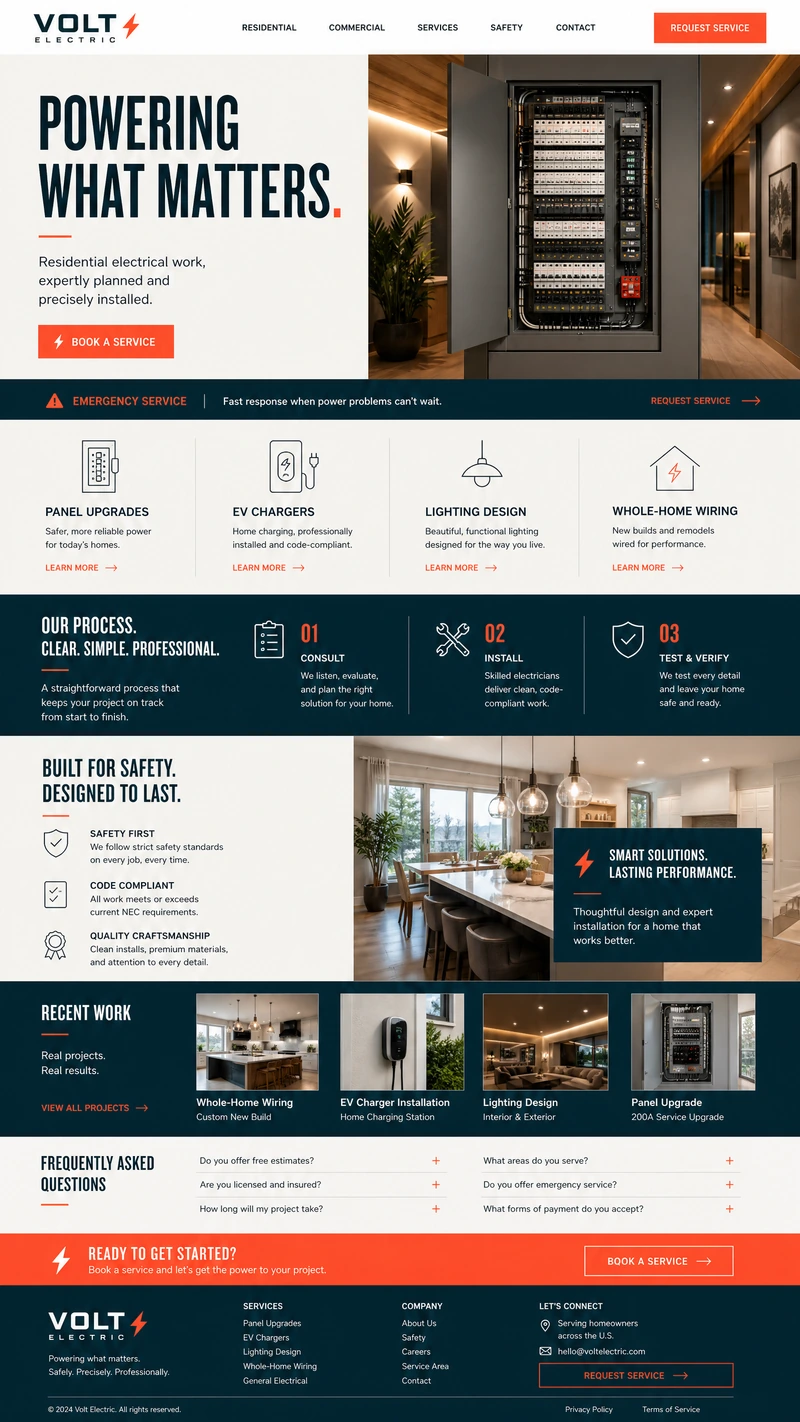
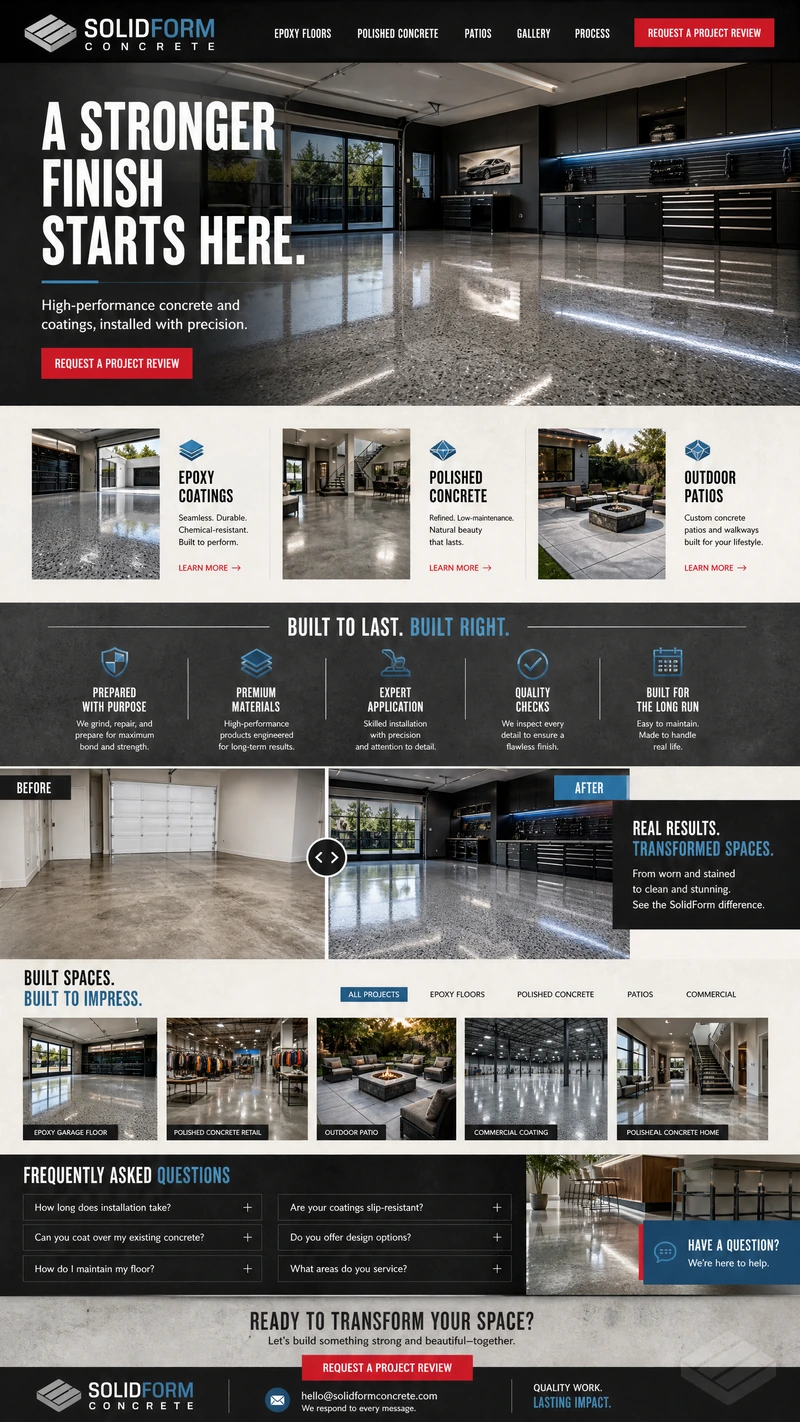
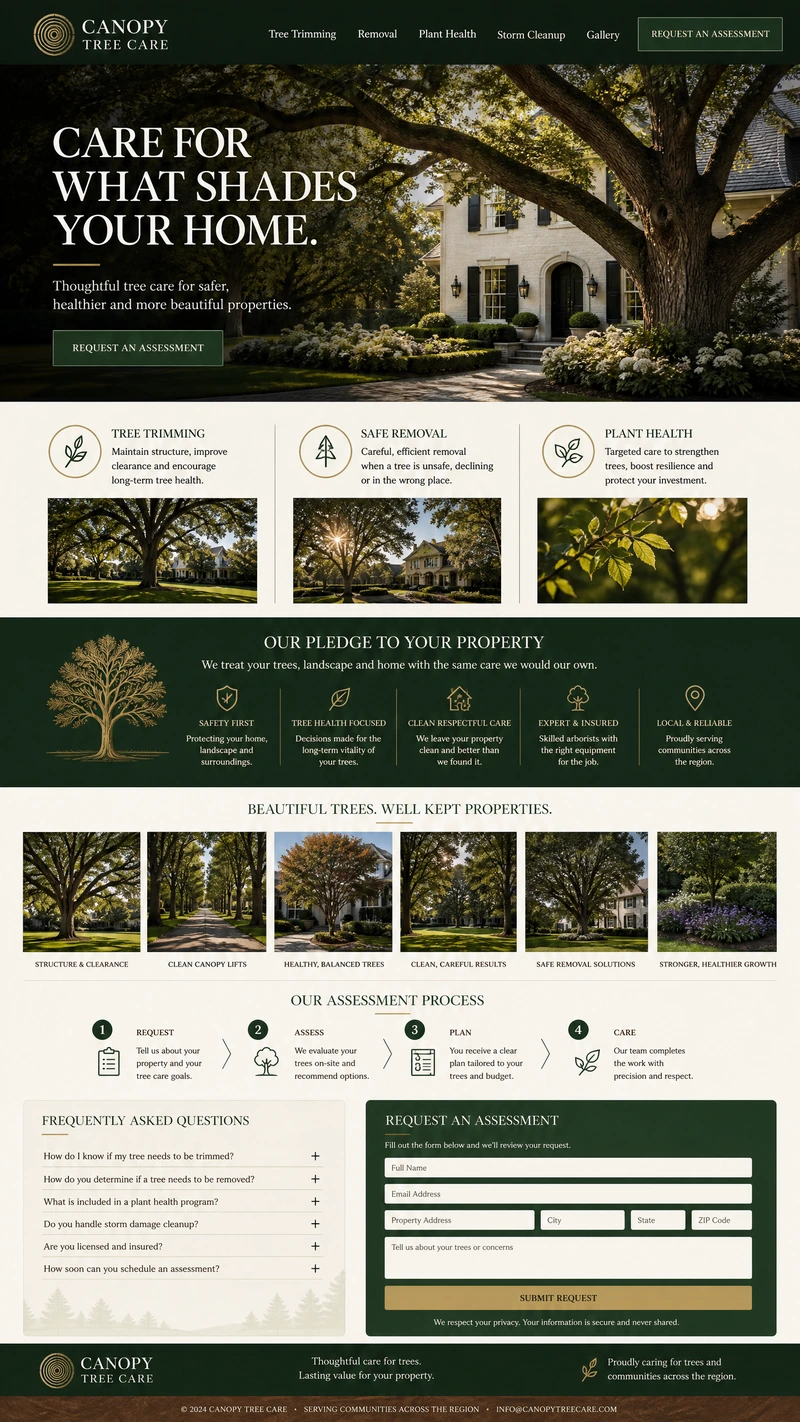
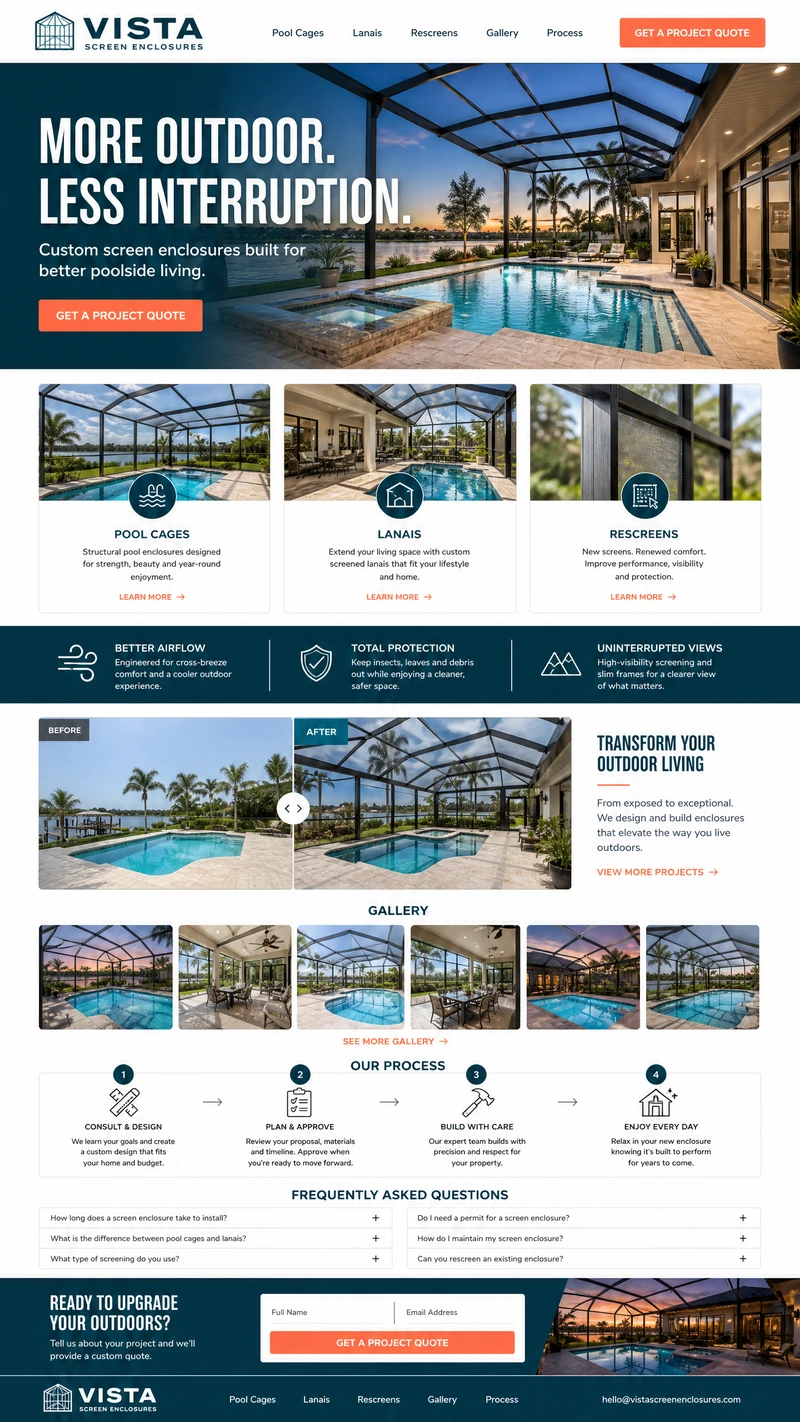
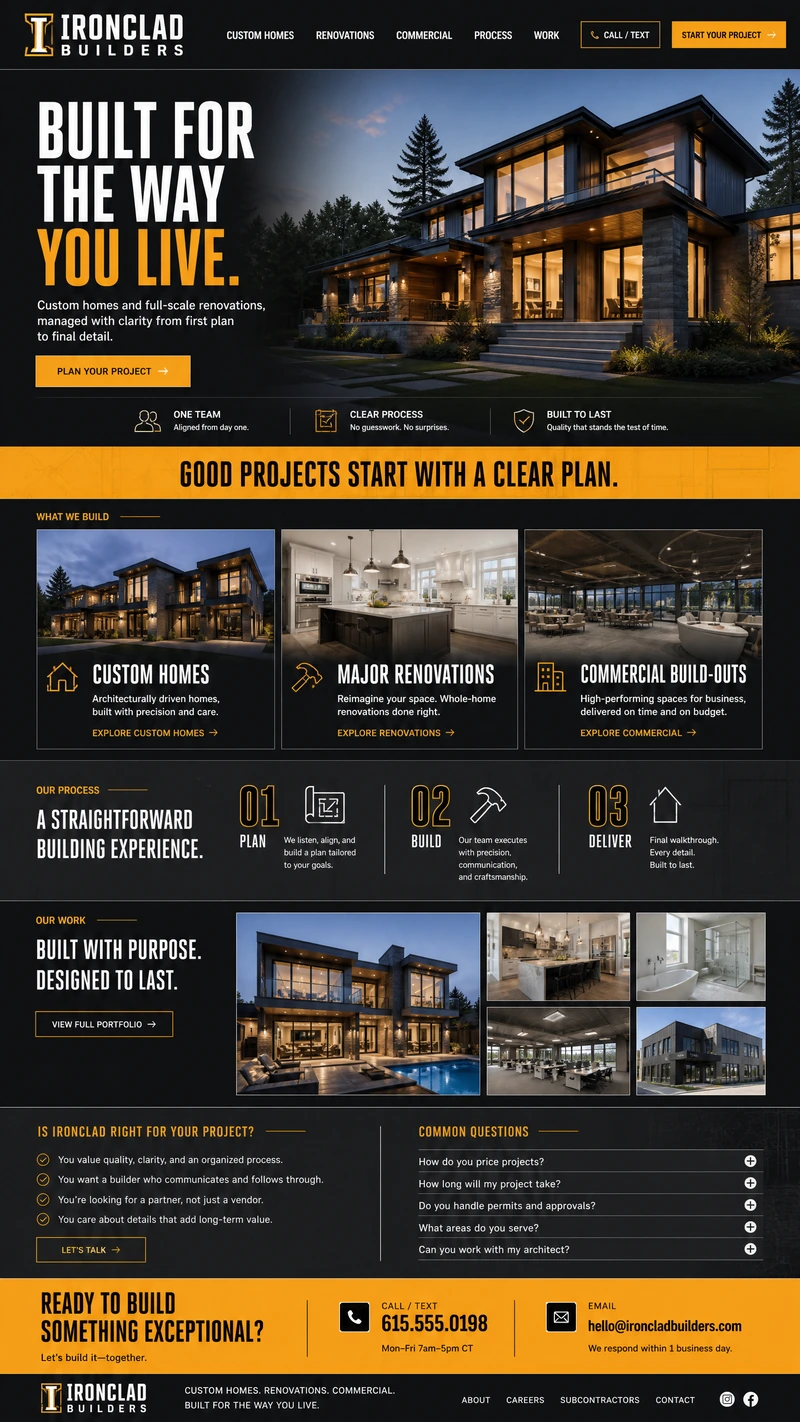
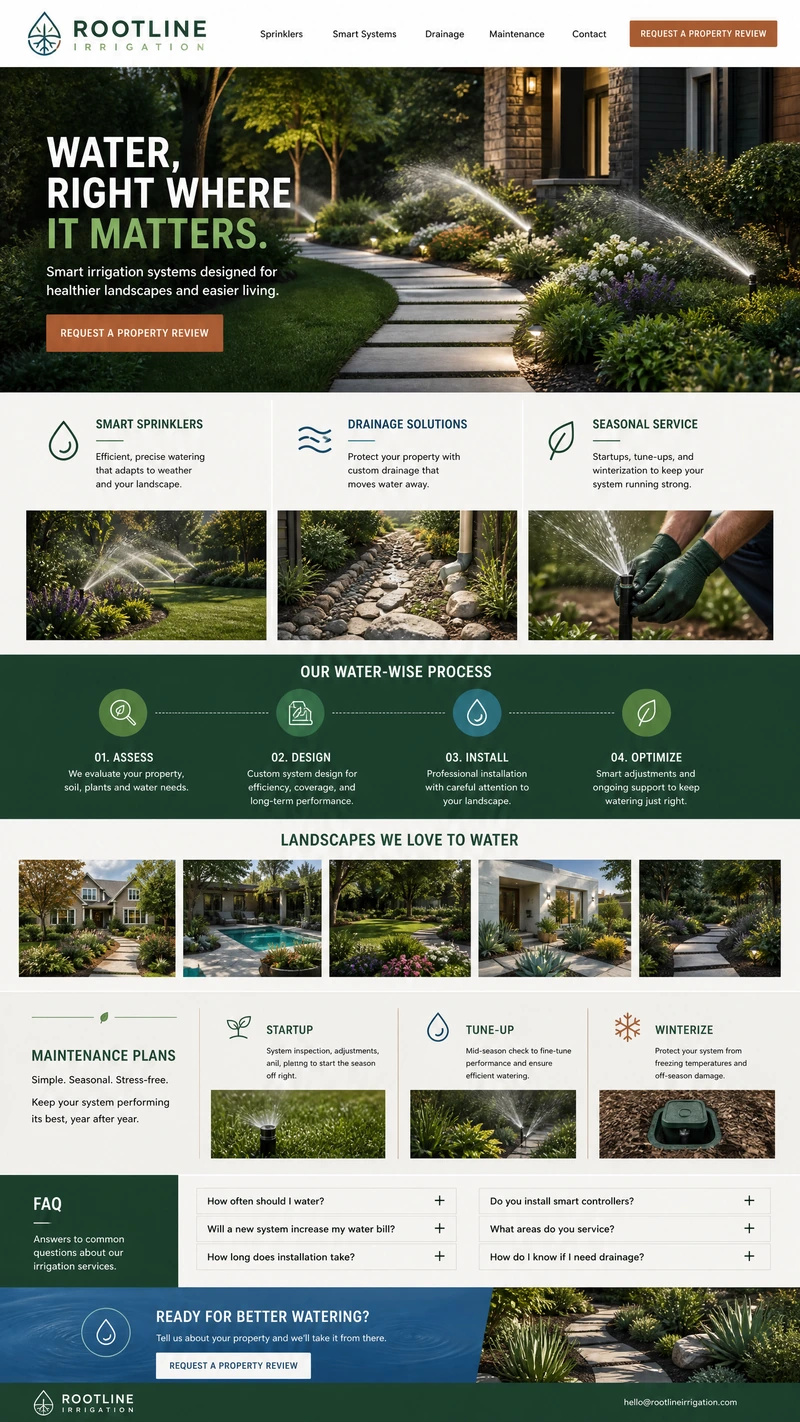
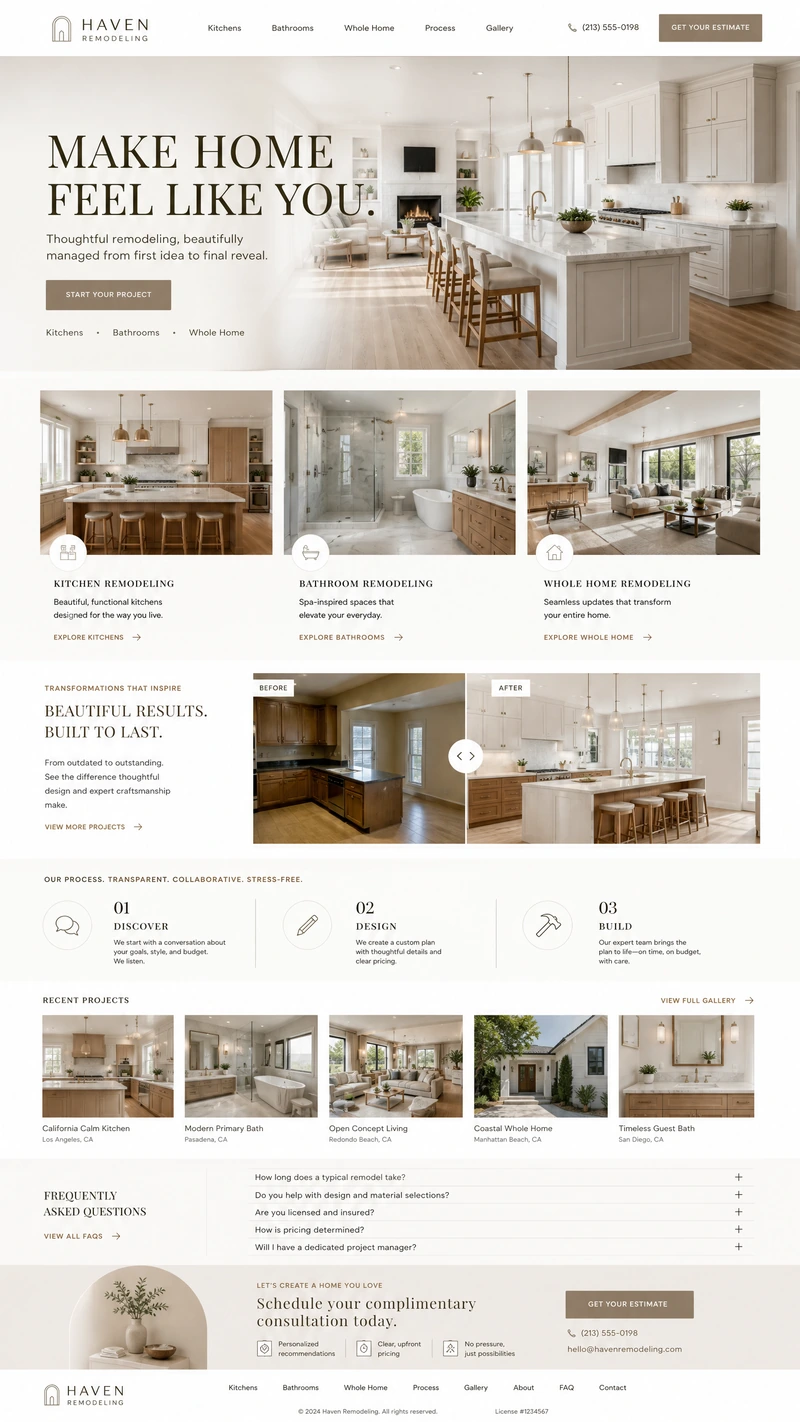
Design concepts produced in the studio, not client projects. Yours would be built for your business, from the same five directions.
Detail is what makes a builder credible. Specific homes, specific decisions, specific outcomes carry more weight than any adjective.
A project presented with its square footage, its plan, the site it sat on and a note about what the family wanted reads as real. The same photos with no context read as stock. Buyers can tell the difference immediately, and they are looking for it.
Client stories work the same way, if you have them. A short account from a family you built for, in their words, is worth more than a page of claims about craftsmanship. If you do not have any yet, we build the site without them rather than filling the space with something invented.
Everything here is yours: your homes, your clients, your words. We build the structure. We do not write testimonials, invent projects or supply client stories.
One price, up to seven pages, and a complete site rather than a template you finish yourself.
Domain and hosting are separate and belong to you. No monthly fee for the website is paid to us.
$1,497 total. $500 to start the project, $997 after you approve the final version and before it goes live.
First preview within five business days of the initial payment clearing and your briefing and materials being approved for production. Three consolidated rounds of revisions after that.
For builders, gathering the materials is usually the long pole: photography, plan drawings and specifications take longer to assemble than the site takes to build. Starting that early is the single thing that moves your launch date.
You tell us the services you sell, the area you cover and what you want the site to do. This is a form, not a meeting, and it is where the structure gets decided.
Photographs of your own work, your license and insurance details, and anything that has to appear on the site.
We draft the page plan and write the words from your briefing. You see both before anything is designed.
The complete site, within 5 business days of the initial payment and an approved briefing.
You review the whole site and send your notes together. Up to 3 consolidated rounds are included.
You approve the final version, pay the $997 balance, and we deploy to your hosting on your domain.
That is the whole process.
If it fits, the $500 initial payment starts it. If you would rather ask something first, the form is a few lines below.
Not within the standard seven-page project.
Twelve plans can be presented as a structured section with the specifications and images for each. A separate page per plan is a larger site and would be scoped and quoted as a custom project.
Yes, as a section you can keep current.
What is not included is a live listing feed or an MLS integration. Those are custom work with an ongoing data dependency, and they are not part of the $1,497.
Only if you want to publish it, and most builders do not.
Where builders do show something, it tends to be a starting range with the conditions attached. We publish what you confirm. We will never estimate a build price for you.
No. We display the visual material you supply.
If you already have renderings, virtual tours or drone footage, those can be presented on the site. Producing them is outside what we do.
Enough to fill a gallery honestly, which usually means a handful of completed homes shot properly.
It is worth being realistic here. A builder's site lives or dies on its images, and it is better to launch with four homes shown well than twelve shown badly.
Yes. You own the site and the hosting, so you can update it yourself or ask us.
Work beyond the original scope is quoted at the time. There is no retainer and no monthly fee.
Up to seven pages covering your homes, your plans and how you build. If you carry twenty plans and six communities, we will say so before you pay anything.
$1,497
One-time project price
This is the website price. SEO and advertising are separate services, quoted on their own.
The 5 business days start once your payment is in and you have sent us what we need to begin.
Carrying more plans than seven pages will hold?
Tell us what you need to showCustom, semi-custom or spec, how many plans and communities you carry, and what you have for photography. We will tell you honestly whether seven pages fits.