
Can a visitor tell in one glance that you do both?
Heating and cooling are searched separately and peak in opposite seasons. On the site they should be two routes, not two bullet points.
Websites, SEO and ads for small businesses$1,497 for a professional websiteYou own your domain and hostingNo monthly fees to us
HVAC website design
An HVAC company sells more distinct services than almost any other trade, and most HVAC websites bury them in one long list. We organise the site around how customers actually search: by the system that stopped working, or by the decision they are trying to make.
Up to seven pages, $1,497 total, deployed to hosting you own.
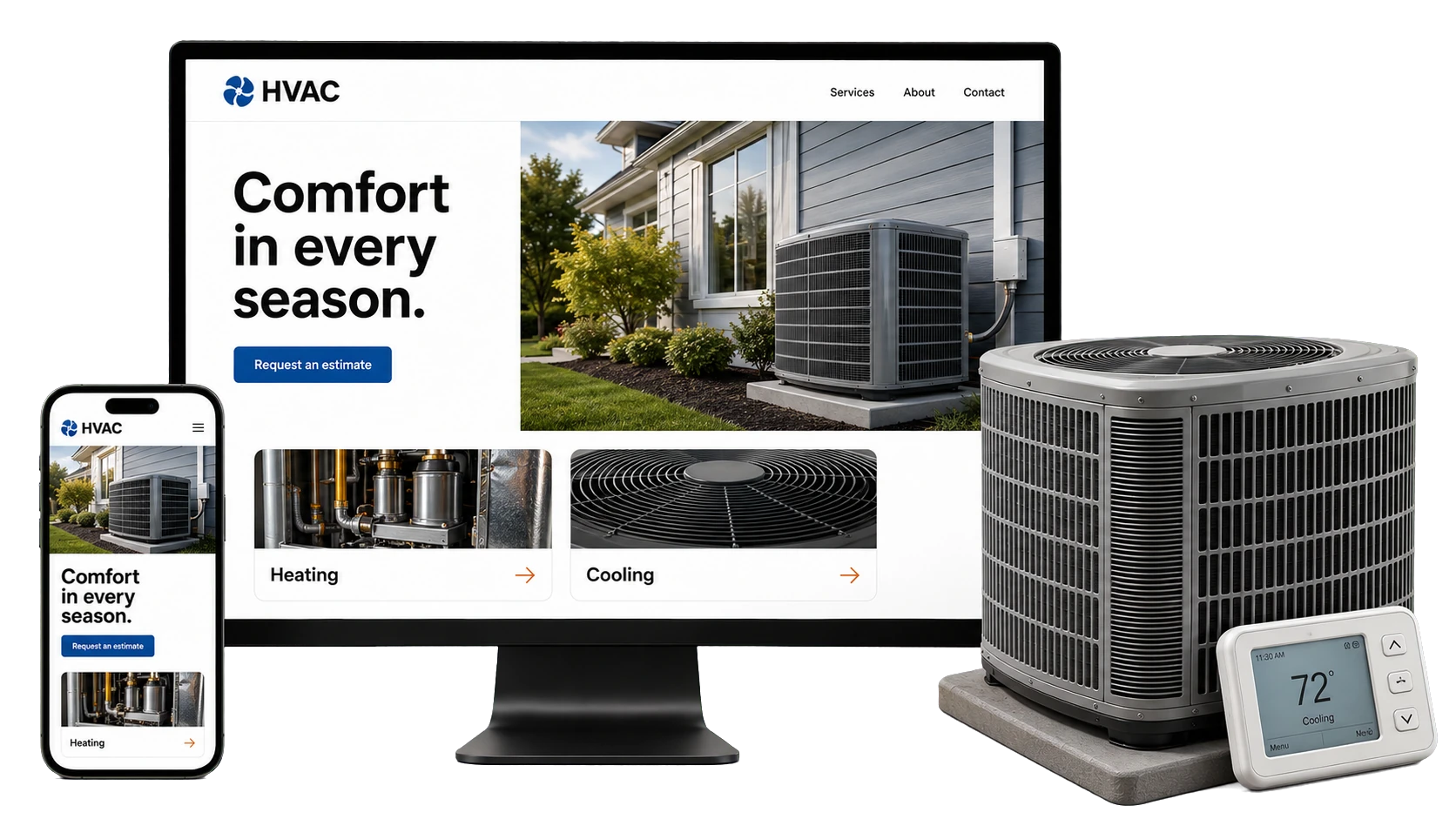
The site is planned around your service mix rather than around a generic home services layout.
Heating and cooling are two businesses under one roof, and they peak at opposite ends of the year. A site that treats them as one undifferentiated blob of services makes a customer in August read past furnace copy to find out whether you fix air conditioners.
There is also a third thing most HVAC sites underplay: the recurring side. Maintenance agreements are steadier revenue than either install season, and they need somewhere on the site that explains what a plan actually includes.
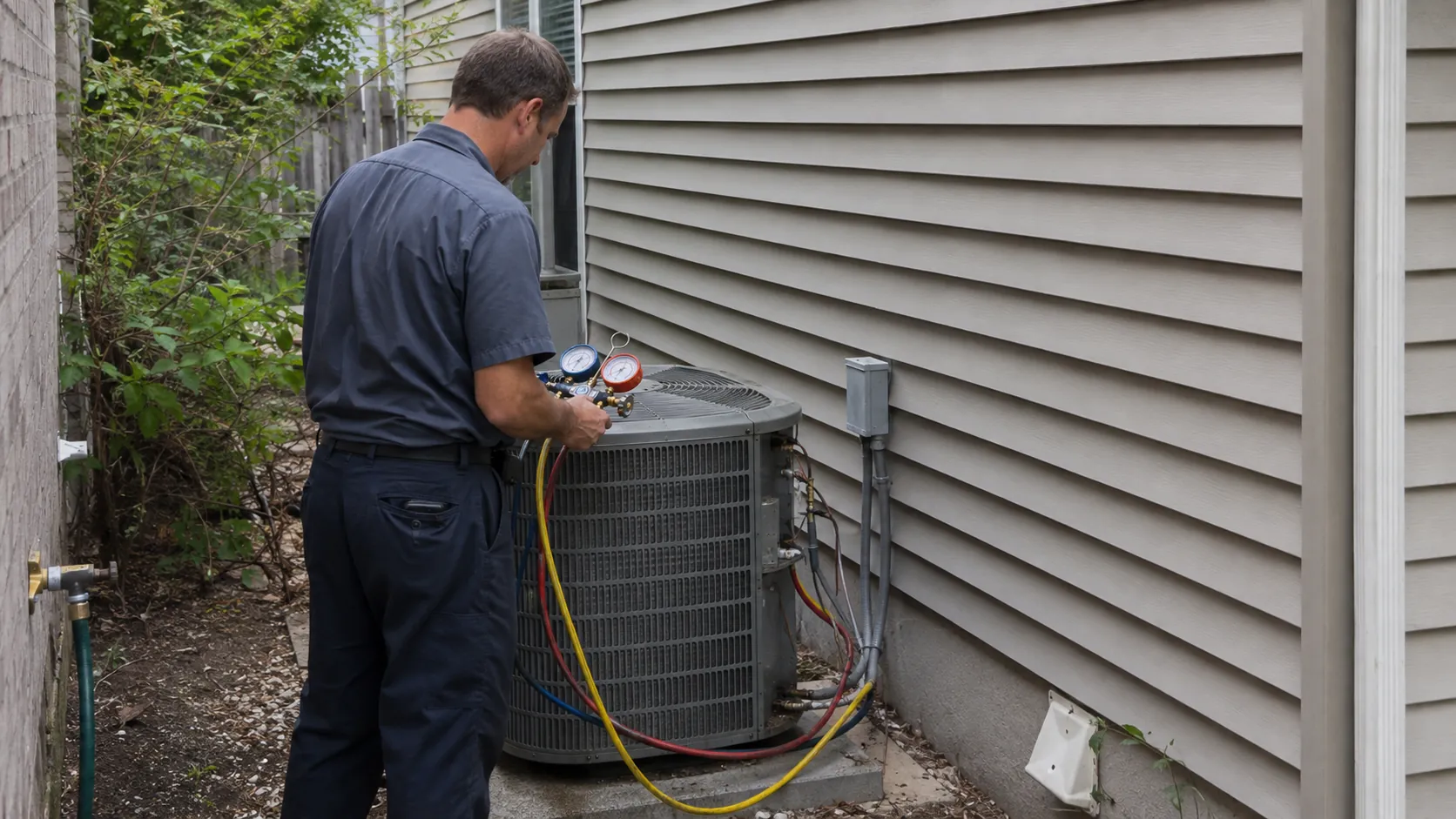
Equipment and service work photograph better than a logo. This is the side of the business a customer is hiring.
What people search for is decided by the weather, and your site has to answer whichever question is being asked this week without making anyone scroll past the other one.
In August nobody who found you cares that you install furnaces. In January nobody cares about condenser coils. A single combined services page asks every visitor to read past half of it, which is exactly the friction the site was supposed to remove.
Then there is the third business, maintenance agreements, which behaves like neither. It is recurring revenue sold to people who are not currently in trouble, and it needs to be explained rather than listed.
Heating and cooling are searched separately and peak in opposite seasons. On the site they should be two routes, not two bullet points.
What a visit covers, how often, what it costs to skip it. That does not fit in a services grid.
Knowing whether it is a furnace or a heat pump before you call back is the difference between one call and three.
If you charge differently after six, say so. Finding out on the phone is where goodwill goes.
The seasonal half of this is a content decision, not a design one, and it is worth making before the site is built rather than in October.
Recognise any of those?
Tell us which ones apply and we will say what we would do about them. No obligation and no sales sequence.
Three routes into the same set of services, because customers arrive knowing three different things.
Some know the system: the furnace is making a noise. Some know only the symptom: the house will not get warm. Some are not there for a repair at all and want to know what your maintenance plan costs. A single flat services list serves the first group and loses the other two.
Within seven pages you can give heating its own page, cooling its own page, and maintenance its own page, then let the home page route people to whichever is theirs. That structure is also what makes the site legible to search engines, because each page is about one thing.
Heating and cooling as separate pages, each covering the equipment you actually service and the work you do on it.
Repair, replace and install read differently and cost differently. Within each system page, they are distinct sections rather than a merged paragraph.
A maintenance plan page that says what visits are included, what they cover and how a customer signs up.
The repair or replace question is the most common thing an HVAC customer is weighing, and the site can answer it before you are standing in their basement.
A homeowner with a system that has failed once already wants to know how you think about that decision: what you look at, what makes a repair the sensible call, and at what point putting money into an old unit stops making sense. Setting out your own reasoning on the site does two things. It saves you the same conversation on every call, and it makes the eventual recommendation land as judgement rather than as a sales push.
If you offer financing, or if there are utility rebates in your area that customers regularly ask about, the site can say so. We describe what you offer and point people at the programme; we do not state what any utility or lender will approve.
Nothing on the page will claim a system lifespan, an efficiency gain or a saving figure. Those vary by equipment, by home and by climate, and inventing one would be the kind of number the site should not carry.
Every site we build starts from one of five design directions. For a heating and cooling company the direction has to survive a navigation that carries heating, cooling and maintenance without any of them being buried, which rules some of these compositions out and is exactly the sort of thing we settle before design starts.
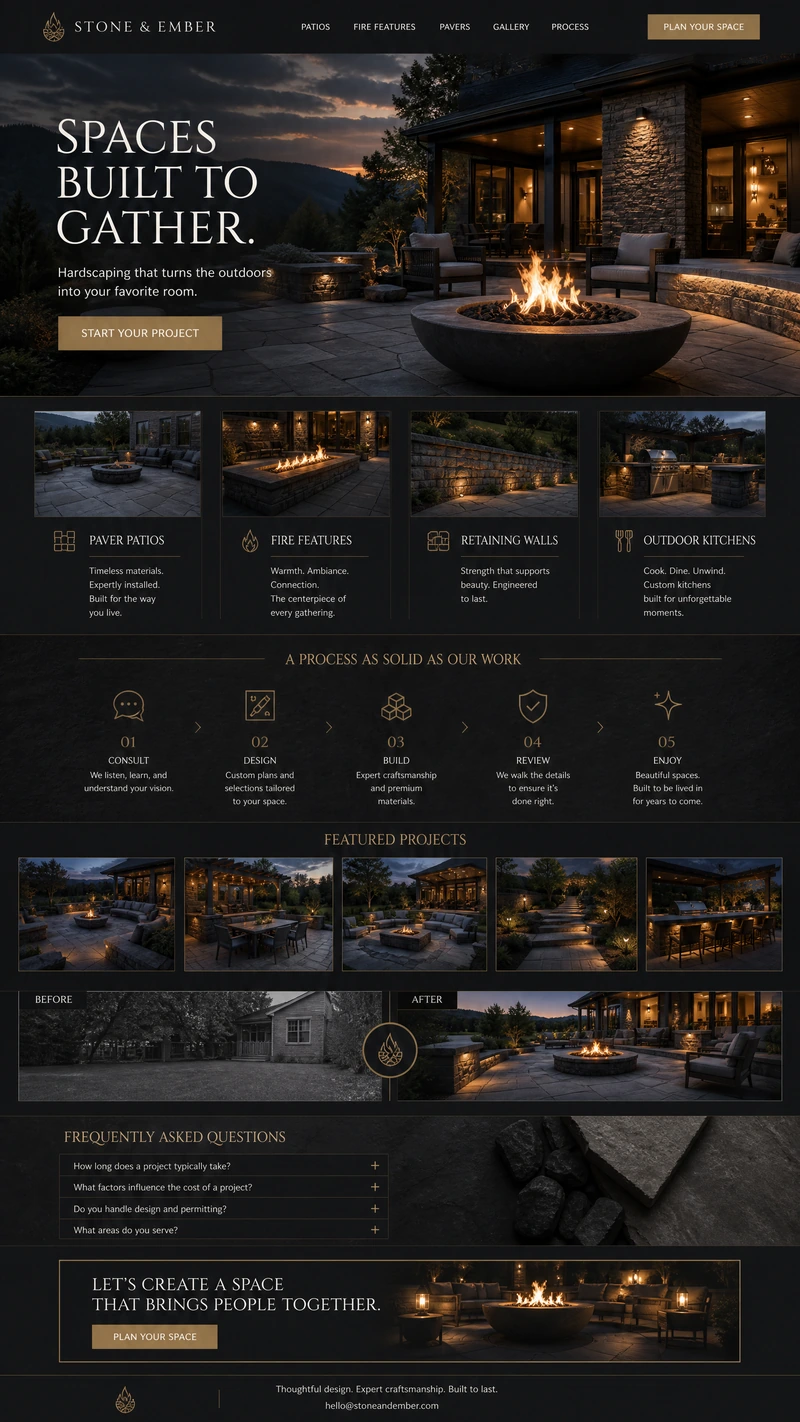
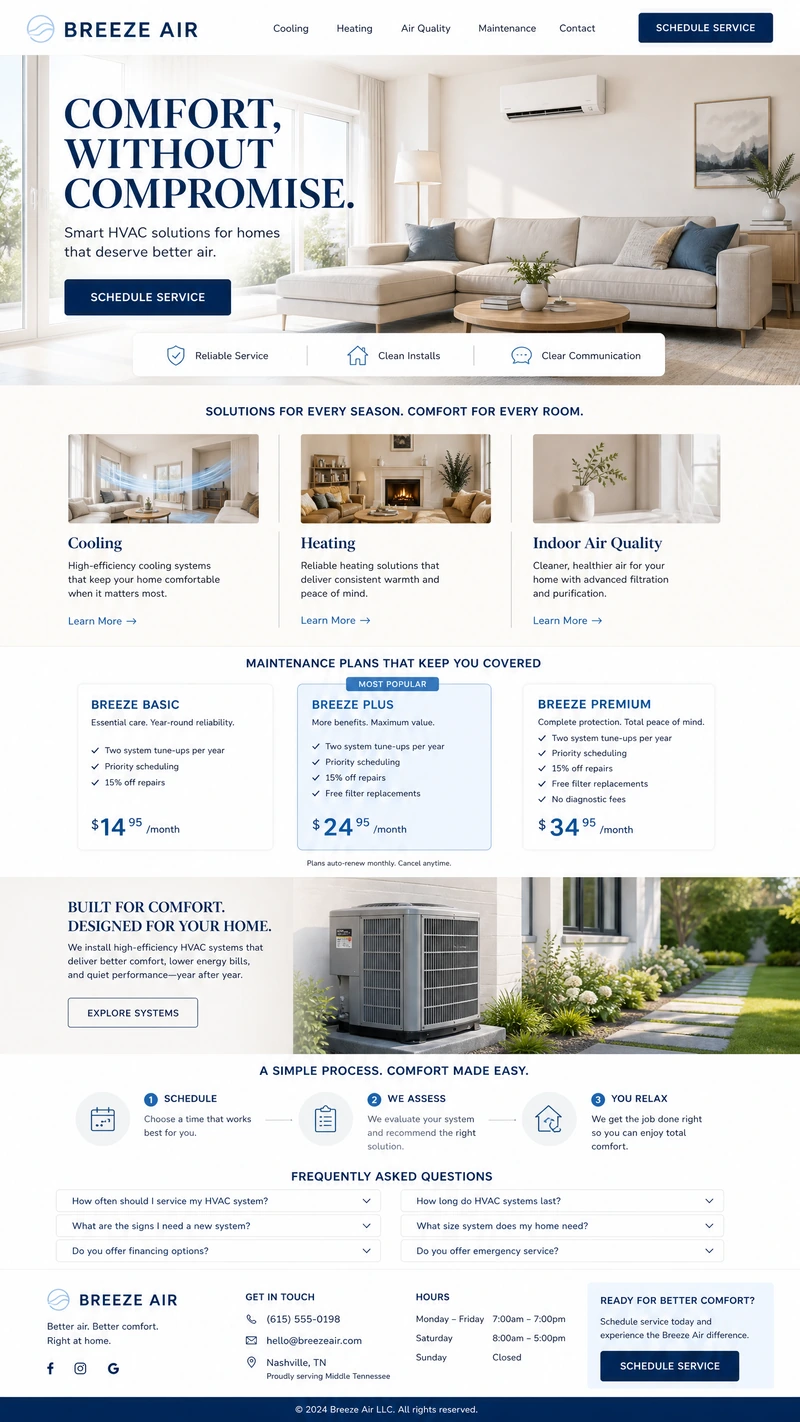
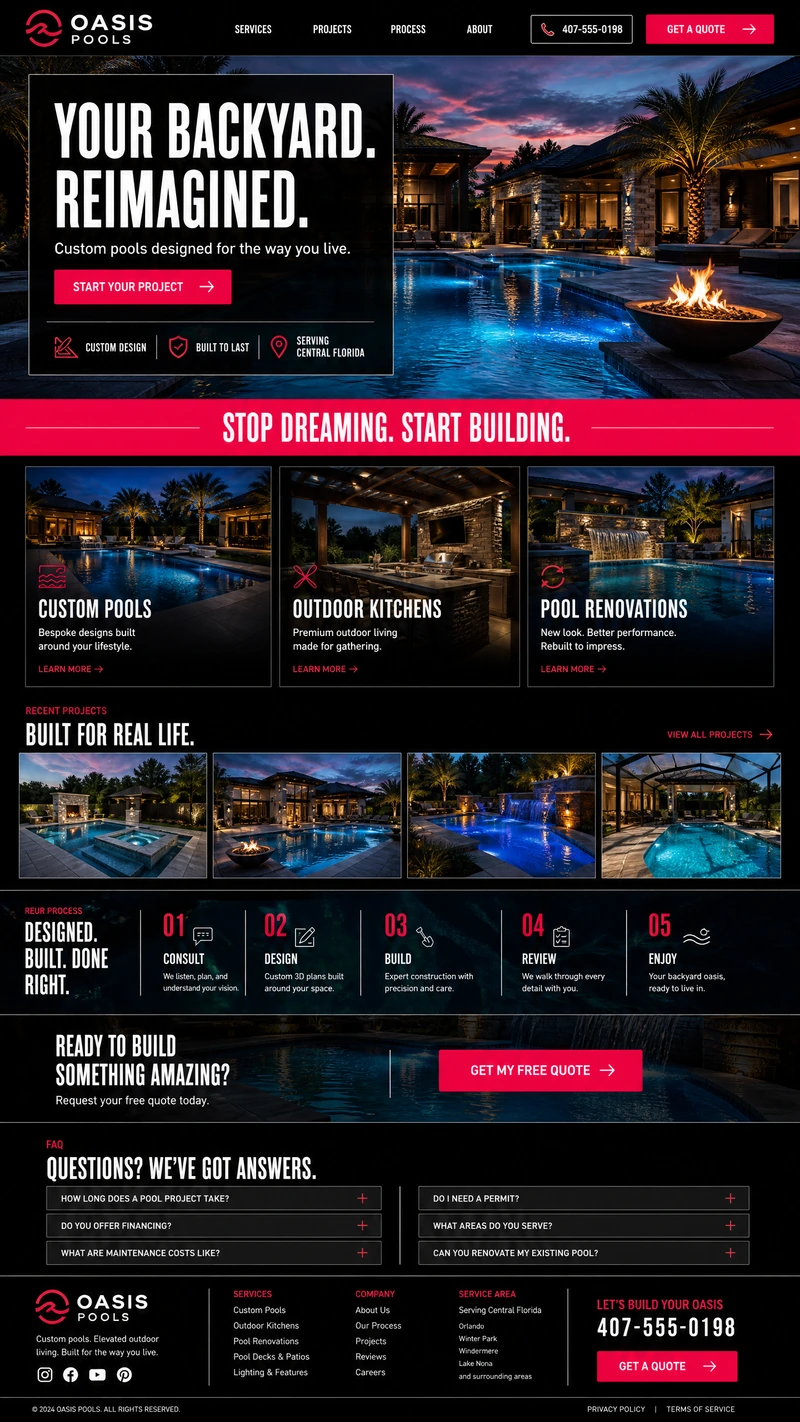
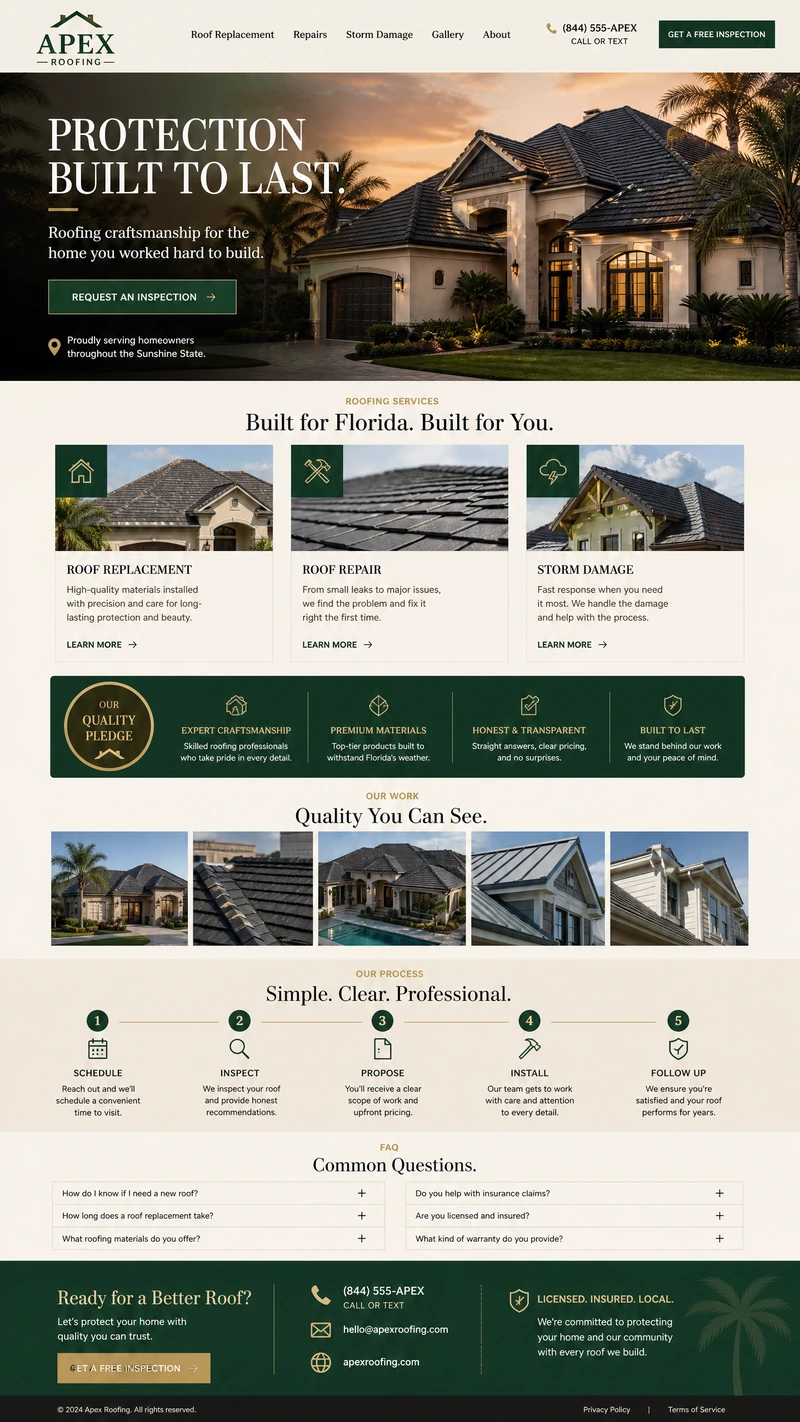
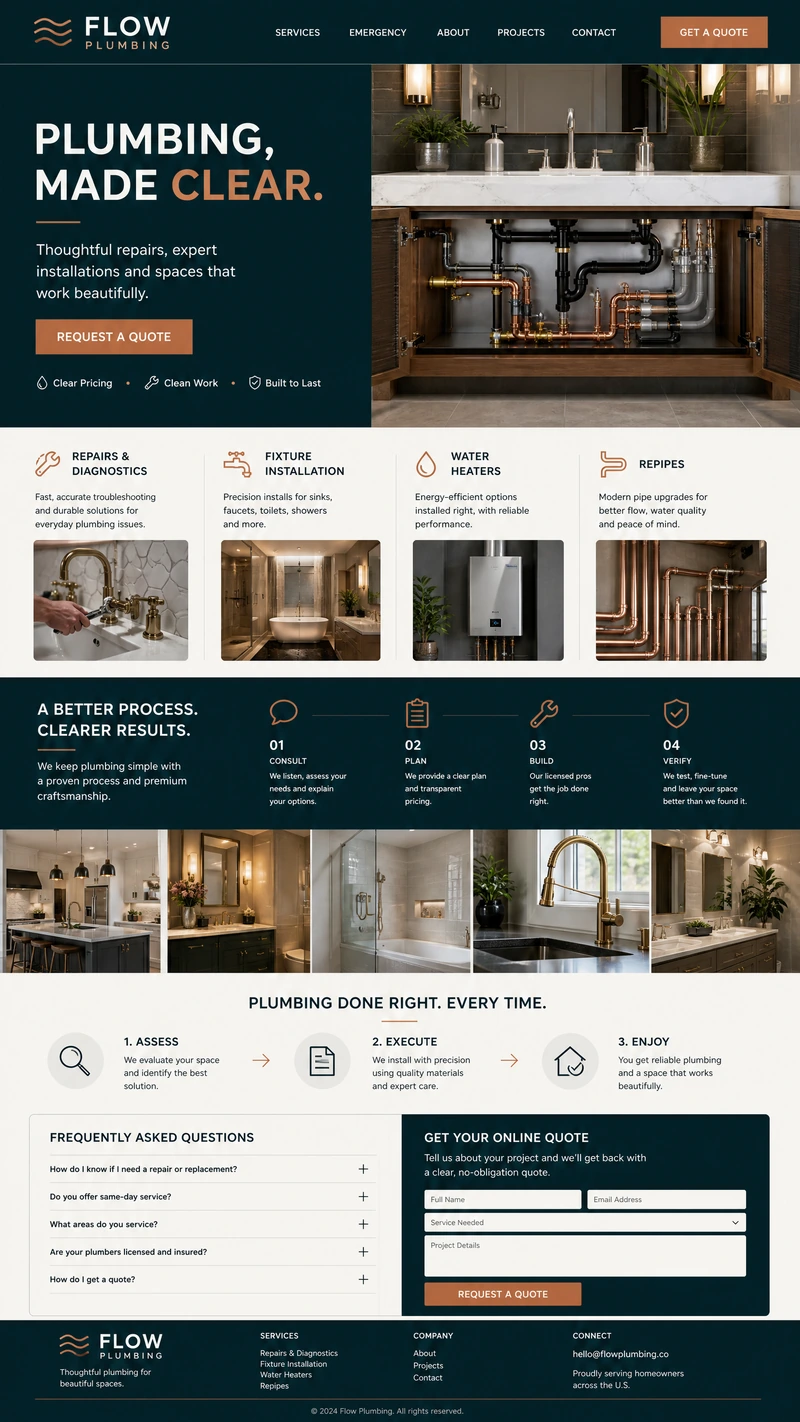
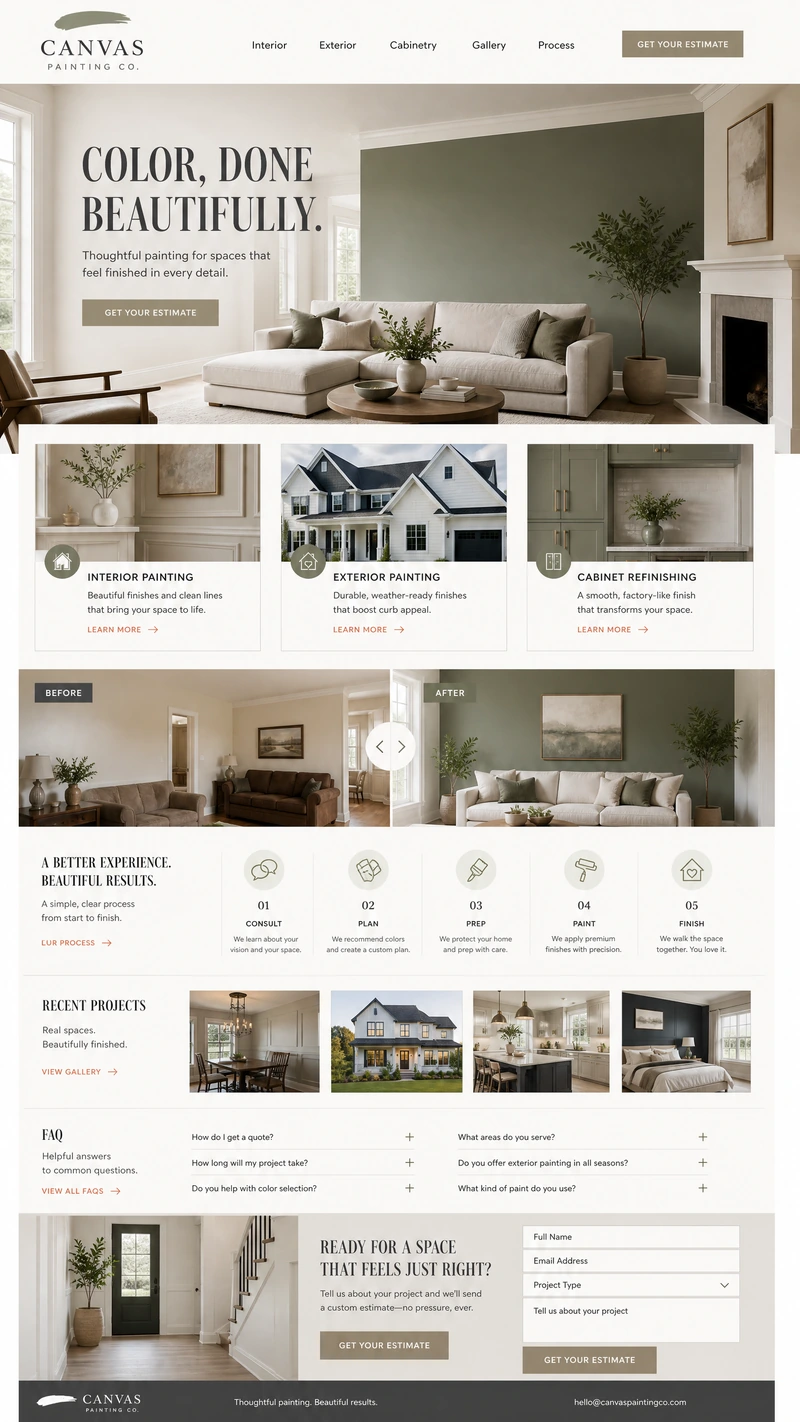
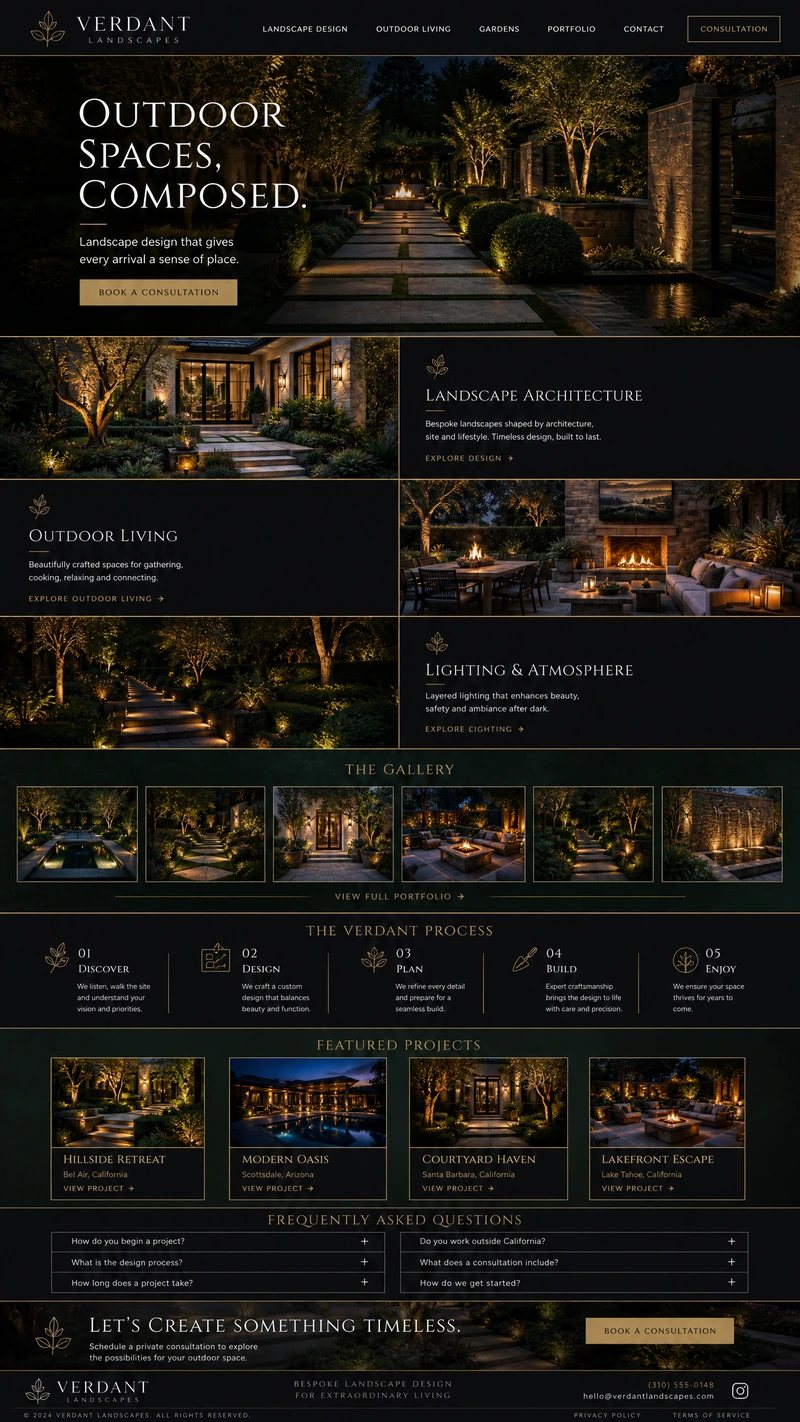
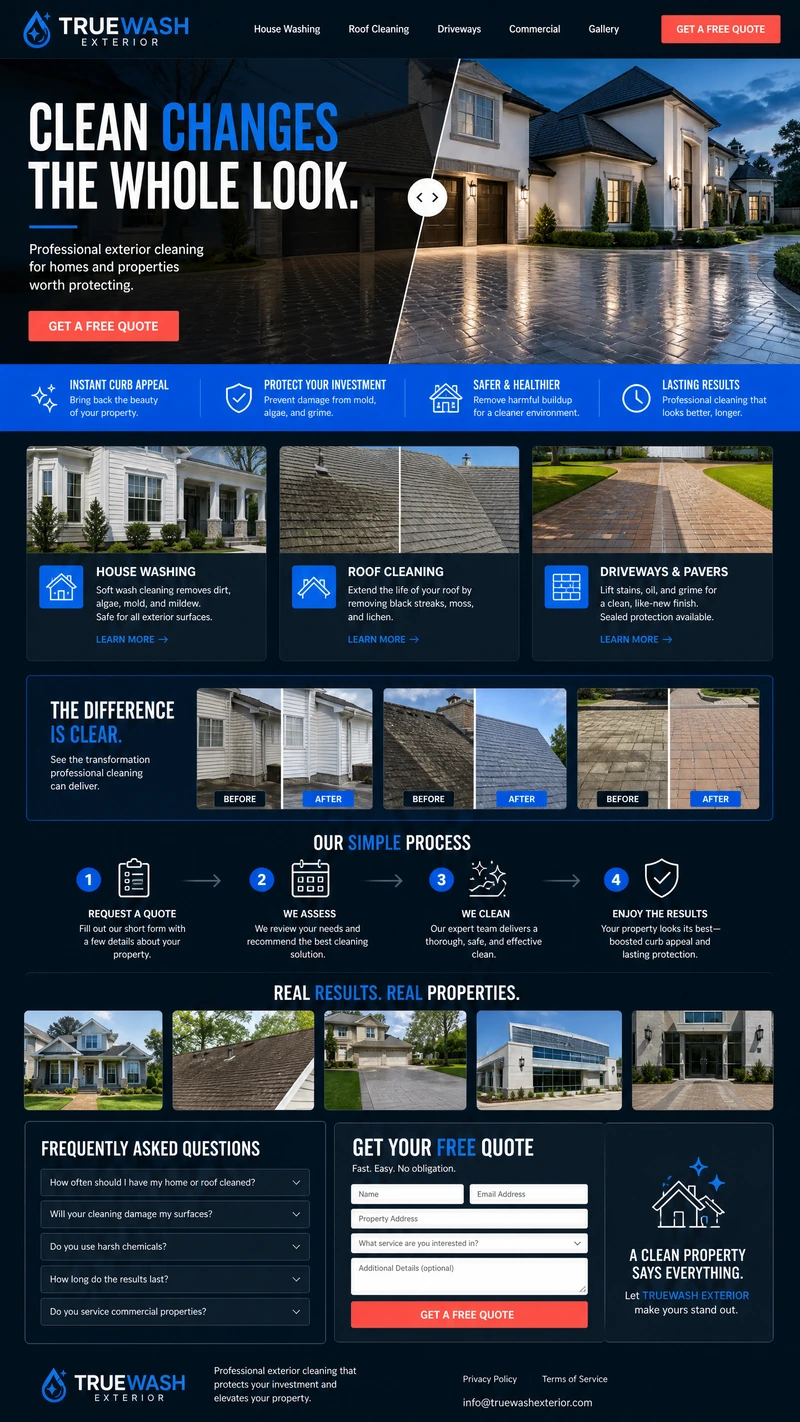
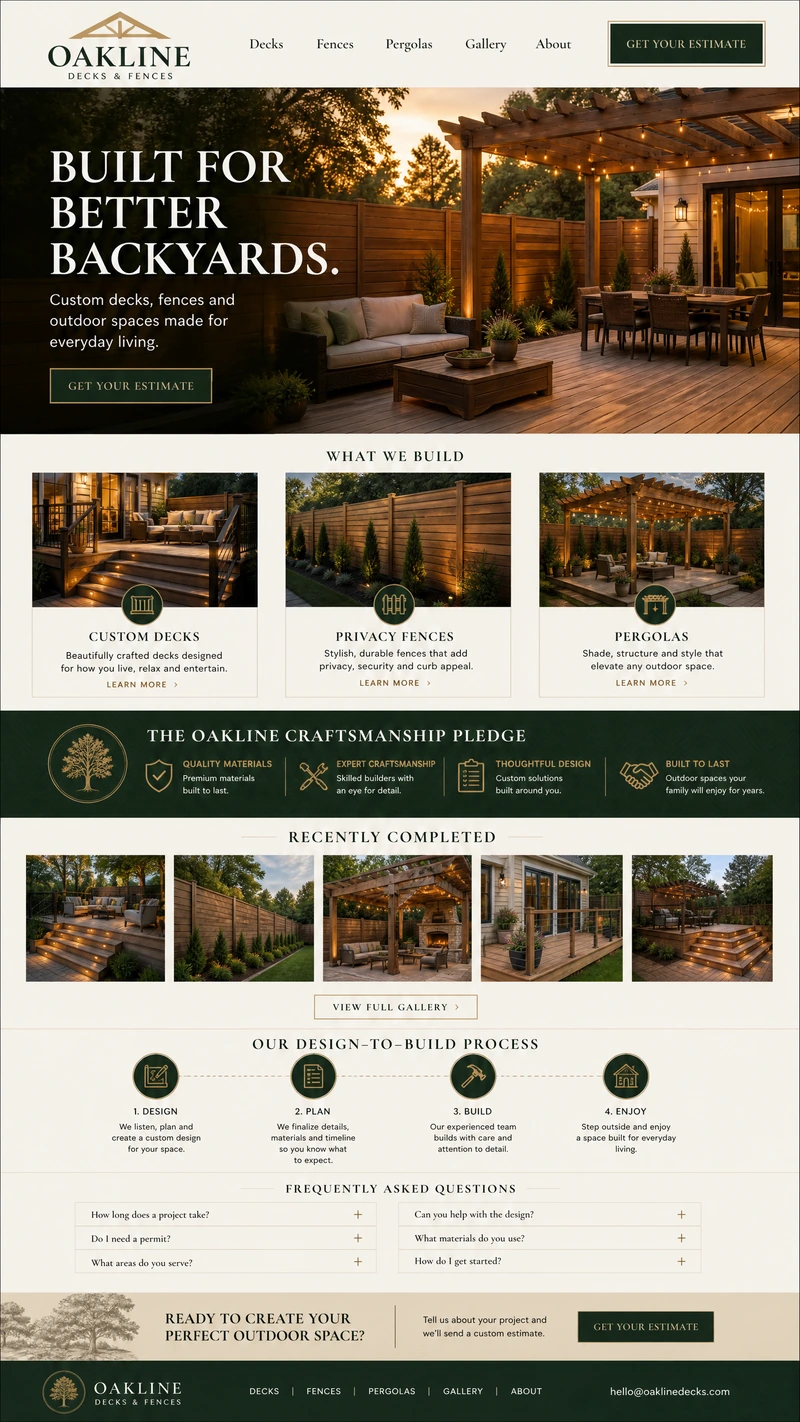
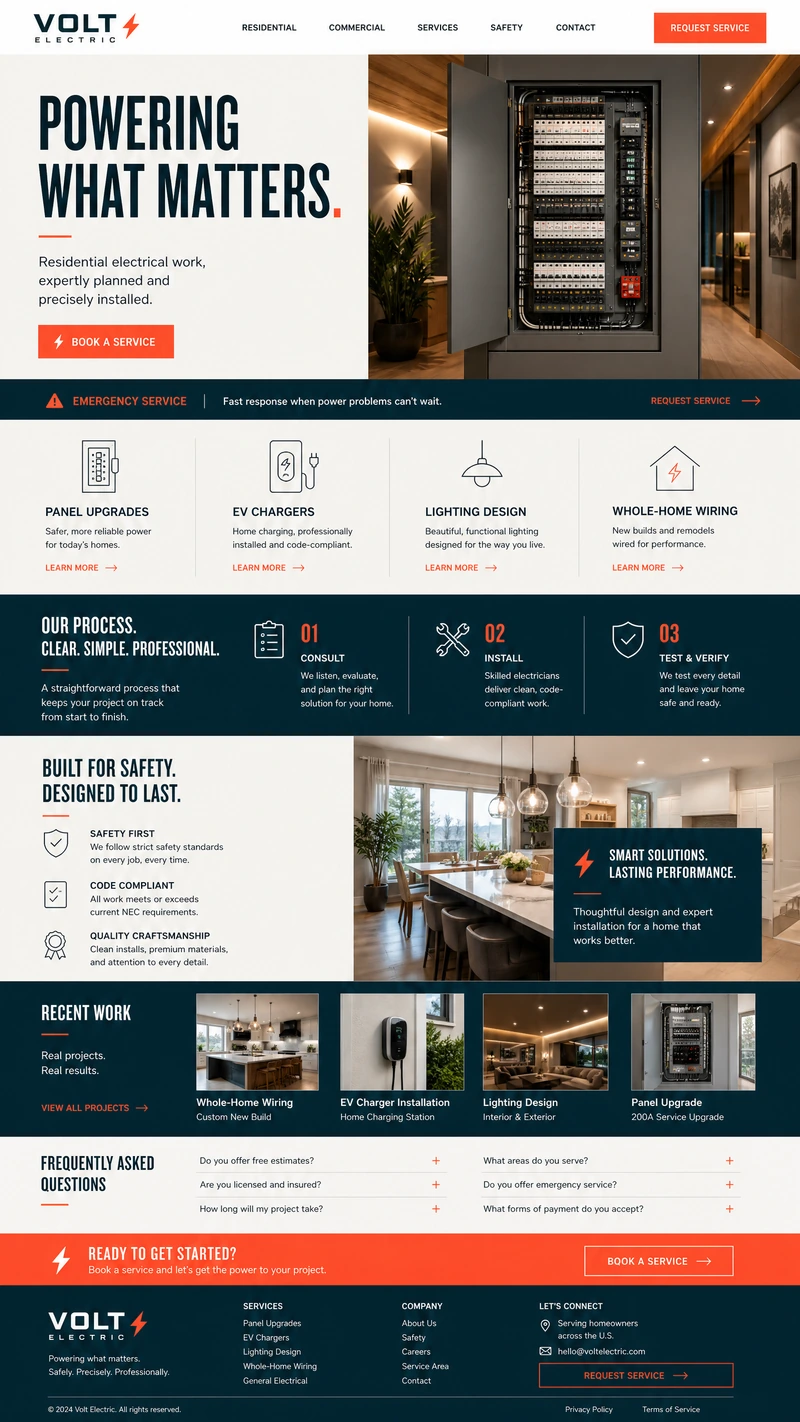
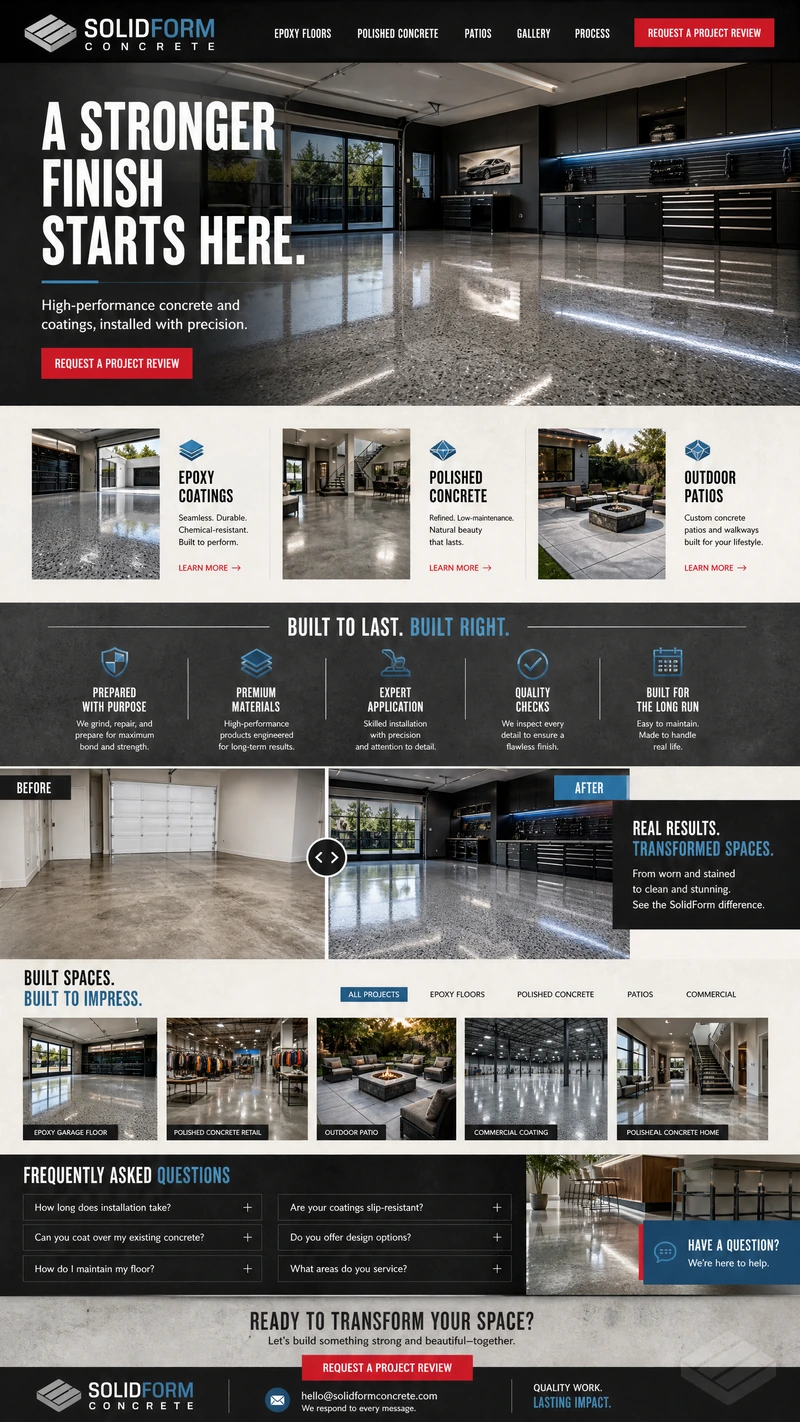
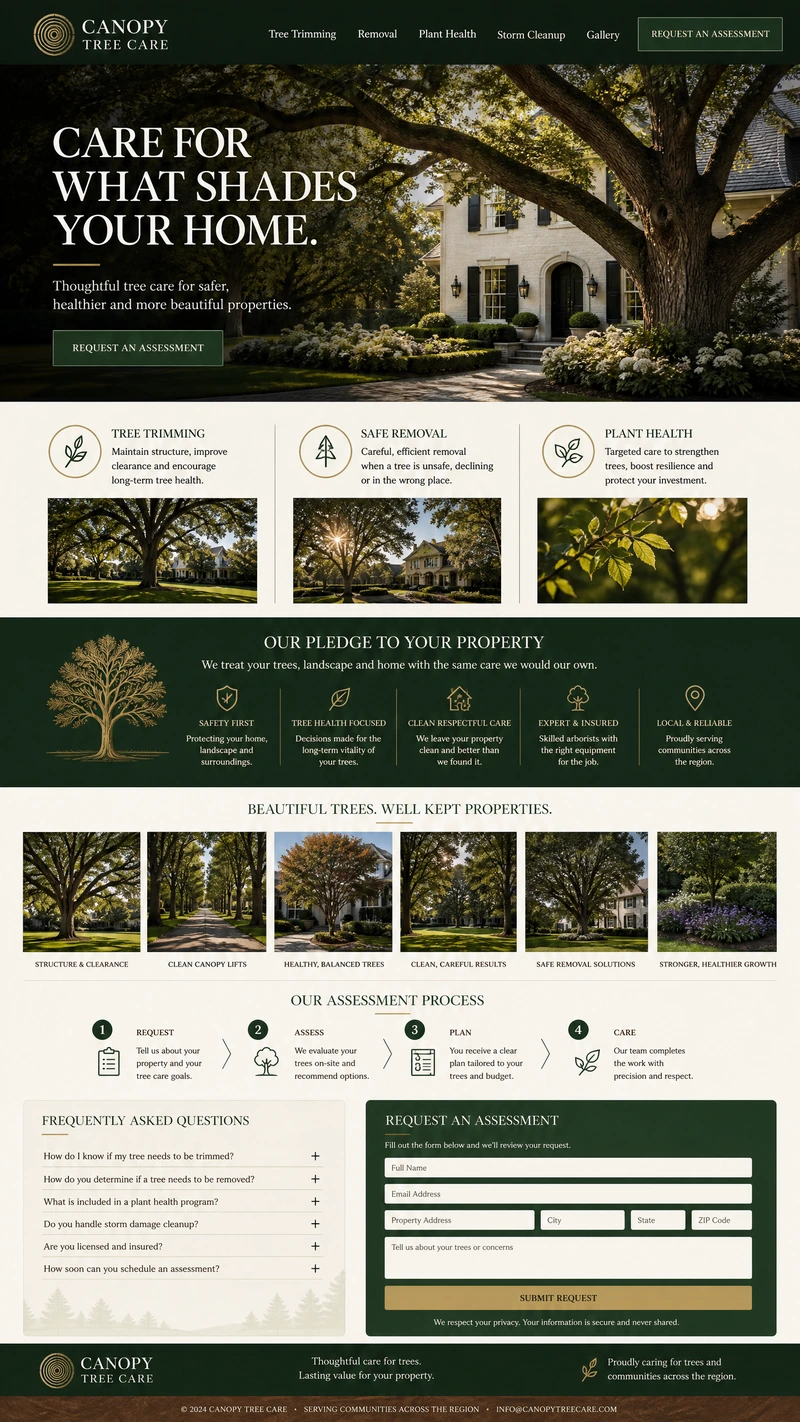
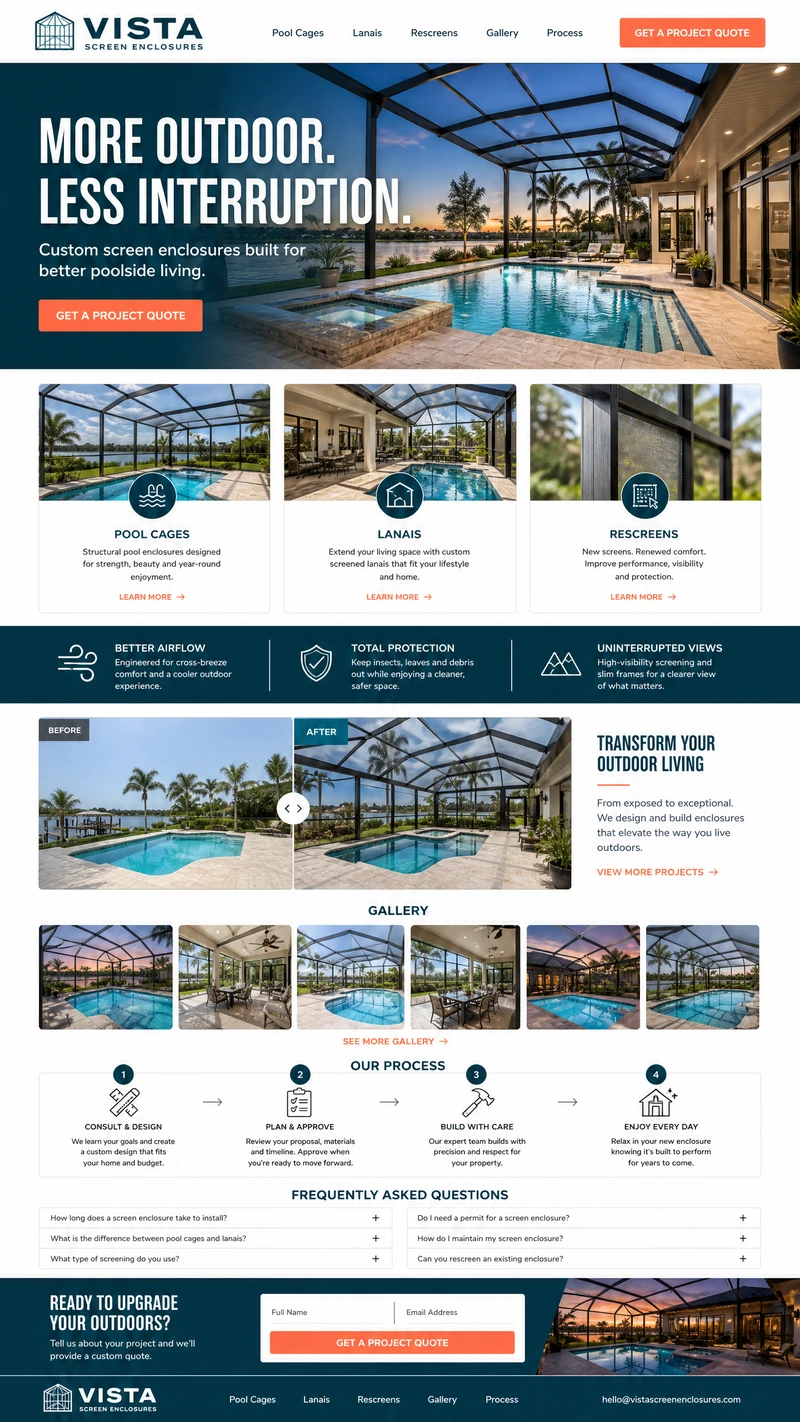
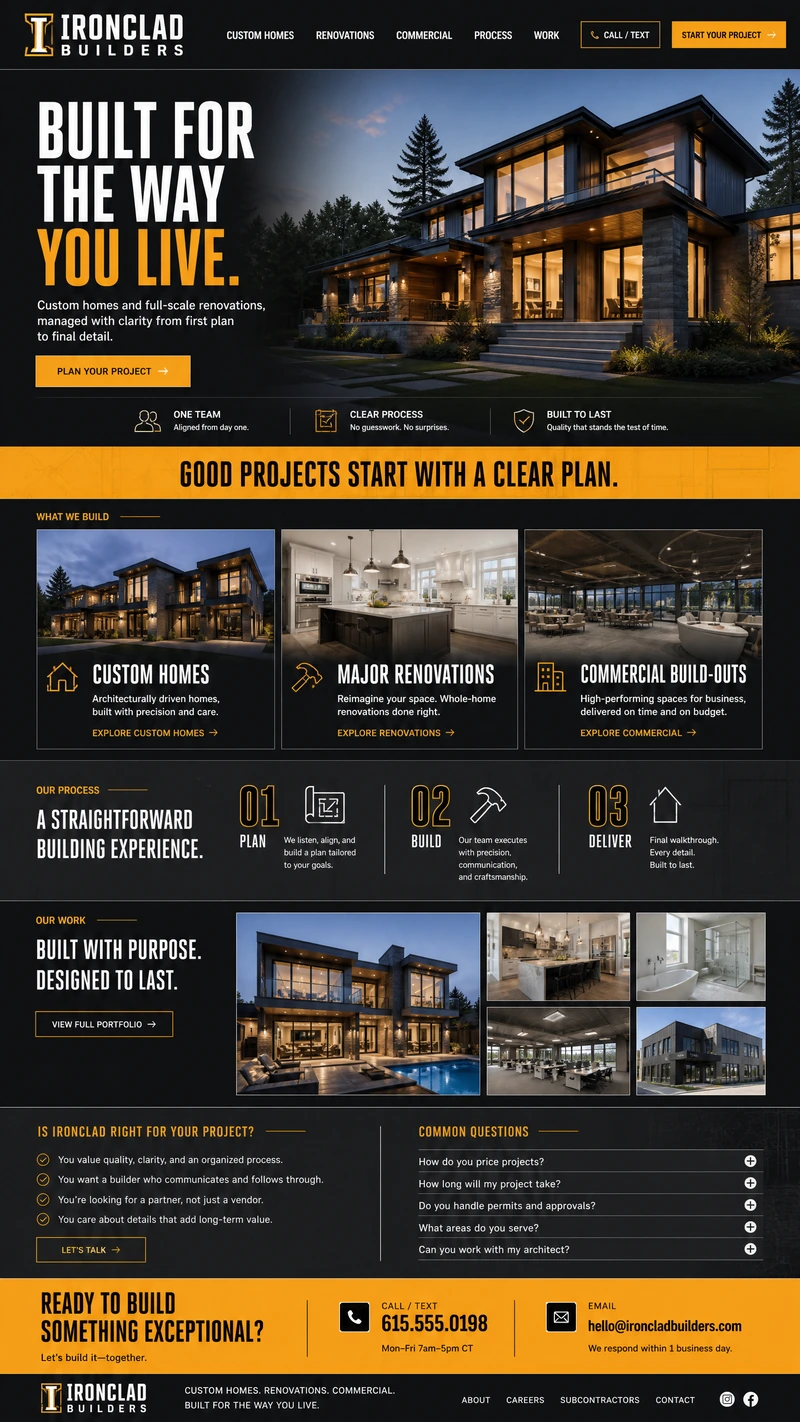
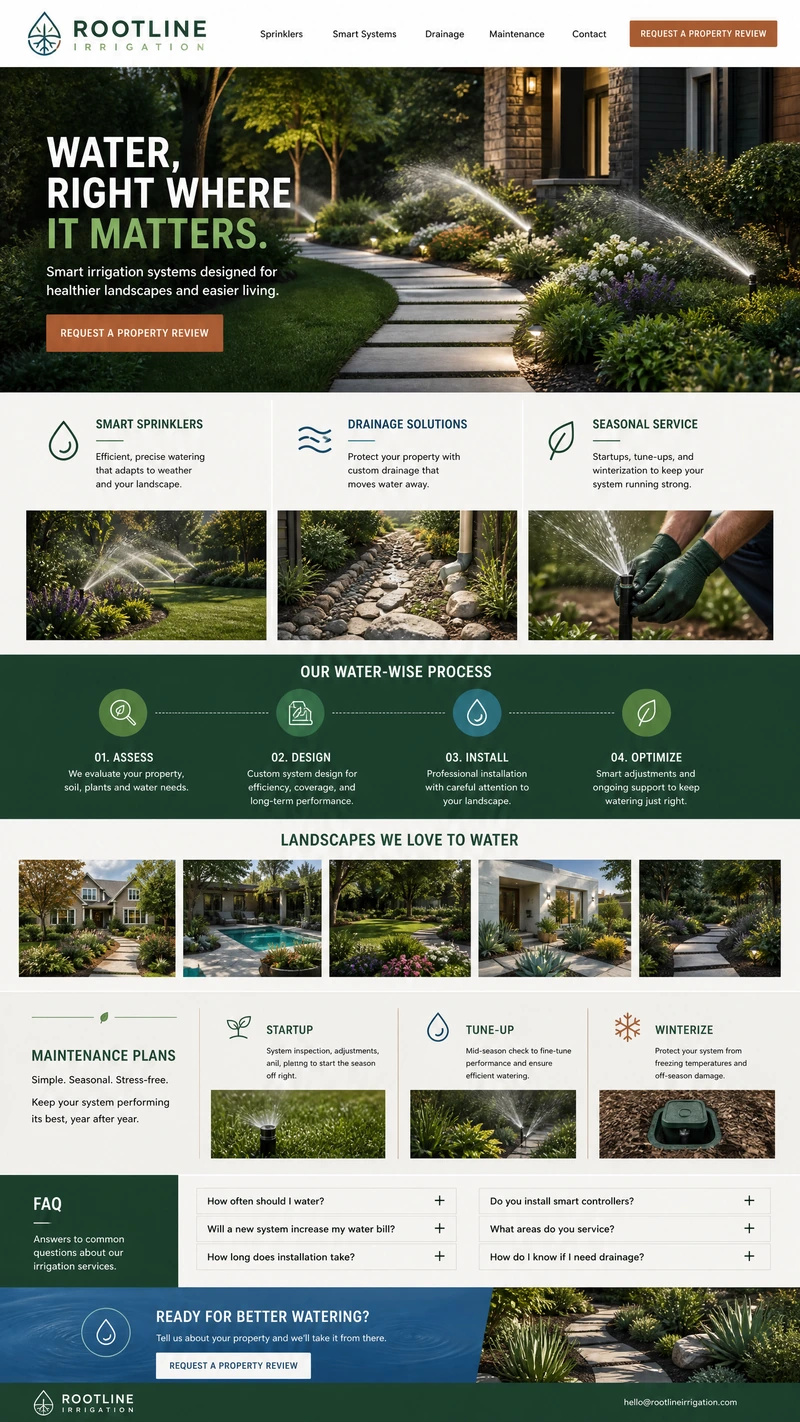
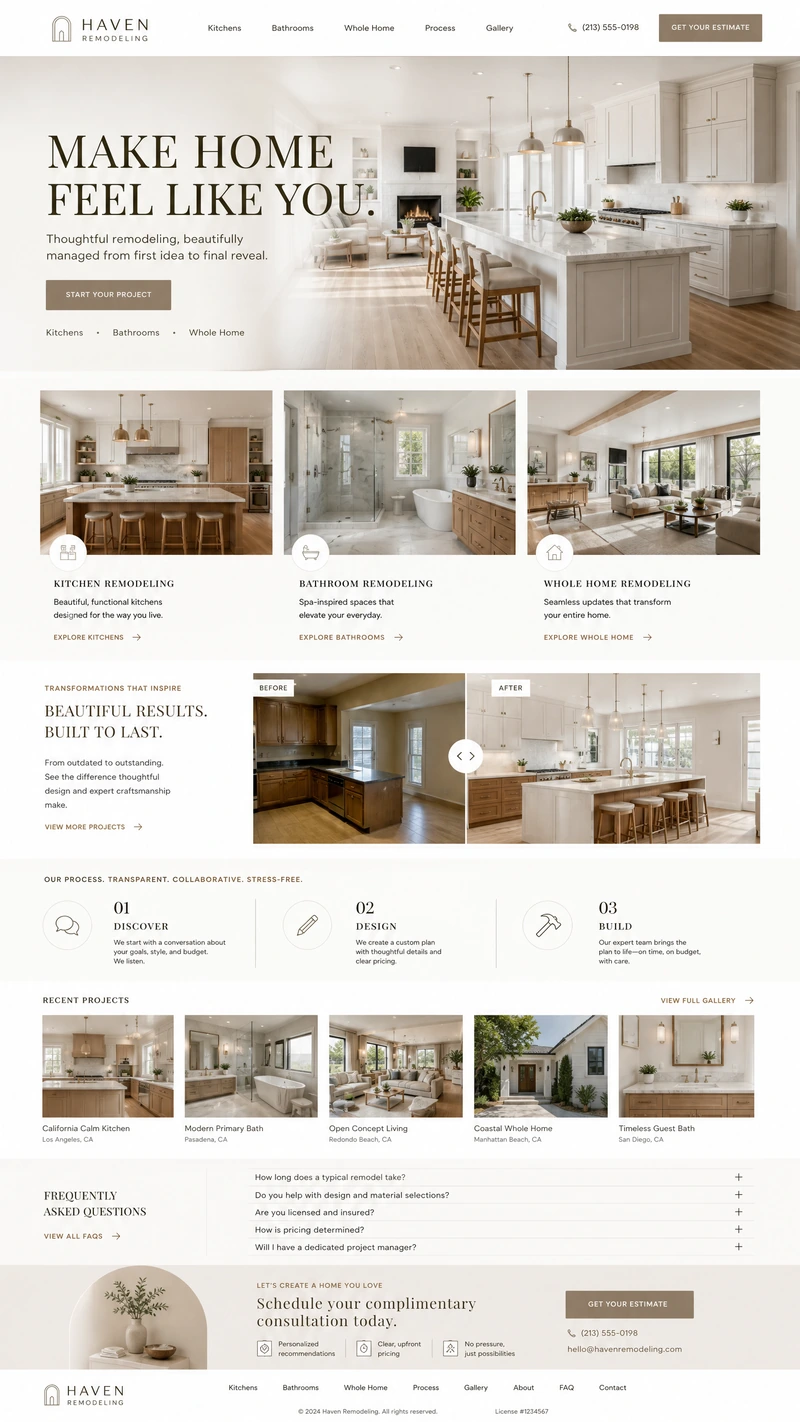
Design concepts produced in the studio, not client projects. Yours would be built for your business, from the same five directions.
A large share of HVAC traffic arrives on a phone, in a house that is currently too hot or too cold, so the request path is built for a thumb.
That means the phone number is tappable and present in the header rather than parked on a contact page. It means the service request form asks for the address, the system, and what is happening, and stops there. It means your service area and your hours are findable without scrolling through a company history.
If you run after-hours or emergency service, the site says so plainly, including what counts as after hours and how someone reaches you then. If you do not, it says that too. A customer who calls at 11pm expecting a technician because the site was vague is a bad start.
The request form described here is the one on your finished site, for your customers. The form at the bottom of this page is how you reach us.
One price, up to seven pages, and everything the site needs on launch day.
Domain and hosting are yours and are bought separately. No monthly fee for the website is paid to us.
$1,497 total. $500 to begin and $997 after final approval, before the site goes live.
The first preview lands within five business days of the initial payment clearing and your briefing and materials being approved for production. Three consolidated rounds of revisions follow.
Given how seasonal this trade is, it is worth starting before the season you are targeting rather than in the middle of it. The build time is ours; the review time is yours, and that is usually what sets the launch date.
You tell us the services you sell, the area you cover and what you want the site to do. This is a form, not a meeting, and it is where the structure gets decided.
Photographs of your own work, your license and insurance details, and anything that has to appear on the site.
We draft the page plan and write the words from your briefing. You see both before anything is designed.
The complete site, within 5 business days of the initial payment and an approved briefing.
You review the whole site and send your notes together. Up to 3 consolidated rounds are included.
You approve the final version, pay the $997 balance, and we deploy to your hosting on your domain.
That is the whole process.
If it fits, the $500 initial payment starts it. If you would rather ask something first, the form is a few lines below.
Yes, as a list of brands you service.
What the seven-page scope does not include is a separate page per brand. In practice a brand list on the relevant service page does the job, and it is what customers are scanning for anyway.
They can request one through the form. Taking payment for a plan online is not part of the standard build.
The plan page explains what is included and the enquiry reaches your inbox. Adding online payment or a recurring subscription would be a custom project, quoted separately.
For most HVAC companies, yes.
They are searched separately, they peak in opposite seasons, and a page about one thing performs better than a page about two. If your business is genuinely weighted to one side, we will plan it that way instead.
Yes, exactly as it actually works.
If you run 24/7, the site says so. If after hours means a callback in the morning, it says that. We will not describe availability you do not offer.
The site can cover both if you do.
They are different buyers, so they usually want separate treatment on the site. Within seven pages that is workable, and we plan it during the briefing.
Not as part of the standard $1,497 project.
The included contact and service request forms send to your email. An integration with a field service or dispatch platform is custom work and would be scoped and quoted on its own.
Up to seven pages planned around your service mix rather than a generic home services layout, with the service request reaching your inbox.
$1,497
One-time project price
This is the website price. SEO and advertising are separate services, quoted on their own.
The 5 business days start once your payment is in and you have sent us what we need to begin.
Not sure how many pages your service list needs?
Tell us what you work onThe systems you work on, whether maintenance plans are part of the business, and where you operate. We will come back with how the pages should be organised.