
Are you taking new patients?
Practices close and reopen their panels. A clear, current statement saves a wasted call and tells the patient whether a referral is needed first.
Websites built around your businessSEO & digital advertisingStrategy with a human touch
Medical website design
Most patients reach a practice website with a decision half made. A referral, a symptom or an insurance directory sent them, and they want to confirm you treat what they have, find the right provider and location, and ask for an appointment. We design medical websites that make each of those steps short.
Scoped and quoted for your practice, and built on a domain and hosting the practice owns.
Specialties a patient can find
Each service line or condition you treat on its own page, so a referred patient lands on the right one.
Providers and locations
Every physician and clinician with a profile, and every location with its own hours and directions.
Requests your staff can handle
An appointment request that asks for contact details and timing, not medical history.
A medical practice website has to work for two groups at once: patients deciding whether to book, and referring offices or existing patients who need a phone number, a fax line or a portal link quickly.
A family medicine office, a cardiology group and a multi-location urgent care clinic need different structures. One is organized around the physicians, one around conditions and procedures, and one around locations and walk-in hours. A medical practice website design that ignores that difference forces every patient through the same generic pages, and the patient with a specific question gives up and calls.
We start from how your patients actually arrive. If most come through referrals, the site leads with the specialties you treat and what a referred patient should bring. If most find you on a map, location pages, hours and the insurance plans you accept come first. The page plan is settled in your proposal, before any design begins.
Existing patients are served too. Links to your patient portal, bill pay and forms you already publish sit where they expect them, so the front desk spends less time reading out URLs over the phone.
A site organized the way your practice works
Tell us whether patients find you by specialty, by physician or by location, and we will tell you how the site should be structured.
Before booking, a patient is trying to rule things out. Each unanswered question is a reason to try the next practice on the list.
The questions are practical, and they repeat across every specialty. A doctor website design that answers them in plain language, on the page where the patient is already reading, keeps the decision moving instead of sending it to the phone queue.
Practices close and reopen their panels. A clear, current statement saves a wasted call and tells the patient whether a referral is needed first.
Patients search for a condition or a procedure, not a department name. A page per service line written in their words is what they recognize.
Profiles with training, board certifications the practice confirms, languages spoken and clinical interests help a patient pick and help your schedulers route.
If you offer telehealth, say which visits qualify and how it works. If you do not, the site should not suggest it.
Your front desk already knows these questions
Send us the ones they answer most and we will show you where each answer goes on the site.
Healthcare website design succeeds or fails on structure. A patient should reach the right service page in one or two clicks, from search or from your home page.
Each specialty or service line gets a page that explains what you treat, which providers handle it, how a first appointment works and what to bring. For a single-specialty practice that might be a handful of condition pages; for a multi-specialty group it is a clear index by department. Either way, the structure is planned before the copy is written.
The clinical wording is drafted from your briefing and reviewed by your physicians before anything goes live. We do not write outcome claims, success rates or comparisons with other practices, and we do not publish patient stories unless you supply them with the patient's written permission.
Condition and procedure pages under one specialty, written so a referred patient knows they are in the right place.
A department index with its own providers and locations, so each service line reads like its own practice without splitting the site.
A page for every office with hours, services offered there and directions, so patients book where they can actually go.
Patients choose a person as much as a practice. A physician website design that gives each provider a real profile turns a list of names into someone they can book with.
Each profile carries what you confirm: education, residency and fellowship, board certifications, the conditions the provider focuses on, languages spoken and which locations they see patients at. A recent photograph matters more than any description. We place what you send and we never add a credential, an award or an affiliation that has not been confirmed by the practice.
Want patients to meet your providers before the first visit?
Sixteen concepts from the studio, drawn from the same five directions. They were made for home-service trades, so none of them shows a clinic. The direction is what carries over: a clean, quiet layout for a primary care office, or a more structured one for a multi-specialty group with many providers. Your site would start from a direction and be built around your own practice.
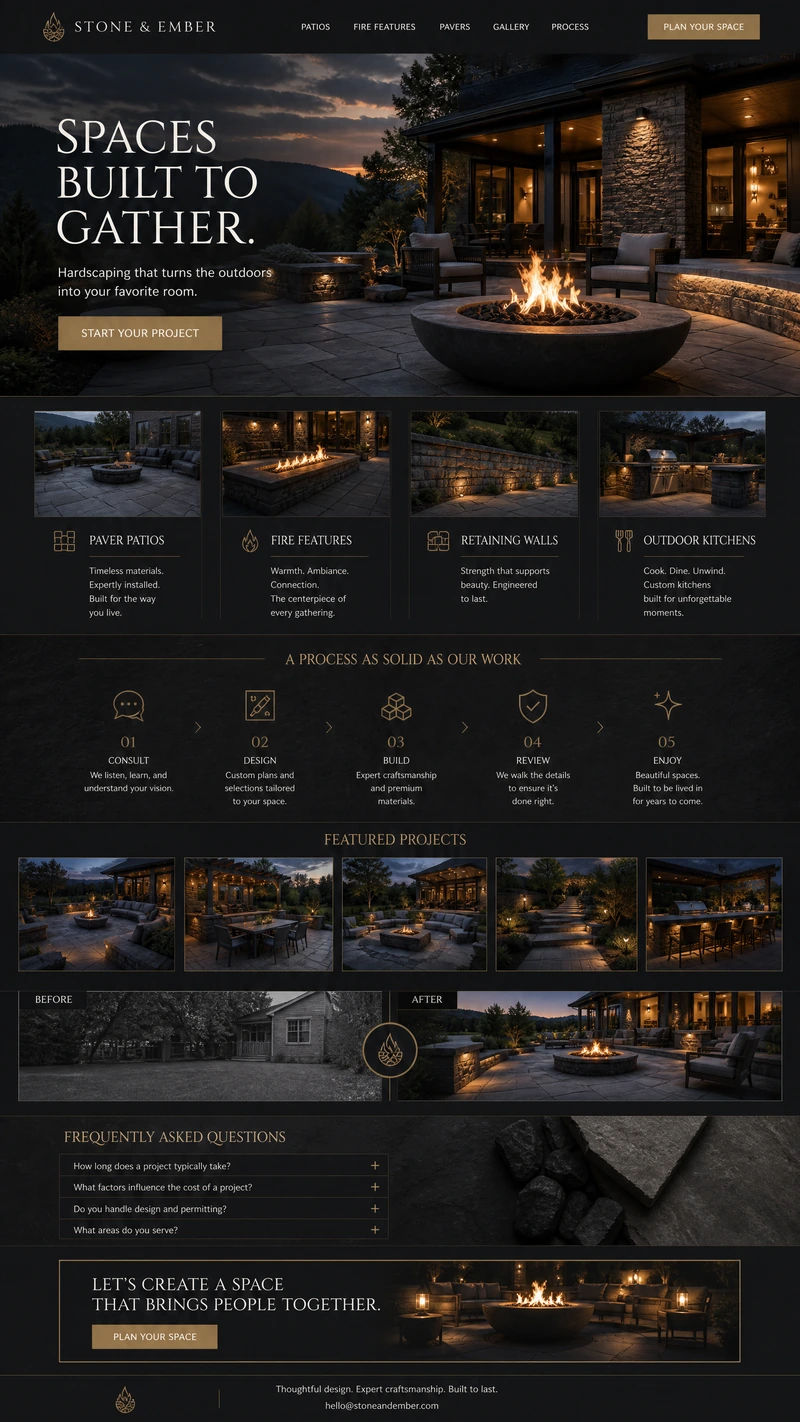
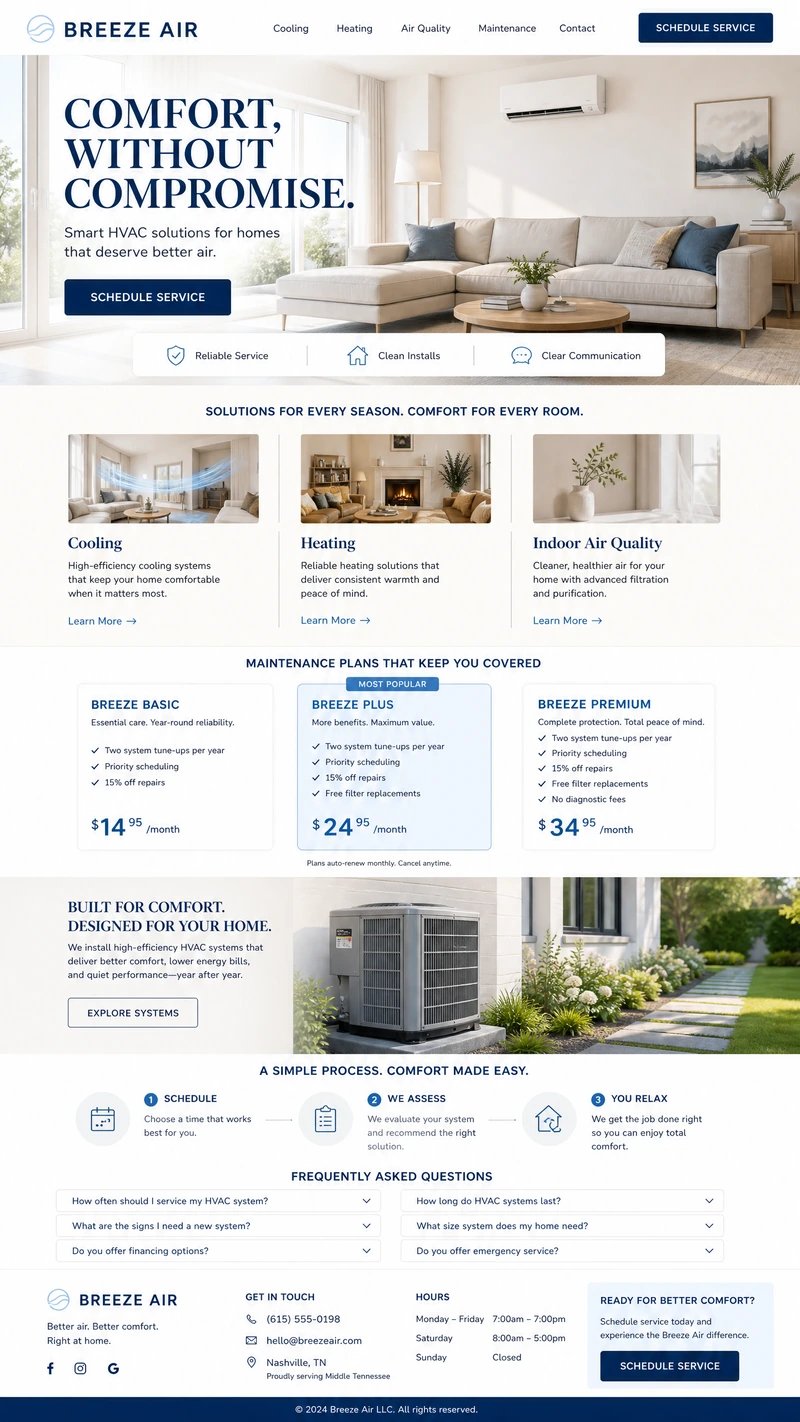
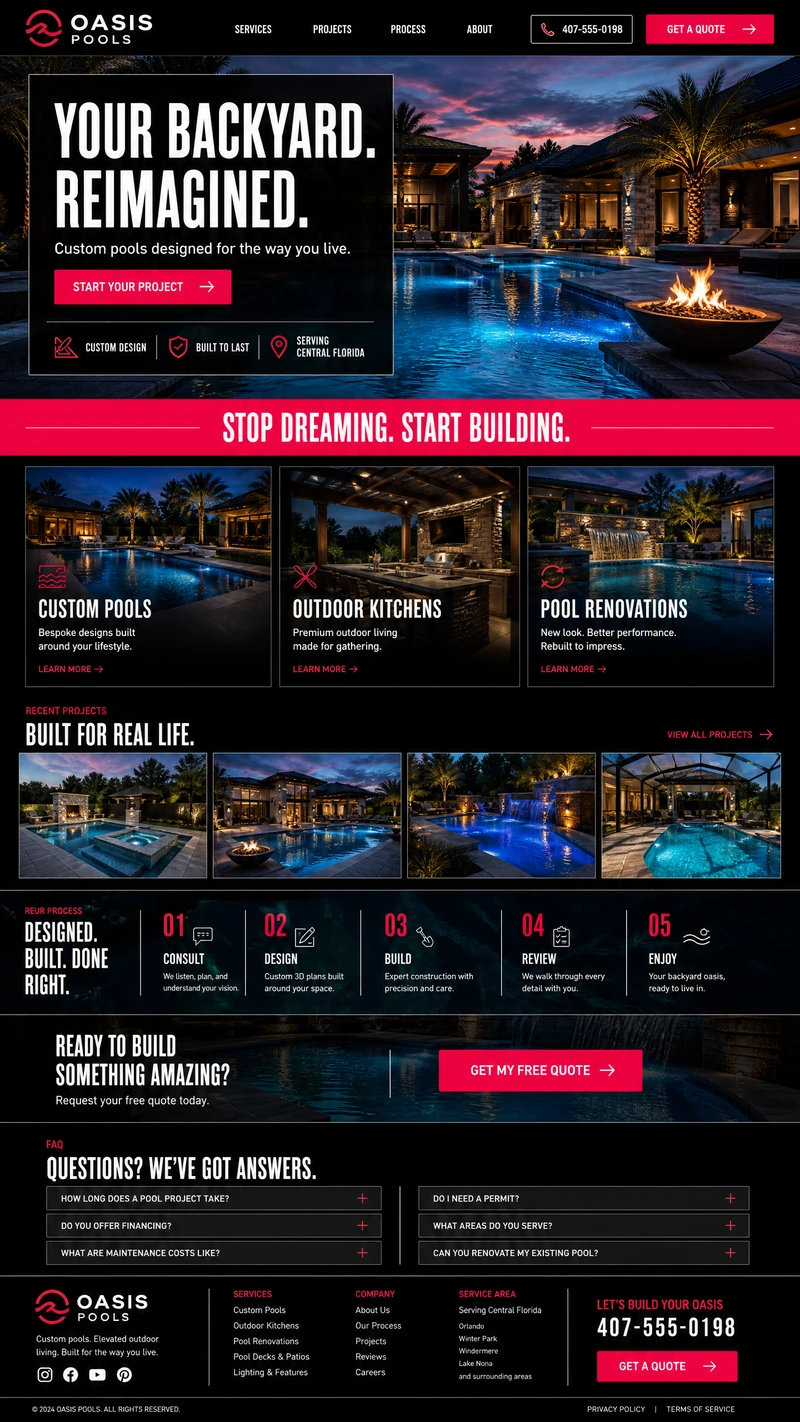
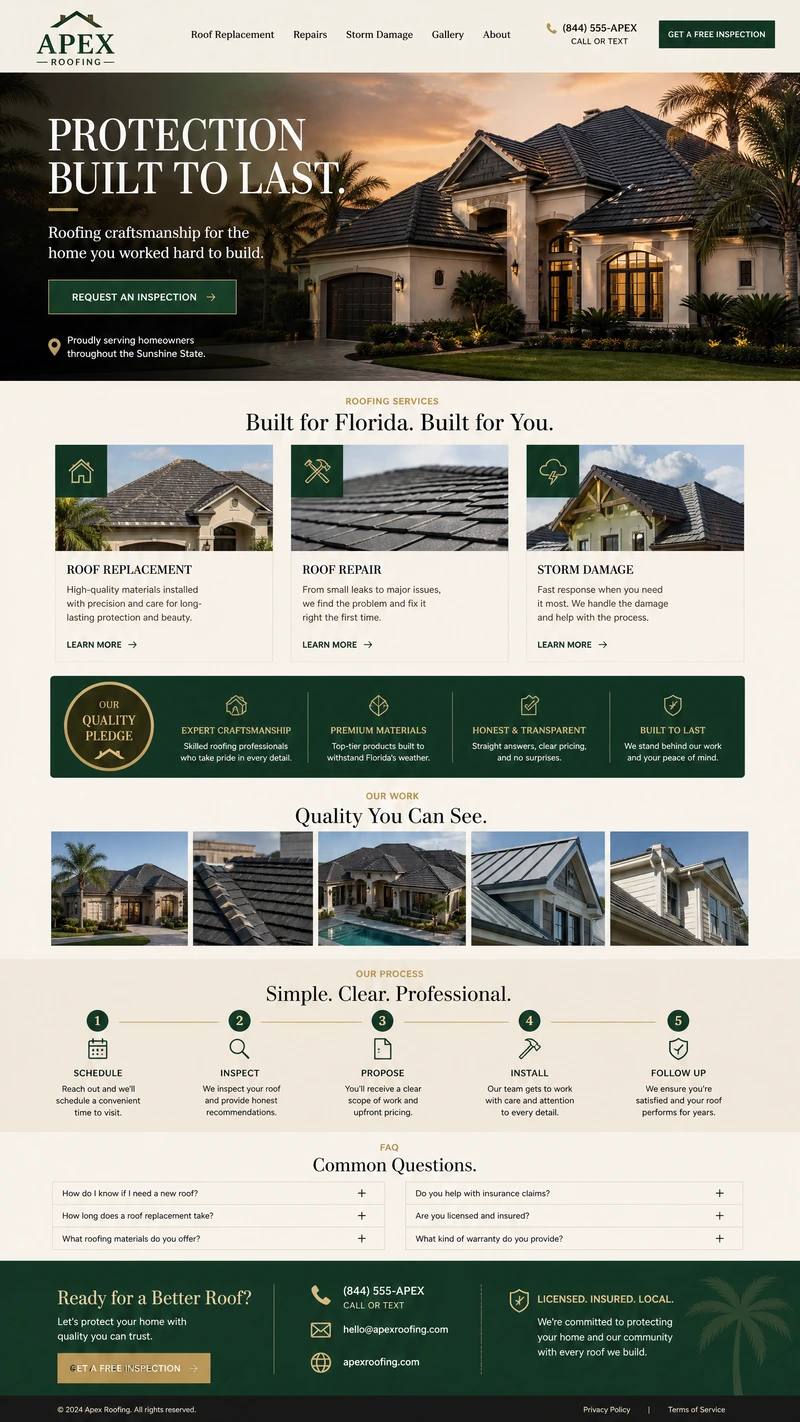
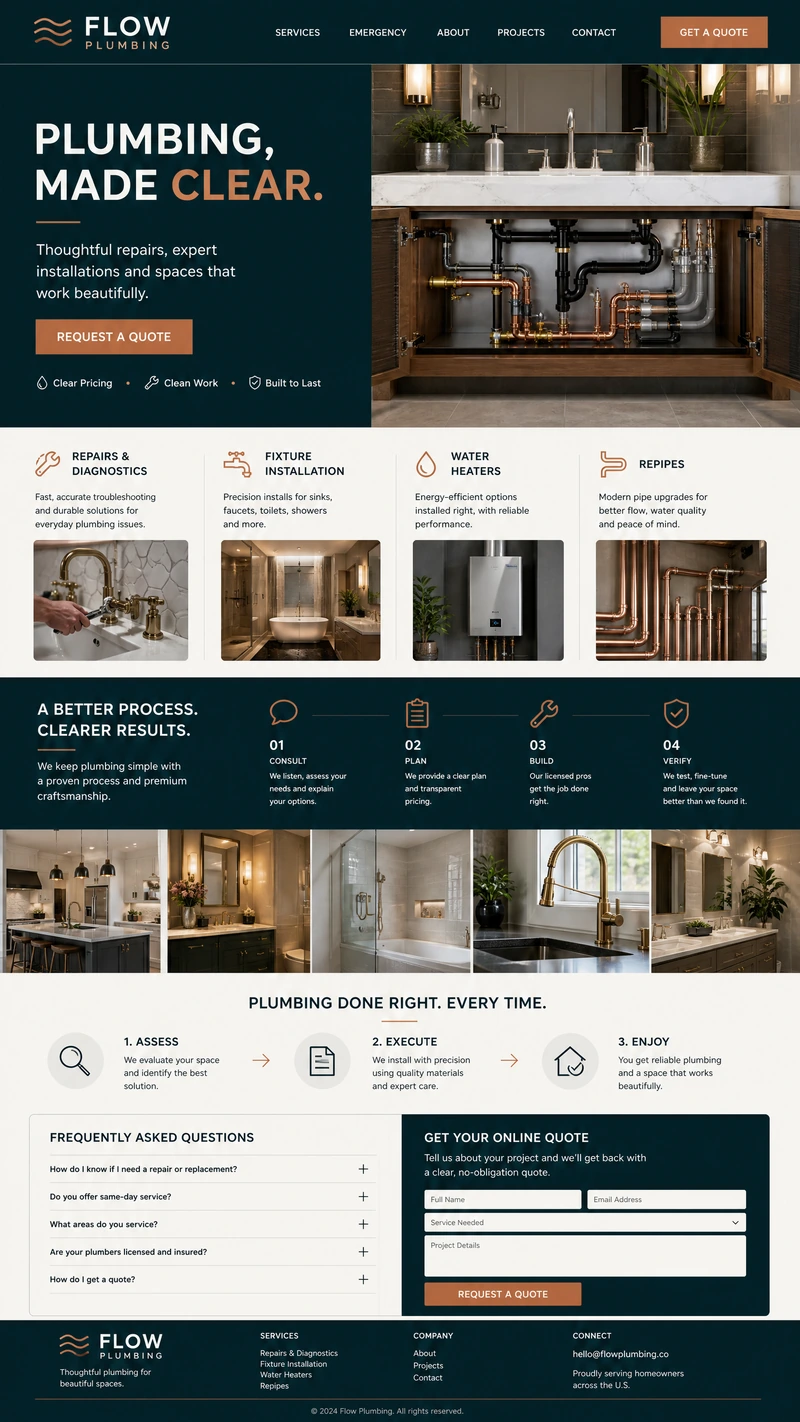
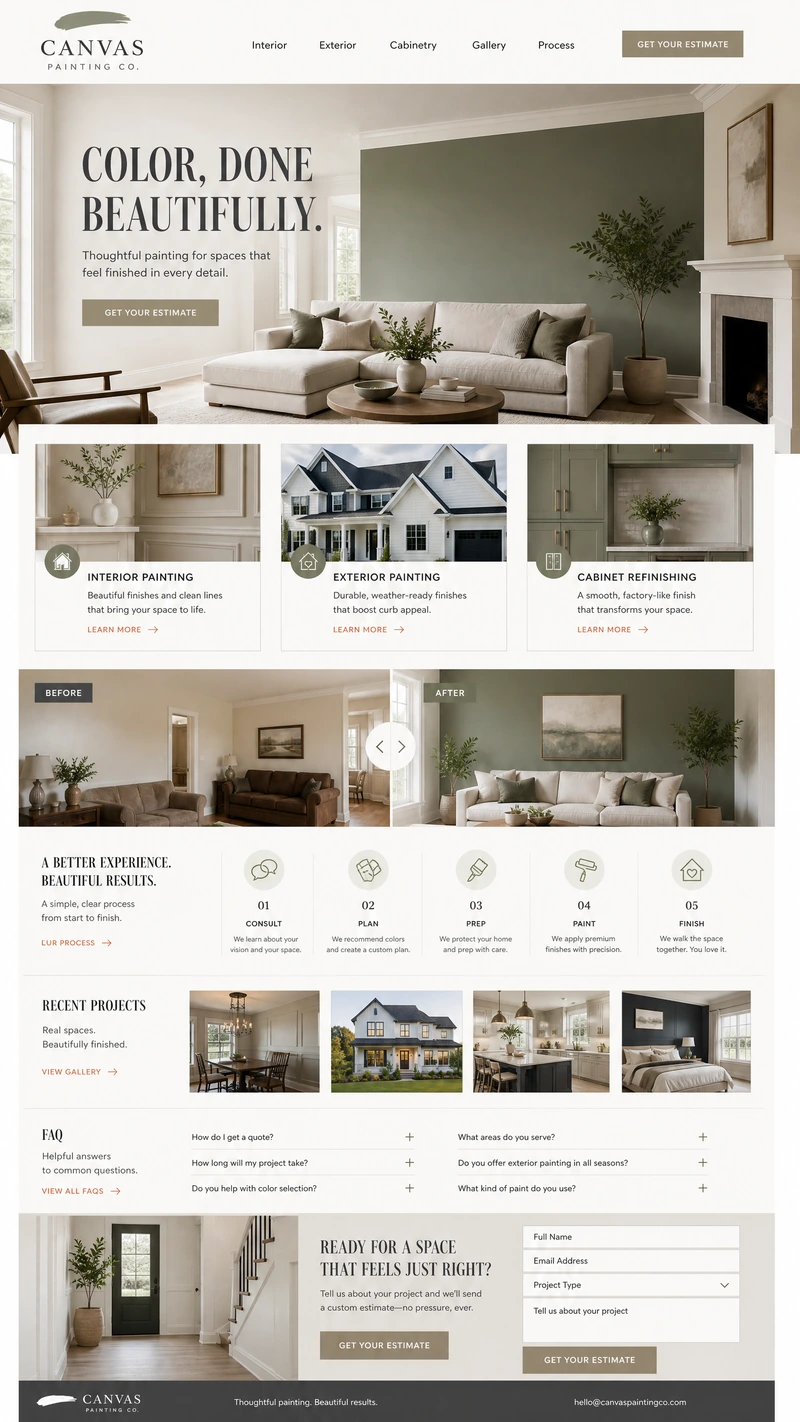
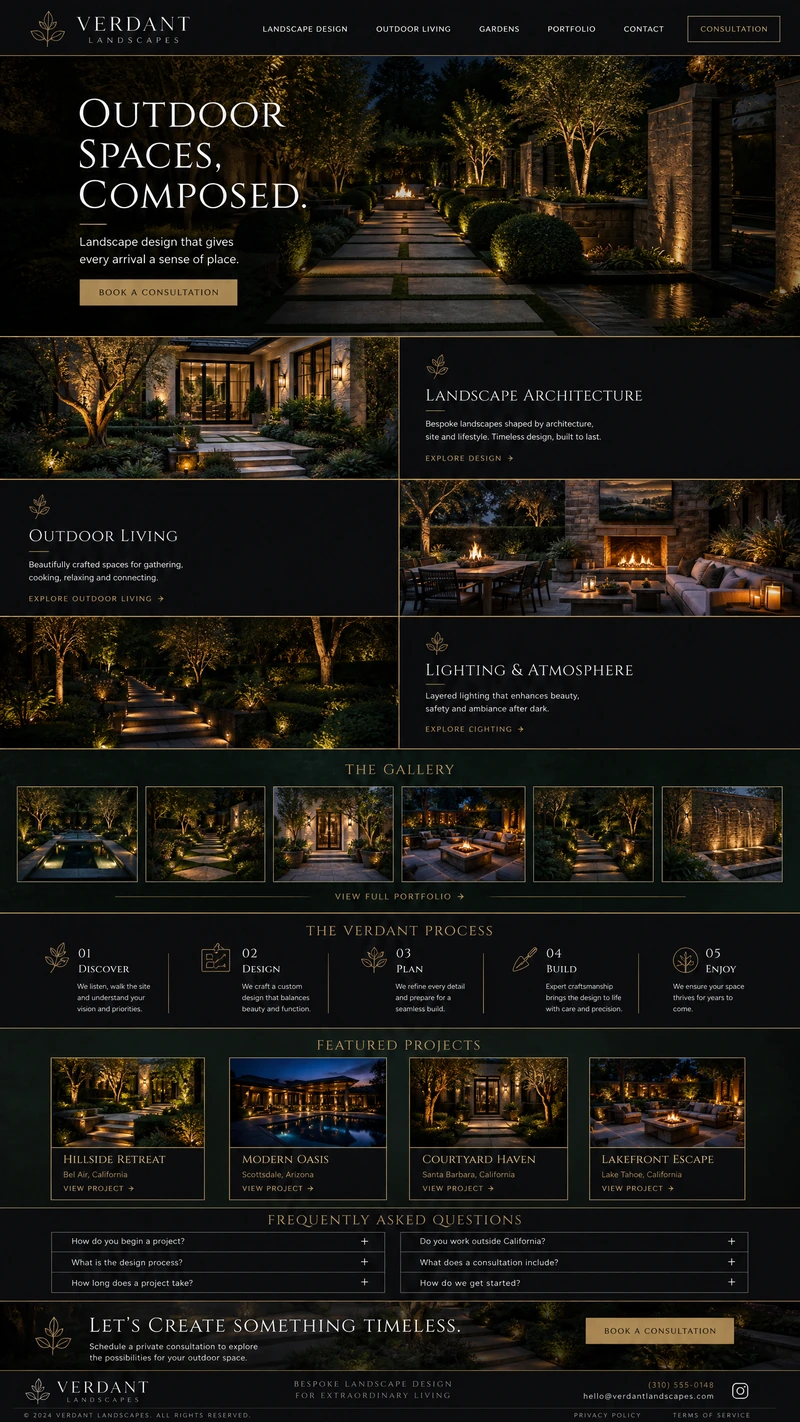
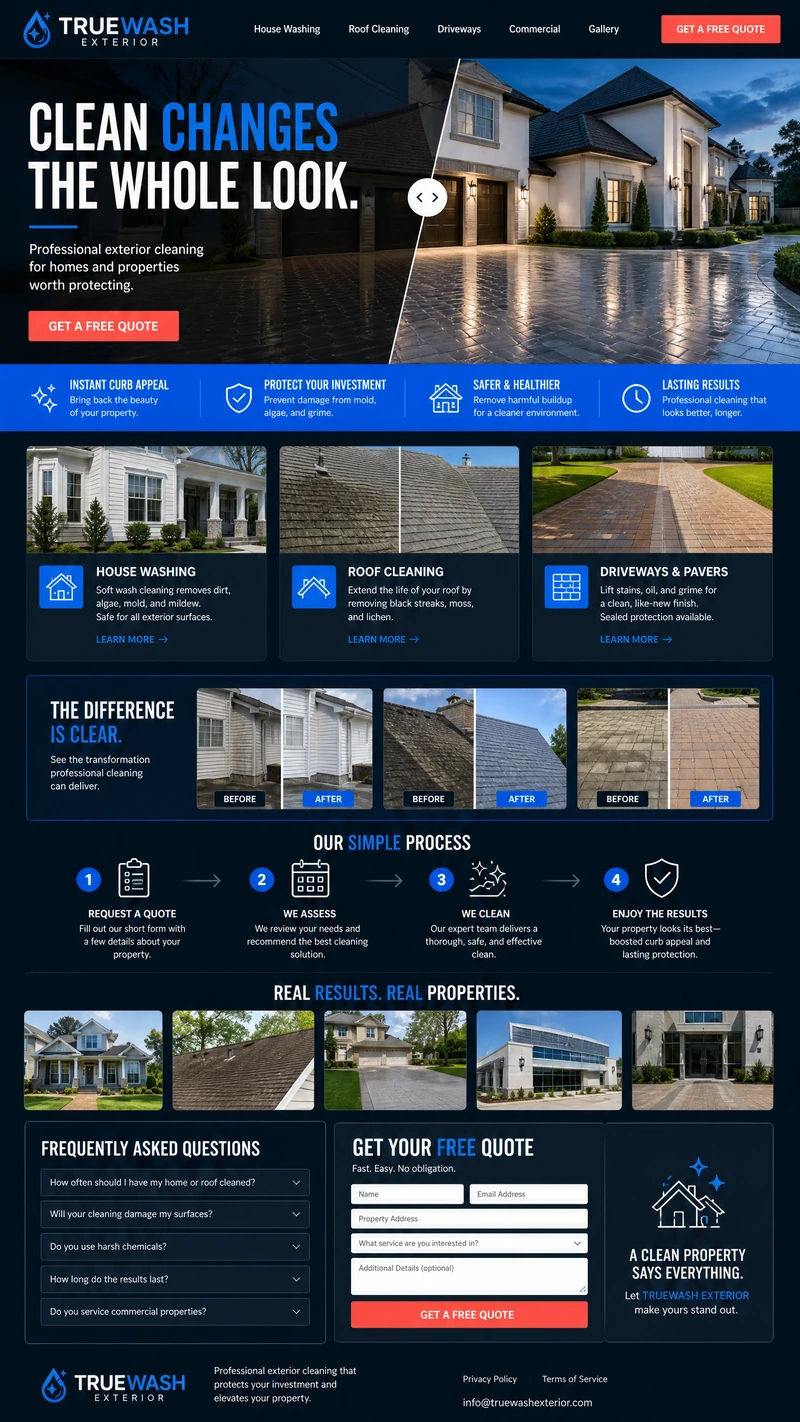
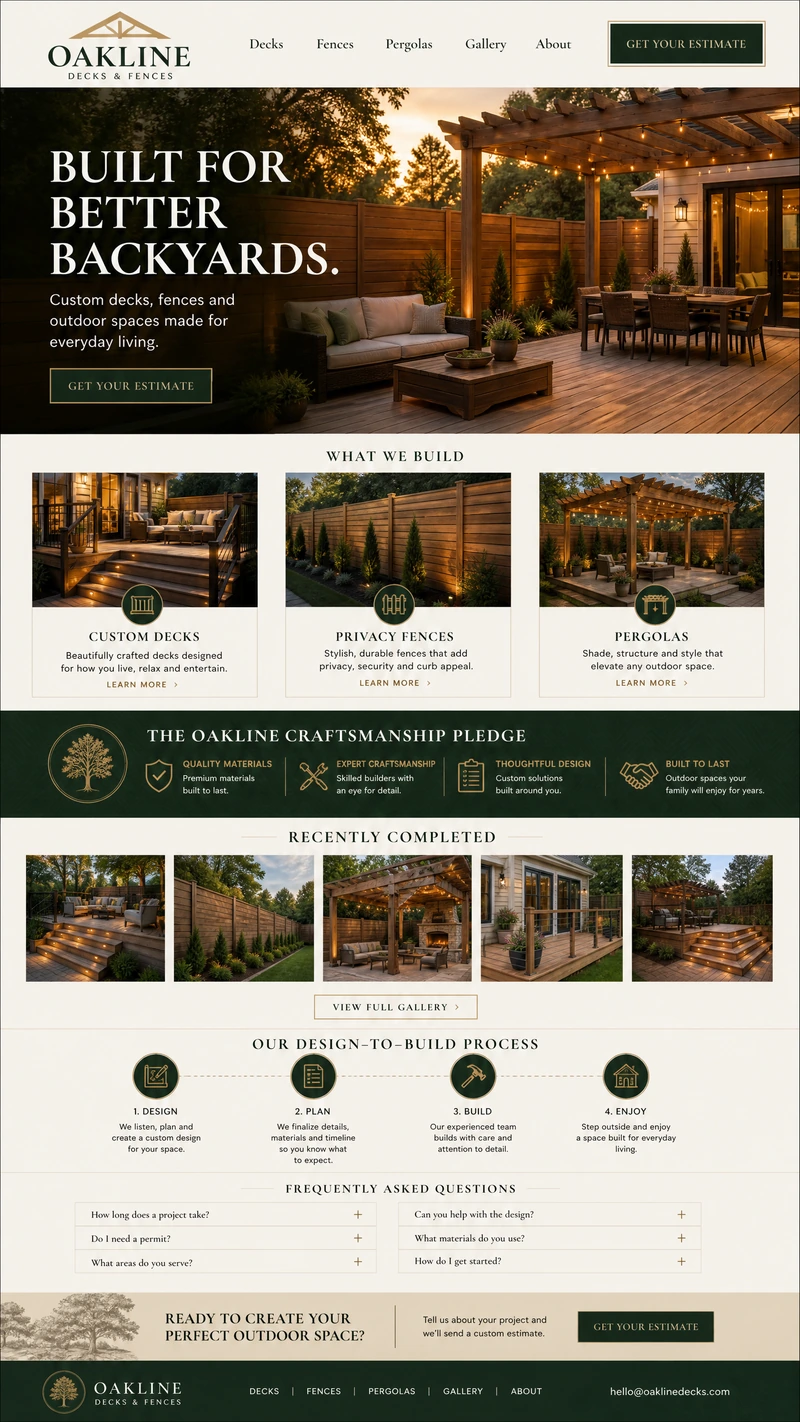

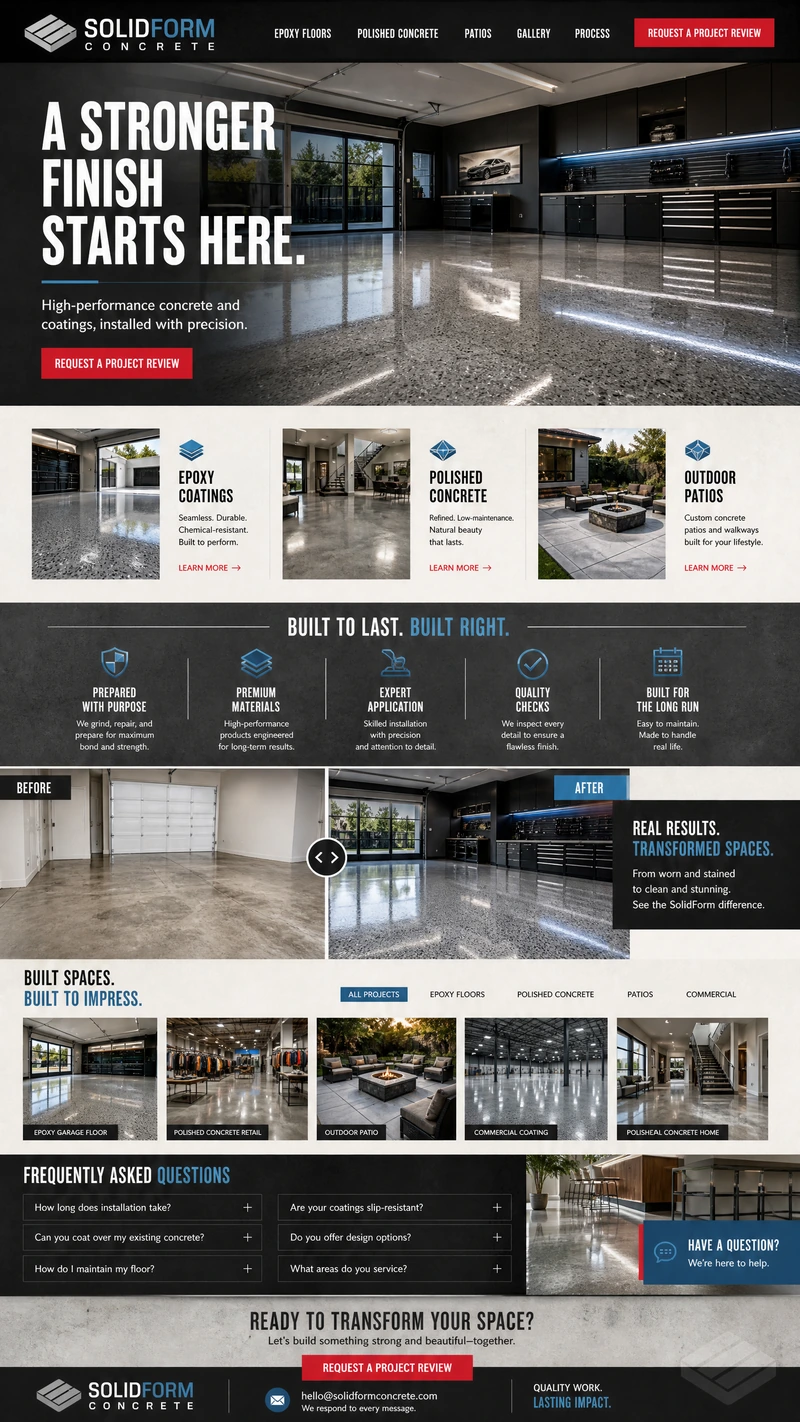
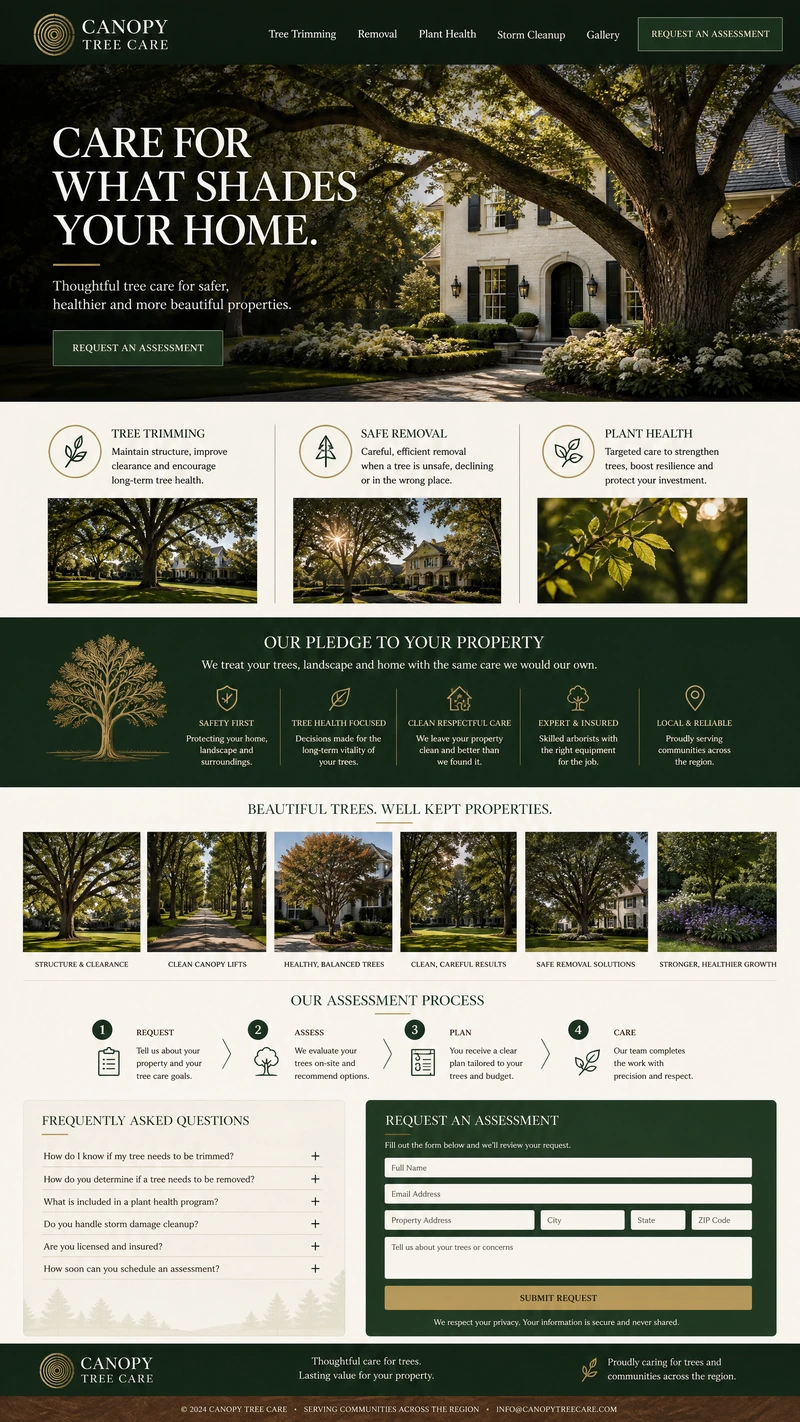
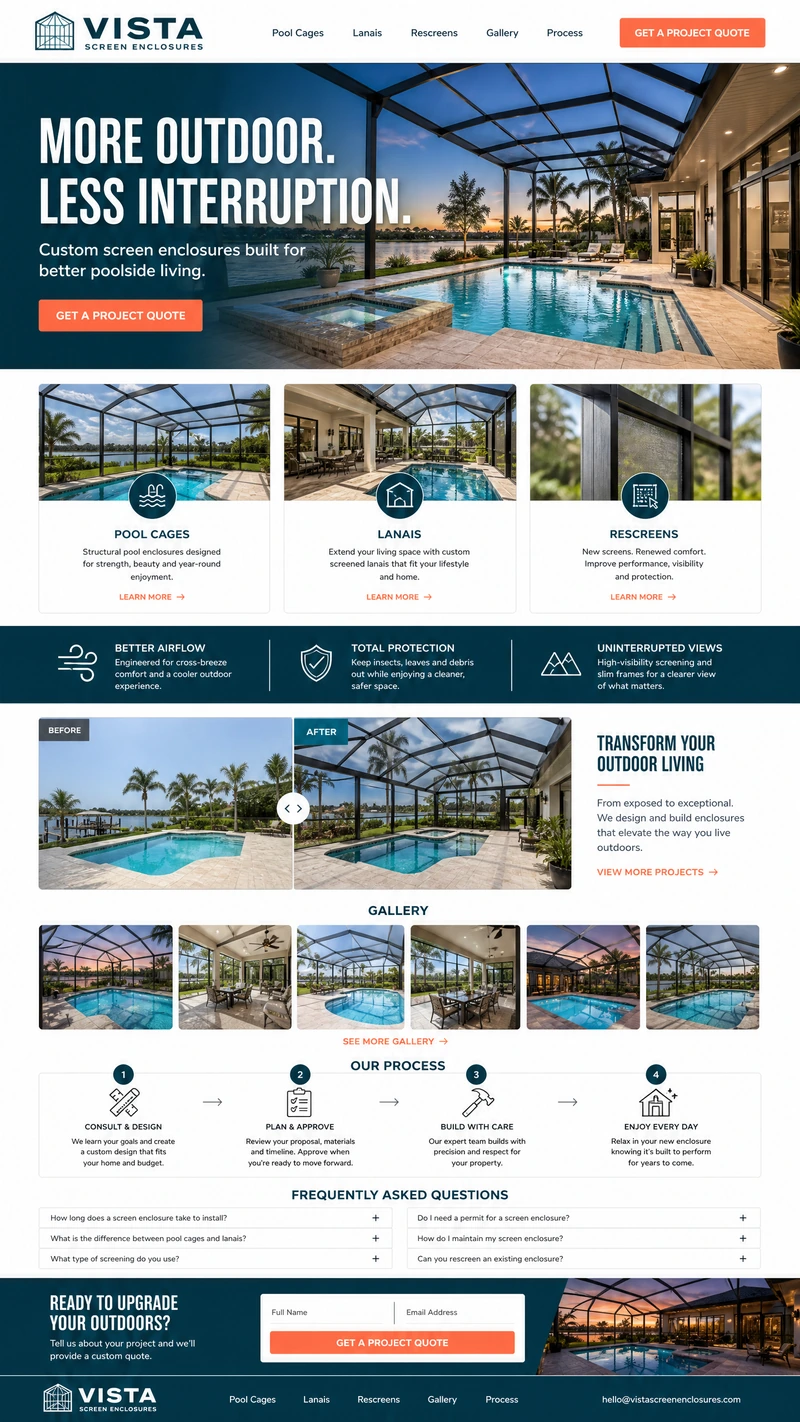
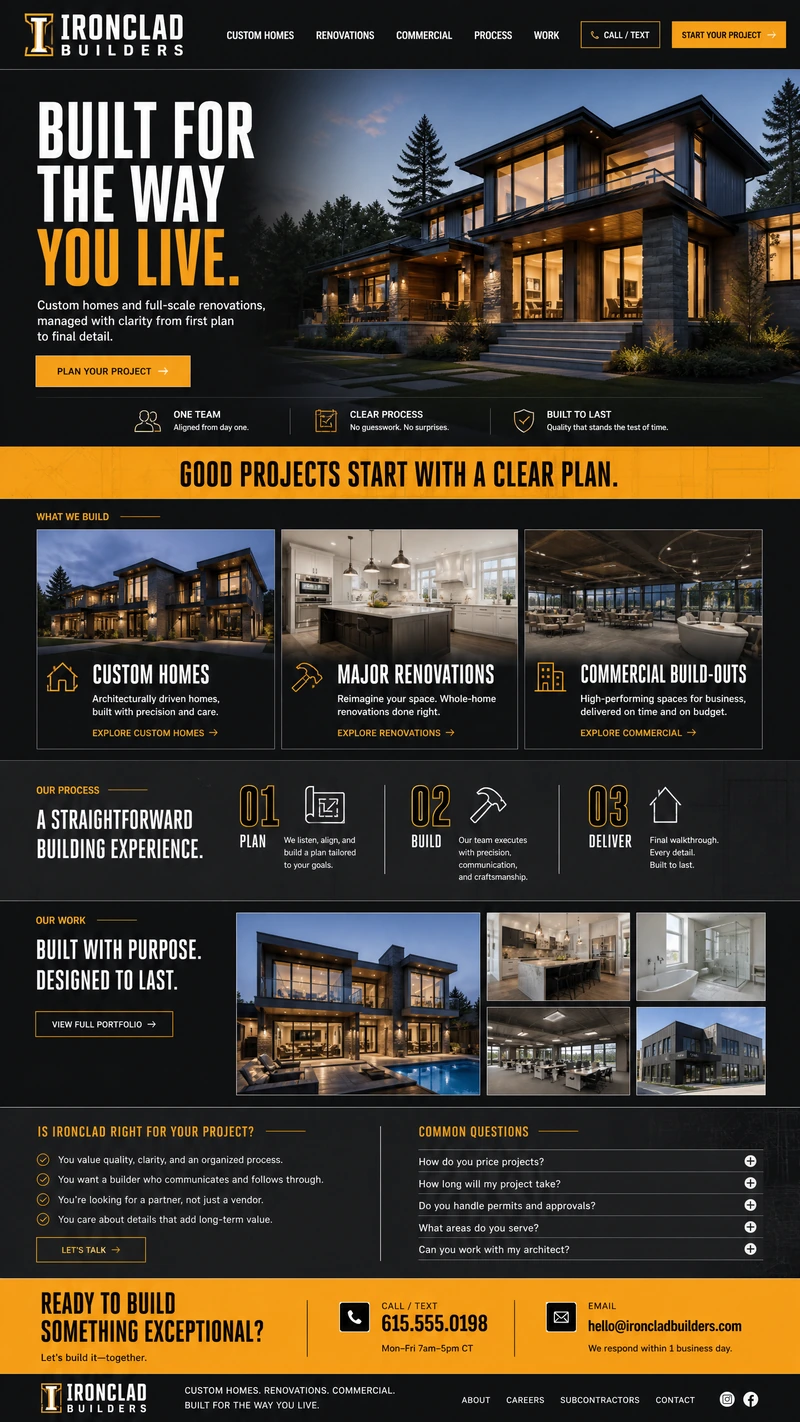
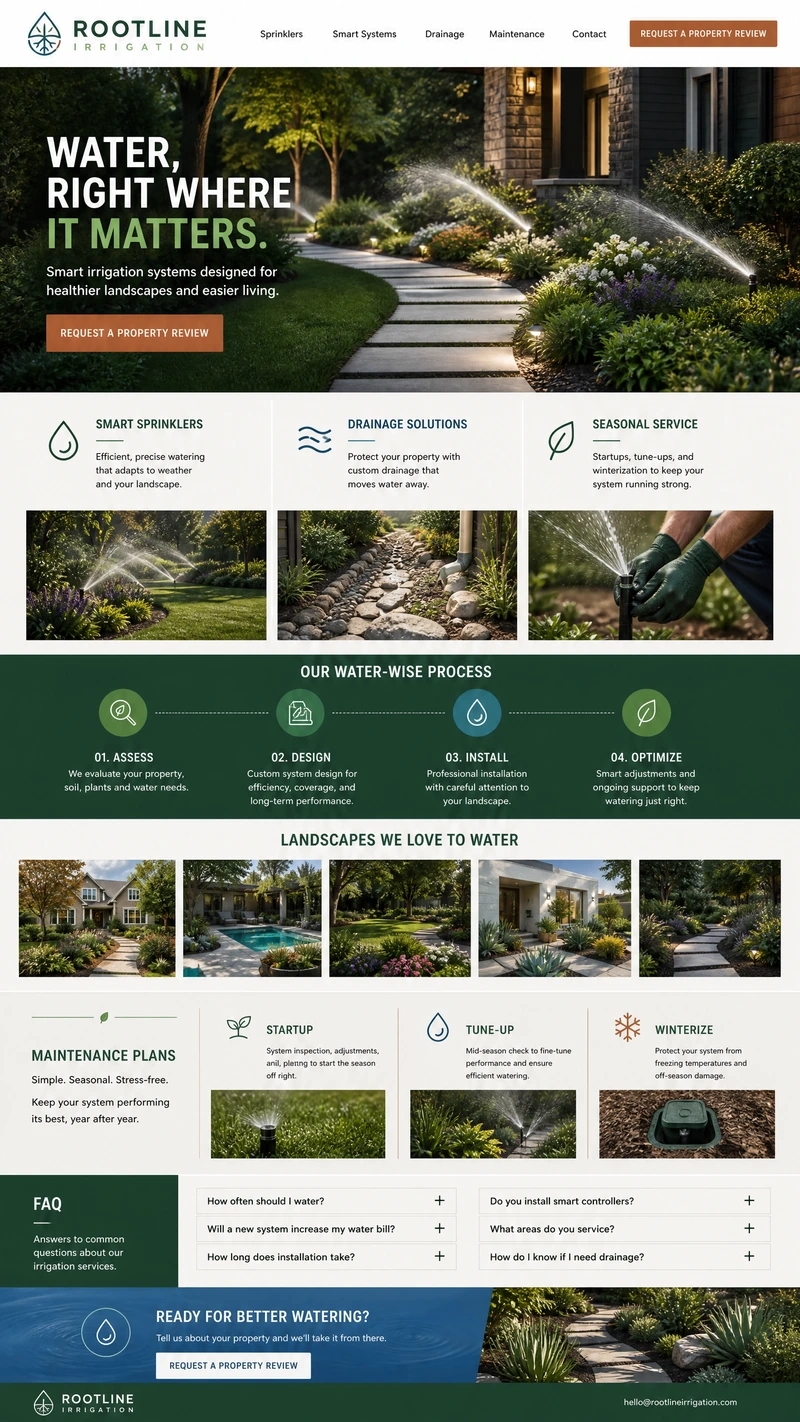
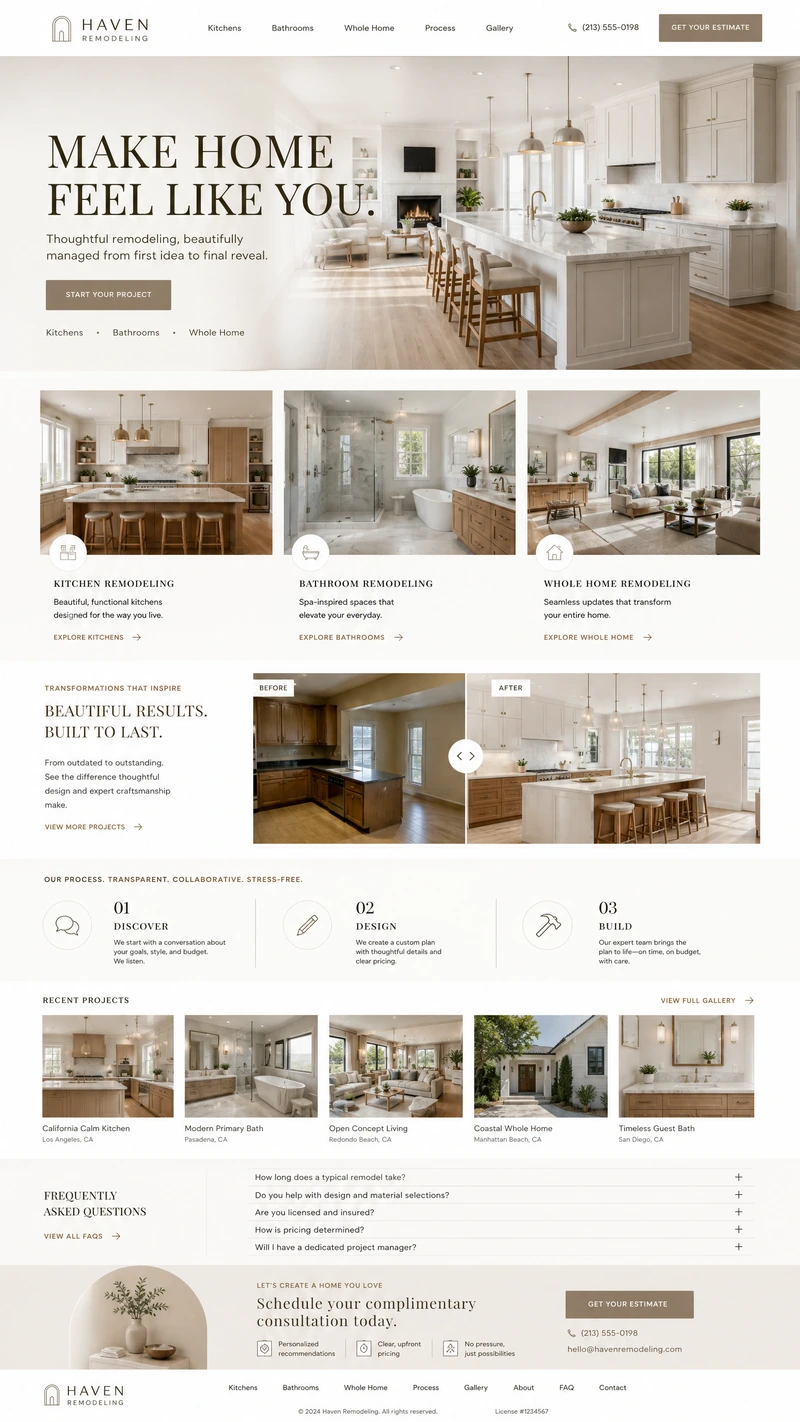
Mand Digital Website Design Collection. Website concepts designed by our studio across five directions. Your site is designed around your own business.
The request form gets a patient into your scheduling queue. It is short, it works on a phone, and it deliberately stays away from clinical information.
The standard form asks for name, phone, email, whether the patient is new or established, the provider or location they prefer, a short reason for the visit in general terms and their insurance carrier. It is delivered to the inbox your team monitors, and your phone and fax numbers stay visible on every page for patients and referring offices.
A website form is not an intake system. If you want online intake, symptom questionnaires or booking connected to your EHR or practice management software, that is assessed during scoping with you and your compliance adviser. We do not describe any website as HIPAA compliant, and nothing that would collect health information is built until the approach has been reviewed and approved by the practice.
If your practice already uses an online scheduling tool or a patient portal, the site links to it from every relevant page so patients use the system you have chosen.
That form is the one your patients will use on your finished site. To reach us, use the form at the bottom of this page.
Patients search by condition, by specialty and by location, often in that combination. The site has to give search engines a clear, specific page for each.
Medical practice SEO starts with the website itself: a page per service line, a page per location with an address and hours that match your Google Business Profile, provider profiles search engines can read, and the technical fundamentals set up correctly from the first day. Healthcare SEO beyond that, such as condition content and local search work, is an ongoing service planned with you.
If you run campaigns, each one needs a landing page that matches the ad, whether that is a new service, a new location or a provider joining the practice. Healthcare advertising follows platform rules and the regulations that apply to your practice, so campaign copy is reviewed with you. SEO and advertising are separate from the website, scoped and quoted on their own, and we never promise rankings, patient volumes or ad returns.
Your proposal lists exactly what the project covers. For a medical practice or clinic, it is usually built from the following.
Domain and hosting are separate and are not paid to us. The practice owns both, and the site is deployed to its account.
Each medical website is quoted individually, after we understand how the practice is organized. You receive a written proposal with scope, timeline and price before work begins.
The proposal depends mostly on structure: how many specialties and providers need their own pages, how many locations you operate, what already exists that should be carried over, and whether anything beyond a standard appointment request is being considered. Once the briefing and materials arrive, we build the full first draft so your physicians and administrators can review the site as a whole.
No mandatory monthly fee is paid to us for the website. The domain and hosting are registered to the practice, and the site can be moved whenever you decide.
You describe the practice: specialties, providers, locations, insurance arrangements and how patients currently reach you.
A written proposal covering pages, features, timeline and price. Work starts only after you approve it.
Provider details and photographs, location information, accepted plans and any wording that must appear exactly as your practice states it.
We draft the page plan and the copy. Clinical pages are checked by your providers before design starts.
The complete first draft of the site, delivered on the timeline in your proposal.
Your team reviews the whole site and returns one consolidated set of notes per round. The number of rounds is set in your proposal.
Once you approve the final version, we deploy it to the practice's hosting on its domain.
That is the whole process.
If it suits the practice, start with a quote request. If you have a question first, the form is just below.
The specialties and conditions you treat, your providers, your locations and hours, the insurance you accept, whether you are taking new patients, and a simple appointment request.
Links to your patient portal and bill pay belong there too. How those pages are organized depends on whether patients find you by specialty, provider or location, and the page list is set in your proposal.
We do not certify HIPAA compliance and we do not make that claim for any website we build.
The standard appointment request is limited to contact details, scheduling preferences and a general reason for the visit, and it does not ask for medical history. Any form that would collect health information is scoped separately and reviewed with your compliance adviser before anything is built.
The site can link to the patient portal and scheduling tools your vendor provides, which is how most practices handle it.
A direct integration depends on the system and on how it handles patient data. It is assessed during scoping and included only if the proposal says so.
Yes. Every provider can have a profile with training, board certifications, clinical interests, languages and locations.
We publish what the practice confirms and supplies. We do not add credentials or affiliations that have not been confirmed.
Each location gets its own page with address, hours, services offered there, providers who practice there and directions.
Those pages also support local search, because each one can match the Google Business Profile for that office.
Yes, as a separate service from the website, scoped and quoted on its own.
Every site we build has the technical SEO fundamentals in place. Ongoing healthcare SEO, such as condition pages and local search work, is planned with you, and we never promise rankings or a number of new patients.
Yes, as a separate digital advertising service, with a landing page built to match each campaign.
Healthcare ads are subject to platform policies and to the rules that apply to your practice, so the copy is reviewed with you before anything runs.
A short description of the practice, its specialties, the number of providers and locations, and what you want the new site to fix.
The form below is enough to start. We reply with questions or a proposal, and that conversation costs nothing.
Organized around your specialties, providers and locations, with an appointment request your staff can act on and links to the systems you already use.
Quoted for your business
A proposal built around your scope
This is the website proposal. SEO and advertising are separate services, quoted on their own.
Your website, your domain, your hosting. No mandatory monthly fee to us.
Also thinking about SEO or advertising for the practice?
Talk to our teamYour specialties, how many providers and locations you have, and what the current site gets wrong. We will tell you what the new one should cover.