
Do they understand my kind of problem?
Service pages that start from the situations clients arrive with, in their language, show understanding faster than a list of capabilities.
Websites built around your businessSEO & digital advertisingStrategy with a human touch
Professional services website design
When what you sell is judgment and experience, the website is where a referral gets checked. We design professional services websites that make your expertise easy to understand, show who does the work and turn a careful reader into a request for a first conversation.
Scoped and quoted for your firm, and built on a domain and hosting the firm owns.
Services a buyer can follow
What you do, for whom and how an engagement runs, explained without the jargon of your own field.
Credibility without case studies
Expertise, method and credentials shown in ways that do not depend on naming clients you cannot name.
A first conversation, not a cart
A consultation request that asks enough to prepare for the call and nothing that slows a busy buyer down.
Most professional services firms win work through referrals and relationships. The website rarely closes the deal, but it often decides whether the first meeting happens.
A prospect who has been given your name will look you up before replying. They want to see that you understand problems like theirs, that the people behind the firm have relevant experience and that working together has a clear shape. A consulting website design that only lists services in abstract terms leaves them with the same doubts they arrived with.
The same site also has to work for buyers who find you without a referral. B2B buyers often research quietly and involve colleagues before anyone gets in touch, so the pages need to make sense when forwarded to someone who has never heard of the firm.
We plan the site around how your engagements actually start. A management consultancy, a marketing agency, an engineering advisory and an independent HR consultant sell in different ways, and the structure is set in your proposal rather than borrowed from a generic corporate template.
A site planned around how your firm wins work
Tell us where your best engagements come from and what prospects ask before they commit. We will tell you how the site should be organized.
Expertise is hard to judge from the outside, so buyers look for signals they can read in a few minutes.
Someone comparing three firms is rarely an expert in your field. They are checking whether you seem to understand their situation, whether the people are credible and whether the next step is clear. Professional services marketing that leans on big claims tends to read as the opposite of expertise; specific, calm explanations read as confidence.
Service pages that start from the situations clients arrive with, in their language, show understanding faster than a list of capabilities.
Profiles of the principals and team members, with real experience described plainly, answer the question every buyer has about who shows up after the sale.
A short explanation of how engagements are scoped, run and reported removes much of the uncertainty that stops a buyer from reaching out.
Decisions are often shared. Pages that make sense on their own, with a clear summary at the top, are easy to forward inside an organization.
Hear those questions in your first meetings?
Send us the questions prospects ask most and we will show you where each one belongs on the site.
Confidentiality agreements, discretion and simple good manners mean many firms cannot publish client logos or results. The site has to build trust another way.
There is more to work with than most firms expect. A clear explanation of your method, the kinds of situations you are usually brought into, anonymized descriptions of typical engagements you are comfortable sharing, and articles that show how you approach a problem all give a buyer something real to assess. Everything is written from your briefing and approved by you; we do not invent clients, outcomes or figures to fill the gap.
If you do have permission to name clients or share results, those can be added with the context they need. Either way, the site stays accurate about what you have done.
How you diagnose, plan and deliver. A described process is evidence of experience in itself, and it sets expectations before the first call.
The situations clients bring you in for, described without names. Prospects recognize themselves in a well-written scenario.
Articles, guides or talks you have produced, organized so a buyer can see how the firm reasons about problems in their field.
In a professional services firm, the people are the product. Buyers want to know whose judgment they are paying for.
Profiles do the heavy lifting here. Relevant experience described concretely, the qualifications and memberships each person actually holds, and a sense of how they work with clients make the firm feel accessible. For a small firm or a solo consultant, a well-written profile can carry as much weight as a full team page does for a larger one.
Want the firm to read the way it sounds in a meeting?
Sixteen concepts from the studio, built from the same five directions. They were drawn for home-service trades, so none of them is a consultancy or an agency. What carries over is the direction: a quiet, clean layout for an advisory firm, or a bolder one for a creative agency. Your site would start from a direction and be designed around your own firm and people.
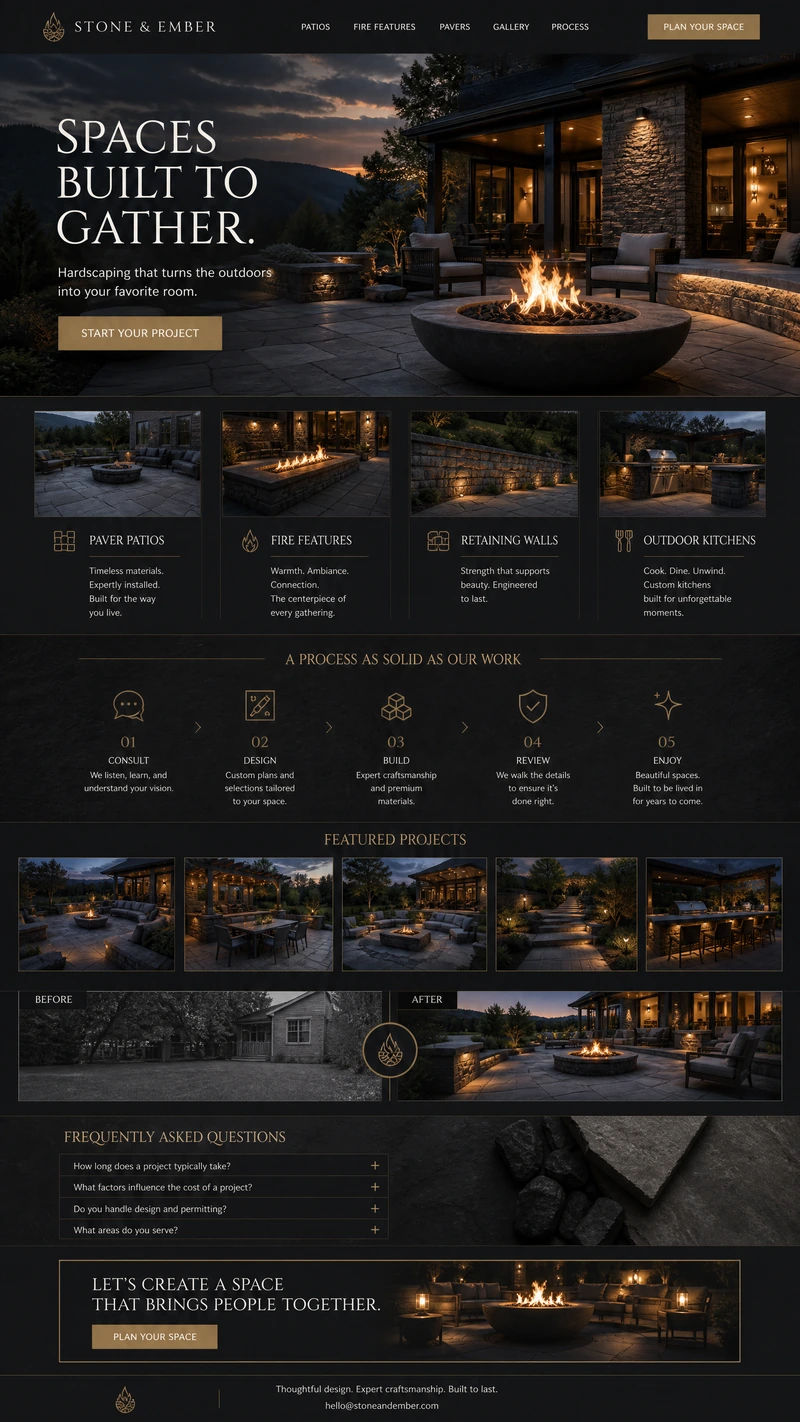
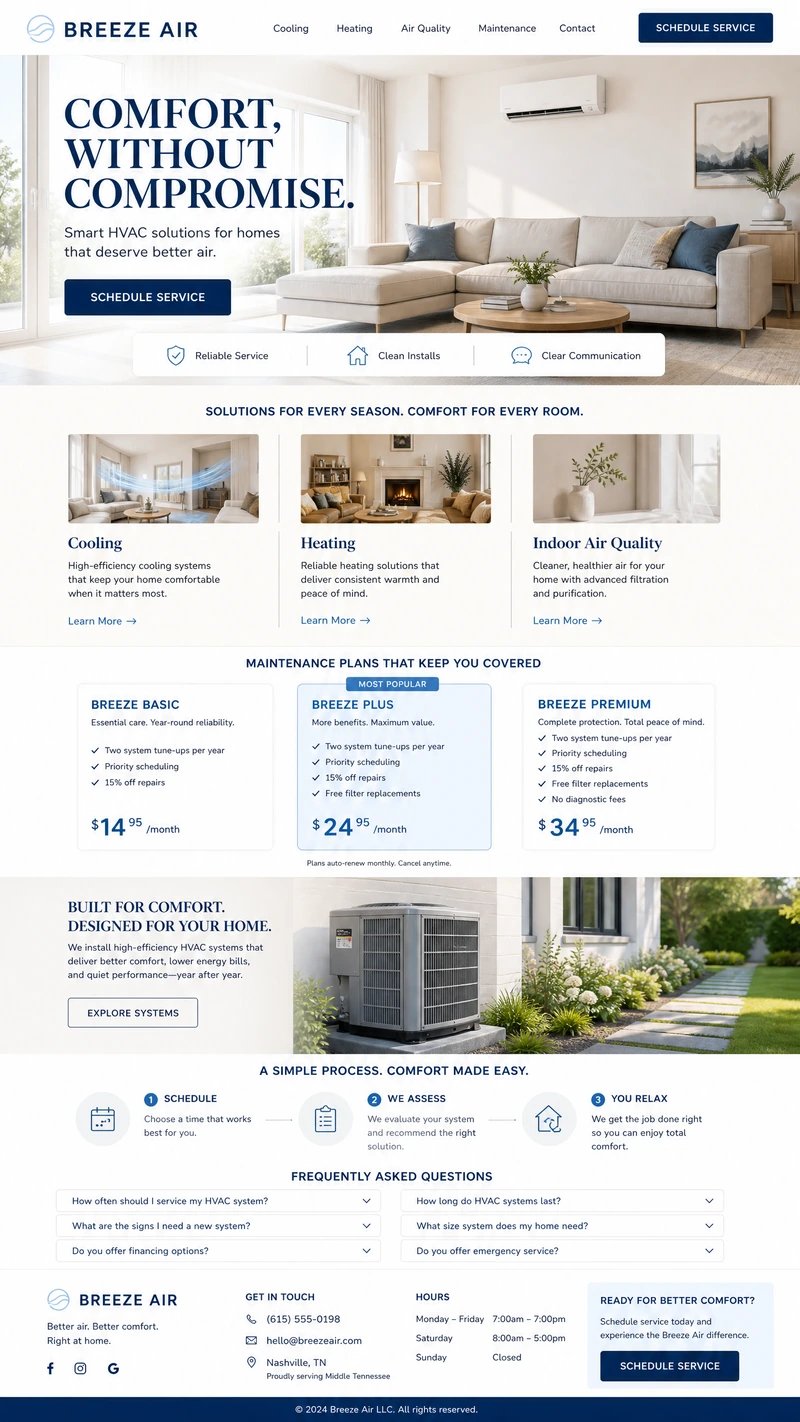
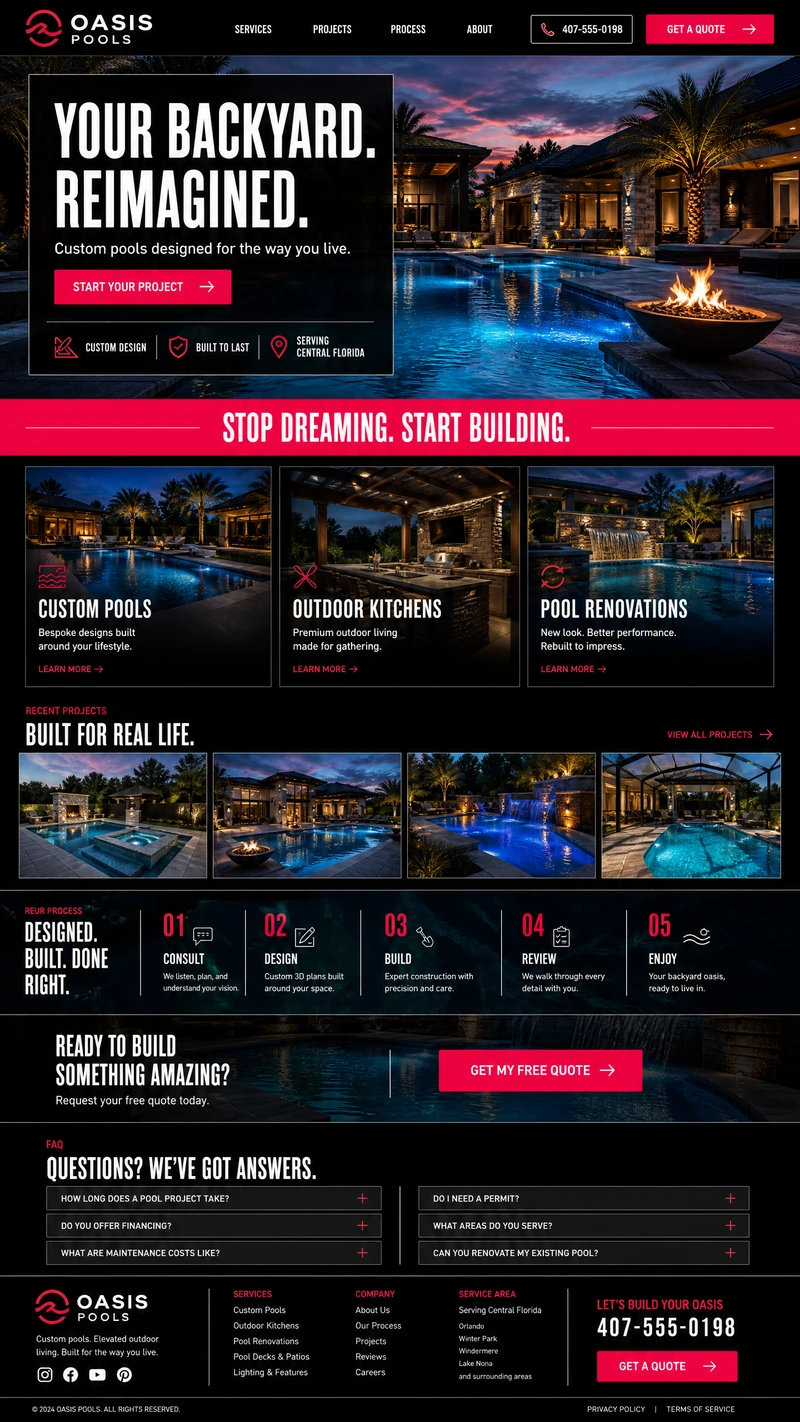
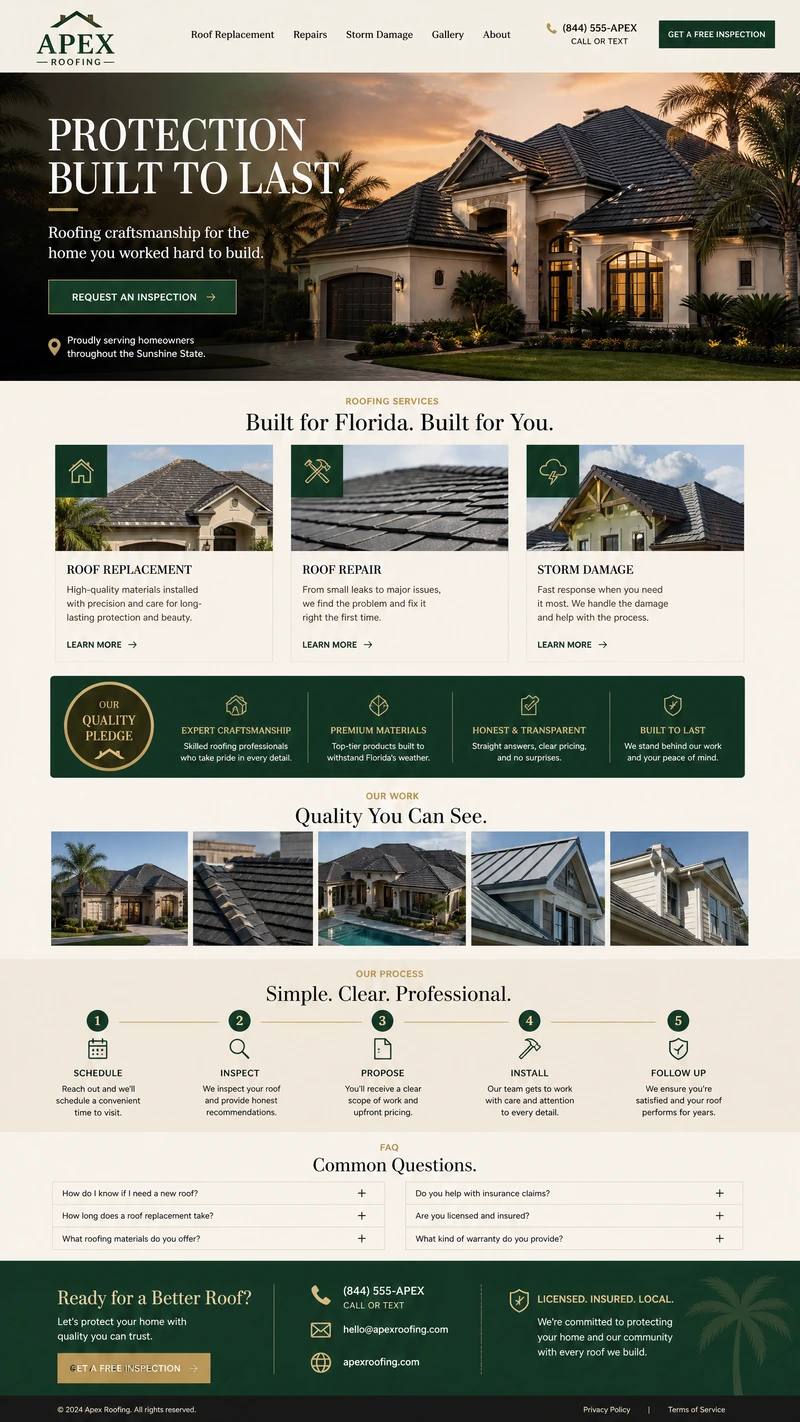
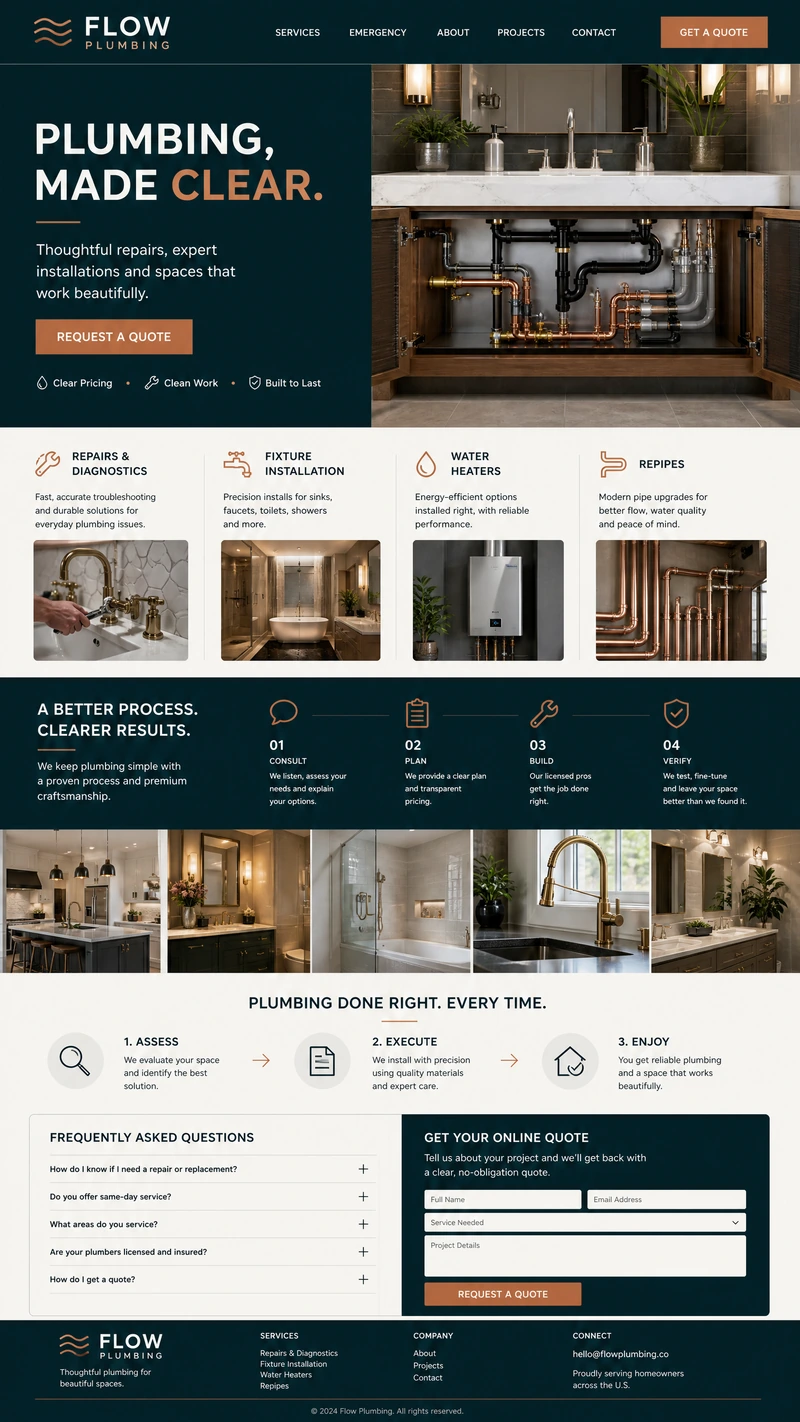
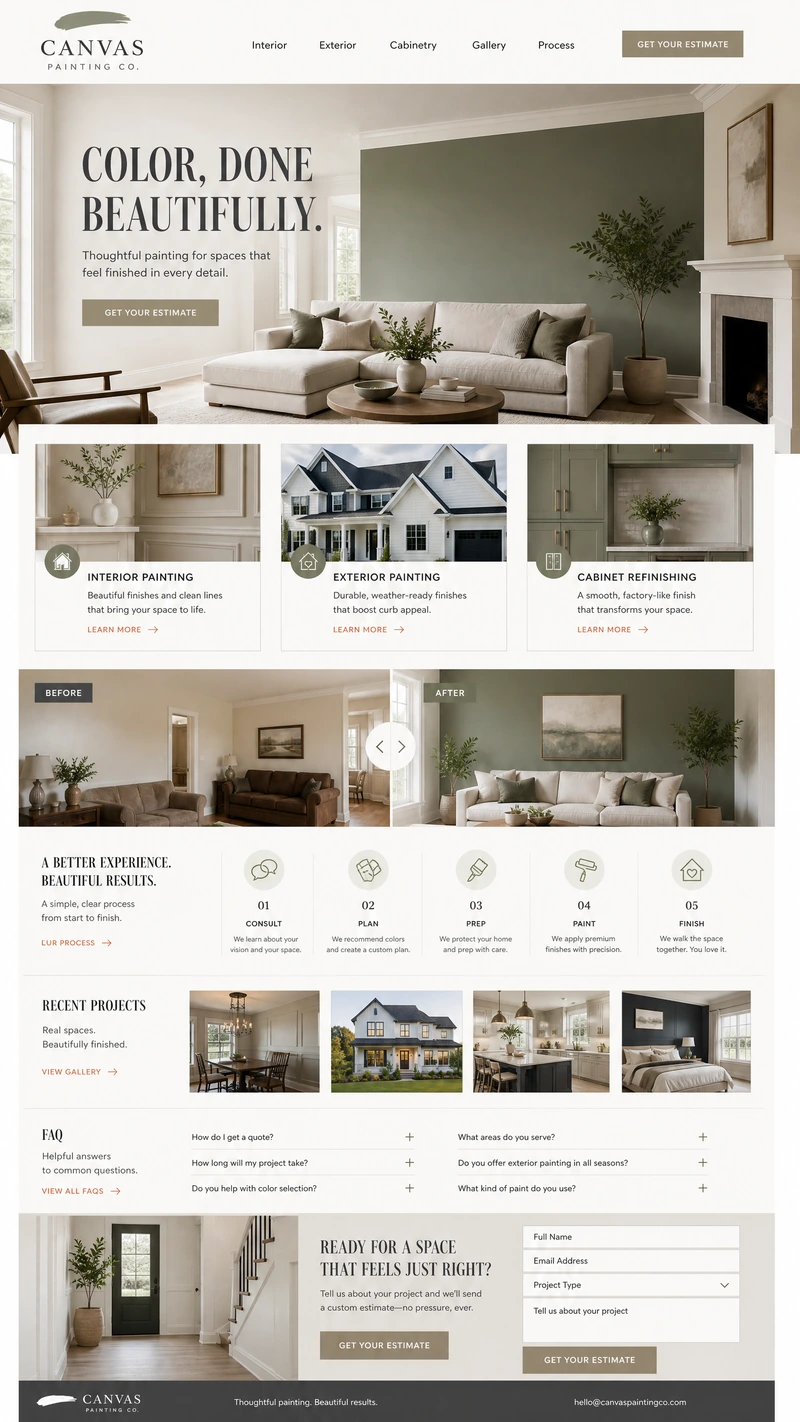
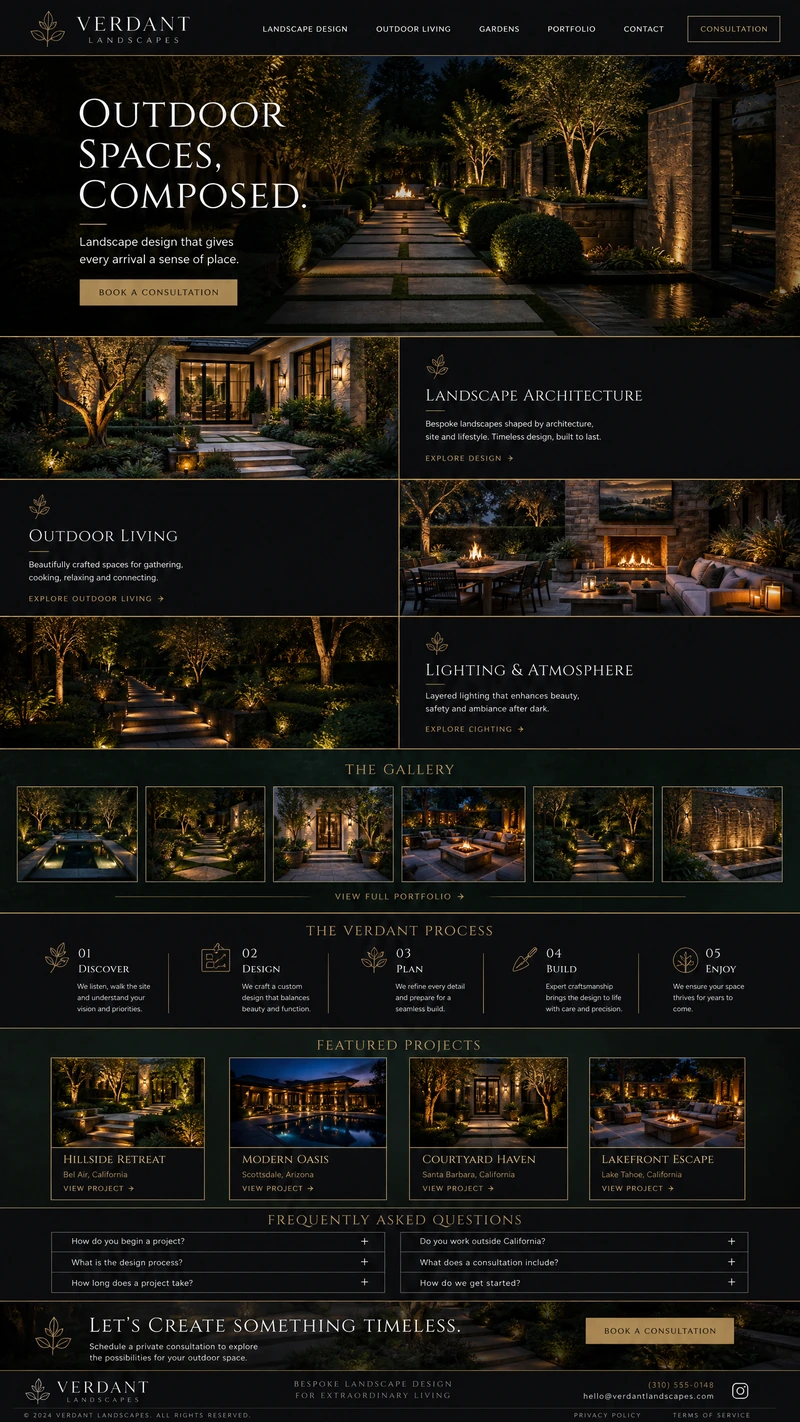
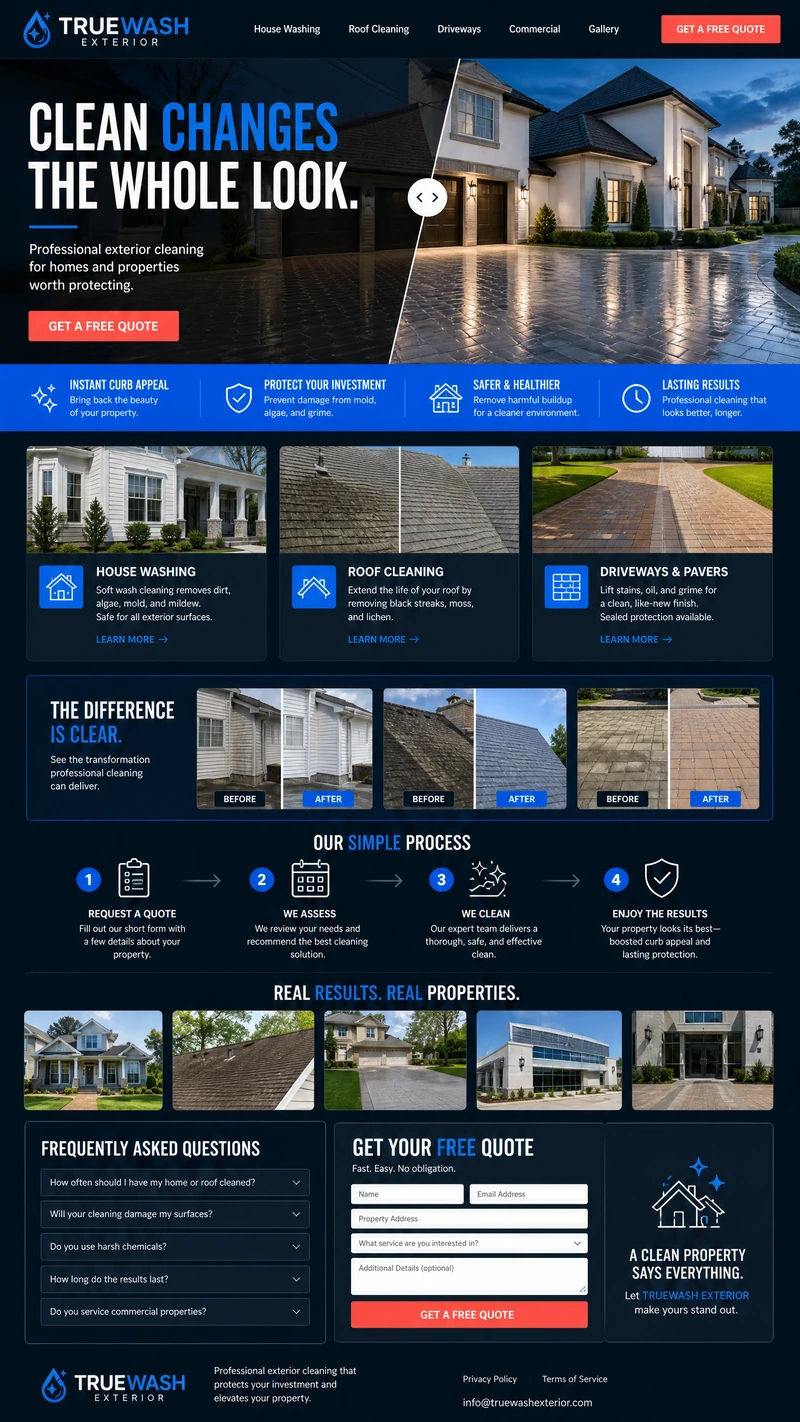
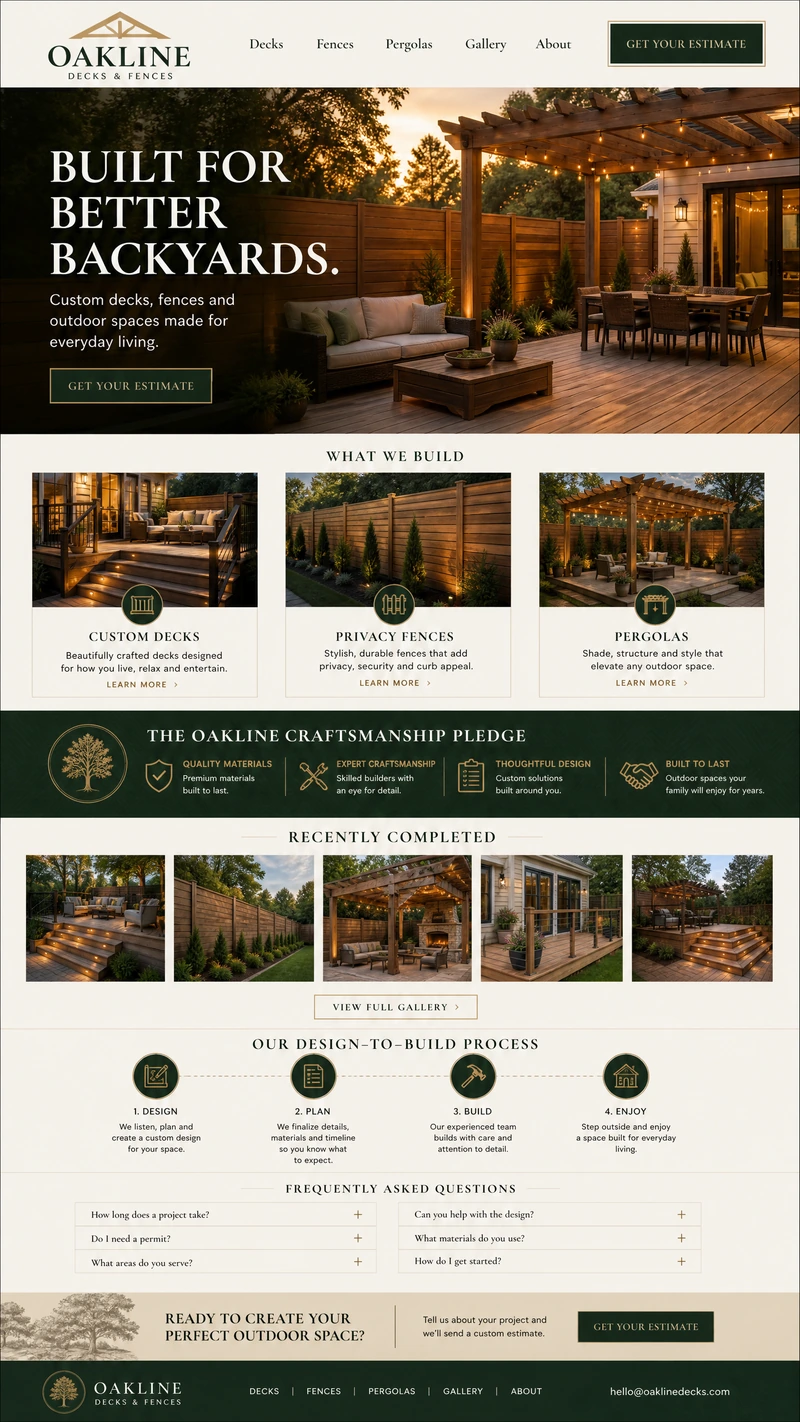
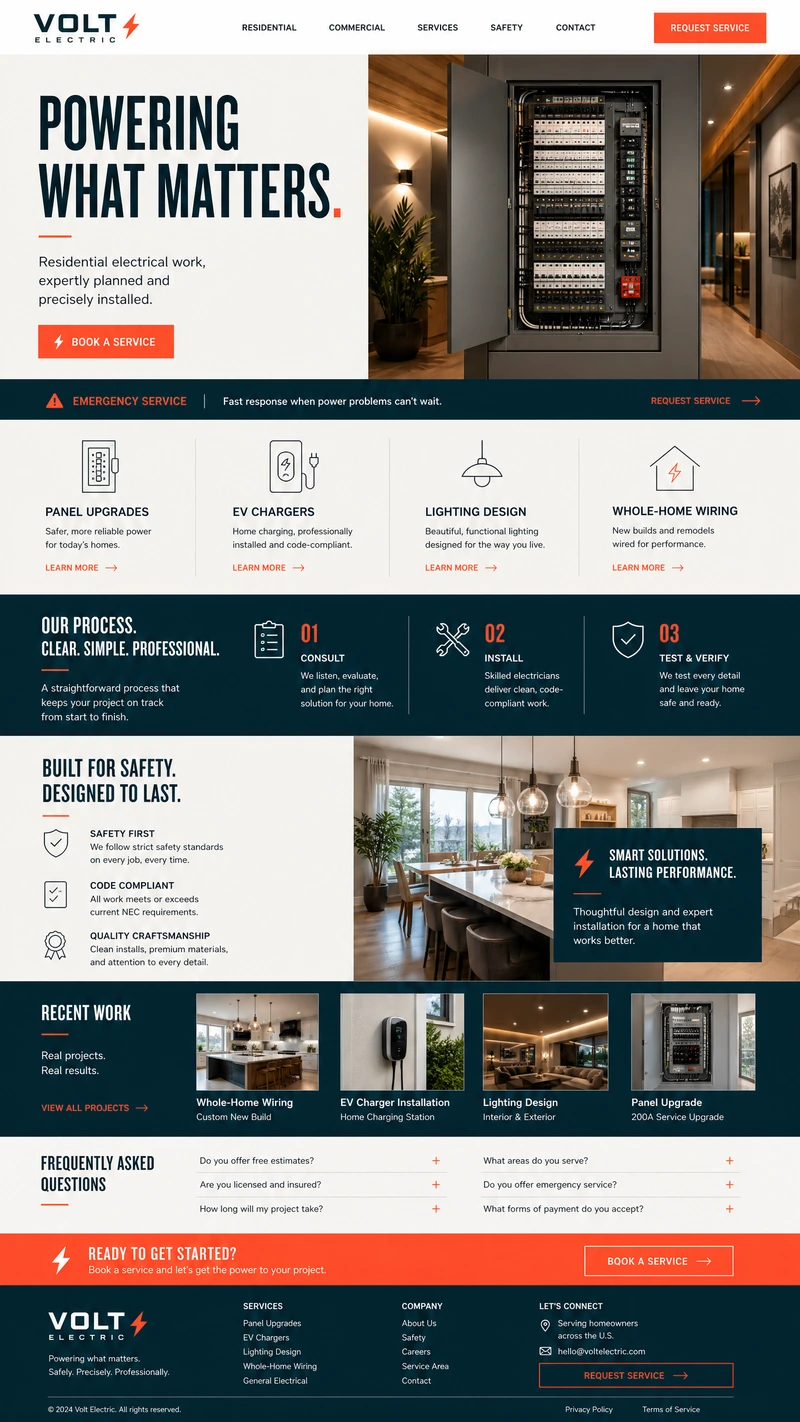
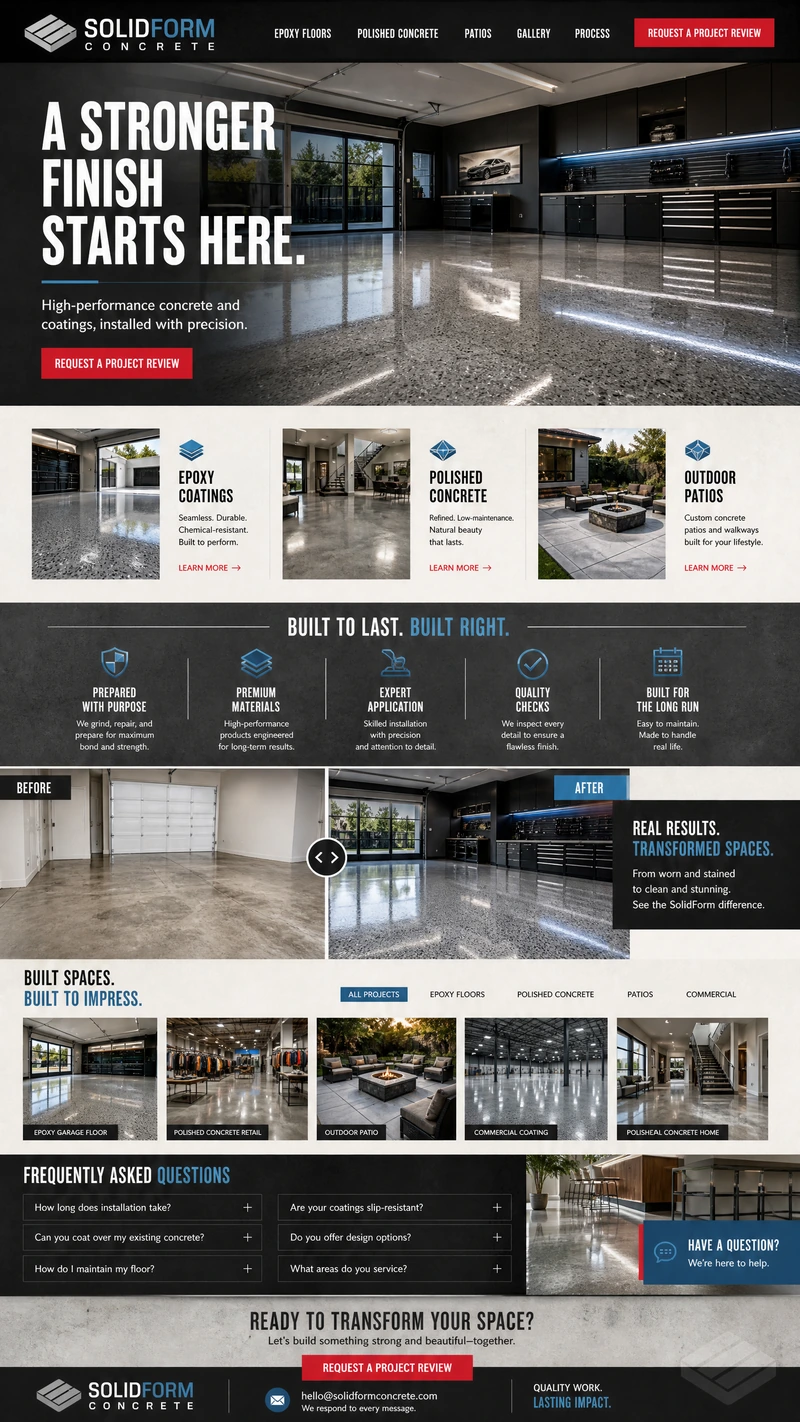
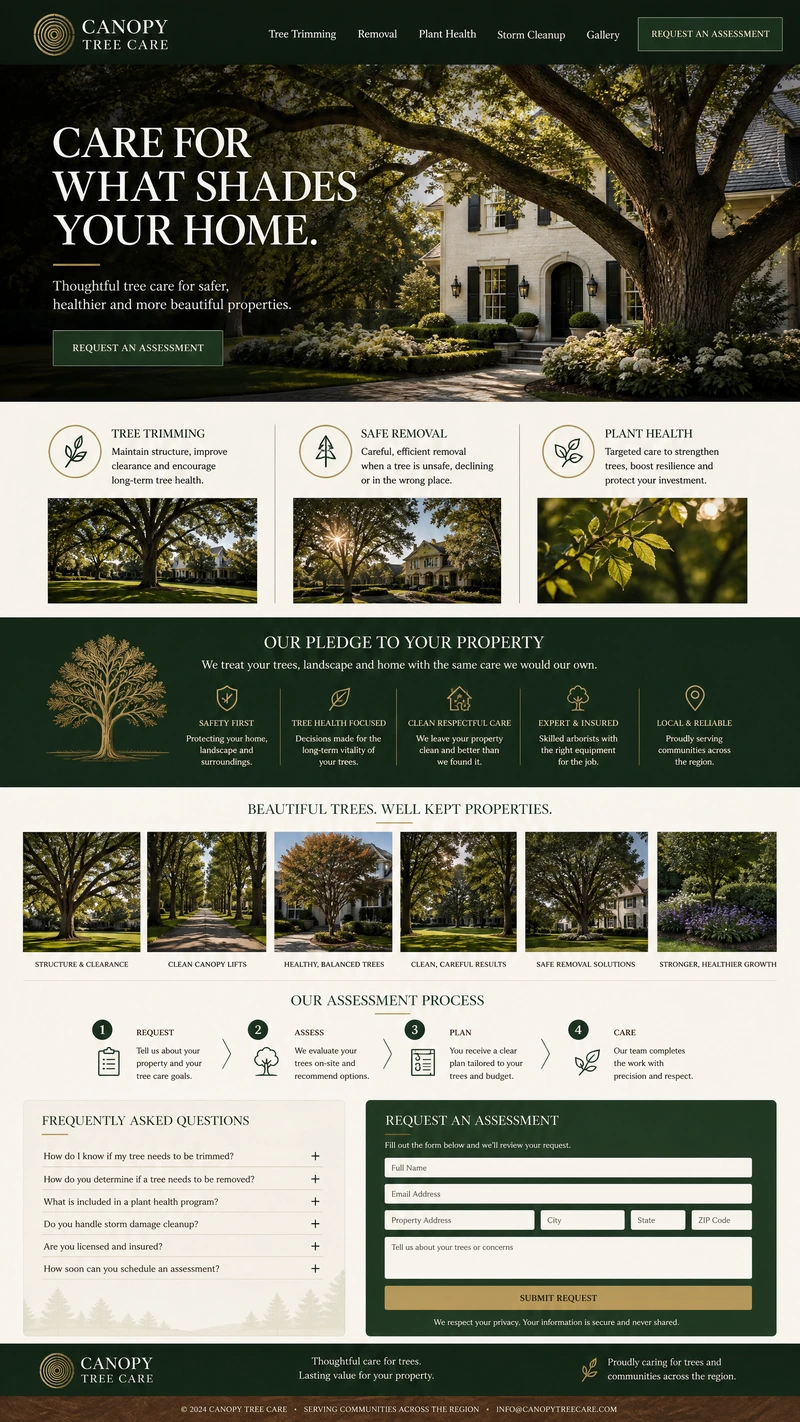
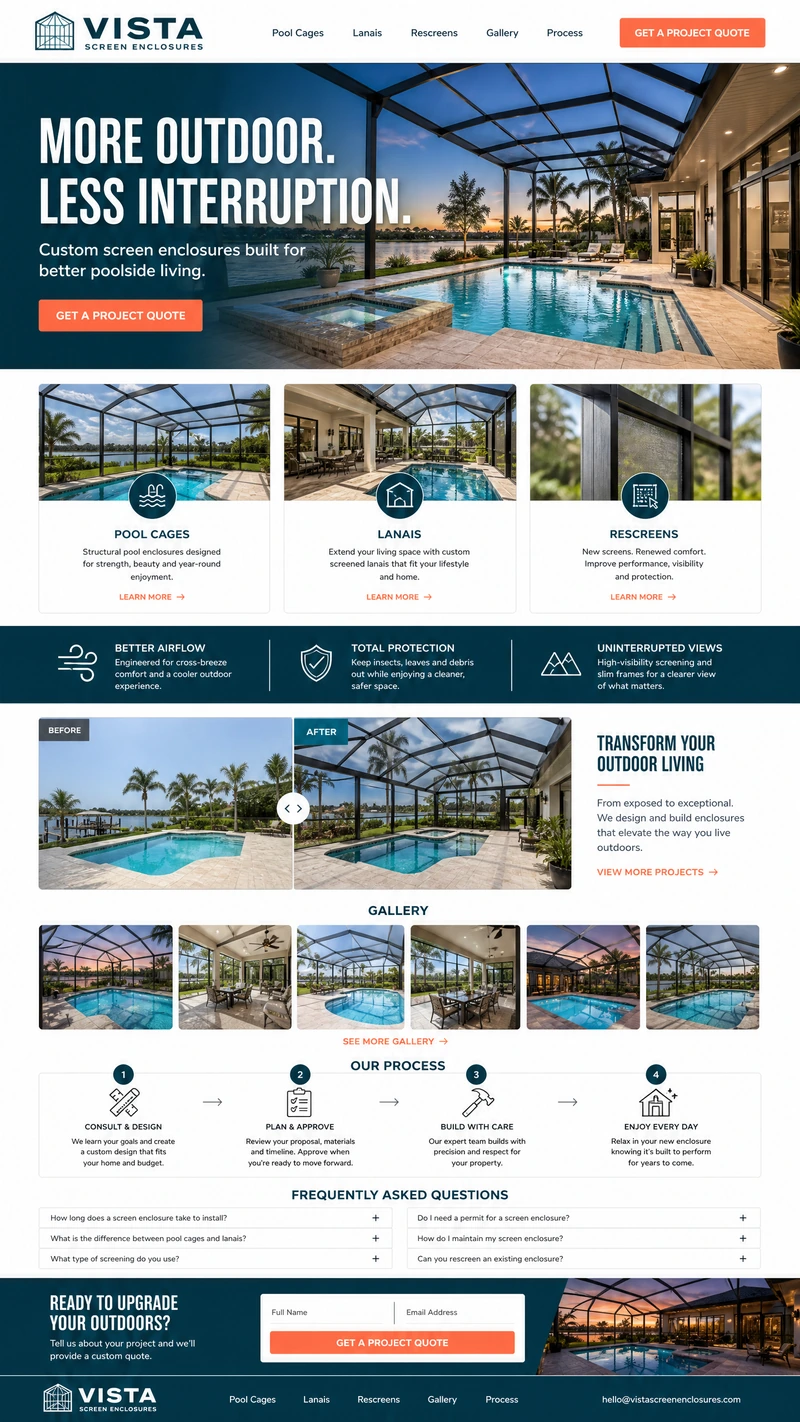
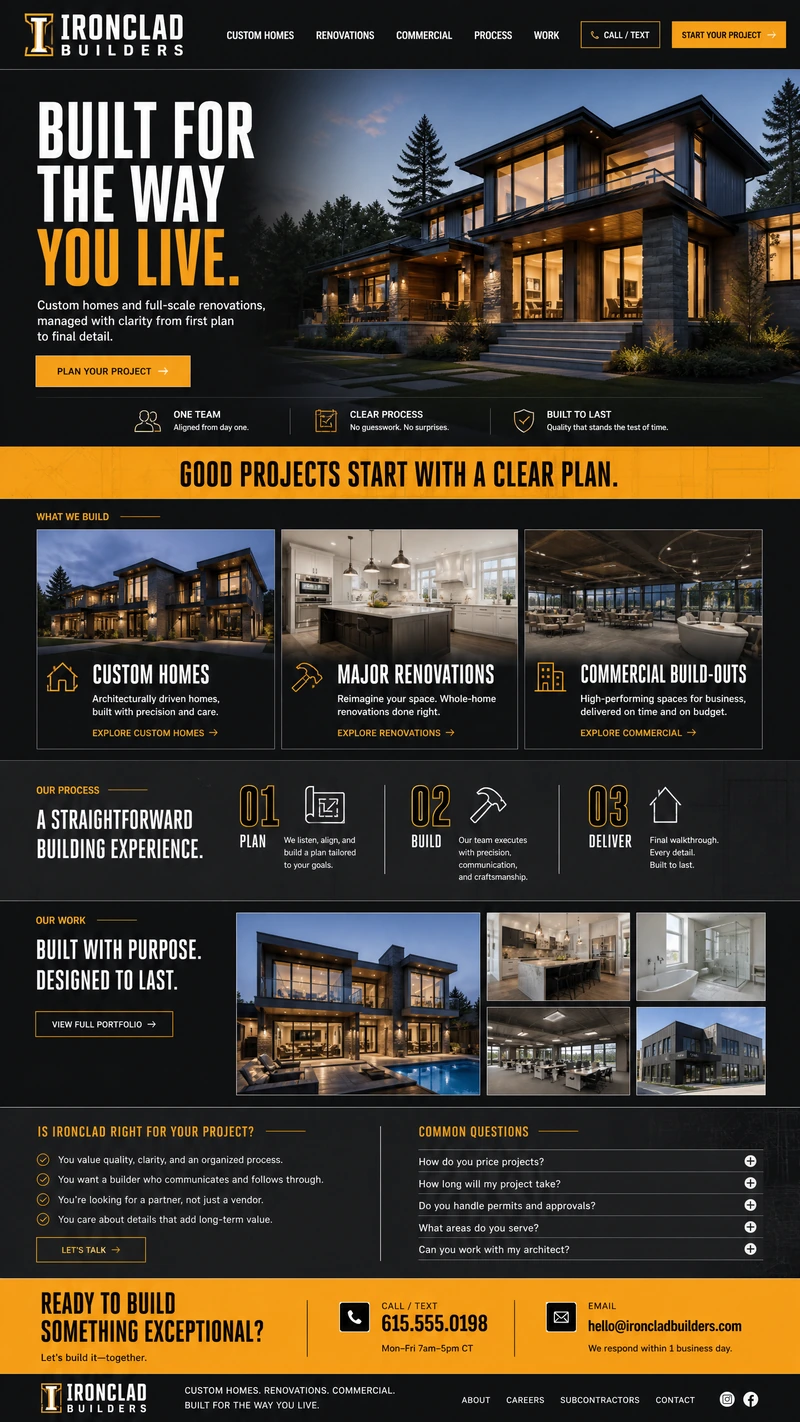
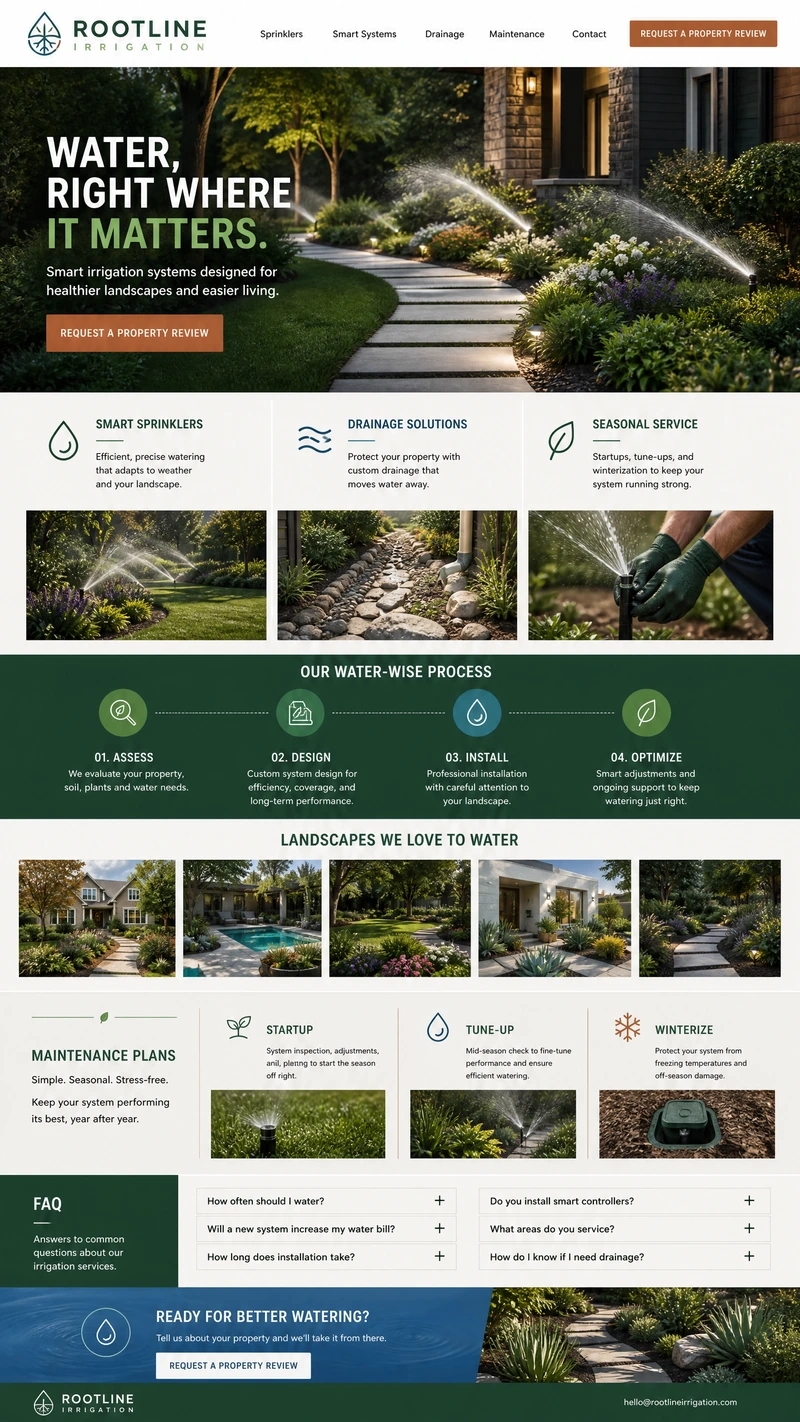
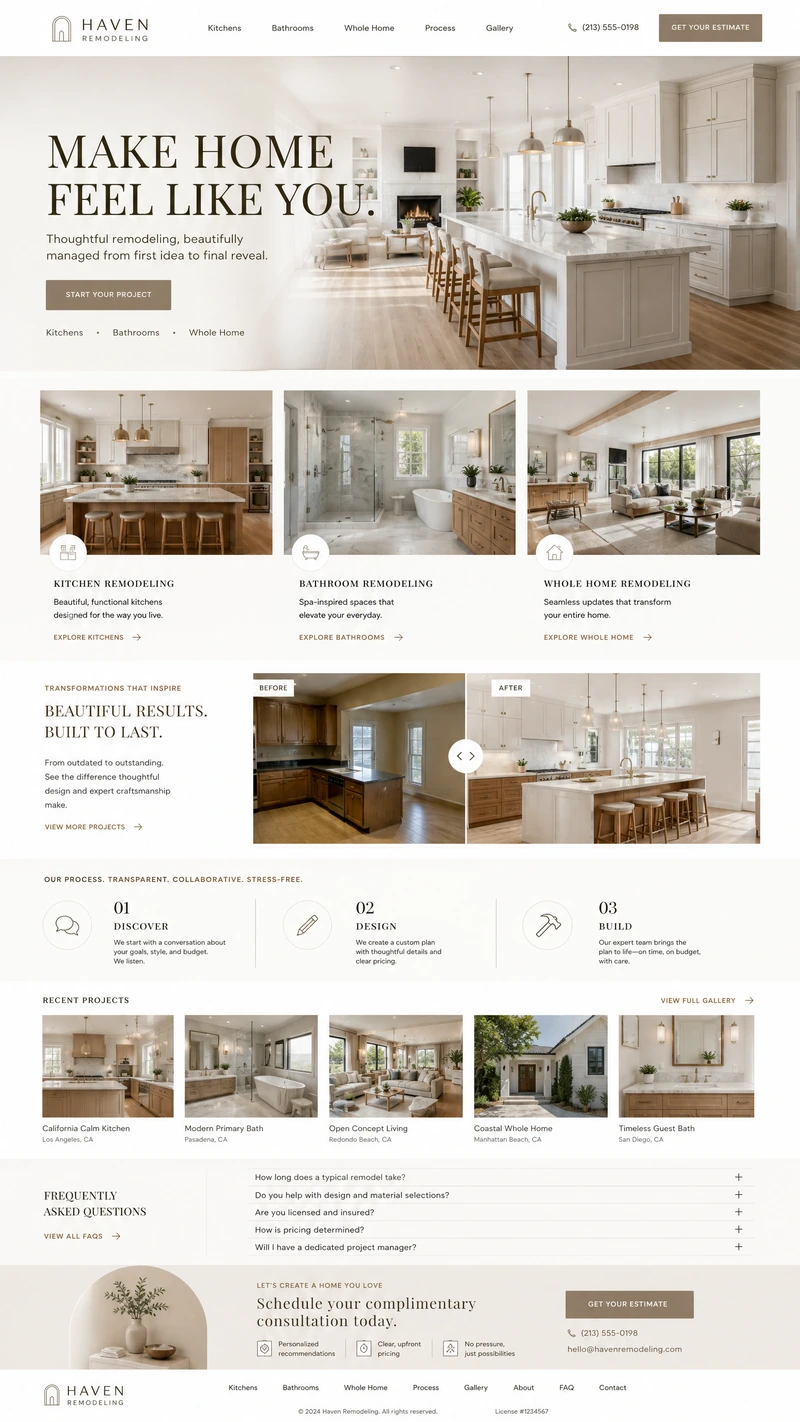
Mand Digital Website Design Collection. Website concepts designed by our studio across five directions. Your site is designed around your own business.
The consultation request is where a reader becomes a prospect, so it asks for enough to prepare a useful first call and stays quick to complete.
A good request asks for the person's name, work email and phone, their organization, the service they are interested in and a short description of what they need. Optional questions about timing or the size of the organization can help you prepare, as long as they do not turn the form into a questionnaire. Requests go to the inbox you choose.
If you already book first calls through a scheduling tool, the site can link to it so prospects pick a time directly. Connecting the form to a CRM or another system is possible in some cases and is assessed during scoping rather than assumed.
That form is the one your prospects will use on your finished site. To reach us, use the form at the bottom of this page.
Buyers search for help with a specific problem in a specific field, so the site needs pages that describe that help precisely enough for people and search engines to match it.
Search for professional services is often narrower than firms expect. A page for each service, articles that answer the questions buyers research, and clear statements of the industries and regions you serve give search engines something concrete to work with. Every site we build has the technical SEO fundamentals in place from the start.
For paid campaigns, including B2B campaigns aimed at particular roles or industries, each ad needs a landing page that continues what the ad said, with the consultation request close by. Ongoing SEO and campaign management are separate services from the website, scoped and quoted on their own. We describe the work and never promise rankings, inquiries or a return on ad spend.
Every proposal lists exactly what your project includes. For a professional services firm, that usually means the following, in a site that is complete on the day it launches.
Domain and hosting are separate and are not paid to us. The firm owns both, and the site is deployed to its account.
Every professional services website is quoted on its own, once we understand the firm. You receive a written proposal with the scope, timeline and price before any work starts.
What shapes the proposal is the breadth of what you offer and how much has to be explained: the number of services and industries, how many people are presented, whether existing articles need to move across and whether the request form needs to connect to other tools. Once your briefing and materials are in, we build a complete first draft for you and your partners to review together.
There is no mandatory monthly fee to us for the website. The domain and hosting are in the firm's name, and the site stays yours if you ever change providers.
You explain the firm: the services you sell, who buys them, how engagements usually begin and what the current site gets wrong.
A written proposal with the pages, features, timeline and price. Work starts only after you approve it.
Profiles and photographs, credentials, any articles you already have and wording that must appear exactly as approved.
We plan the pages and draft the copy in plain language. You check that the expertise is described accurately before design begins.
The complete first draft of the site, on the timeline set in your proposal.
You and your partners review the whole site and send combined notes. The number of revision rounds is set in your proposal.
When you approve the final version, we deploy it to the firm's hosting on the firm's domain.
That is the whole process.
If it fits, the first step is a quote request. If you would rather ask something first, the form is a few lines below.
Clear service pages, the industries or clients you work with, how an engagement runs, profiles of the people doing the work and a straightforward way to request a consultation.
Articles or insights are worth adding if you will keep them current. The exact page list is agreed in your proposal.
By showing how you work rather than who you worked for: your method, typical engagements described without names, your people's experience and your own published thinking.
If you have permission to name clients or share results later, they can be added. We never write testimonials, client names or figures that you have not supplied.
Yes. Law firms have their own advertising rules and intake concerns, so they have a separate page: see our law firm website design page.
This page covers consultancies, agencies, advisers and other B2B firms whose work is sold on expertise but is not governed by bar rules.
Linking to a scheduling tool you already use is straightforward. Connecting the request form to a CRM depends on the system and is assessed during scoping.
Anything beyond a standard request form is included only if your proposal lists it.
No. A solo consultant often benefits most, because the site has to do the work a team page and a brochure would do for a larger firm.
The scope is sized to what you need, and the proposal reflects that.
Yes. SEO is a separate service from the website, scoped and quoted on its own.
Every site we build includes the technical fundamentals. Ongoing work such as service content, articles and local or industry visibility is planned with you, and we never promise rankings or a number of inquiries.
Yes, as a separate digital advertising service, with landing pages built to match each campaign.
We agree the audience, platforms and messaging with you before anything runs, and we never guarantee a cost per lead or a return on spend.
A short description of the firm, the services you want to emphasize, the people to be presented and what your current site is missing.
The form at the bottom of this page is enough to start. We reply with questions or a proposal, and nothing is charged for that conversation.
Planned around the services you sell and the questions buyers ask before the first call, with the consultation request wired to your inbox.
Quoted for your business
A proposal built around your scope
This is the website proposal. SEO and advertising are separate services, quoted on their own.
Your website, your domain, your hosting. No mandatory monthly fee to us.
Also thinking about SEO or advertising for the firm?
Talk to our teamThe services you sell, who buys them and how engagements usually start. We will tell you what the site should cover.