
Do you handle cases like mine?
A practice area page that describes the situations you take, in everyday language, answers this better than a list of legal terms the visitor does not use.
Websites built around your businessSEO & digital advertisingStrategy with a human touch
Law firm website design
Someone looking for a lawyer usually has one problem on their mind, and they want to know quickly whether your firm handles it and how to reach you. We design law firm websites with a clear page for each practice area, real attorney profiles and a consultation request that is easy to send from a phone.
Scoped and quoted for your firm, and built on a domain and hosting the firm owns.
One page per practice area
Each type of matter you take explained on its own page, in the words a client would use to describe it.
Attorneys a client can picture
Profiles with real photographs, admissions and the work each lawyer does, so the first call feels less like a cold one.
Intake that stays careful
A consultation request kept to contact details and a short summary, with the notices your firm decides to show.
A law firm website has to tell a worried visitor two things fast: yes, this firm handles my kind of problem, and here is how I talk to someone about it.
People rarely search for a lawyer in general. They search for help with a divorce, a DUI arrest, an injury after a crash, a will for their parents or a dispute with a tenant. When they land on your site, the first question is whether that matter is something you take on. A lawyer website design that answers it with a vague list of practice areas sends them back to the search results.
The second question is about people. Clients hire an attorney, not a logo, so the site needs to show who they would be working with and make contacting the firm feel straightforward rather than intimidating. That matters as much for a solo practice as it does for a firm with several partners.
We plan the structure around the work you actually want. A family law practice, a criminal defense firm and a business law firm need very different sites, and the page list is set in your proposal instead of being pulled from a template built for every kind of lawyer at once.
A site planned around the matters you take
Tell us which practice areas matter most to the firm and which calls you would rather not get. We will tell you how the site should be organized.
Most visitors cannot judge legal skill from a website. They judge whether the firm seems to understand their problem and whether it seems approachable.
A person reading attorney websites at night after a bad day is comparing tone as much as credentials. Plain explanations, a clear sense of the next step and visible people make the difference between a call and another open tab. An attorney website design that sounds like every other firm leaves them with nothing to choose on.
A practice area page that describes the situations you take, in everyday language, answers this better than a list of legal terms the visitor does not use.
Attorney bios with a real photograph, where each lawyer was admitted and the matters they focus on make the firm feel like people rather than a phone tree.
Whether the first consultation is free or paid, how long it takes and what to bring. Explaining the first step removes a reason to put it off.
Many people look for a lawyer in the evening. A request they can send at night, and a clear note on when the firm replies, keeps them from moving on.
Know which of those your clients ask?
Send us the questions your intake staff hears most and we will show you where each one belongs on the site.
One page listing everything the firm does serves nobody well. A page per practice area lets a visitor confirm the fit and lets a search engine match the page to what was searched.
Each practice area page explains the kinds of matters you handle, the questions clients usually have at the start and what the first steps look like with your firm. It is written from your briefing and reviewed by your attorneys before it goes live, because accuracy matters more here than on almost any other kind of site.
Larger areas can be split further. A personal injury practice might give car accidents, workplace injuries and premises liability their own pages, while an estate planning practice might separate wills, trusts and probate. The split follows the work you want more of.
Pages open with the problem the visitor has, then explain how the firm approaches it. Legal terms are explained the first time they appear.
Lawyer advertising is regulated state by state. We draft the copy and your firm reviews it, and we avoid claims about results or specialization the rules may not allow.
Each practice area page ends with the consultation request, so a visitor who has found the right page does not have to go looking for the contact page.
A potential client is about to share something difficult with a stranger. Seeing who that stranger is makes the first call easier.
Good attorney bios are specific and human. Where each lawyer was admitted to practice, where they studied, the matters they focus on and how they work with clients say more than adjectives ever will. If your firm handles cases in more than one language or works closely with a particular community, the profiles are a natural place to say so.
Want the firm to come across the way it does in person?
Sixteen concepts from the studio, built from the same five directions. They were drawn for home-service trades, so none of them is a law firm. What carries over is the direction: a restrained traditional layout for an established practice, or a cleaner, more modern one for a newer firm. Your site would start from a direction and be designed around your own attorneys and practice.
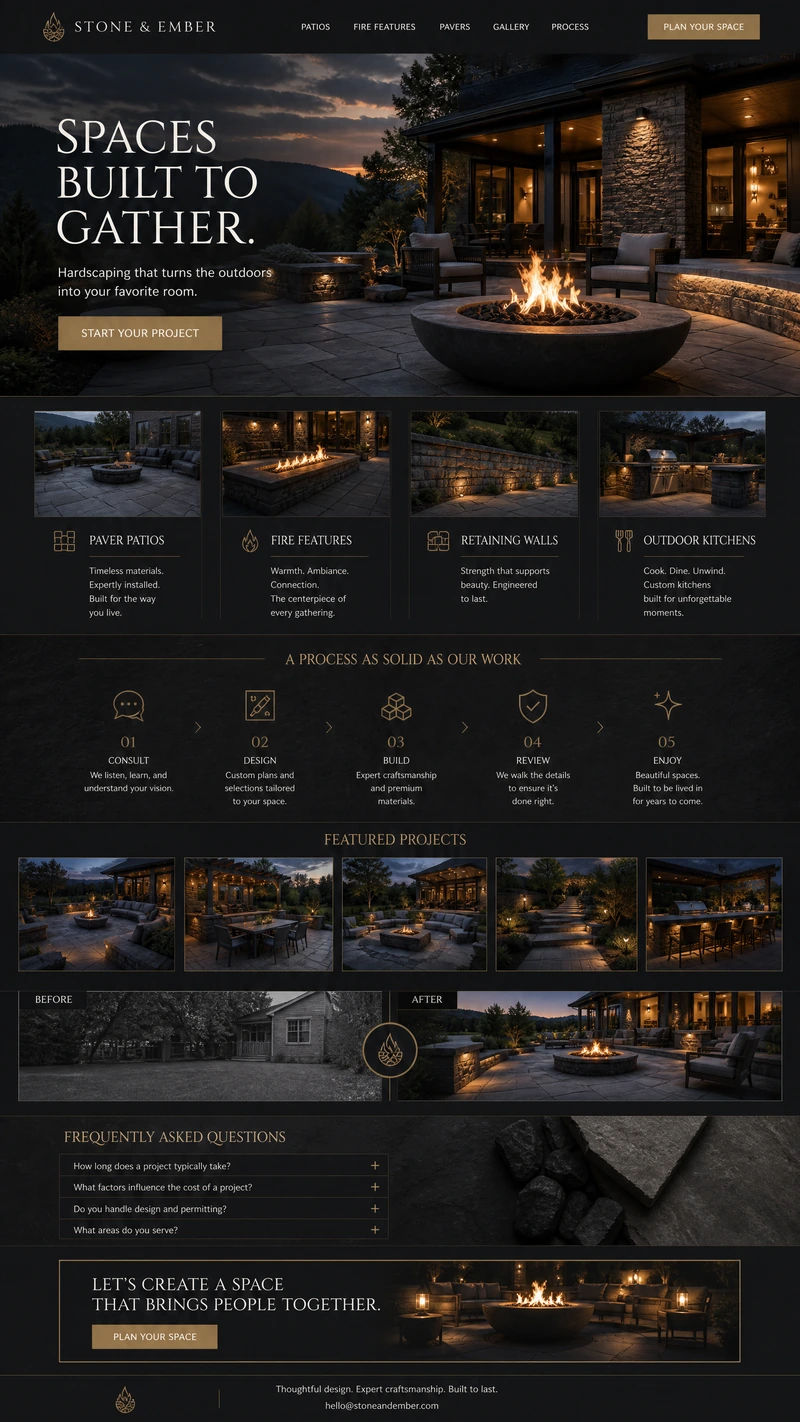
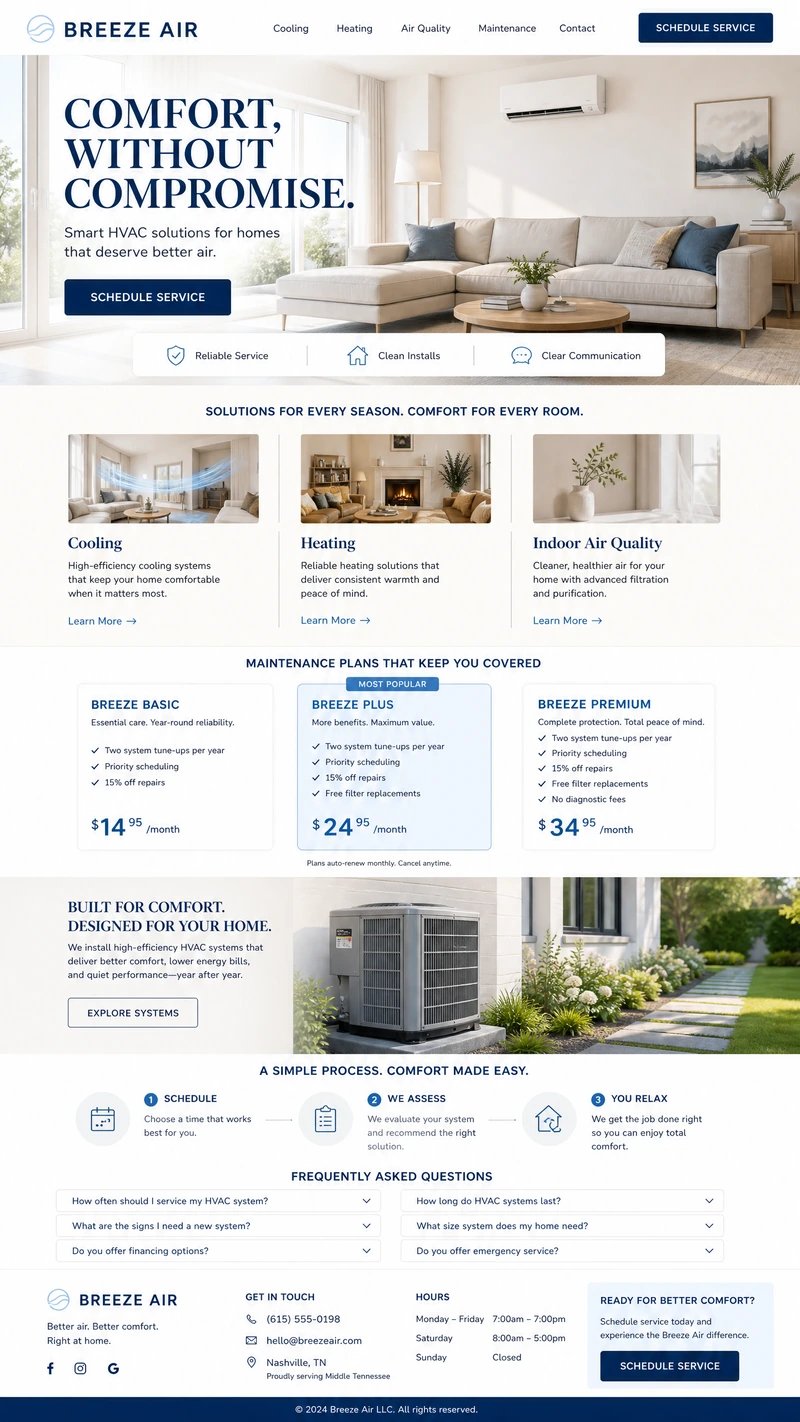
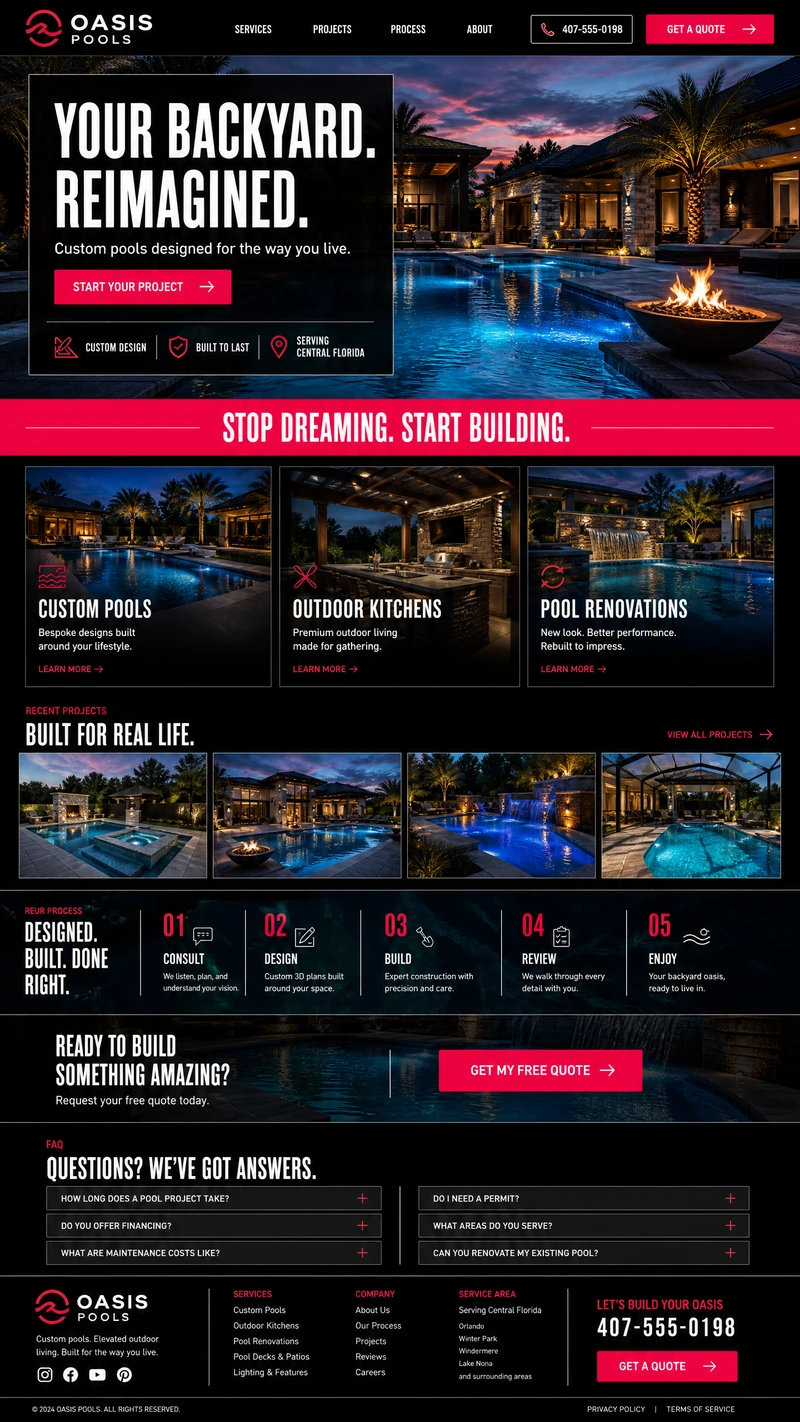
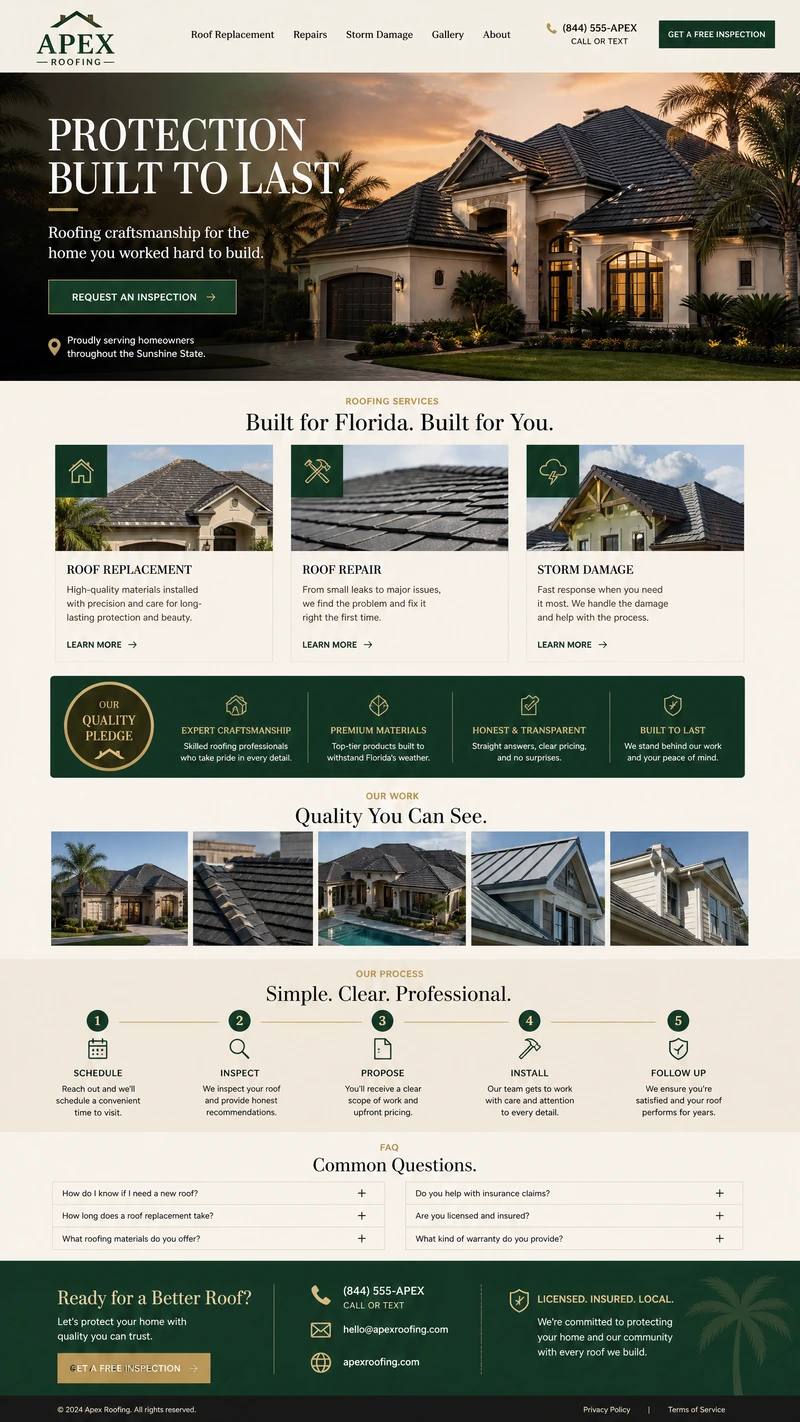
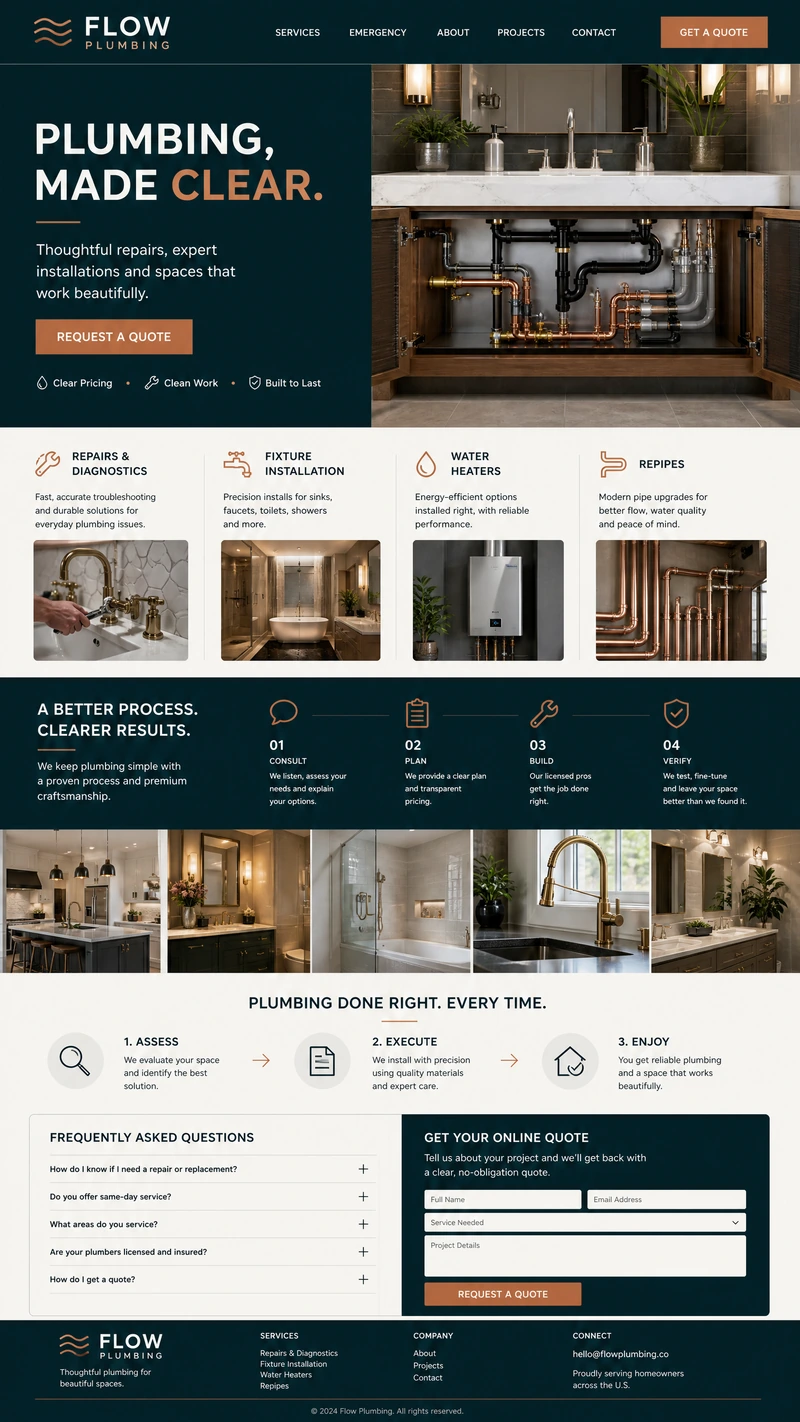
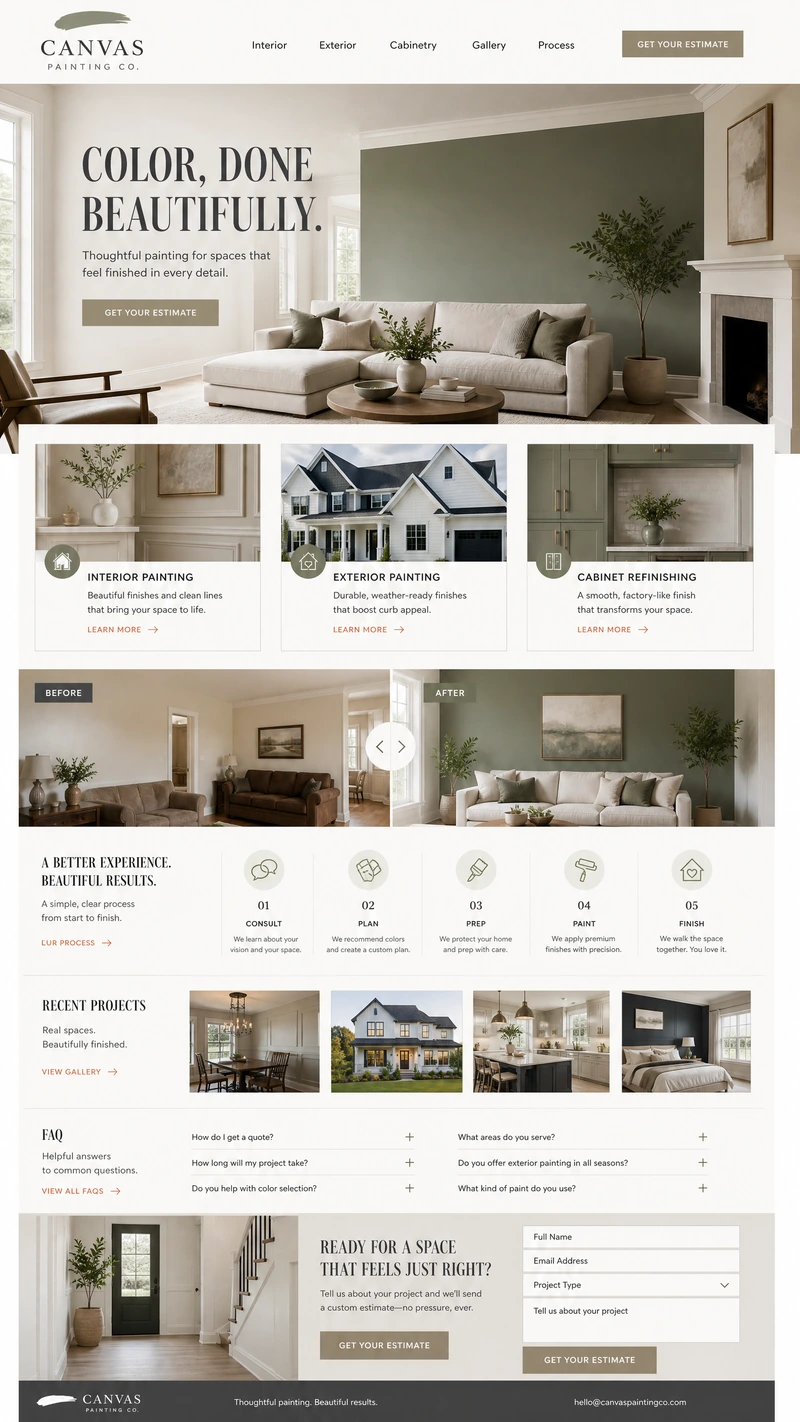
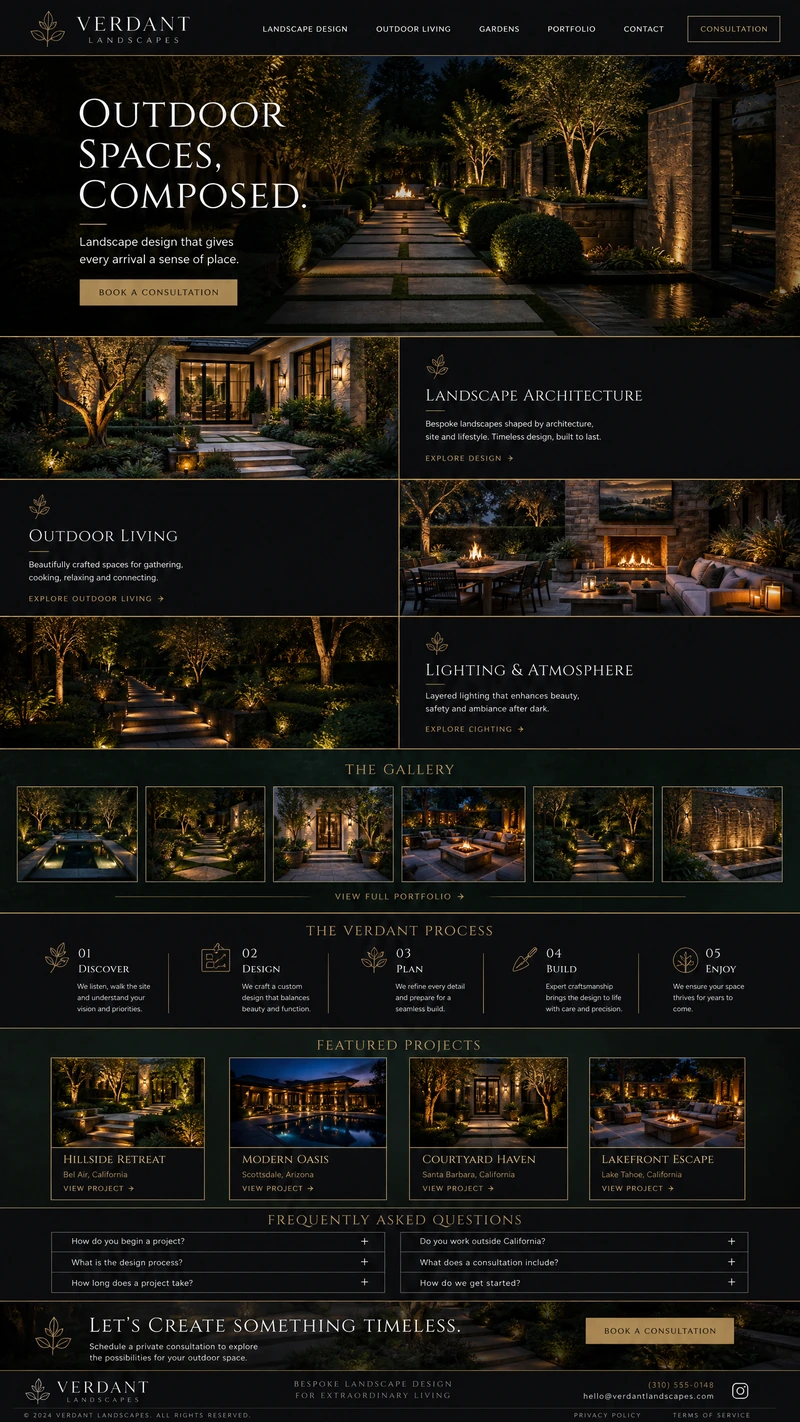
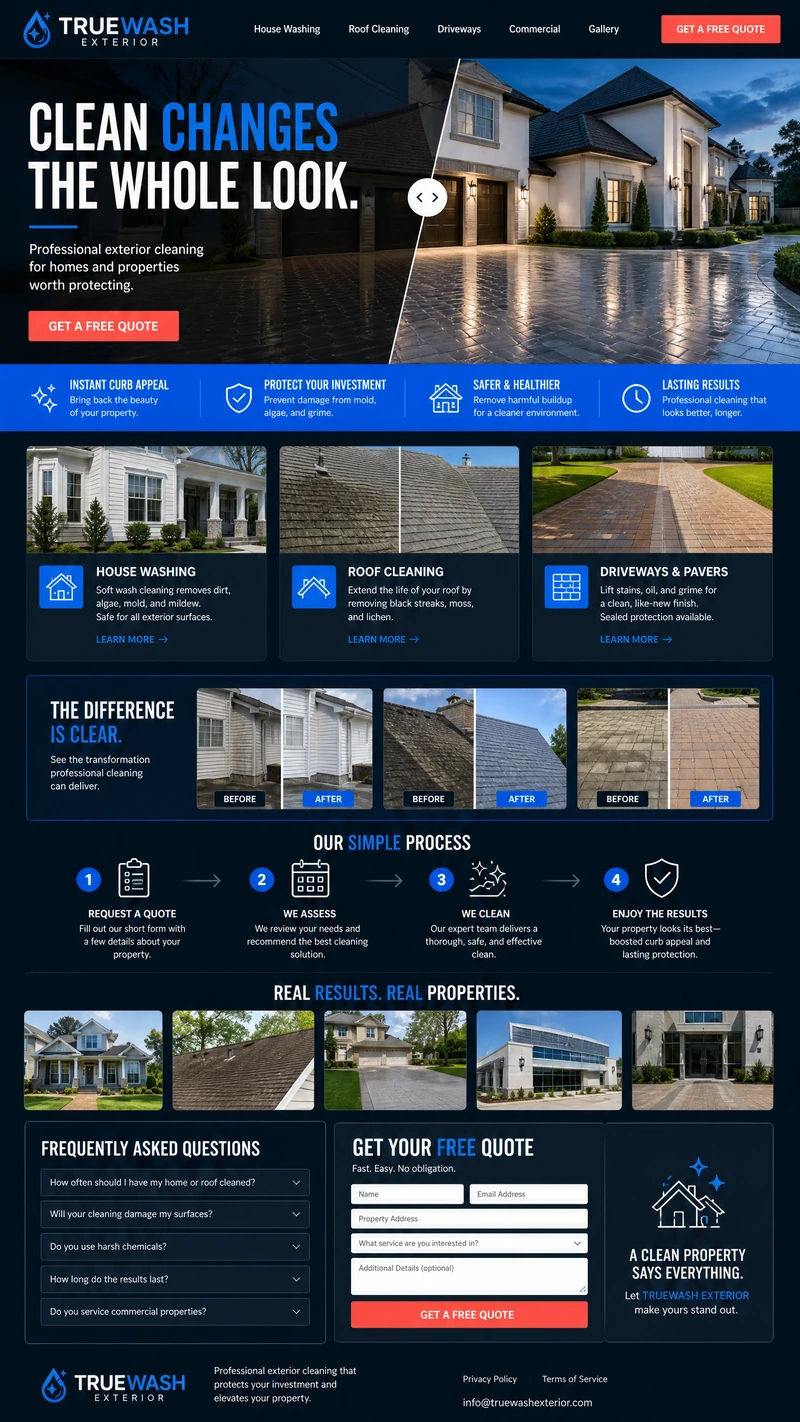
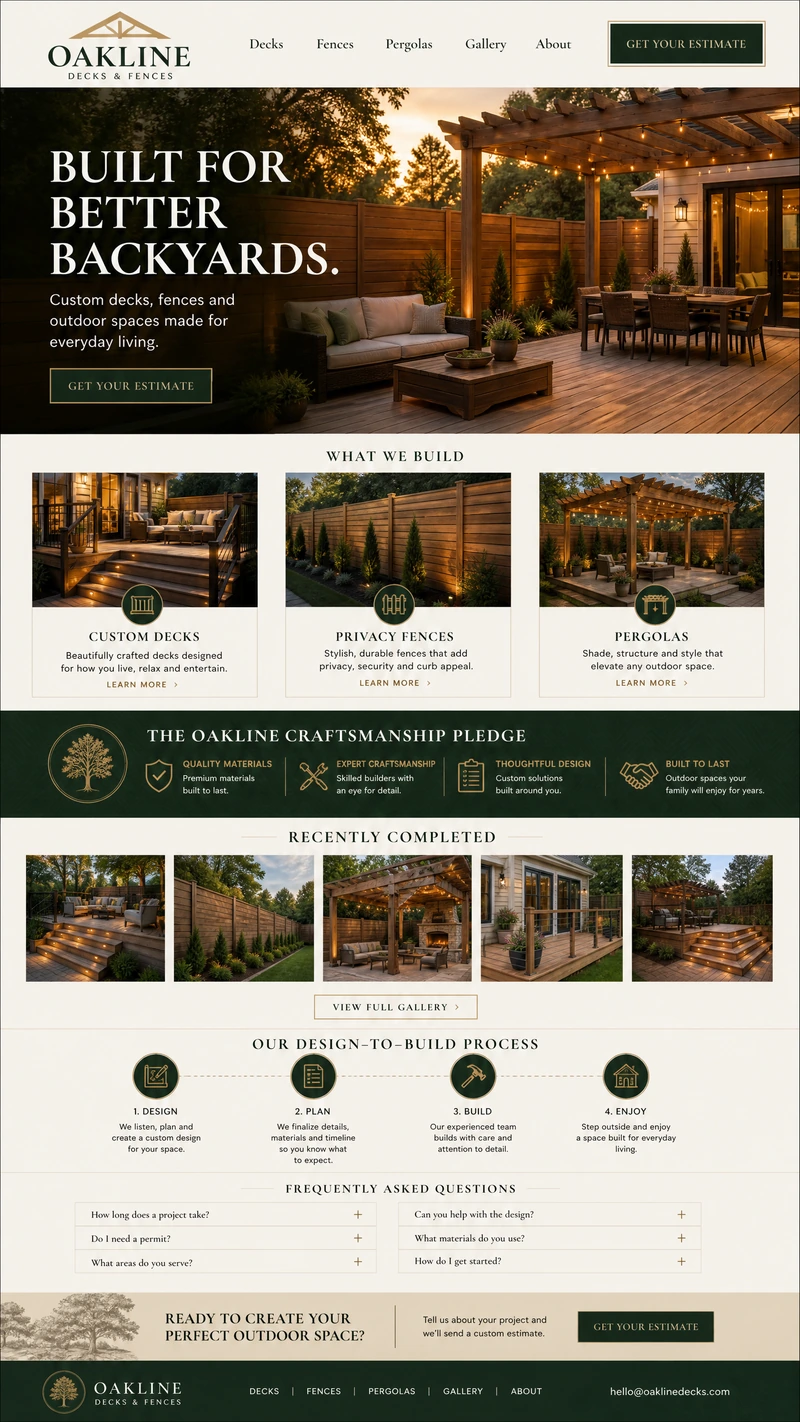

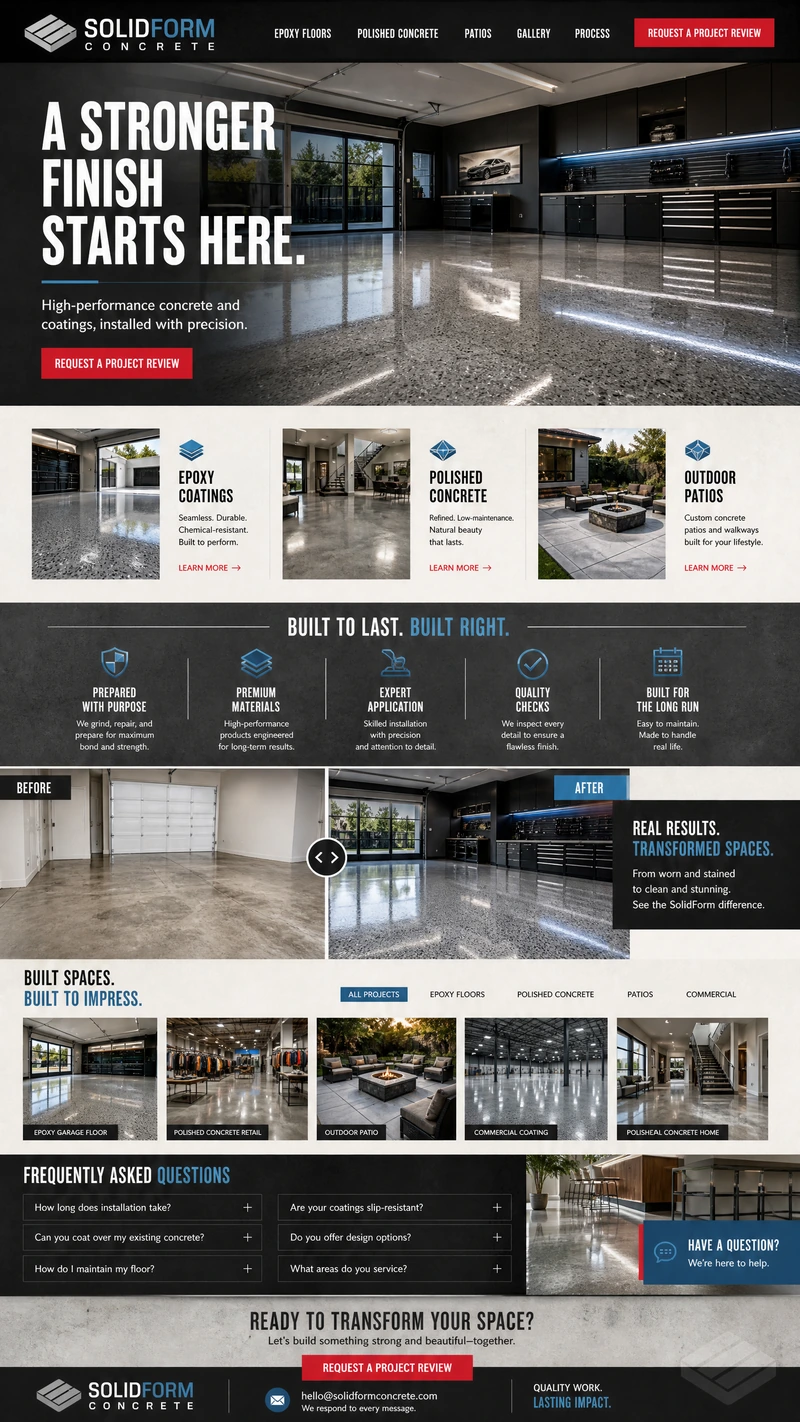
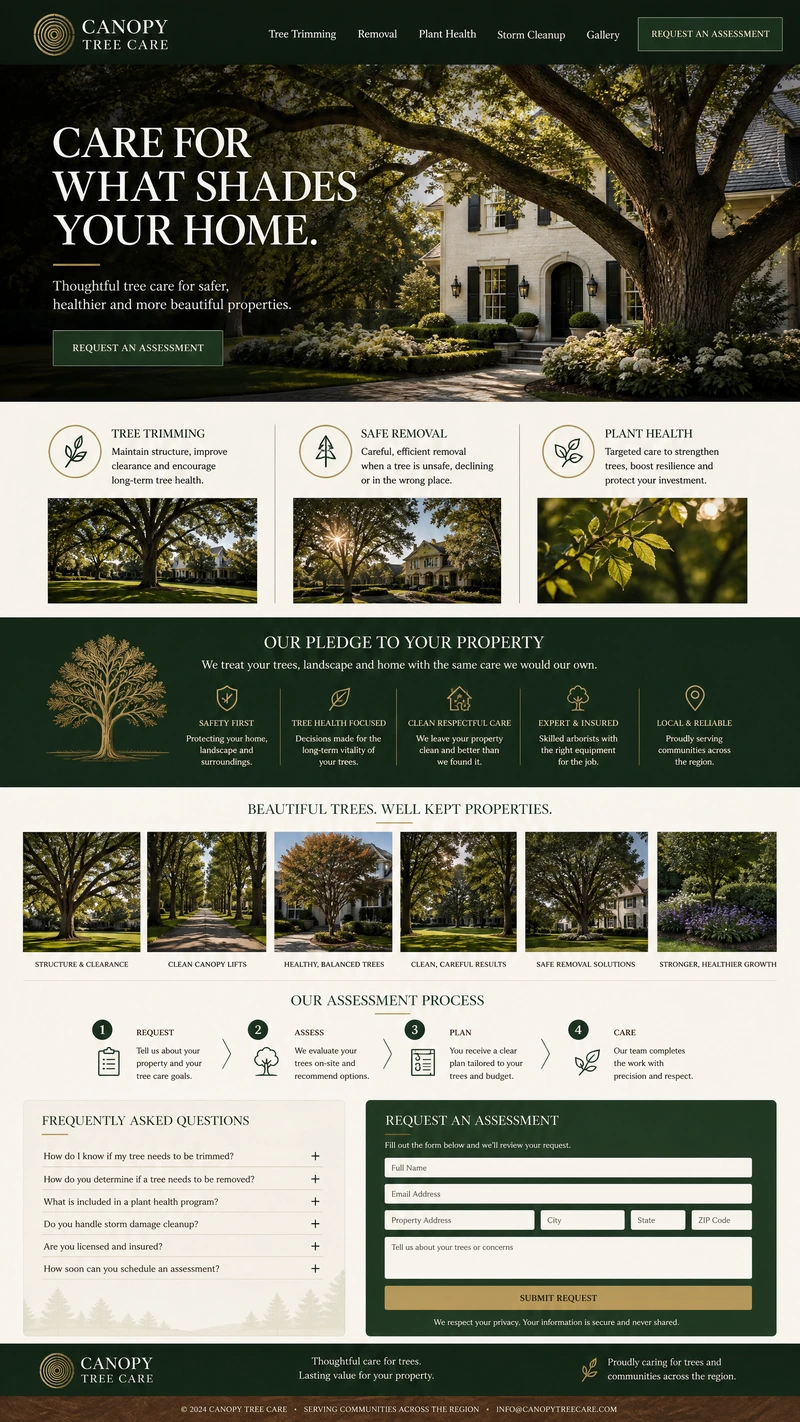
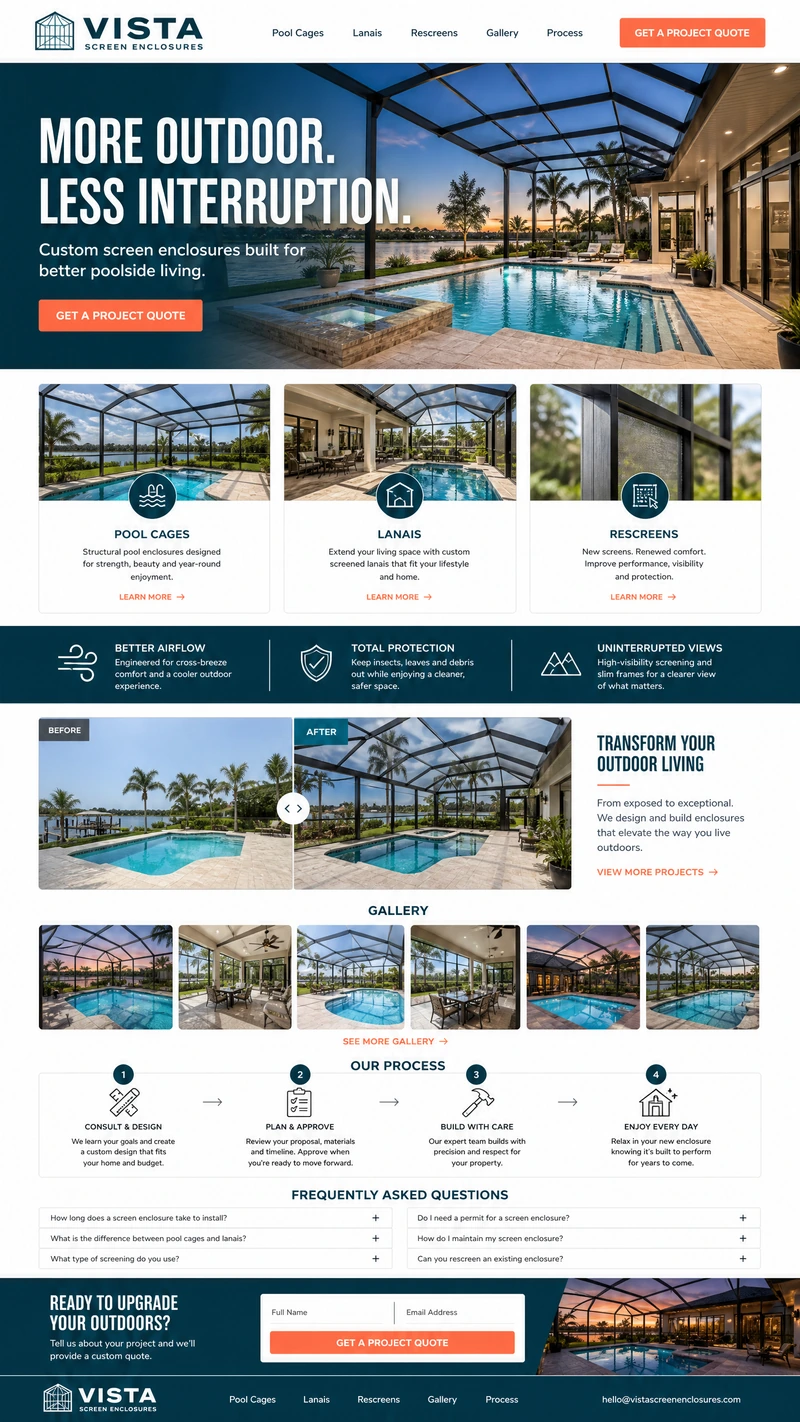
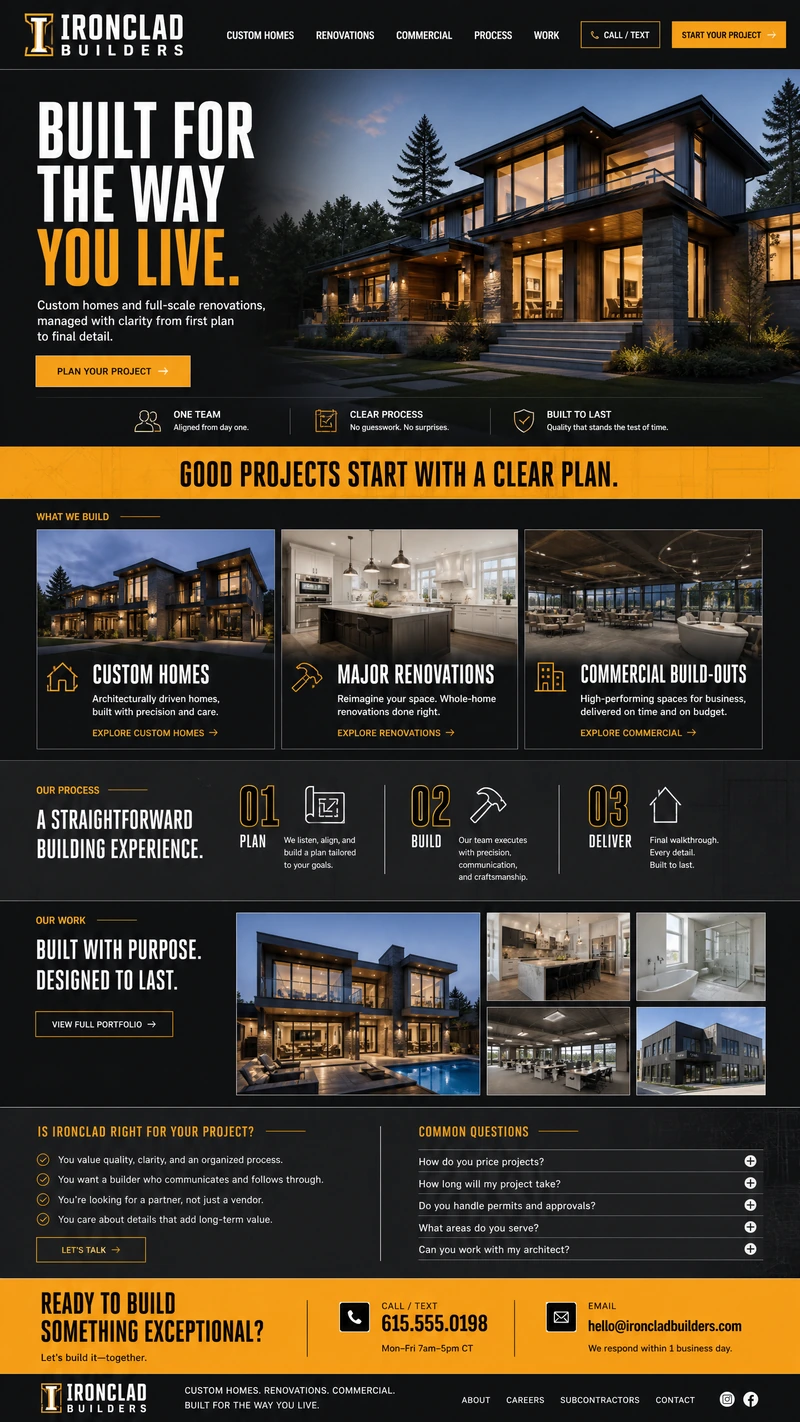
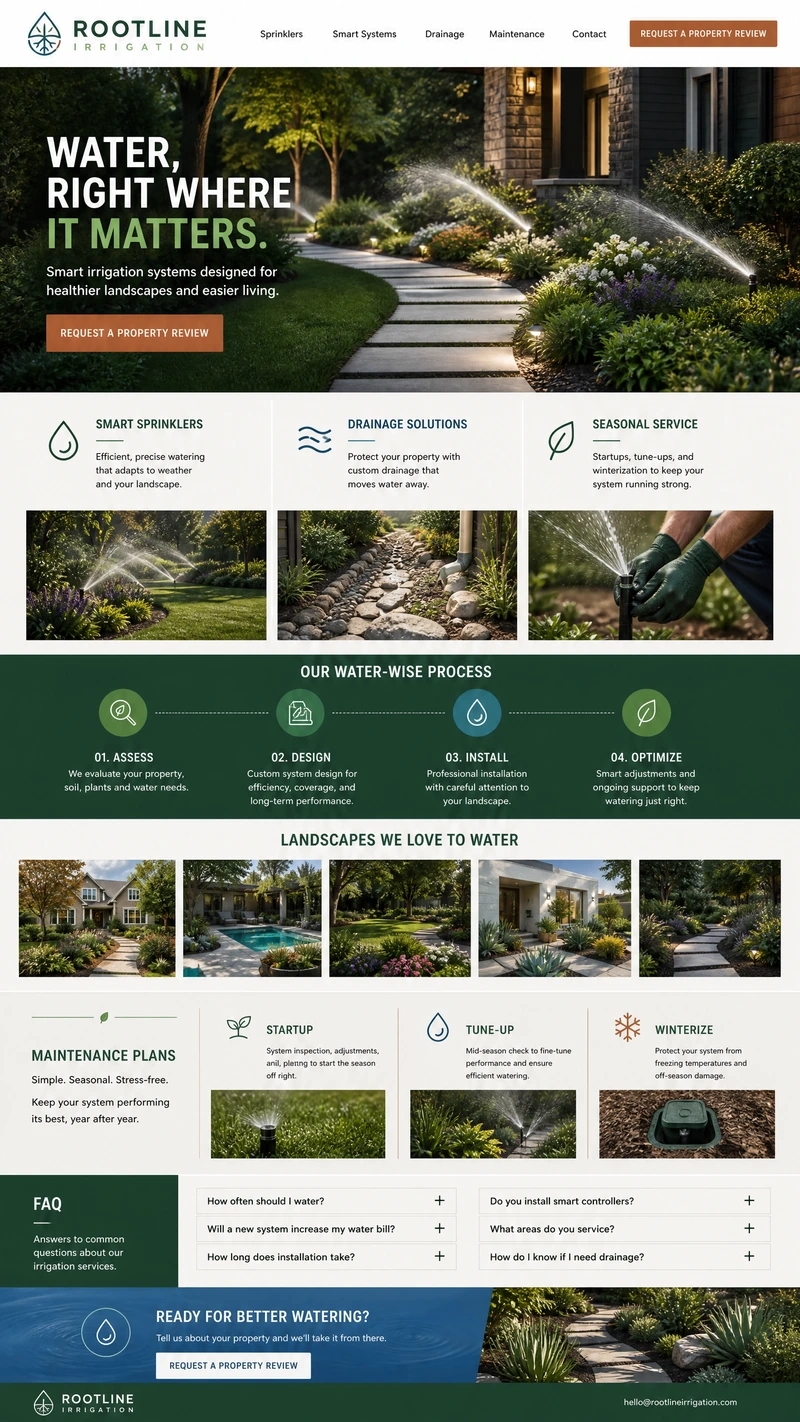
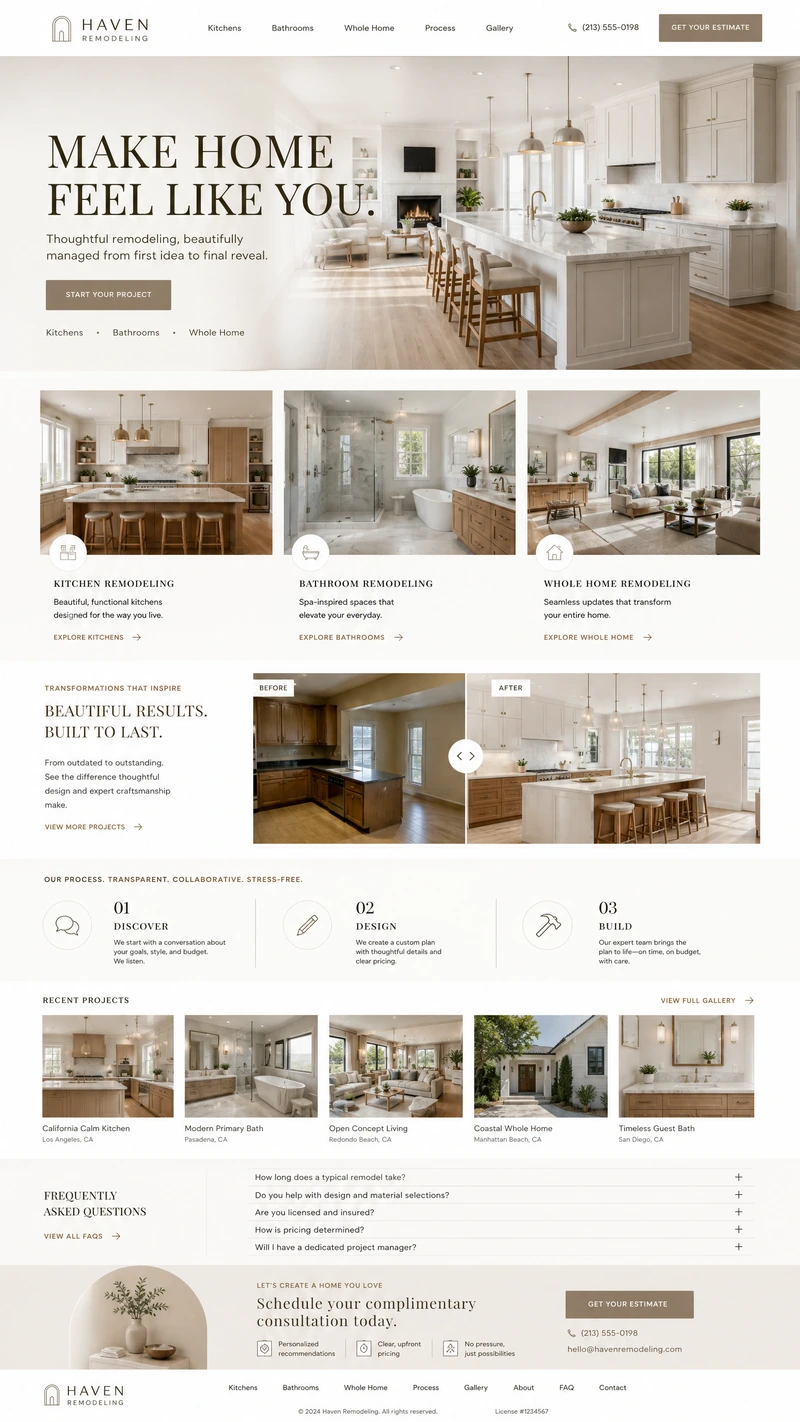
Mand Digital Website Design Collection. Website concepts designed by our studio across five directions. Your site is designed around your own business.
The consultation request is where interest turns into a call from your office, so it is short, clear on a phone and available from every page.
A useful request asks for the person's name, phone and email, the practice area, a short description in their own words, how they prefer to be contacted and where they are located if that affects whether you can take the matter. It goes to the inbox your intake staff watches. The firm's phone number stays visible and tappable across the site, because many people would rather speak to someone.
The form should not invite a visitor to pour out confidential details before the firm has checked for conflicts. We add a short notice asking people to keep the description brief and explaining that sending the form does not create an attorney-client relationship. The exact wording of that notice and any other disclaimers is your firm's decision, and we place what you approve.
If you already use intake or case management software with its own web form, the site can link to it or embed it where the software allows. Whether that is practical is checked during scoping.
That form is the one your prospective clients will use on your finished site. To reach us, use the form at the bottom of this page.
Most legal searches are local and specific, so the site has to make your practice areas, your offices and the communities you serve clear to people and to search engines.
Law firm SEO starts with the website itself: a page for each practice area, offices and service areas written out in words, attorney profiles that match how the firm is listed elsewhere, and an address and phone number consistent with your Google Business Profile. Every site we build has the technical fundamentals in place from the start, so that groundwork is ready when you decide to invest in search.
Legal marketing through paid search is expensive per click, which makes the landing page matter more. A campaign for a specific matter needs a page that says what the ad said, with the consultation request close by. Ongoing SEO and campaign management are separate services from the website, scoped and quoted on their own. We describe the work and never promise rankings, case volume or a return on ad spend.
Every proposal lists exactly what your project includes. For a law firm, that usually means the following, in a site that is complete on the day it launches.
Domain and hosting are separate and are not paid to us. The firm owns both, and the site is deployed to its account.
Every law firm website is quoted on its own, once we understand the practice. You receive a written proposal with the scope, timeline and price before any work starts.
What shapes the proposal is how much the site has to carry: the number of practice area pages, how many attorneys and offices there are, whether existing content needs to move from an old site, and whether intake needs anything beyond a standard request form. Once your briefing and materials are in, we build a complete first draft for your attorneys to review as a whole.
There is no mandatory monthly fee to us for the website. The domain and hosting are in the firm's name, and the site moves with you if you ever decide to change providers.
You describe the firm: the practice areas you want to grow, the clients you serve, your offices and how new matters reach you today.
A written proposal setting out the pages, features, timeline and price. Work begins only after you approve it.
Attorney photographs and bios, office details, the notices you want displayed and any wording that must appear exactly as written.
We plan the pages and draft the copy. Your attorneys review practice area content for accuracy and for your state's advertising rules.
The full first draft of the site, delivered on the timeline your proposal sets.
The firm reviews the complete site and sends consolidated notes. Your proposal sets how many revision rounds are included.
Once you approve the final version, we deploy it to the firm's hosting on the firm's domain.
That is the whole process.
If it fits, the first step is a quote request. If you would rather ask something first, the form is a few lines below.
A page for each practice area, profiles of your attorneys, how a first consultation works, your office details and a consultation request that is easy to send.
Beyond that, the structure depends on the matters you want more of. The exact page list is agreed in your proposal.
We write with those rules in mind, but your firm makes the final call, because the rules differ from state to state and the responsibility for compliance sits with the attorneys.
In practice that means no promises about outcomes, no specialist or expert claims unless your attorneys hold a recognized certification, and every page reviewed by the firm before launch.
Only if your state's rules allow it and you supply them, with whatever disclaimers the firm requires.
We never write results or testimonials ourselves. If the firm decides not to show them, the site builds trust through clear practice area pages and attorney profiles instead.
The form is designed not to collect it. It asks for contact details and a short description, and it tells visitors not to include confidential details before the firm has been in touch.
If your firm needs secure document collection or a client portal, that belongs in your case management software, and connecting to it is assessed during scoping.
Usually, yes. The first things to check are who owns the domain name and what your current agreement says about leaving.
We build the new site on a domain and hosting in the firm's name, so a future move is always your decision. Moving existing pages and articles is part of the scope we agree in the proposal.
Yes. SEO is a separate service from the website, scoped and quoted on its own.
Every site we build includes the technical fundamentals. Ongoing work such as practice area content, local search and profile consistency is planned with the firm, and we never promise rankings or a number of new cases.
Yes, as a separate digital advertising service, with landing pages that match what each ad says.
Ad copy is reviewed by the firm before anything runs, since it is lawyer advertising too. We describe the work involved and never guarantee a cost per client or per case.
A short description of the firm, the practice areas you want to grow, how many attorneys and offices you have and what is not working on your current site.
The form at the bottom of this page is enough to start. We reply with questions or a proposal, and that conversation costs nothing.
Planned around the practice areas you want to grow and the questions new clients bring, with the consultation request wired to your intake inbox.
Quoted for your business
A proposal built around your scope
This is the website proposal. SEO and advertising are separate services, quoted on their own.
Your website, your domain, your hosting. No mandatory monthly fee to us.
Also thinking about SEO or advertising for the firm?
Talk to our teamYour practice areas, how many attorneys and offices you have, and what the current site is not doing. We will tell you what the new one should cover.