
Will people remember the address?
A short domain in your name or your team's name is easier to put on signs, cards and social profiles than a long brokerage URL.
Websites built around your businessSEO & digital advertisingStrategy with a human touch
Realtor website design
Your brokerage gives you a profile page. It does not give you a site that carries your name if you ever move, shows that you know the neighborhoods you sell in, and treats a first-time buyer and a long-time owner as the different people they are. We design realtor websites around your brand, your areas and those two paths.
Scoped and quoted for your business, and built on a domain and hosting you own.
Your name, your domain
A site that belongs to you, not to the brokerage, and stays yours through any change of office.
Neighborhoods you know
Area pages written from your local knowledge: streets, schools nearby, the kind of homes and what buyers ask about.
Buyers and sellers, separately
Two clear paths, each ending in the request that fits: a showing, a consultation or a home value review.
A real estate agent's own website is where a buyer or seller decides that you are the person to call, and it is the one marketing asset that stays with you no matter which brokerage you work under.
Plenty of people find an agent through a referral, a sign in a yard or a search for their area, then look the agent up. They want to see who you are, which neighborhoods you work, what you have to say about the market there and how you handle a sale or a purchase. A brokerage profile with a headshot and a phone number answers very little of that.
The site also has to hold up to the realities of the job. Listings change daily and live in the MLS, not on your site. Your brokerage has rules about how its name and your license appear. Some agents work alone; others lead a team of three with a transaction coordinator. We plan the structure around how you actually work, and the page list is agreed in your proposal.
We also decide early whether the site is a personal brand, a team brand or a page that sits beside the brokerage's own site, because that choice shapes the domain, the design and the copy.
A site built around your market
Tell us where you sell, who you mostly work with and how your brokerage handles listings. We will tell you how we would plan the site.
Your brokerage's site sells the brokerage. A personal site sells you, and it keeps your domain, your content and your audience if you change offices.
Many agents start with the profile page their brokerage provides and only realize what it lacks when they move: the URL they printed on every card stops working, and the blog posts and area pages they wrote stay behind. A site on your own domain avoids that. It still names your brokerage and shows your license the way your brokerage requires; it simply belongs to you.
A short domain in your name or your team's name is easier to put on signs, cards and social profiles than a long brokerage URL.
Your domain, hosting and pages stay with you. The brokerage details and listing search are updated to the new office, and the rest of the site keeps working.
Usually yes. Your brokerage name, license number and any disclosures it requires appear as you supply them, and your broker can review them before launch.
A team site introduces each agent and how the team splits the work. A solo site keeps the focus on one person. Both are planned around how clients actually reach you.
Thinking about your next move?
Tell us how you work today and what you want the site to keep doing for you over the years. We will tell you what that means for the structure.
An area page answers the questions a buyer has about a place and shows a seller that you know their market. It is written from what you know, not filled with generic statistics.
A useful neighborhood page describes what the area is like to live in, the kinds of homes found there, what buyers usually ask, and how you work in that market. It can link to the listing search filtered to that area, where your listing provider allows it. We write the pages from your briefing and you review them for accuracy; we do not publish market figures, school ratings or price trends unless you supply them with their source and they can be kept current.
Area pages are also the backbone of real estate SEO. People search for homes and agents by town and neighborhood, and a page that genuinely describes a place gives search engines something to match. We would rather build six honest area pages than forty thin ones.
Character, types of homes, getting around, and what draws people to the area, in your own words.
The recurring questions from your clients, answered the way you would answer them on a showing.
A link to the listing search for that neighborhood, where your brokerage or MLS provider offers one.
Buyers and sellers need different things from your site, so each gets its own path, and listings come from the search your brokerage or MLS provider permits you to use.
The buyer path explains how you work with buyers, what happens from the first conversation to closing, and leads to a showing or consultation request. The seller path explains how you prepare and market a home and leads to a home value review request. That request is a form you answer personally; the site does not generate an automated valuation.
Listings are where agent websites most often overpromise. Whether you can show a full MLS search on your site depends on your MLS, your brokerage and the listing provider you use. Where one of them offers a link or an embed, the site uses it. A deeper IDX setup is checked with you and your provider during scoping and included only if the proposal says so. Your own listings can also have simple feature pages built from the details you provide.
Want buyers and sellers to each find their way in?
Sixteen concepts from the studio, built from the same five directions. They were drawn for home-service trades, so none of them is a real estate site. What carries over is the direction: a Premium, image-led layout for an agent in a luxury market, or a Clean, approachable one for an agent who works mostly with first-time buyers. Your site would start from a direction and be designed around your own brand and neighborhoods.
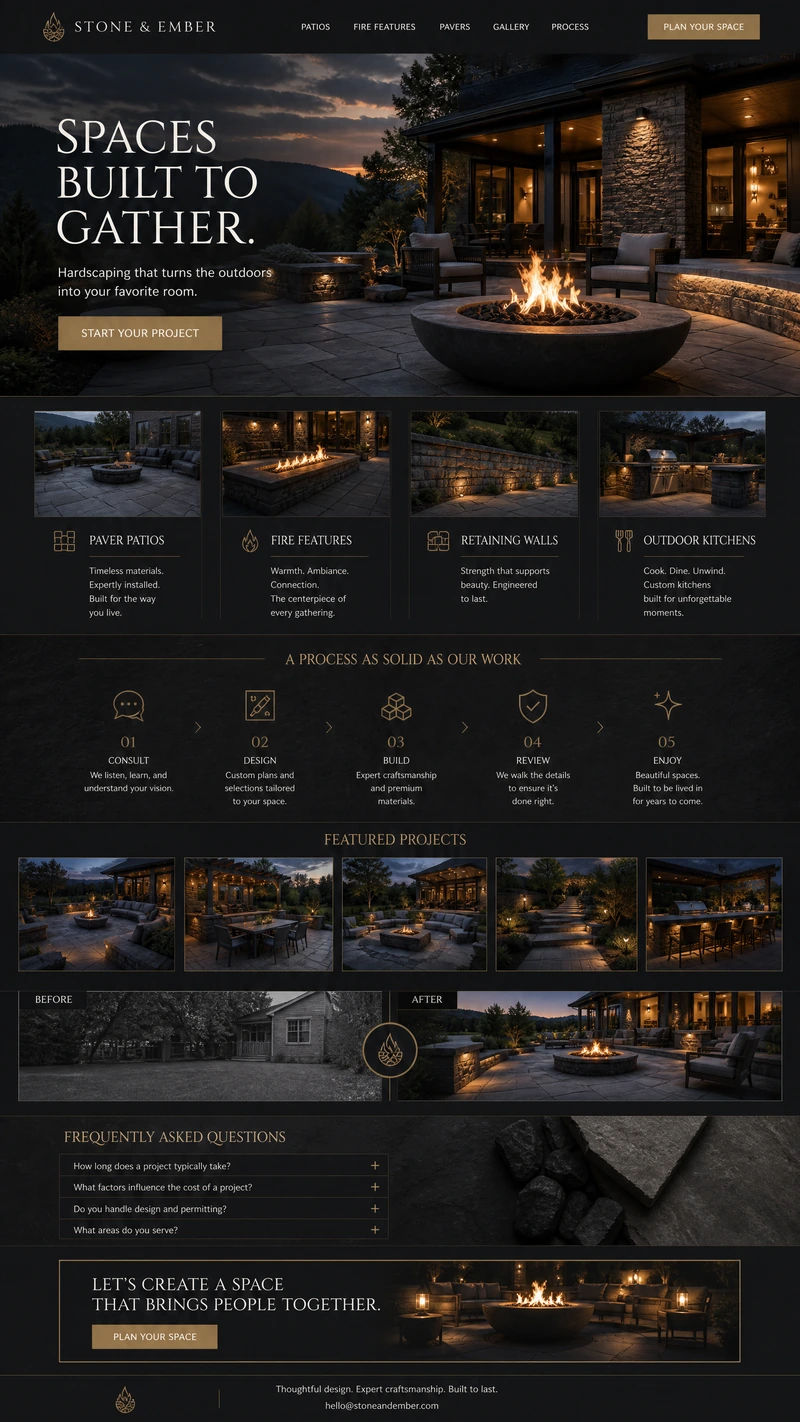
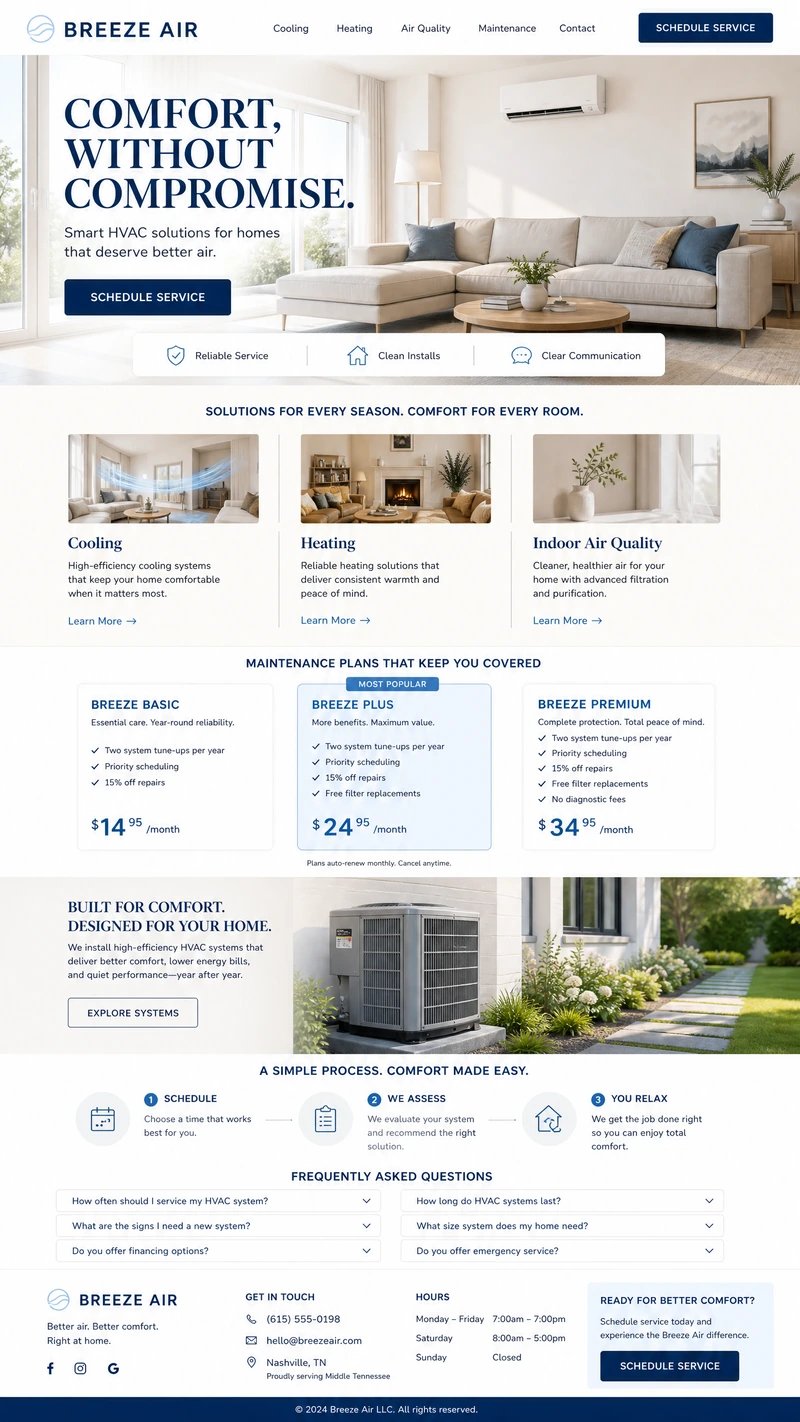
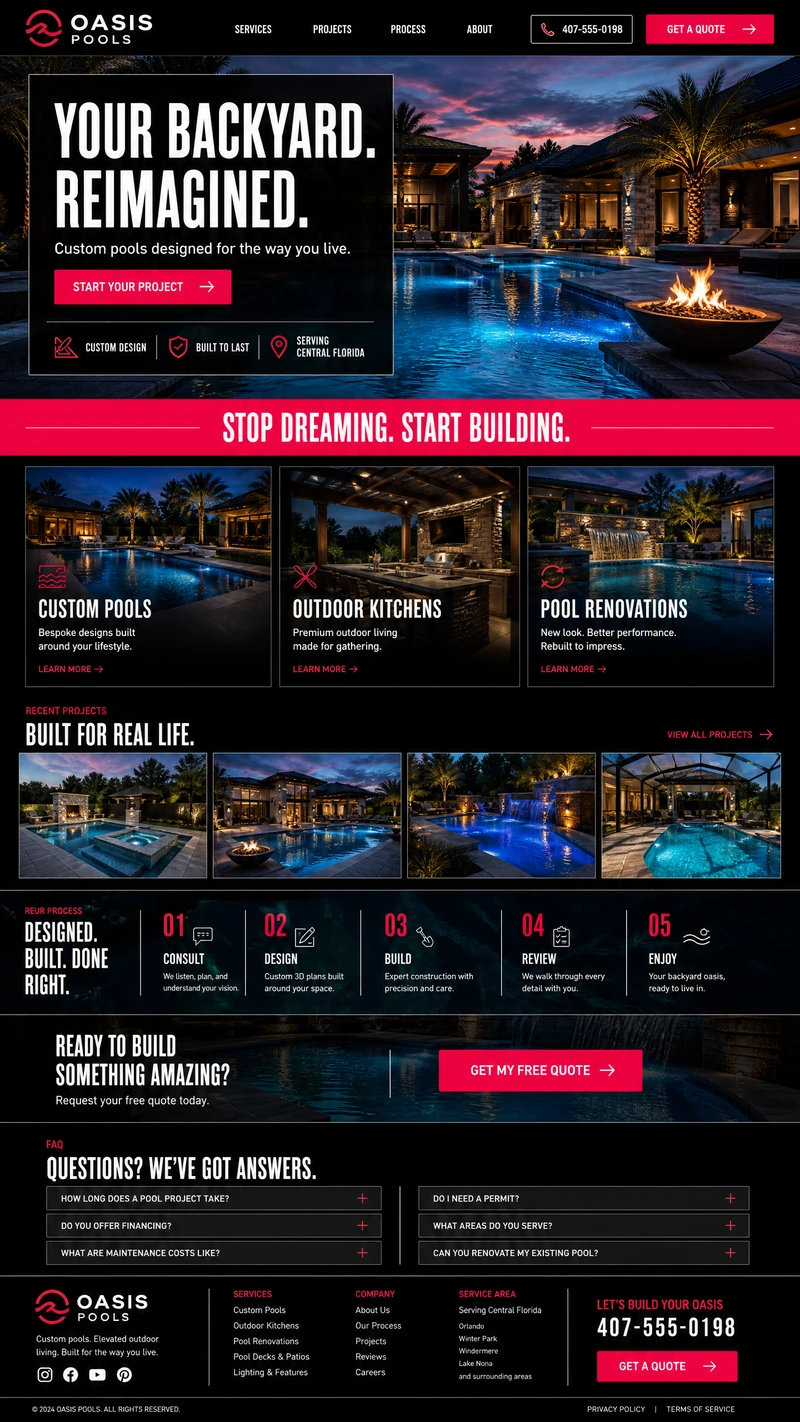
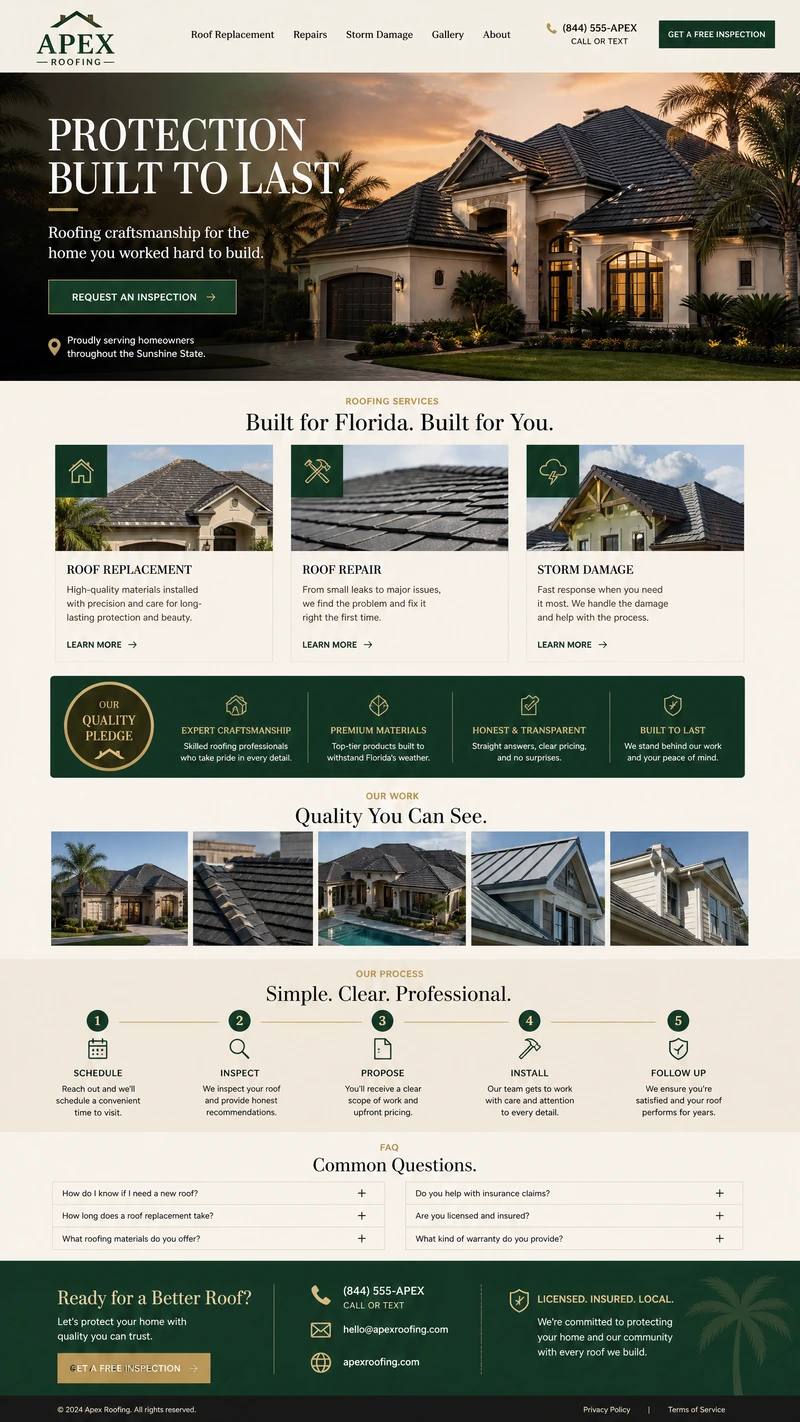
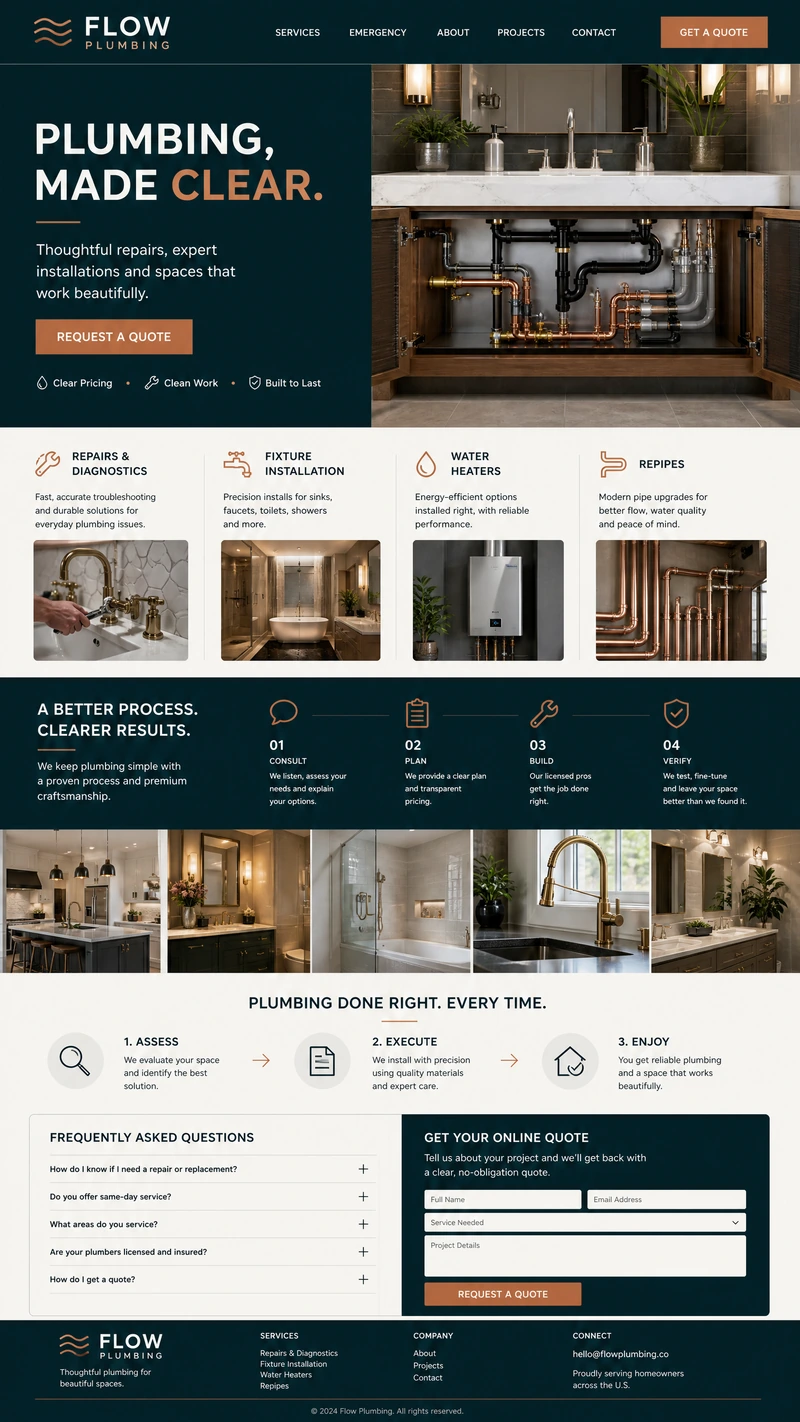
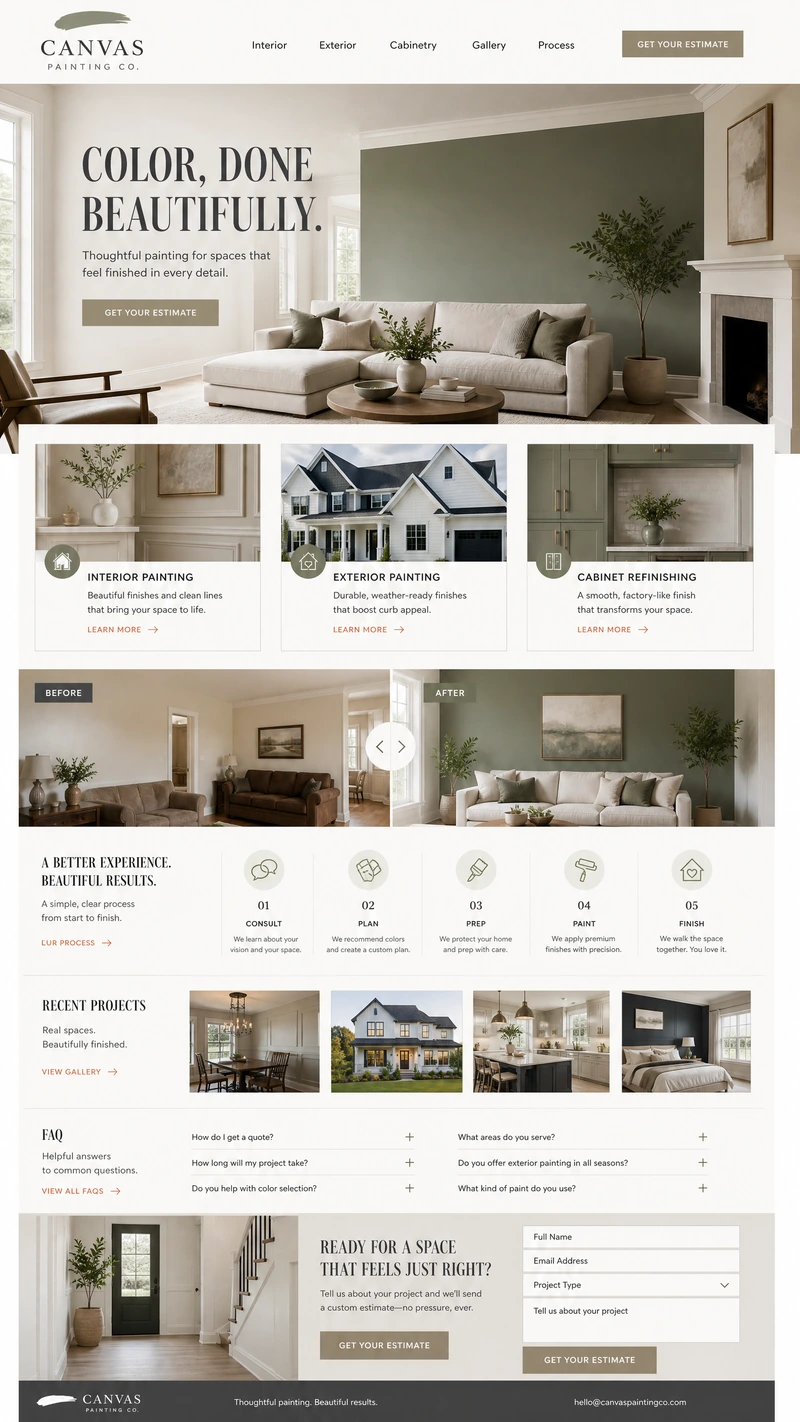
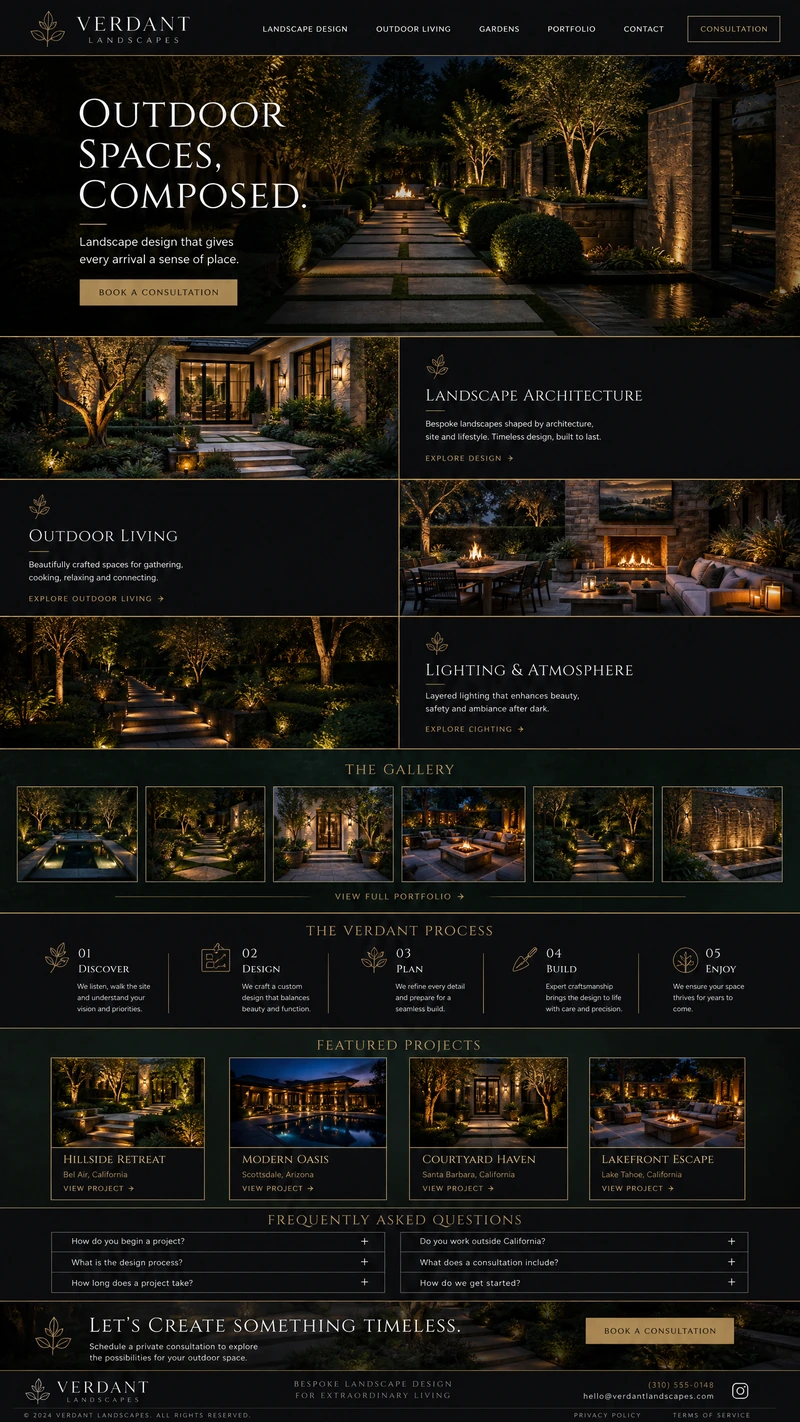
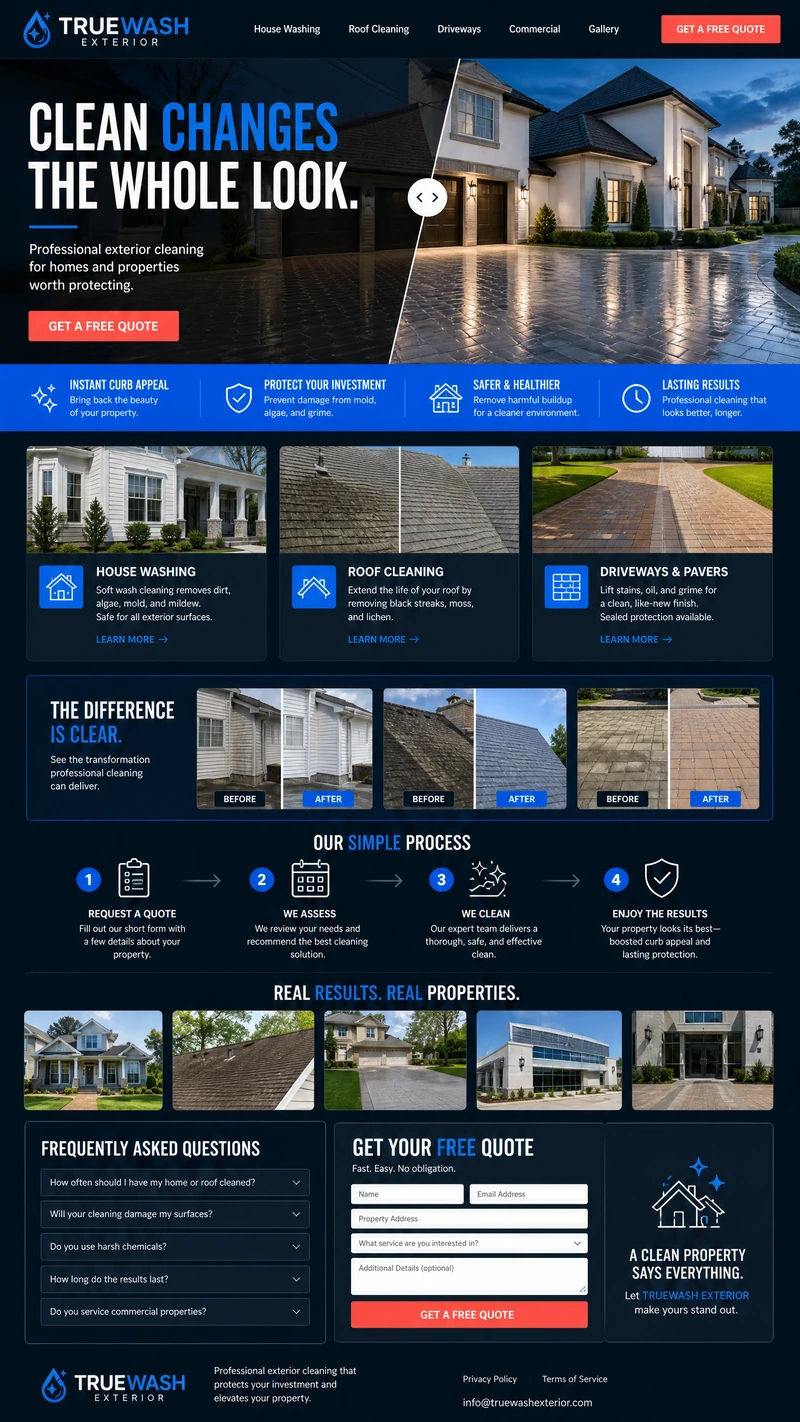
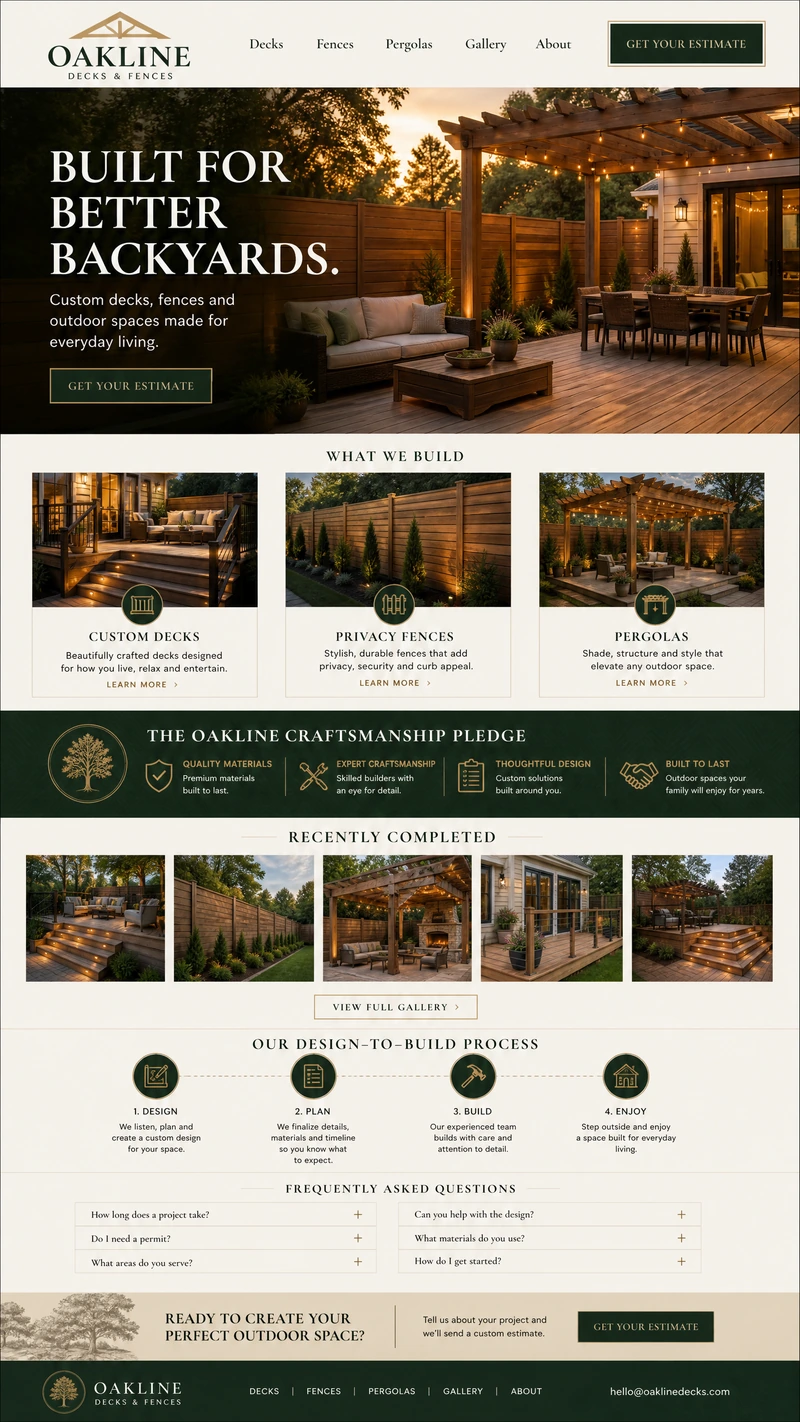
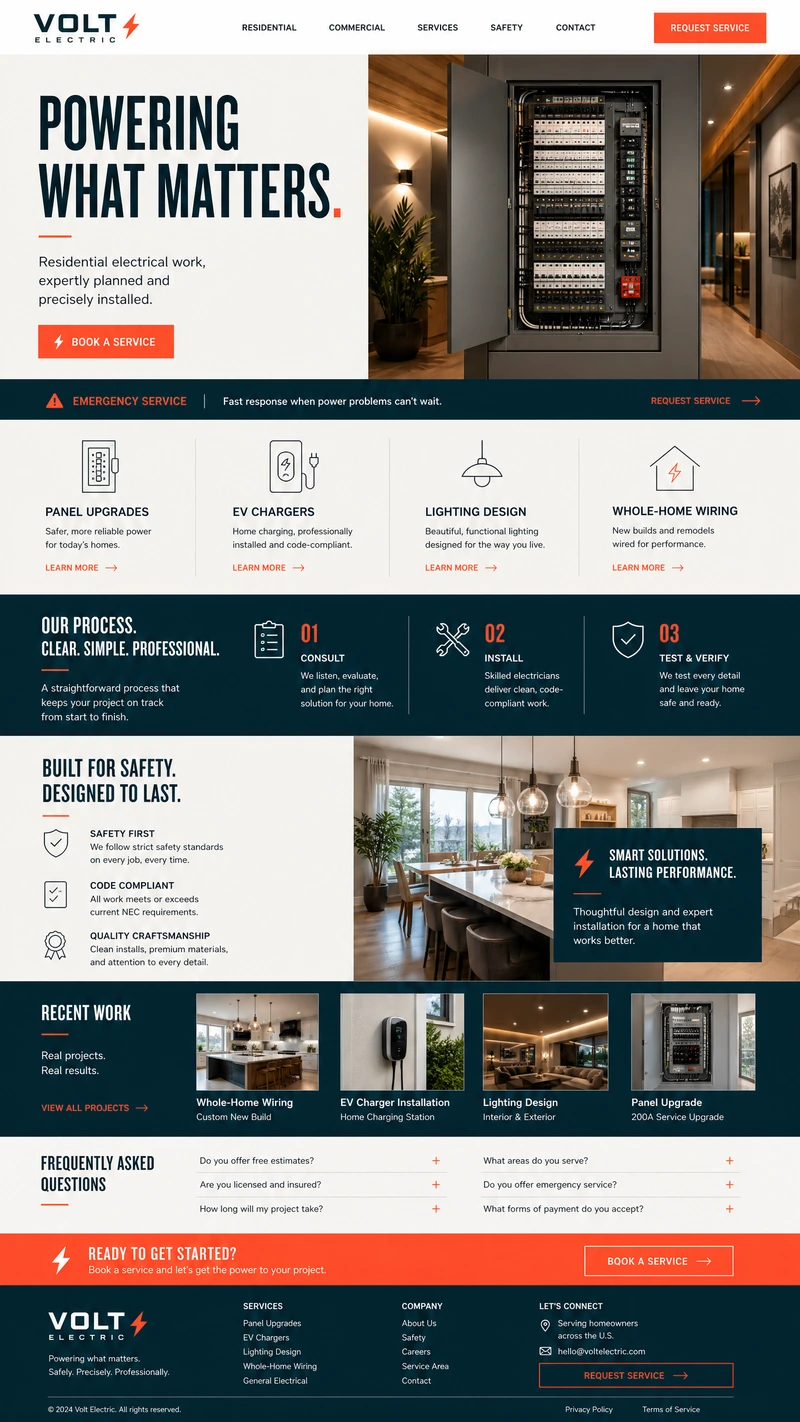
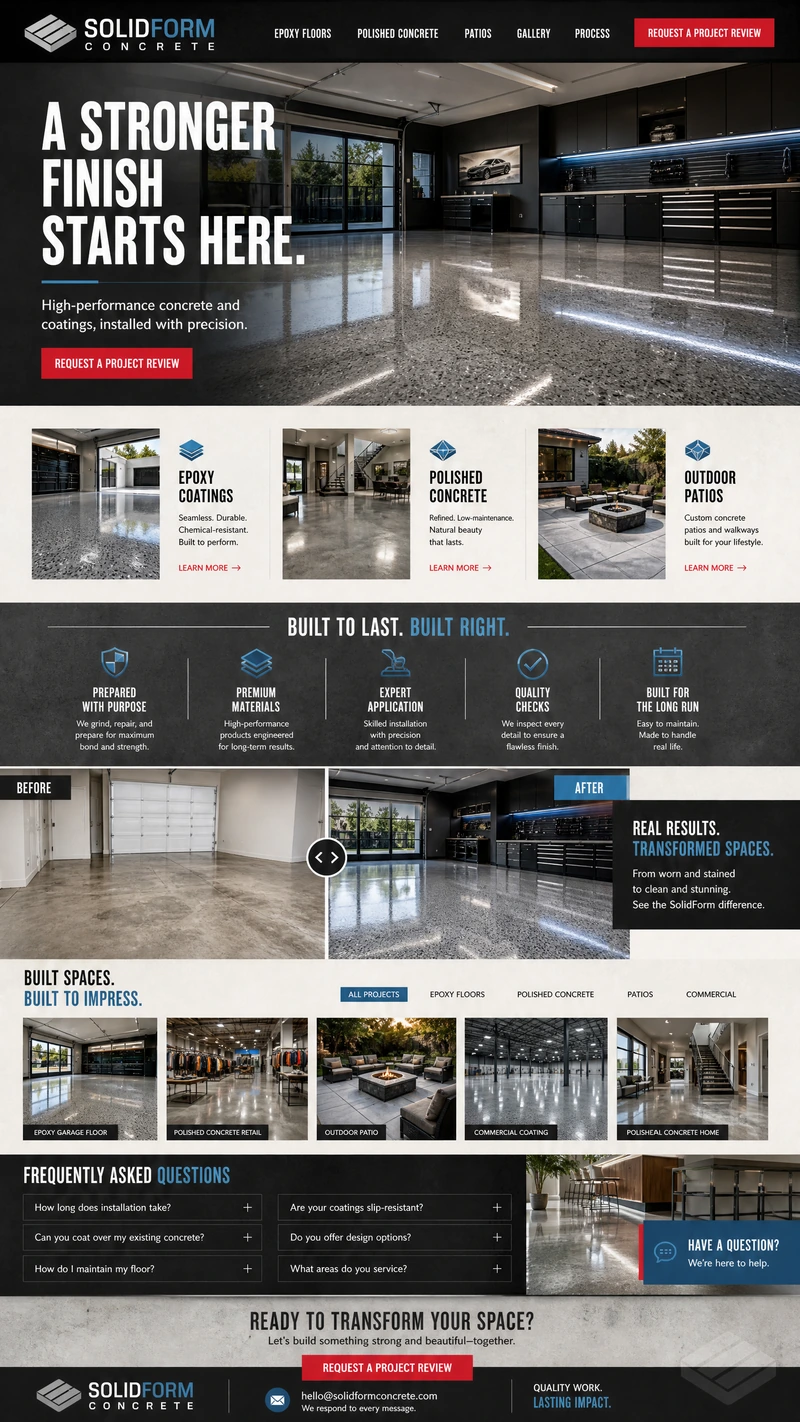
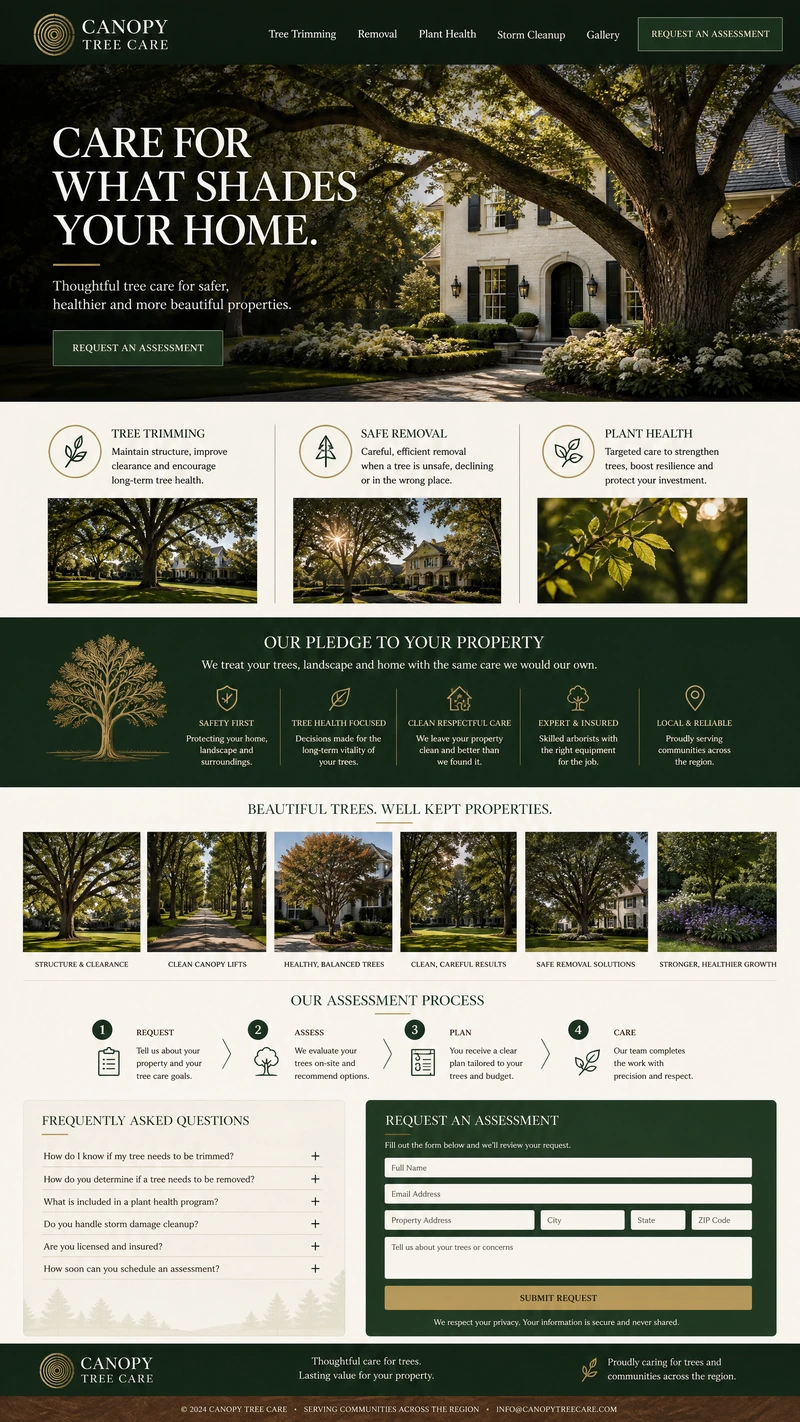
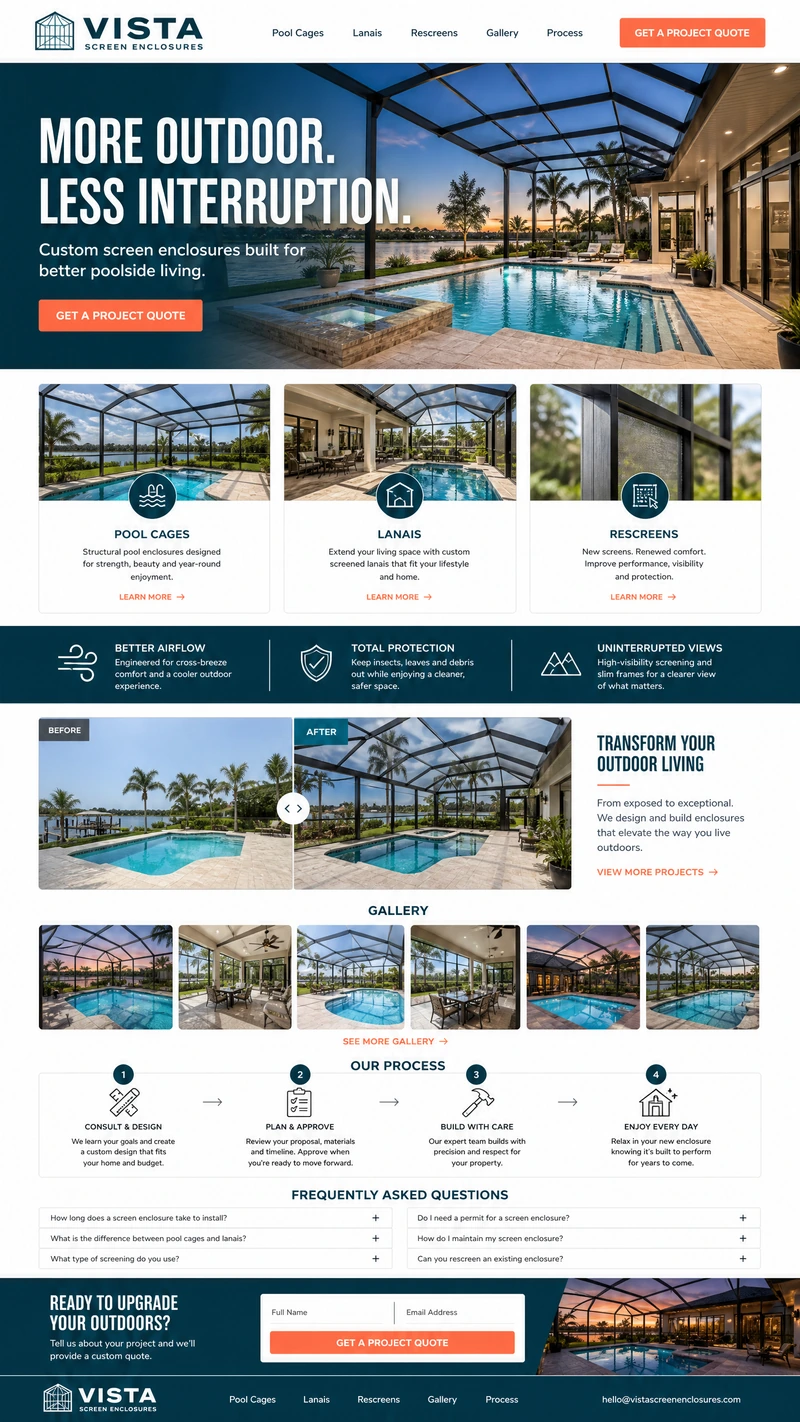
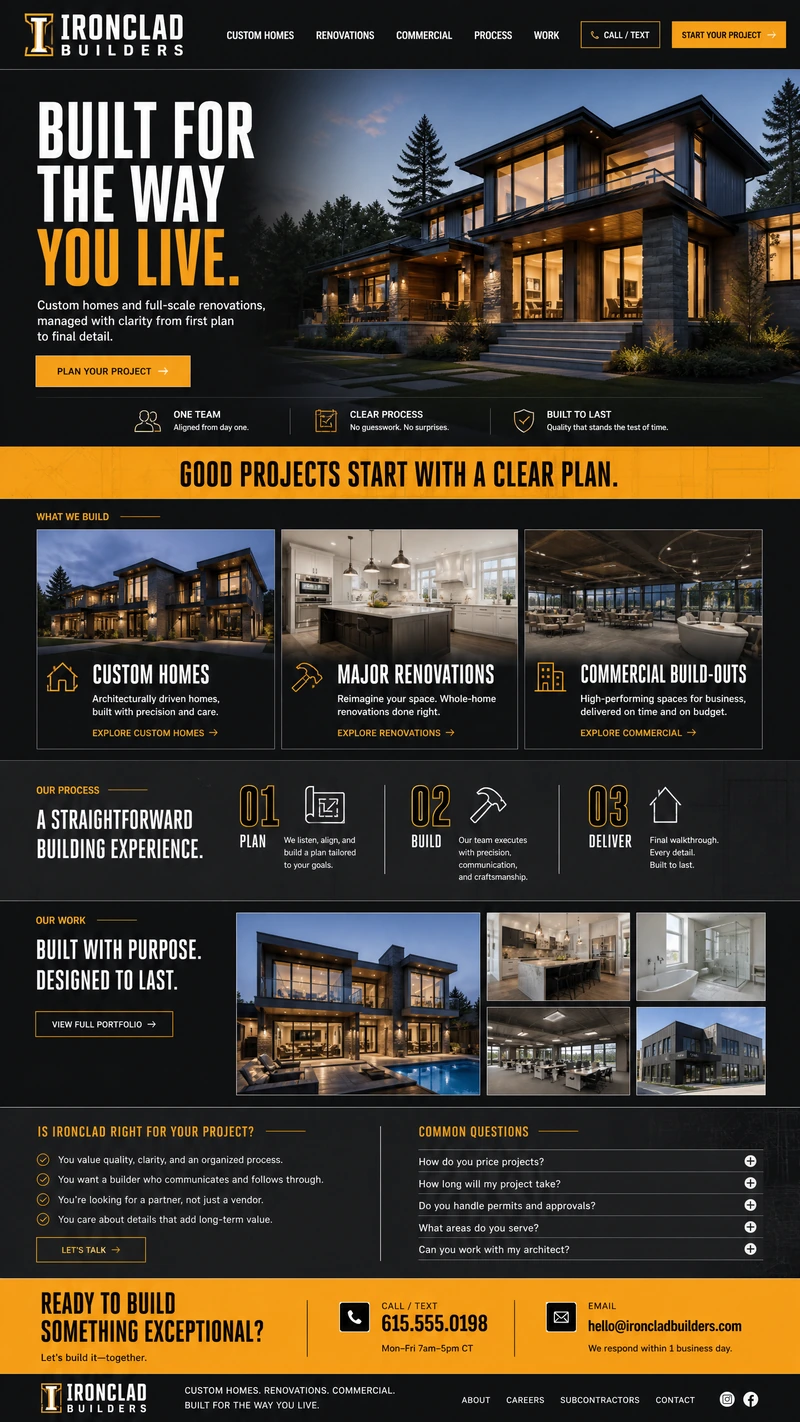
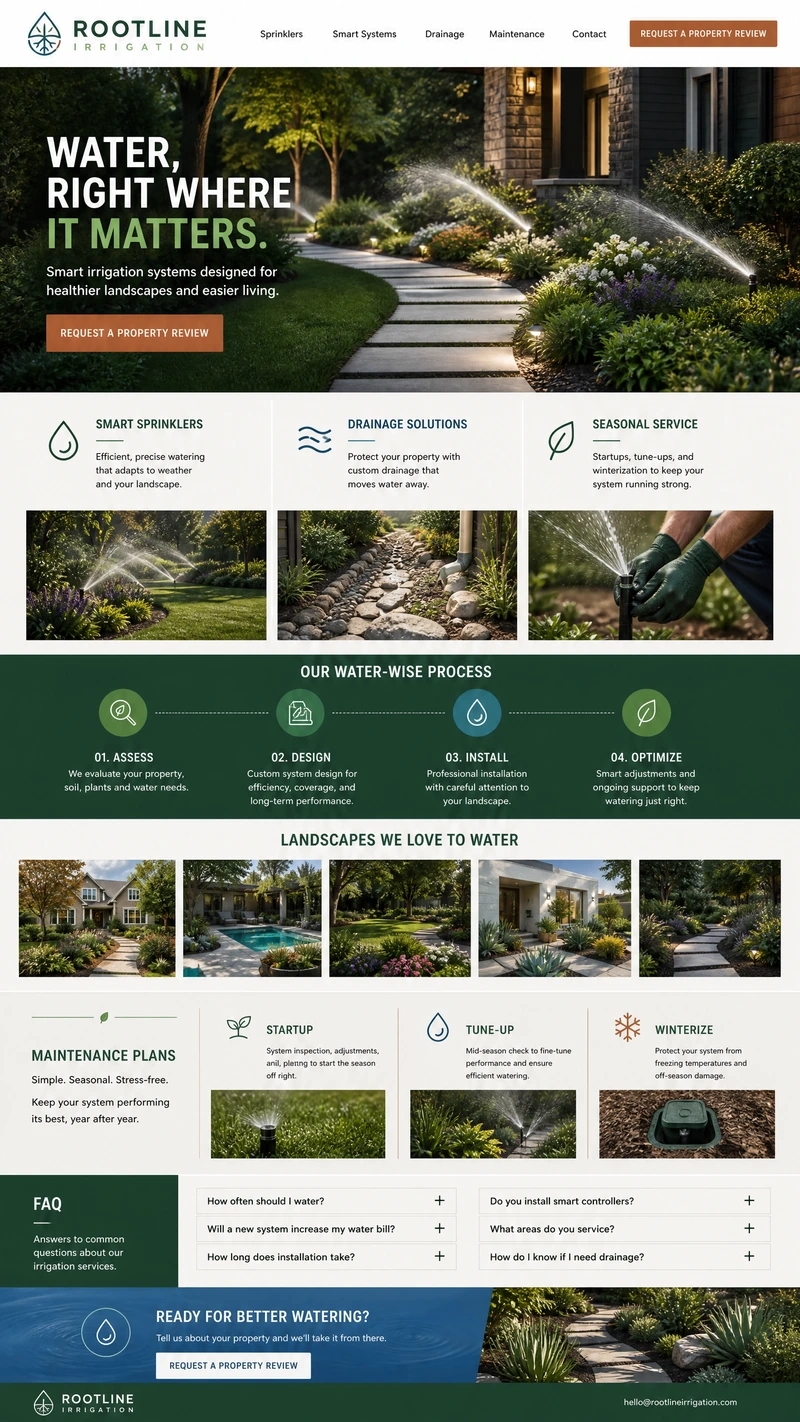
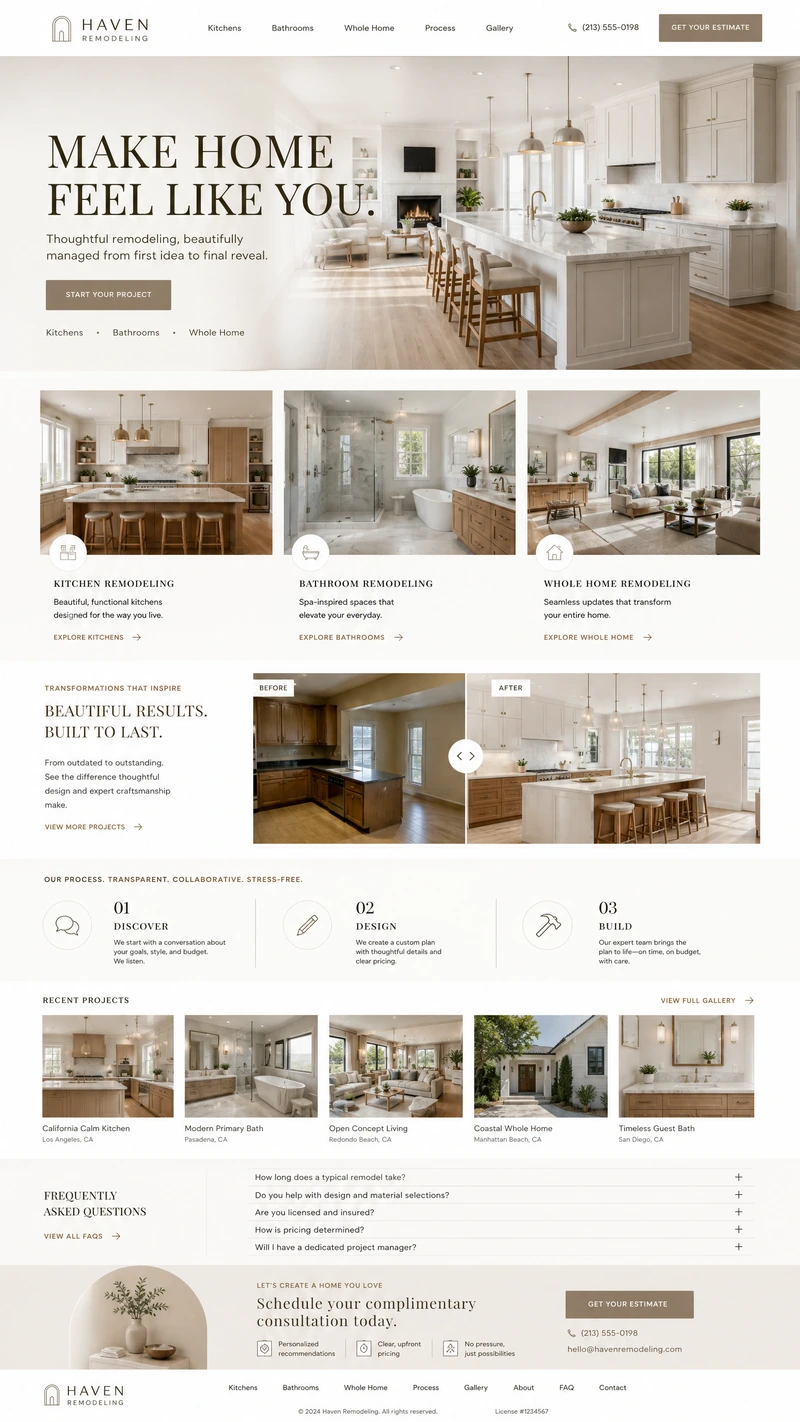
Mand Digital Website Design Collection. Website concepts designed by our studio across five directions. Your site is designed around your own business.
Short, specific requests work better than one generic contact form. Each one asks only what you need to follow up, and goes to the inbox you check.
A buyer request asks for contact details, the areas they are considering, rough timing and whether they are already pre-approved. A seller request asks for the property address, when they are thinking of selling and the best way to reach them. Neither form asks for financial details, and neither forces a visitor to register before they can see anything on your site.
Every form is sent to your email, and your phone number stays tappable on every page for the many clients who would rather text or call. If you use a CRM, the site can work alongside it by email, and anything deeper is scoped in the proposal.
Those are the forms your clients will use on your finished site. To reach us, use the form at the bottom of this page.
Buyers and sellers search by place, so a real estate site is found through clear area pages, a well-structured site and details that match your Google Business Profile.
Real estate SEO for an individual agent is local and specific: area pages with real substance, your service area written out, consistent name, office and phone details across your listings, and technical fundamentals done right from launch. Market updates or buyer guides you publish give people another reason to land on your site. Large listing portals tend to dominate broad searches; an agent's own site is better placed for local and personal ones.
If you advertise, a seller campaign for one neighborhood or a buyer campaign for first-time buyers each needs a landing page that matches the ad. Housing ads are subject to platform rules, including restrictions on targeting, and the copy is reviewed with you and your broker before anything runs. If you are comparing us with a real estate marketing agency, note how the work is split: ongoing SEO and advertising are separate services from the website, scoped and quoted on their own, and we never promise rankings, leads or closings.
Your proposal lists exactly what the project includes. For an agent or a small team, it usually covers the following, ready to use from launch day.
Domain and hosting are separate and are not paid to us. You own both, and the site is deployed to your account.
Every realtor website is quoted on its own, after we understand your market and how your brokerage handles listings. You receive a written proposal with scope, timeline and price before any work begins.
The proposal depends on how many area pages you need, whether it is a solo or team site, how listings will appear, how much photography you have and whether you are moving content from an existing site. Once your briefing and materials are in, we build a complete first draft so you can review the whole site at once.
There is no mandatory monthly fee to us for the website. The domain and hosting are in your name, and the site stays with you through any change of brokerage.
You tell us where you sell, who your clients are, how you work with buyers and sellers, and what your brokerage requires.
A written proposal with the pages, forms, listing approach, timeline and price. Work starts only after you approve it.
Your headshot and photographs, bio, brokerage details and disclosures, and the listing link or embed your provider gives you.
We plan the pages and draft the copy from your briefing. You review every area page for accuracy.
The full first draft, delivered on the timeline in your proposal.
You, and your broker if needed, review the site and send your notes together. The number of revision rounds is set in your proposal.
Once you approve the final version, we deploy it to your hosting on your domain.
That is the whole process.
If it sounds right, the next step is a quote request. If you want to ask something first, the form is just below.
Your bio and brokerage details, the areas you sell, separate buyer and seller paths, a way to search or view listings, and simple requests for showings, consultations and home value reviews.
Teams add a page for each agent. The exact page list is set in your proposal.
It depends on your MLS, your brokerage and your listing provider. Where they offer a link or an embed, the site uses it.
A full IDX setup is checked with you and your provider during scoping and included only if the proposal says so. We do not promise it in advance.
No. It is a request form that sends the property address and the owner's details to you, so you can prepare a review yourself.
That keeps the number in your hands and starts a real conversation with the seller.
Area pages are written from your knowledge of each place, and your bio from your own story, then reviewed by you.
We do not invent sales volumes, awards, reviews or market statistics. Figures appear only when you supply them with a source.
Your brokerage name, license and the disclosures you or your broker supply are placed where you and your broker say they belong.
We do not certify compliance with Fair Housing or any other rules. The copy is written so you and your broker can review it before it goes live.
Yes. SEO is a separate service from the website, scoped and quoted on its own.
Every site we build has the technical fundamentals in place. Ongoing work, such as area content and local listing consistency, is planned with you, and we never promise rankings or a number of leads.
Yes, as a separate digital advertising service, with a landing page that matches each campaign.
Housing ads follow platform rules that limit how they can be targeted, so the plan and the copy are reviewed with you before anything runs. We never guarantee a cost per lead or a closing.
Where you sell, whether it is a solo or team site, your brokerage and listing provider, and what you want to change about your current site.
The form at the bottom of this page is enough to start. We reply with questions or a proposal, at no charge.
You own the domain, the hosting and the site, so it moves with you. The brokerage details and listing link are updated for the new office. There is no mandatory monthly fee to us and no lock-in.
The proposal says what support is included after launch and for how long; later updates can be quoted when you need them.
Planned around your brand, the neighborhoods you sell and the way buyers and sellers reach you, with every request sent to your inbox.
Quoted for your business
A proposal built around your scope
This is the website proposal. SEO and advertising are separate services, quoted on their own.
Your website, your domain, your hosting. No mandatory monthly fee to us.
Also thinking about SEO or advertising for your listings?
Talk to our teamWhere you sell, whether you work solo or with a team, and how your brokerage handles listings. We will tell you what the site should cover.