
Do you have what I want?
Categories, the brands you stock and a few representative products tell a shopper what to expect, without promising that a specific item is on the shelf today.
Websites built around your businessSEO & digital advertisingStrategy with a human touch
Retail website design
A shopper who finds your store online usually wants to know whether you carry what they are after, whether you are open, and how to get there. We design retail store websites that answer those quickly, show the brands and categories that make your shop worth the trip, and point to your online store if you already have one.
Scoped and quoted for your store, and built on a domain and hosting you own.
What you carry
Categories and the brands you stock, presented so a shopper can tell before leaving home that the trip is worth it.
Open, close and easy to find
Hours, holidays, address, parking and directions in one obvious place on every page.
Links to how you already sell
Your existing online shop, gift cards and pickup options, one tap away. No new store system required.
An independent store's website is mainly a reason to visit: it shows what makes the shop worth the trip and removes the small doubts that keep a nearby shopper at home.
Big-box stores and marketplaces win on convenience. An independent shop wins on things they cannot copy: a curated selection, staff who know the products, the brands nobody else in town carries, a place people enjoy walking into. Retail web design for a store like yours should put those front and center rather than imitate a national chain's catalog.
Shoppers arrive with practical questions too. Is it open on Sunday? Is there parking, or is it street only? Do you carry that brand of running shoe, that yarn, that local coffee? Do you do gift wrapping? A site that answers them in a tap or two turns a maybe into a visit.
We plan the site around how your store works: one location or several, a boutique with a seasonal assortment, a hardware or garden store with deep categories, a gift shop with events and workshops. The page list is agreed in your proposal, not copied from a template.
A site built around your shop
Tell us what you sell, who shops with you and what people ask before they come in. We will tell you how we would plan the site.
Before driving across town, a shopper wants to know that the trip will be worth it. The website is where they check.
The decision is usually small and quick, made on a phone between other plans. What tips it is confidence: the store is open, it is easy to reach and it has the kind of thing they want. Retail website design that builds that confidence does more for a physical shop than a long list of products ever could.
Categories, the brands you stock and a few representative products tell a shopper what to expect, without promising that a specific item is on the shelf today.
Hours near the top of every page, with holiday and seasonal changes added ahead of time, so nobody arrives at a closed door.
A sentence on parking, the nearest lot or transit stop and how to find the entrance takes a real worry off the list.
A new arrival, a trunk show, a workshop or a sidewalk sale. Events give regulars and newcomers a reason to stop by.
Answering these questions at the register every day?
Send us the ones your staff hear most and we will show you where each answer belongs on the site.
You do not need a full product catalog online to show shoppers what is in the store. Categories, brands and a few highlights do most of the work, and they stay accurate without daily updates.
Keeping hundreds of products and their stock levels current on a website is a full-time job, and an out-of-date listing sends someone to the store for an item you sold last week. A better fit for most independent shops is a page per category, describing the range and the brands you carry, with photographs of the store and featured items you choose. When stock changes, the page still tells the truth.
If you want a shopper to be able to check a particular product, the site can link to an inventory or product page your point-of-sale or shop provider already publishes, where that provider offers one. Anything more connected is assessed during scoping and included only if your proposal says so.
Each department or product family described in your words, with the range you usually carry and who it is for.
The labels and makers you carry, named as you are allowed to name them, especially the ones shoppers cannot find elsewhere nearby.
New arrivals, staff picks or holiday gift ideas in a space you can refresh without rewriting the rest of the site.
We build your store's website, not an online store. If you already sell online, take gift card orders or offer pickup, the site links to those tools clearly from every page.
Many independent retailers already run an online shop, a gift card provider or a buy-online-pickup-in-store option through their point-of-sale system. The website's job is to send shoppers to those without friction: a visible shop button, a gift card link, pickup instructions written plainly. The platform and its terms stay yours, and we never name a provider as our partner.
If you do not sell online yet and want to, that is a different project. A small business ecommerce build is not included in a standard website; when it is needed, it is scoped, priced and planned separately in a proposal. For many shops the right first step is a strong site that brings people into the store, with online sales added later if they make sense.
Want the shop, the gift cards and the store to work together?
Sixteen concepts from the studio, built from the same five directions. They were drawn for home-service trades, so none of them is a retail store. What carries over is the direction: a Bold, colorful layout for a gift or lifestyle shop, or a Premium, restrained one for a boutique. Your site would start from a direction and be designed around your own store and products.
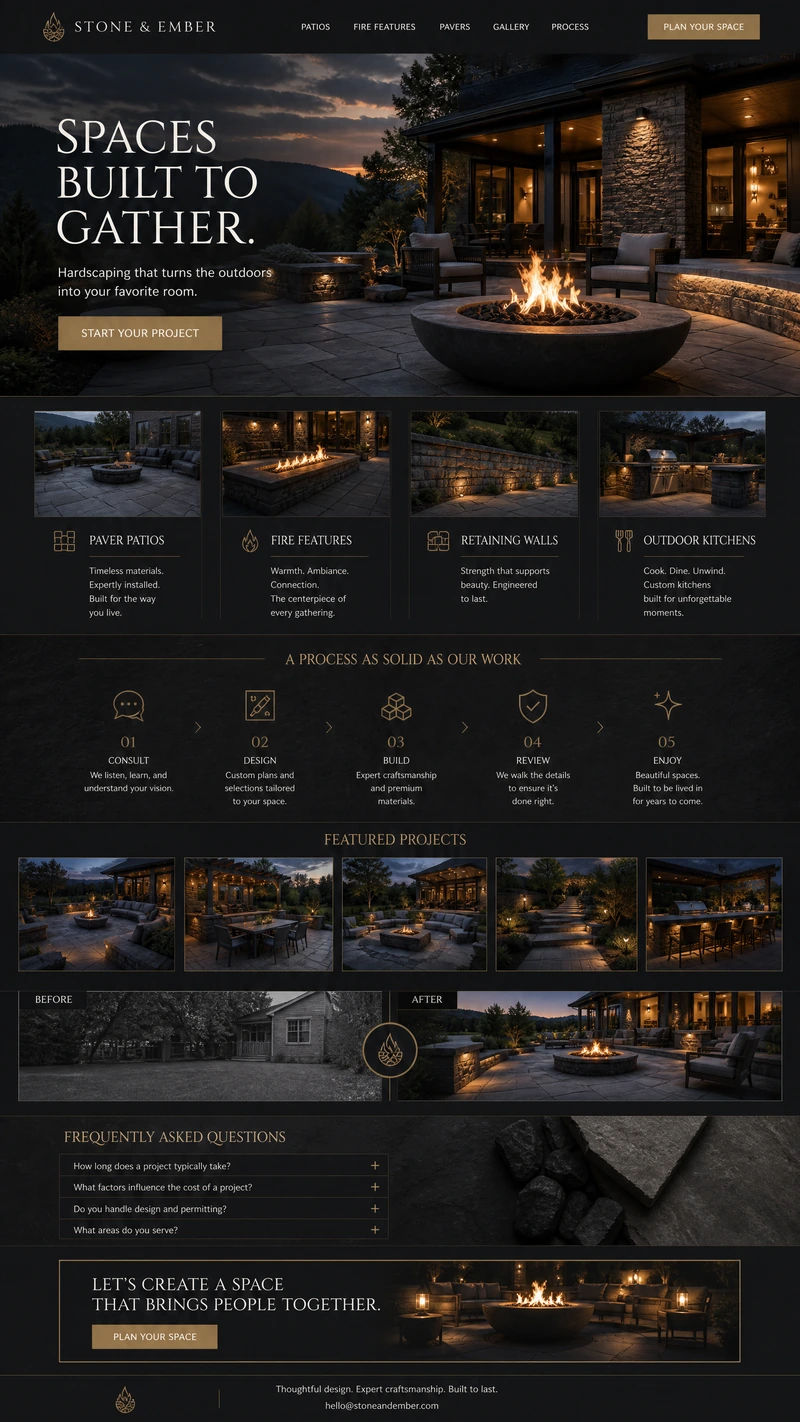
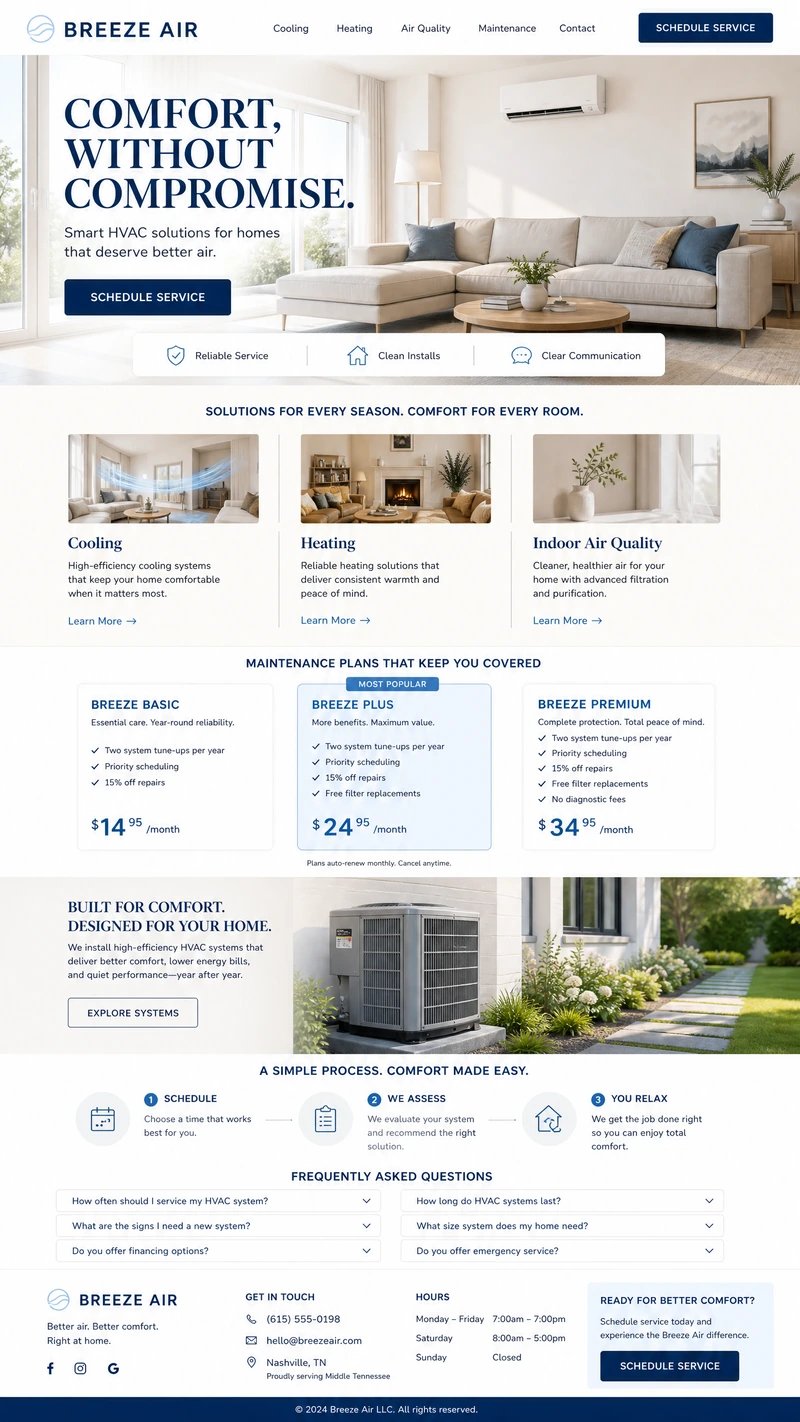
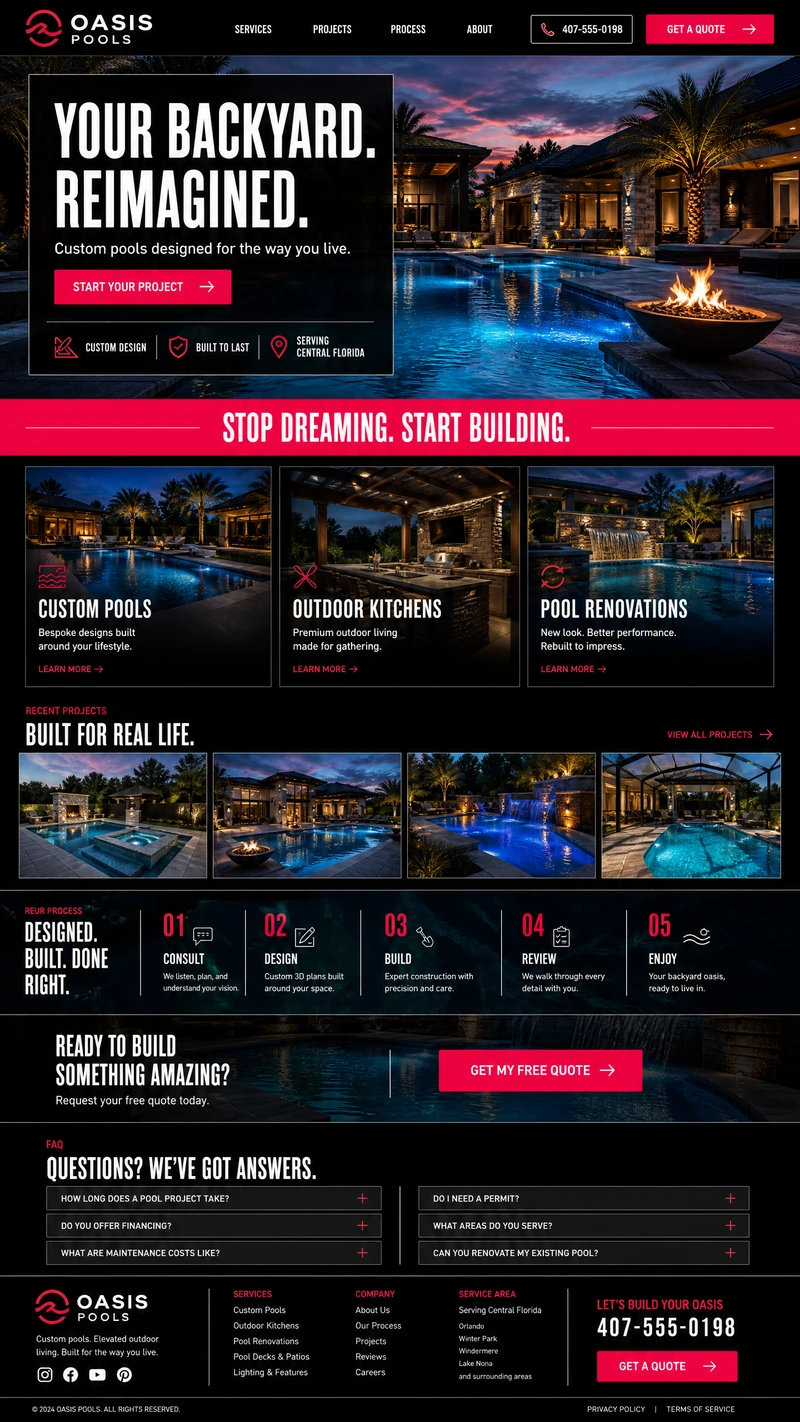
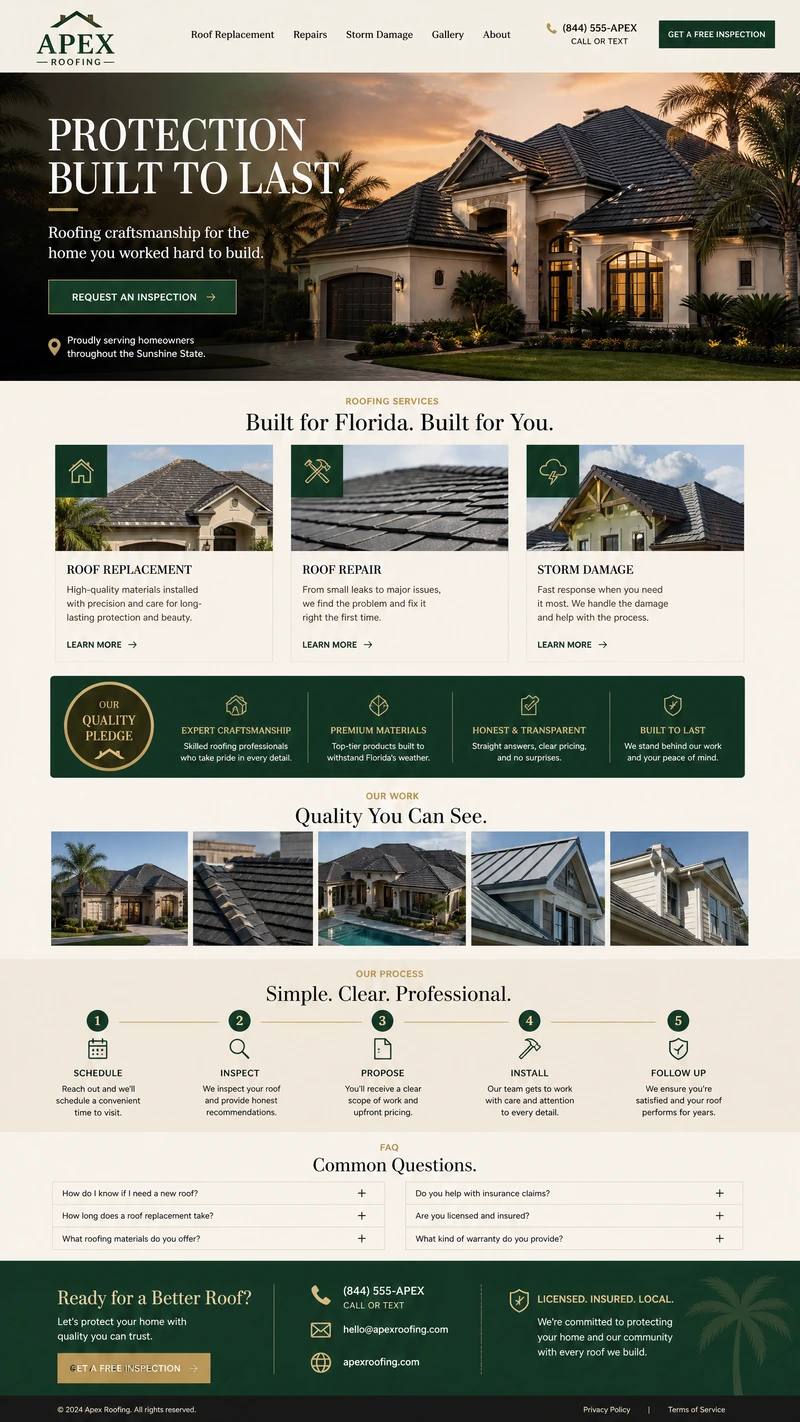
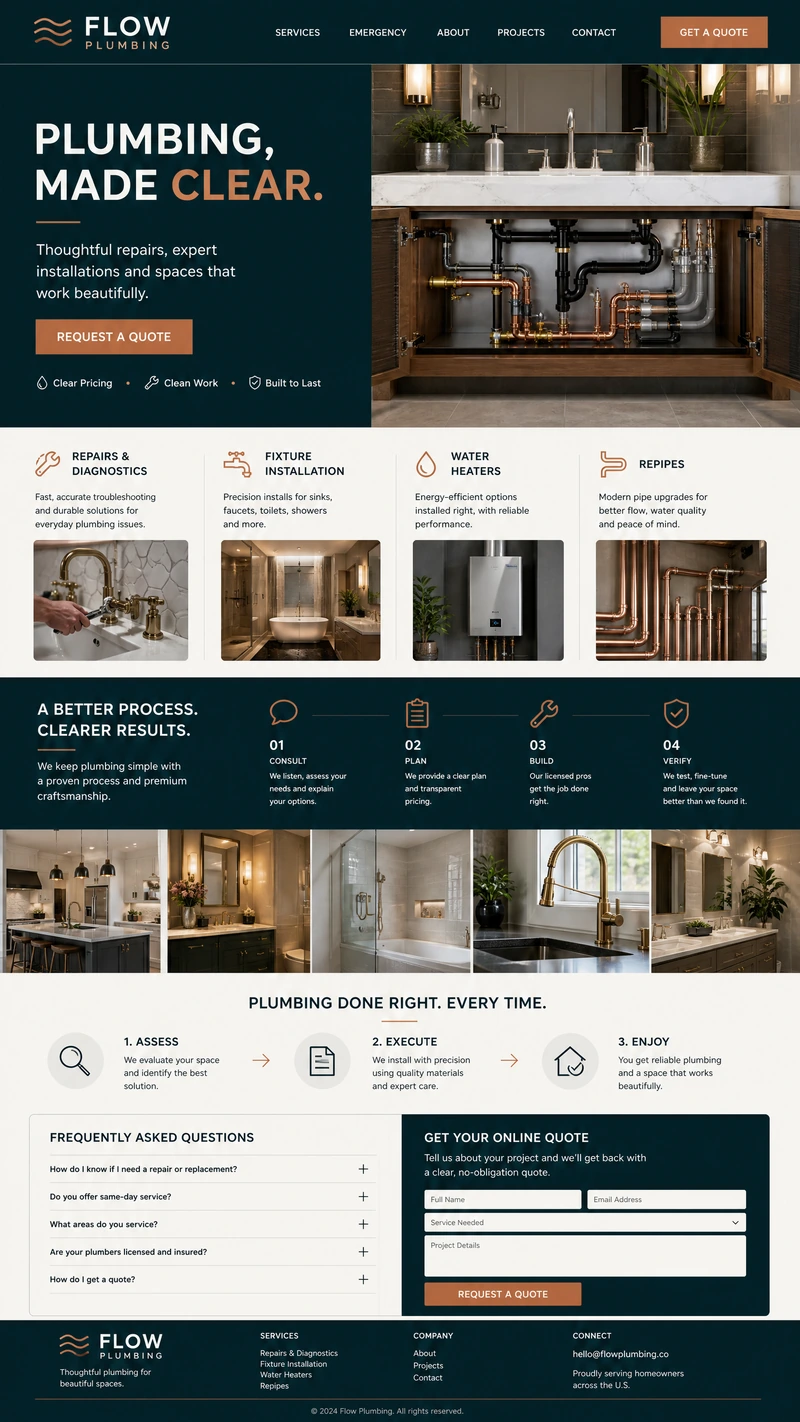
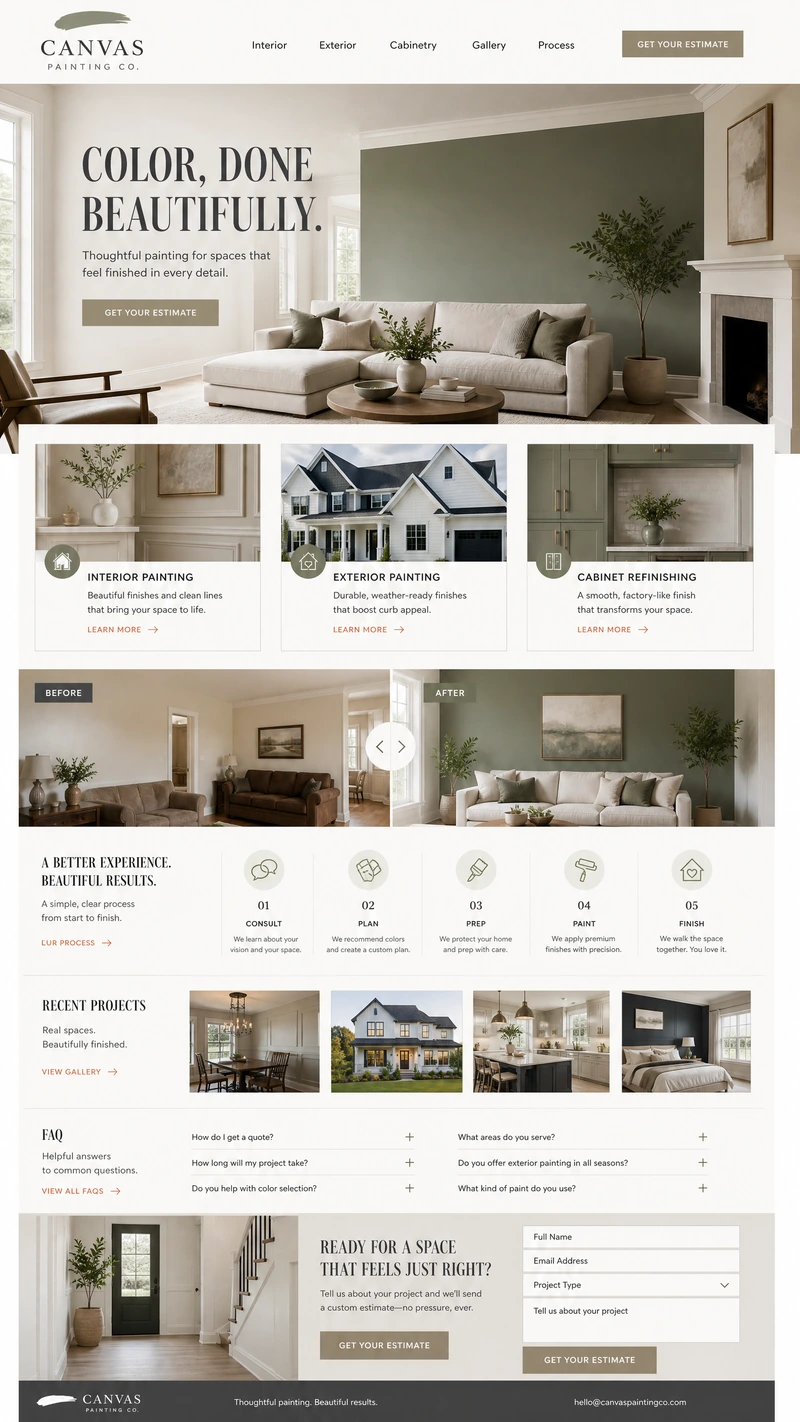
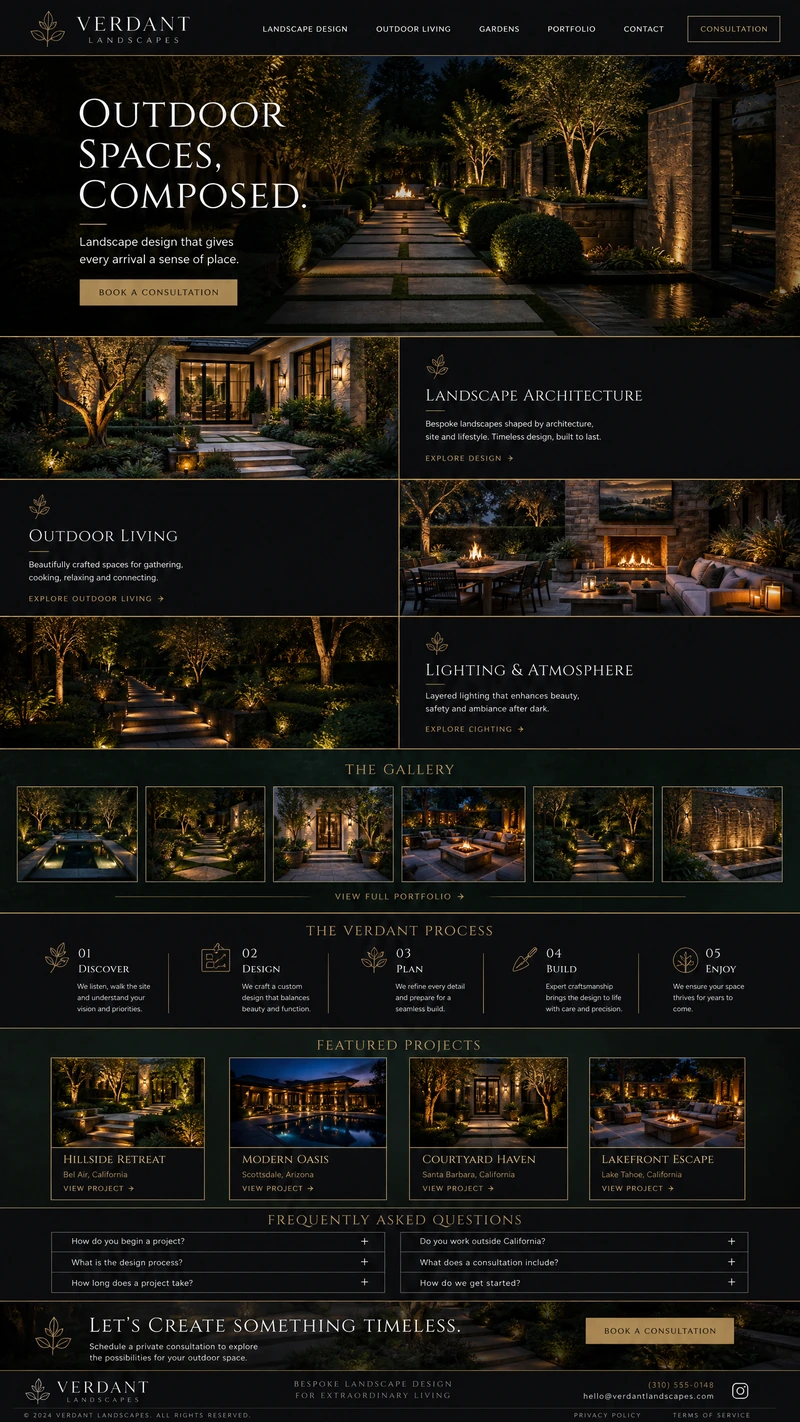
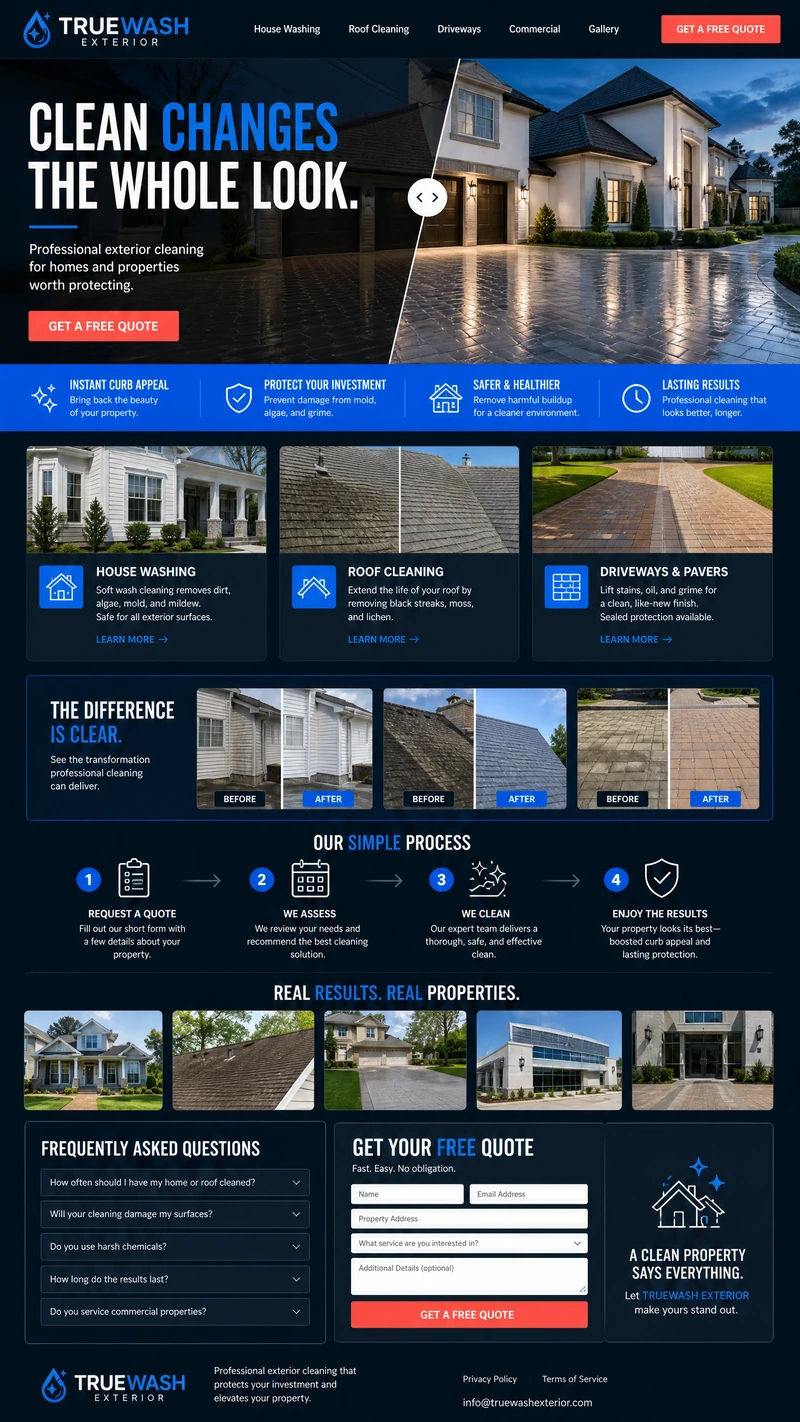
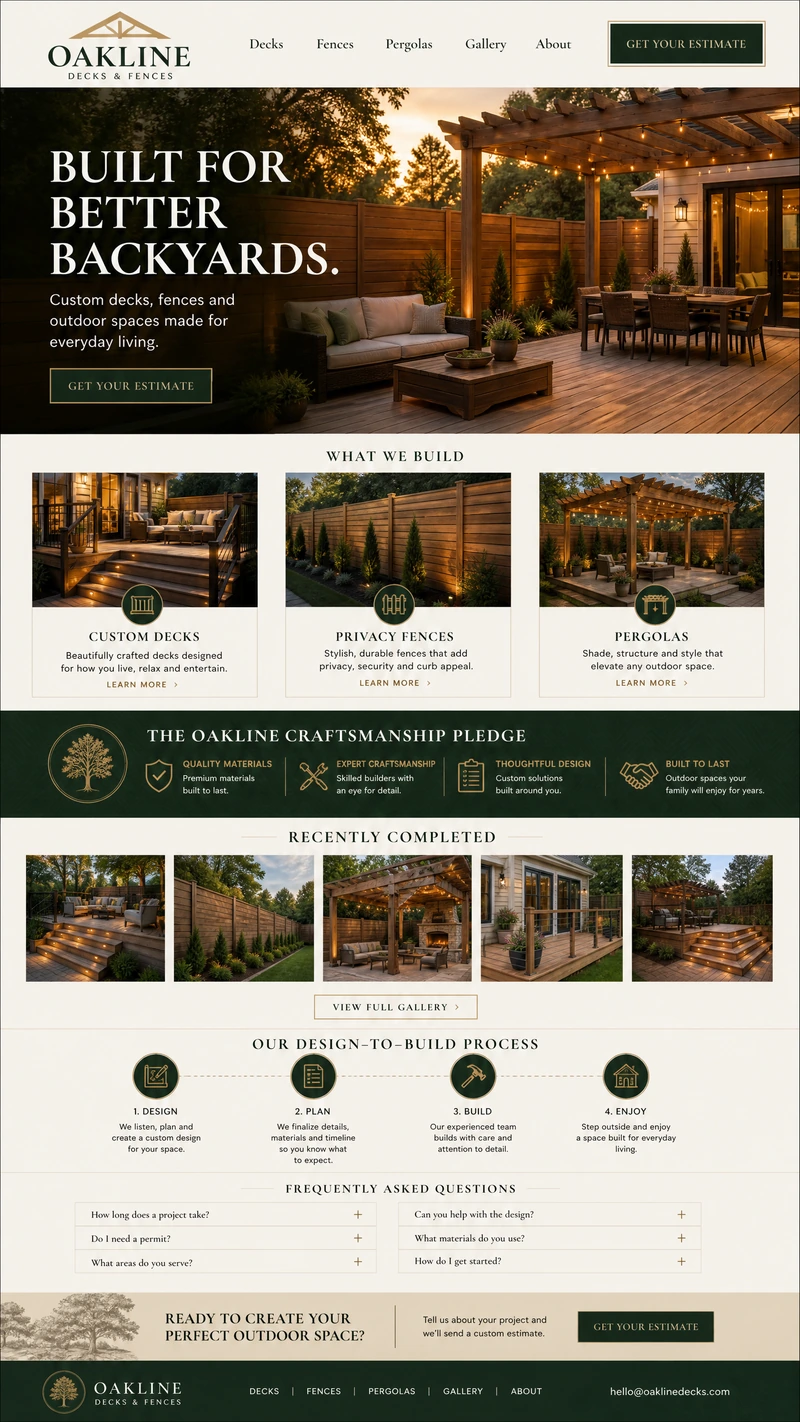
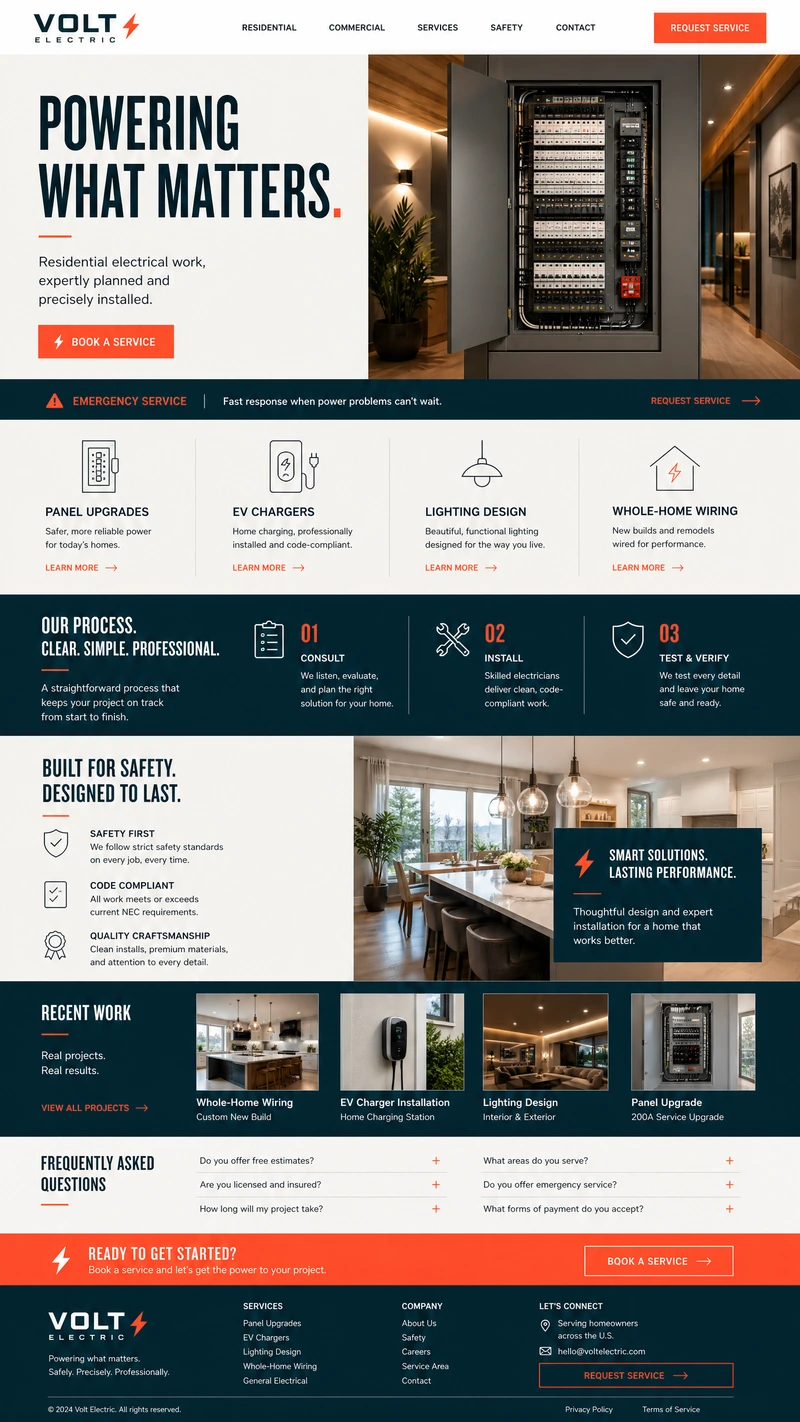
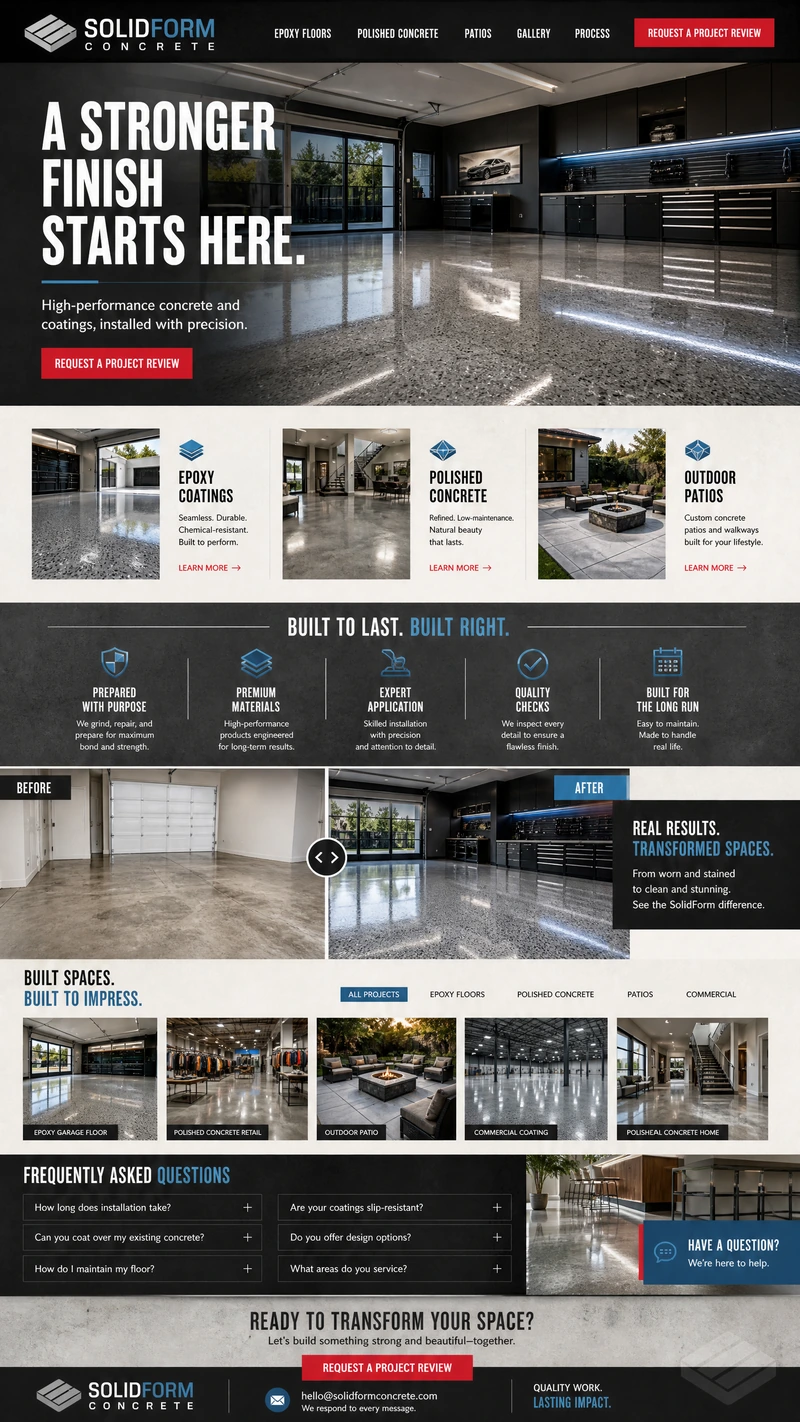
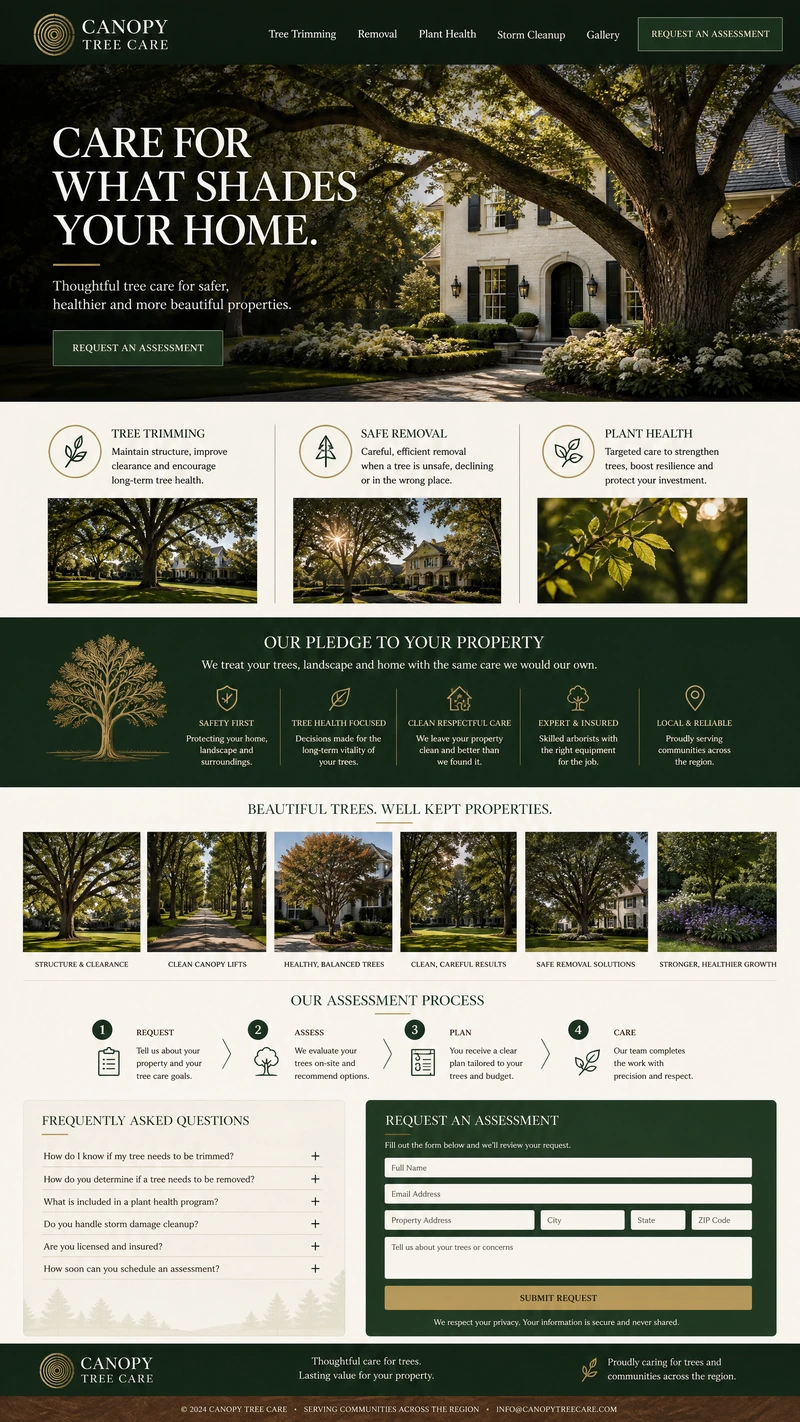
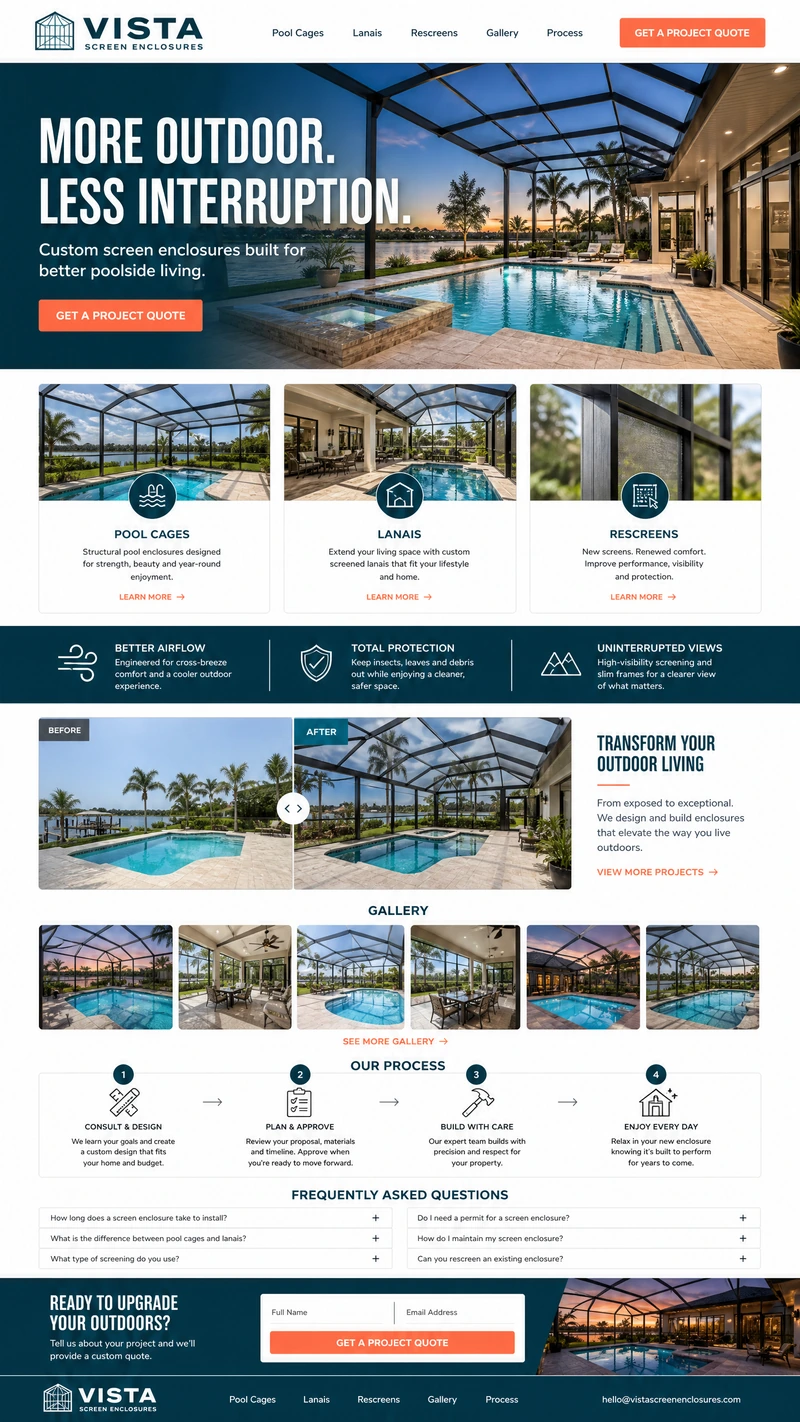
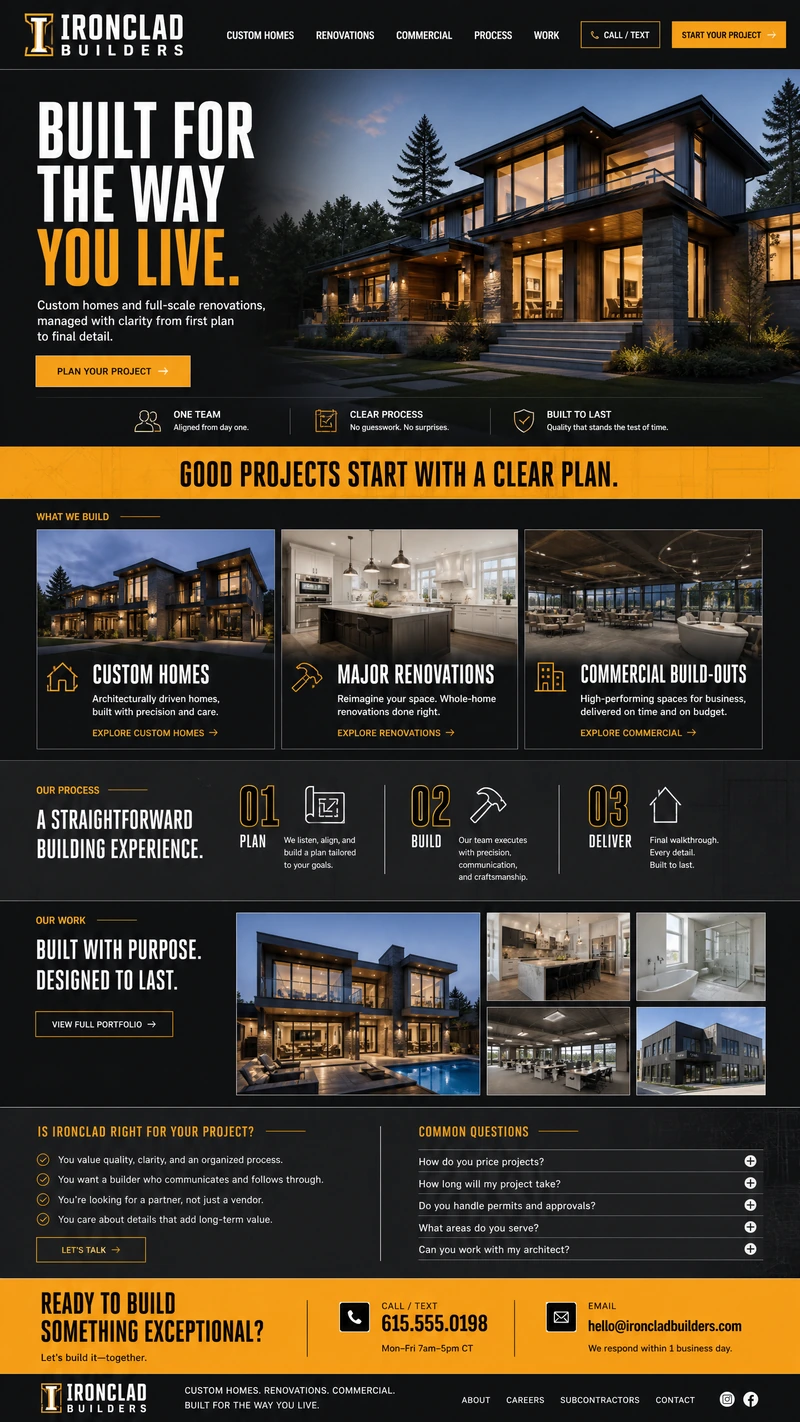
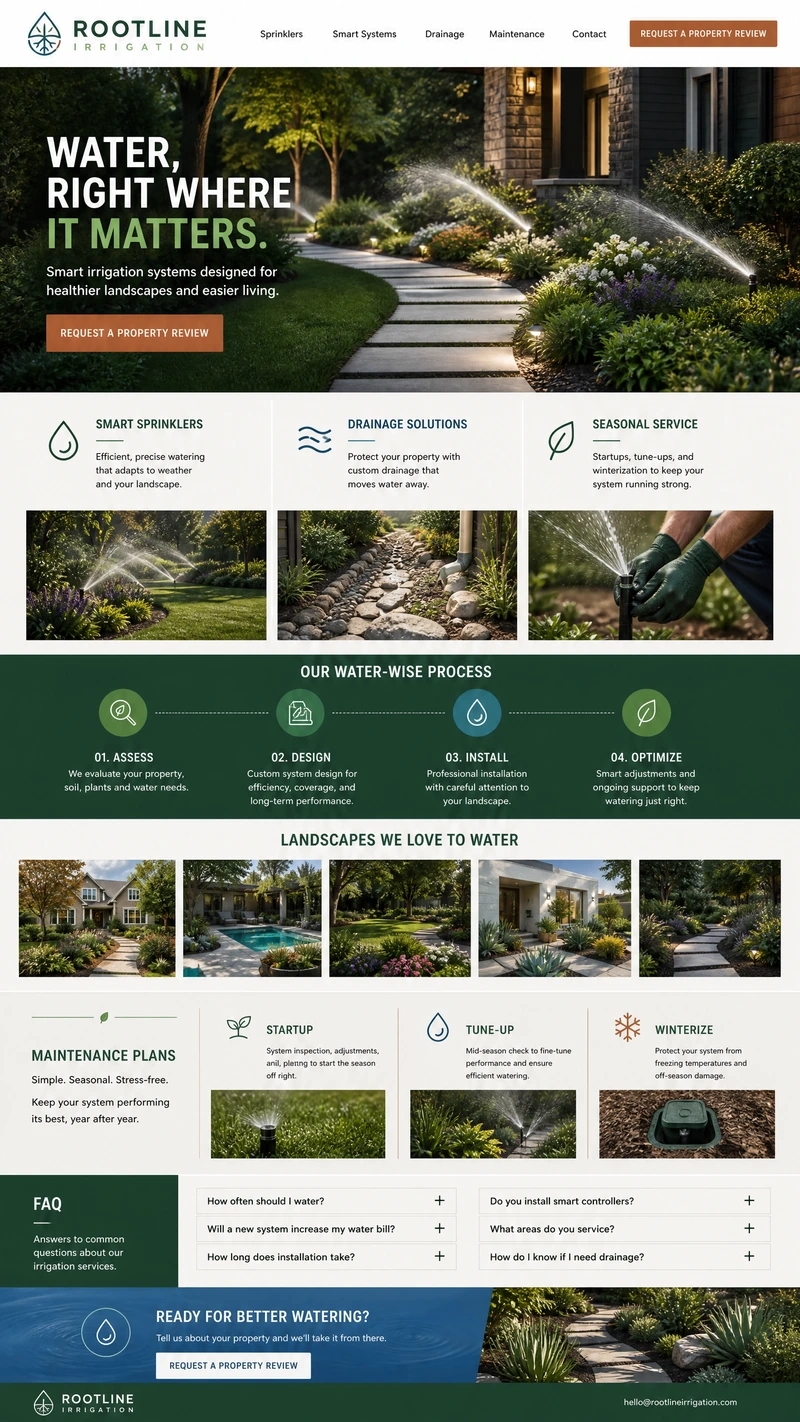
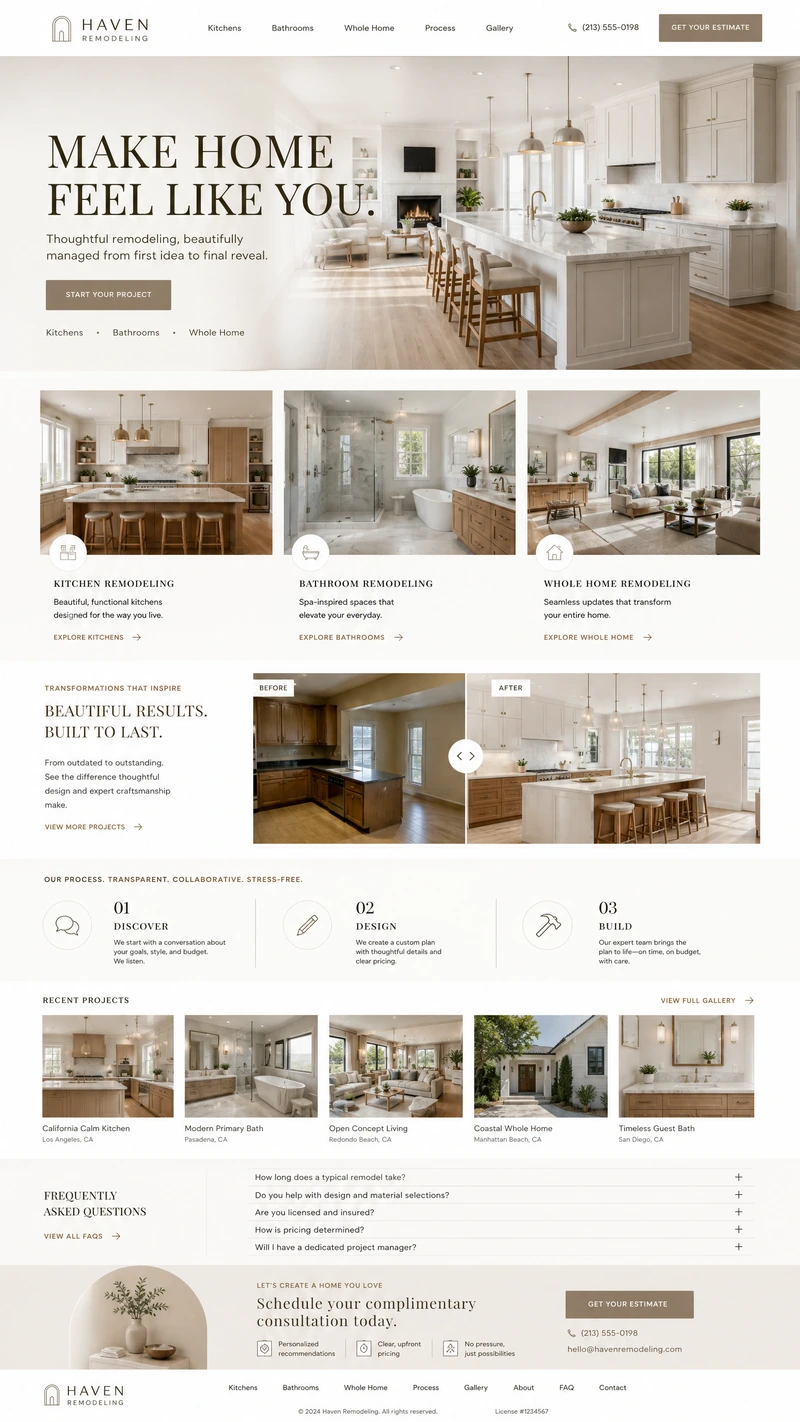
Mand Digital Website Design Collection. Website concepts designed by our studio across five directions. Your site is designed around your own business.
For a physical shop, the practical details carry as much weight as the design. The site makes them accurate, consistent and easy to find.
Your hours, address and phone should say the same thing on the website as on your Google Business Profile and any other listing. We set them up in one clear place on the site and give you a short list of other places to update when they change. An events page or block handles workshops, signings and seasonal sales, so they do not get buried in social posts.
Photographs matter here more than in most categories, and they should be your own: the storefront so people recognize it from the street, the shelves, the displays, the people who work there. We build around the photos you have and can tell you which ones would help most if you plan a shoot. Stock photography of someone else's shop does not stand in for yours.
The special order or contact form on your finished site is the one your shoppers will use. To reach us, use the form at the bottom of this page.
Shoppers search for a type of store or a product near them, so the site needs to state what you sell, where you are and when you are open in plain text that search engines can read.
Retail SEO for a local shop is mostly groundwork: category pages that describe what you carry, your neighborhood and city written out, details that match your Google Business Profile, and technical fundamentals in place from launch. Those give search engines something concrete to match when someone looks for a gift shop, a bike store or a garden center near them.
If you advertise an event, a holiday season or a new location, each campaign works better with a page that repeats the ad's offer and shows the address and hours. If you are comparing a retail marketing agency, the split here is simple: ongoing SEO and paid advertising are separate services from the website, scoped and quoted on their own. We never promise rankings, foot traffic or sales.
Your proposal lists exactly what the project includes. For an independent store, it usually covers the following, complete on the day it launches.
An online store is not included unless your proposal says so. Domain and hosting are separate and are not paid to us; your store owns both, and the site is deployed to its account.
Each retail website is quoted on its own, once we understand the store and how it sells. You get a written proposal with scope, timeline and price before work starts.
The proposal reflects what the site has to carry: how many categories and brands, how many locations, whether events need their own section, which existing tools need linking and how much photography is ready. Once your briefing and materials are in, we build a complete first draft so you can review the whole site in one sitting.
There is no mandatory monthly fee to us for the website. The domain and hosting are in the store's name, and you can move the site whenever you like.
You tell us about the store: what you sell, who shops with you, the tools you already use and what the current site gets wrong.
A written proposal listing the pages, links, timeline and price. Work begins only after you approve it.
Photographs of the store and products, your logo, hours, brand list and the links to your shop, gift card and pickup tools.
We plan the pages and write the copy from your briefing. You check every category, brand and detail before launch.
The complete first draft, delivered on the timeline in your proposal.
You review the whole site and send your changes together. The number of revision rounds is set in your proposal.
After you approve the final version, we deploy it to your hosting on your domain.
That is the whole process.
If it fits your store, the next step is a quote request. If you have a question first, the form is a few lines down.
What you carry, by category and brand; your hours, address and parking; events; your story; and links to any online shop, gift card or pickup tools you use.
Stores with more than one location add a page for each. The exact page list is set in your proposal.
Not as part of a standard website. We build your store's website, and if you already sell online we link to that shop from every page.
If you want a new online store, it is a separate project, scoped and quoted in its own proposal.
Usually not. Category pages, the brands you carry and a few featured items show shoppers what to expect and stay accurate as stock changes.
If your point-of-sale or shop provider publishes product or inventory pages, the site can link to them where the provider allows it.
Yes, through the gift card and pickup tools you already use. The site links to them clearly.
We do not build a gift card or ordering system. Anything beyond a link or an embed your provider offers is assessed during scoping and only included if the proposal says so.
The site is built so search engines can read what you sell, where you are and when you are open, with details that match your Google Business Profile.
Managing your Google Business Profile and ongoing local SEO are separate unless a proposal includes them, and we never promise rankings or foot traffic.
Yes. SEO is a separate service from the website, scoped and quoted on its own.
Every site we build has the technical fundamentals in place. Ongoing work, such as category content and local listing consistency, is planned with you, with no guaranteed rankings or sales.
Yes, as a separate digital advertising service, with a landing page that matches each campaign.
We agree the goal, the area and the budget with you before anything runs, and we never guarantee a cost per visit or a return on ad spend.
A short description of the store, what you sell, how many locations you run, the tools you use for online sales or gift cards, and what you would change about your current site.
The form at the bottom of this page is enough to start. We reply with questions or a proposal, and there is no charge for that conversation.
Your store owns the domain, the hosting and the website. There is no mandatory monthly fee to us and no lock-in.
The proposal says what support is included after launch and for how long. Seasonal updates beyond that can be quoted when you need them.
Planned around what you carry, where you are and how customers buy from you, with special order and contact requests sent to your inbox.
Quoted for your business
A proposal built around your scope
This is the website proposal. An online store, SEO and advertising are separate, each quoted on its own.
Your website, your domain, your hosting. No mandatory monthly fee to us.
Also thinking about SEO or advertising for your store?
Talk to our teamWhat you sell, how many locations you run and the tools you already use for online sales or gift cards. We will tell you what the site should cover.