
Is the menu something I can actually read?
A PDF that opens sideways on a phone, or a photo of a printed page, is the most common reason a guest gives up on a restaurant site. Text on the page loads fast and reads cleanly at any size.
Websites built around your businessSEO & digital advertisingStrategy with a human touch
Restaurant website design
Most people looking at a restaurant website are deciding where to eat tonight. They want the menu, whether you are open right now, where you are and how to order or book a table. We design restaurant websites that put those four things within a thumb's reach on a phone.
Scoped and quoted for your restaurant, and built on a domain and hosting you own.
A menu people can read
Your dishes and prices as real text on the page, easy to scan on a phone and easy for search engines to read.
Hours that match everywhere
Opening hours, holidays and the address kept consistent with your Google listing, so nobody drives to a locked door.
Order and book in one tap
Clear buttons to the ordering and reservation services you already use, on every page.
A restaurant website has a narrow job and it has to do it fast: get a hungry person from a search result to a decision, then to an order, a booking or a set of directions.
Guests rarely read a restaurant site from top to bottom. They open it from a map listing or an Instagram bio, look at the menu, check the hours and leave to order or drive over. If the menu is a blurry photo or the hours are from last summer, they go to the next place on the list without telling you why.
The other visitors matter too. Someone planning a birthday dinner wants to know whether you take large parties. A company looking for lunch delivery wants to know if you cater. A regular wants to check tonight's special. We plan the pages so each of them gets an answer in a tap or two, and so the busiest page on the site, the menu, is the one that works best.
Every restaurant website starts from how your place actually runs: counter service or table service, one location or three, takeout, delivery, catering, private events. The structure is set in your proposal rather than poured into a template built for somebody else's kitchen.
A site that works the way your restaurant does
Tell us how guests order, book and find you today, and what you wish the website did better. We will tell you how we would lay it out.
Choosing a restaurant takes a few minutes on a phone. The site either answers the next question or the guest goes back to the search results.
Food photography helps, but the decision usually turns on practical details. The best restaurant web design makes those details impossible to miss, because a guest who has to hunt for the hours assumes the worst and moves on.
A PDF that opens sideways on a phone, or a photo of a printed page, is the most common reason a guest gives up on a restaurant site. Text on the page loads fast and reads cleanly at any size.
Hours belong near the top of every page, with holiday closures added before the holiday rather than after a guest finds the door locked.
If you take online orders through a delivery app or your own ordering service, the button to it should be the most obvious thing on a phone screen.
Groups, reservations, walk-ins only, a wait list. A sentence on how seating works saves a call during the dinner rush.
Answering these on the phone every night?
Send us the questions your staff hear most and we will show you where each one lives on the site.
Most restaurants already use a service for orders or bookings. The website's job is to send guests to it without friction, not to replace it.
We link the site to the ordering, delivery and reservation services you already use, with buttons placed where a guest looks for them on every page. If you are choosing between services, we can tell you what the website needs from each, but the choice of platform and its terms stay yours. Catering and private event requests are a different conversation, so they get their own simple form that reaches your inbox.
Want orders and bookings to be one tap away?
Sixteen concepts from the studio, built from the same five directions. They were drawn for home-service trades, so none of them is a restaurant. What carries over is the direction: a bold, image-led layout for a busy neighborhood spot, or a quieter, more refined one for a tasting menu. Your site would start from a direction and be designed around your own food and room.
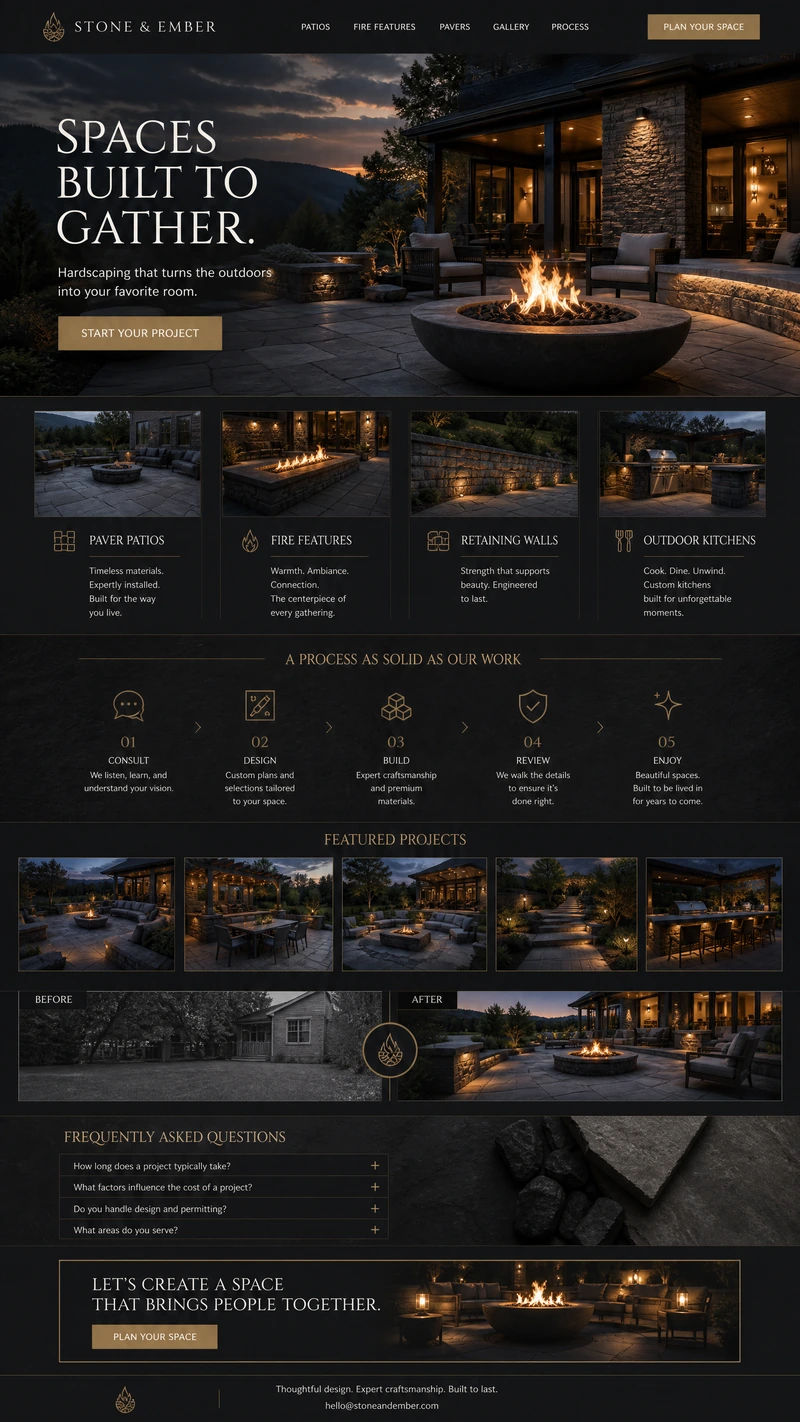
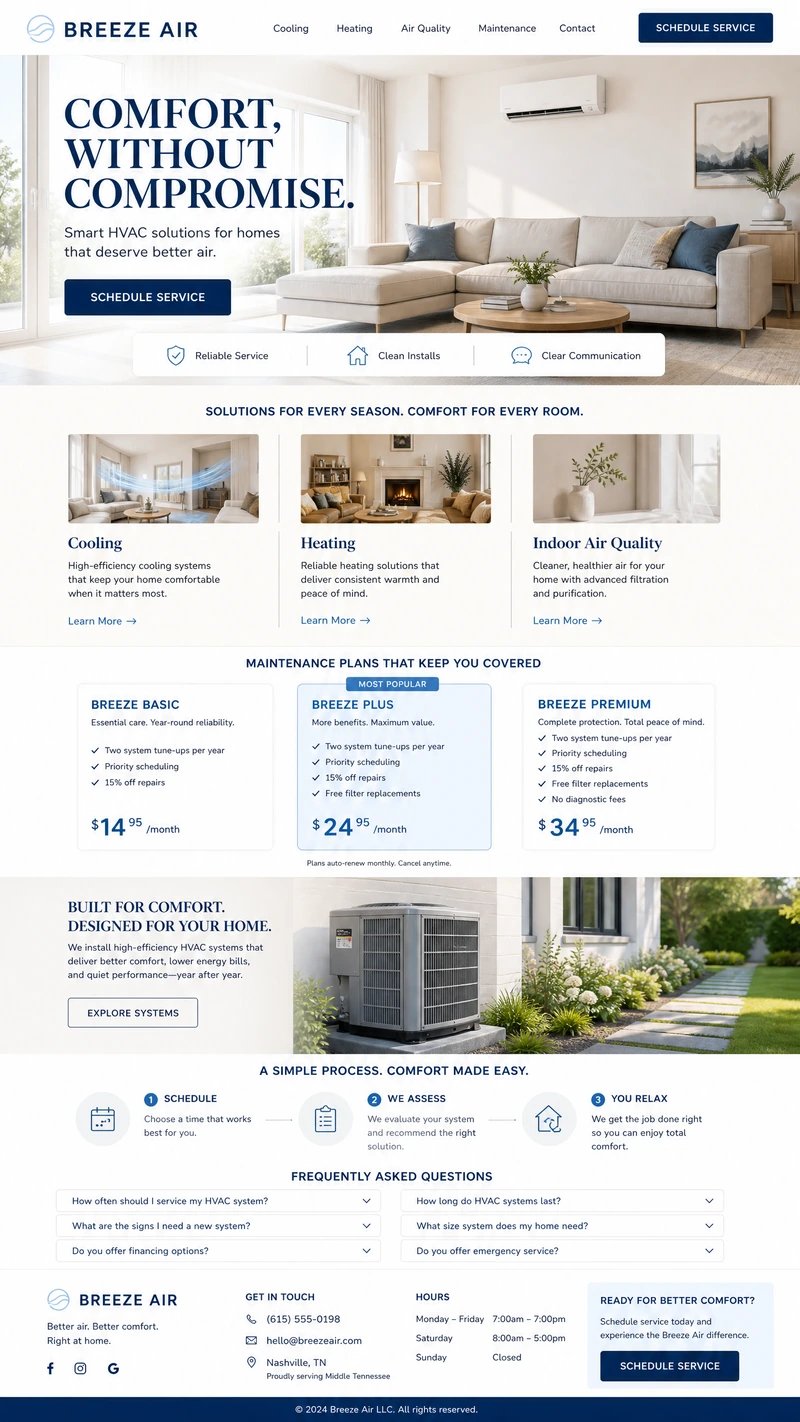
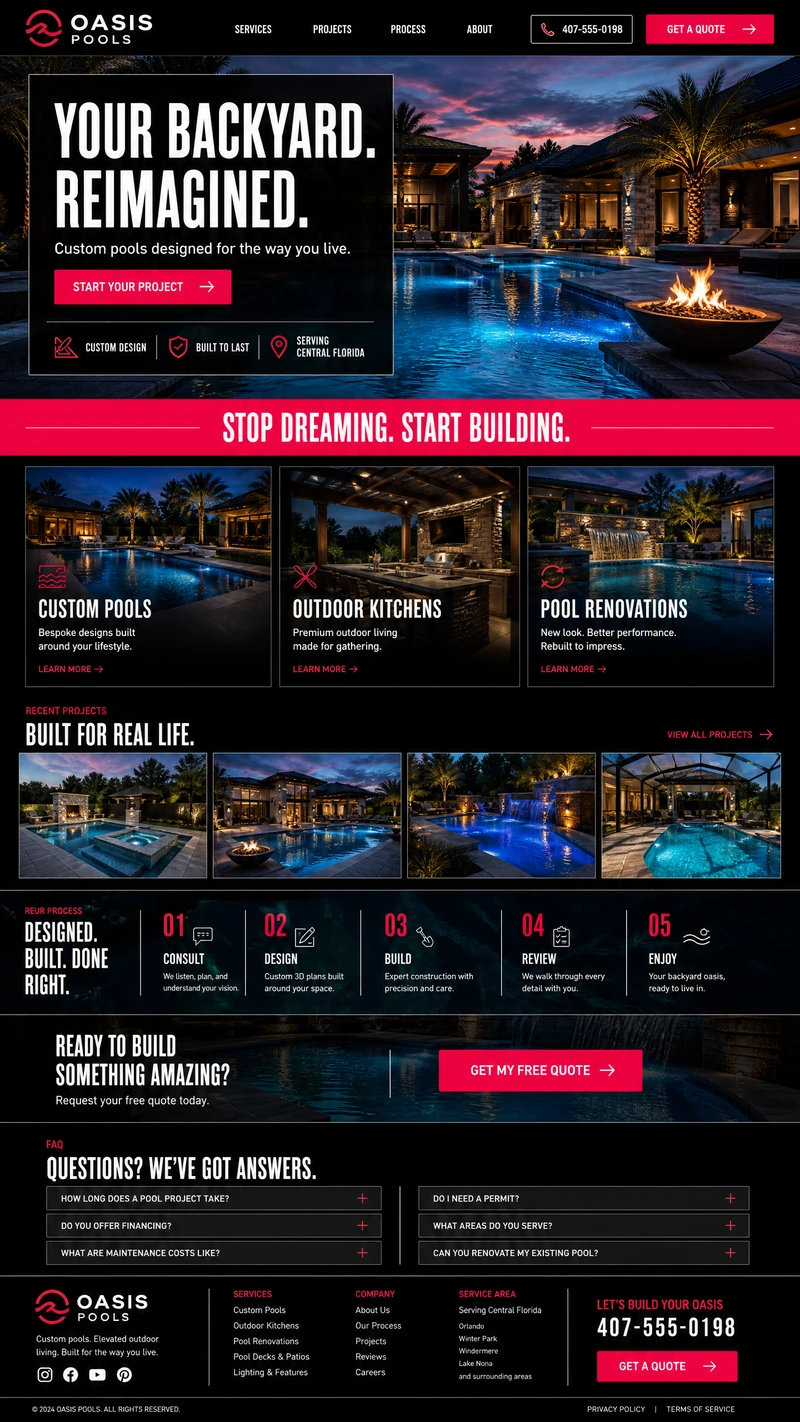
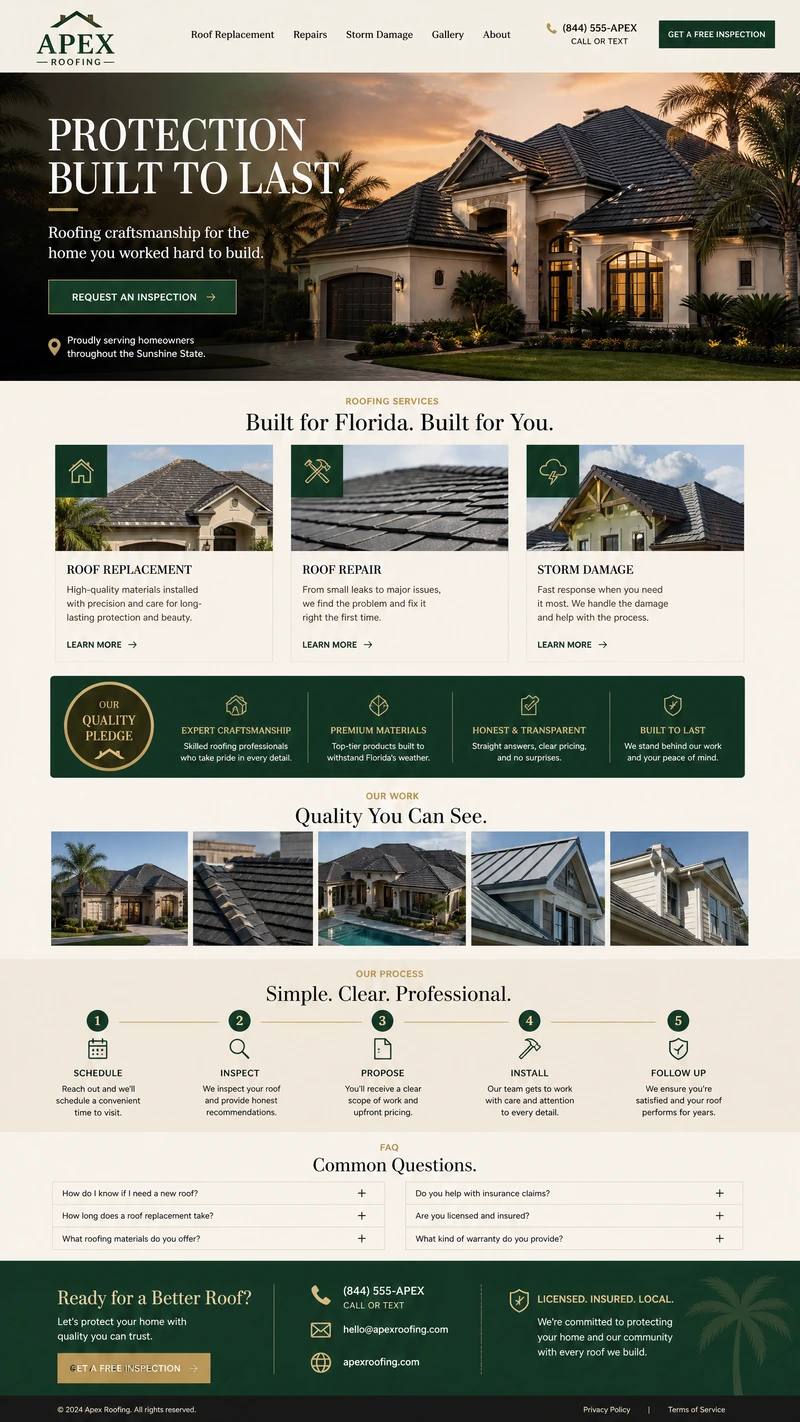
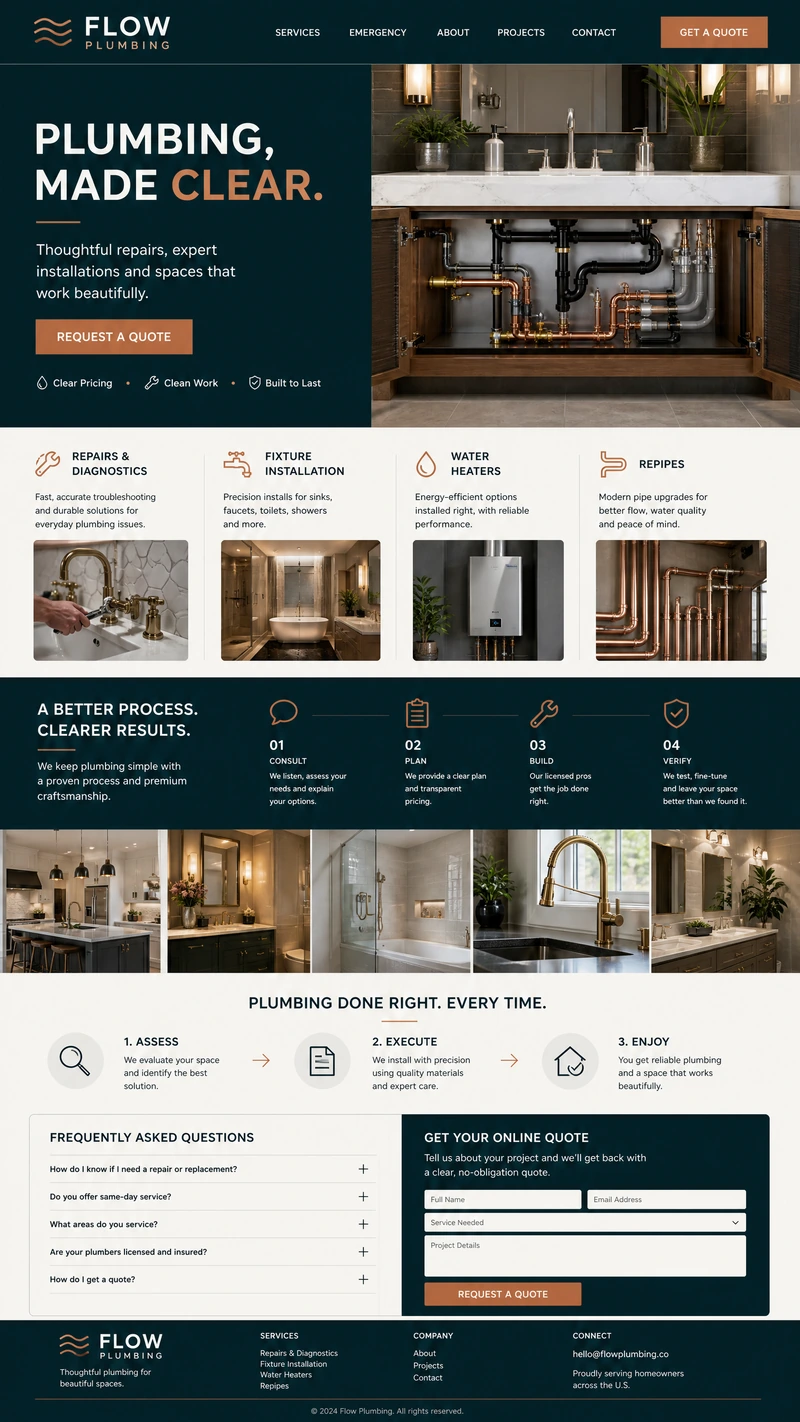
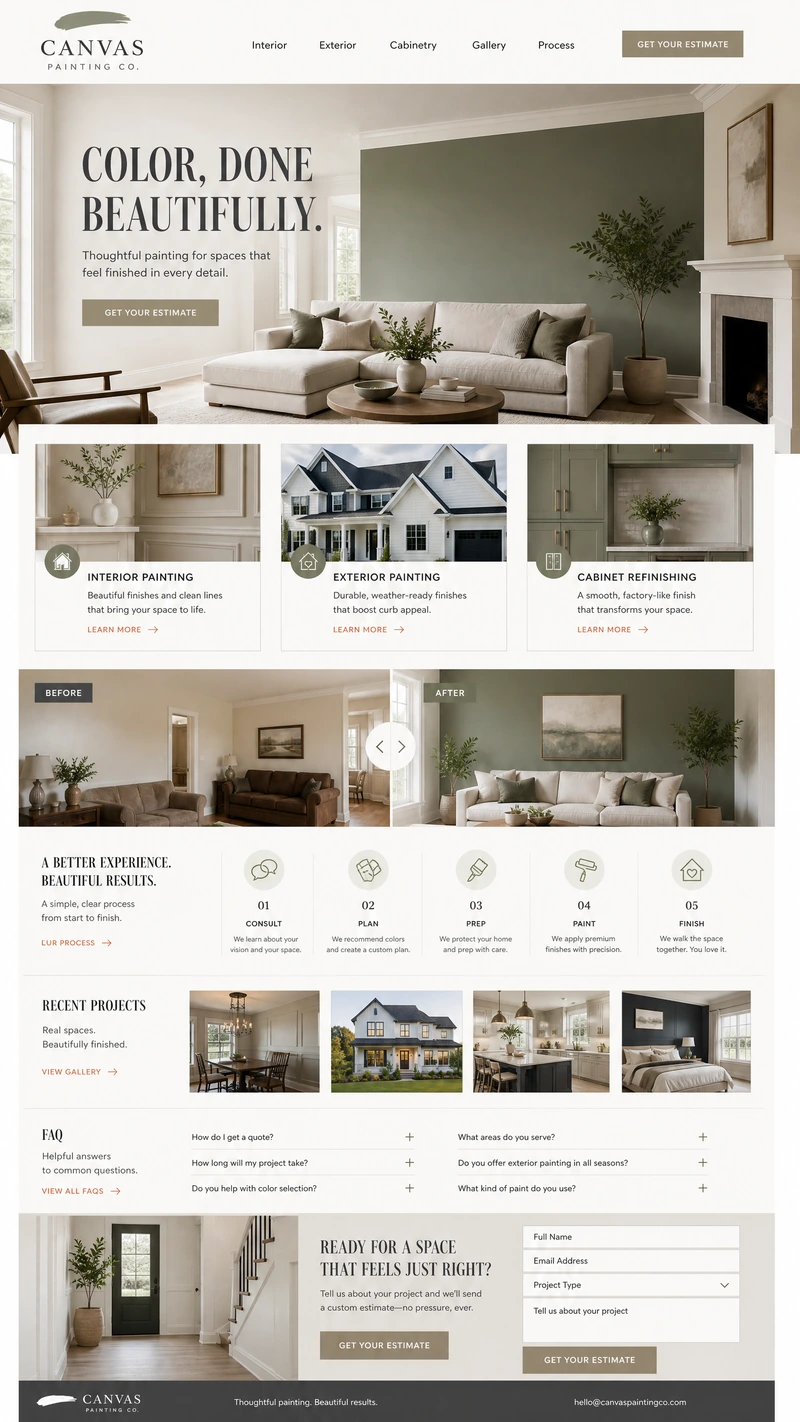
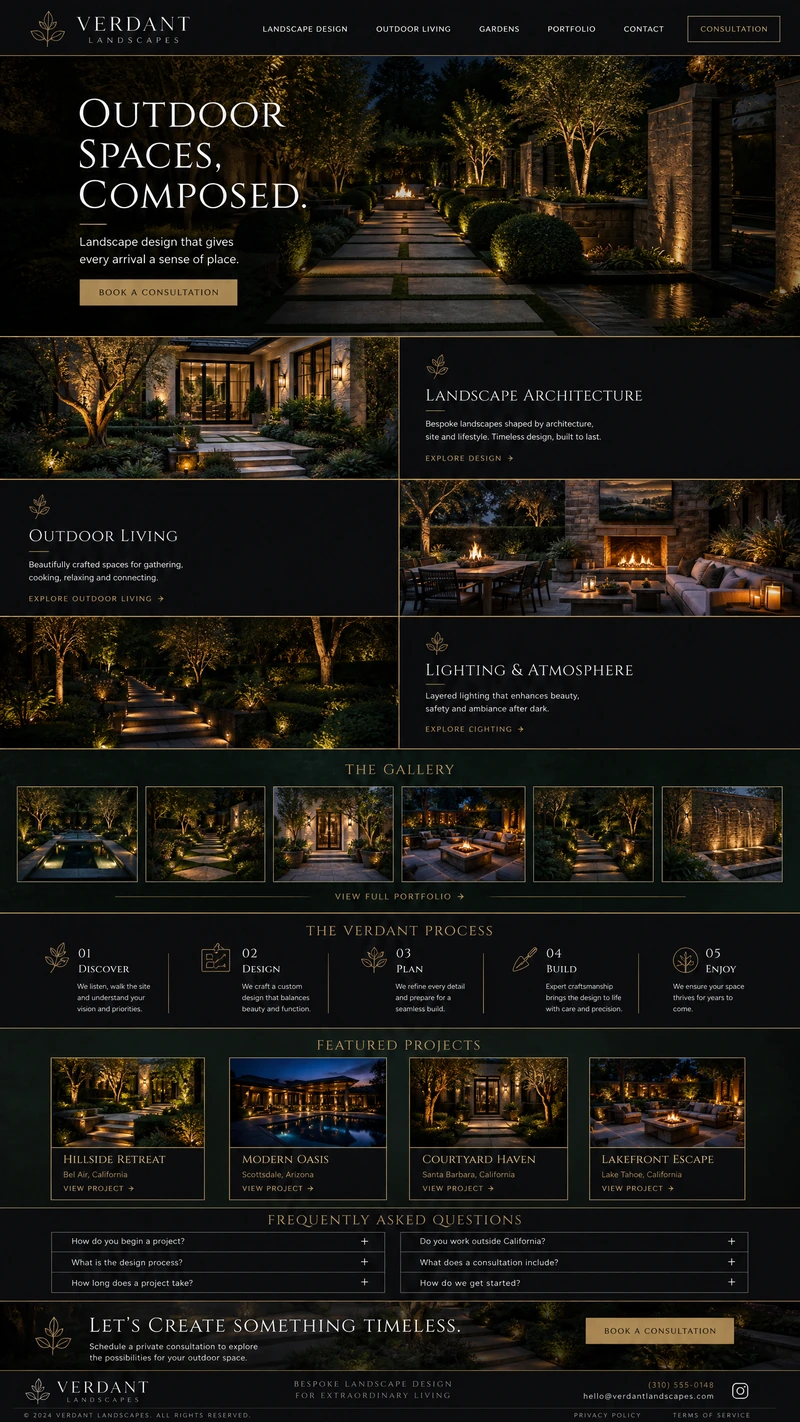
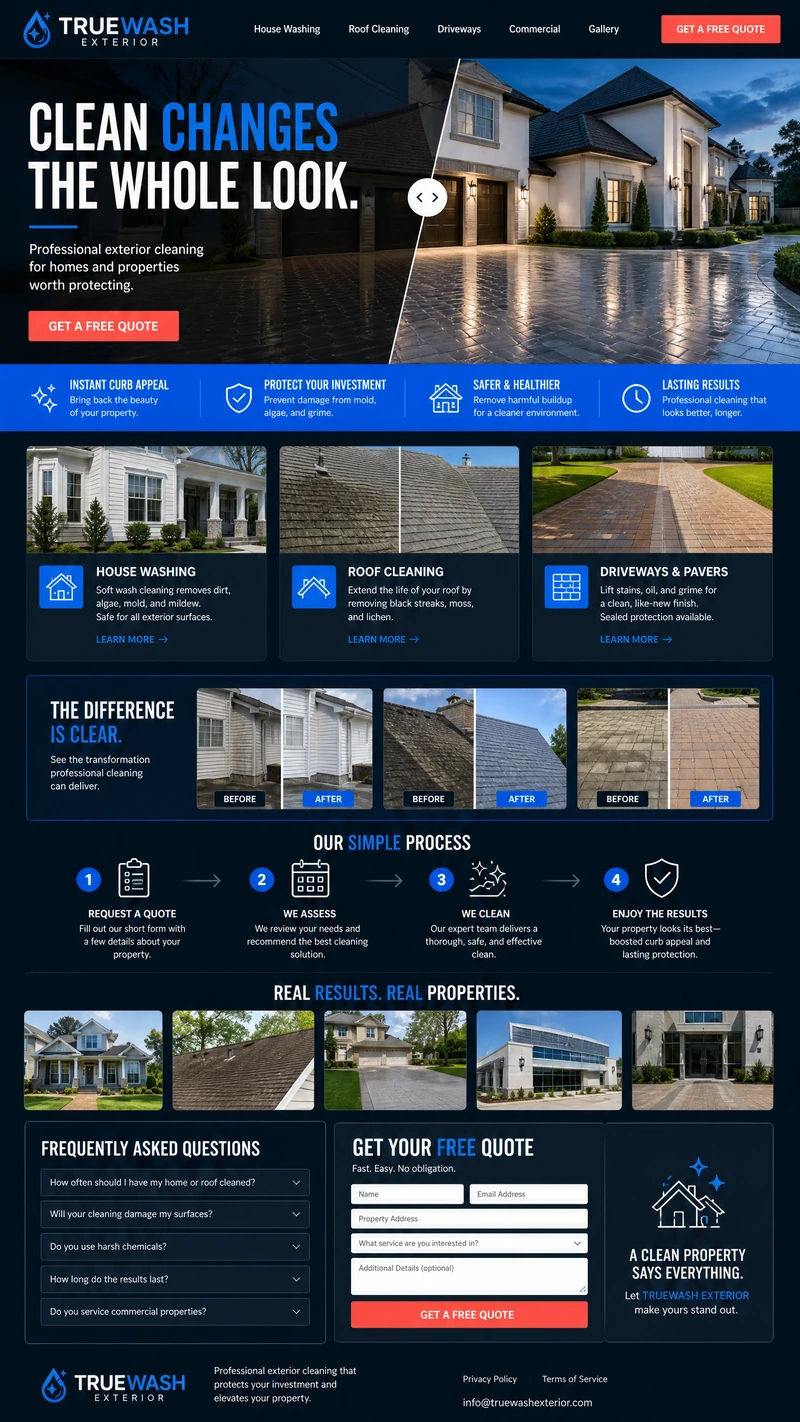
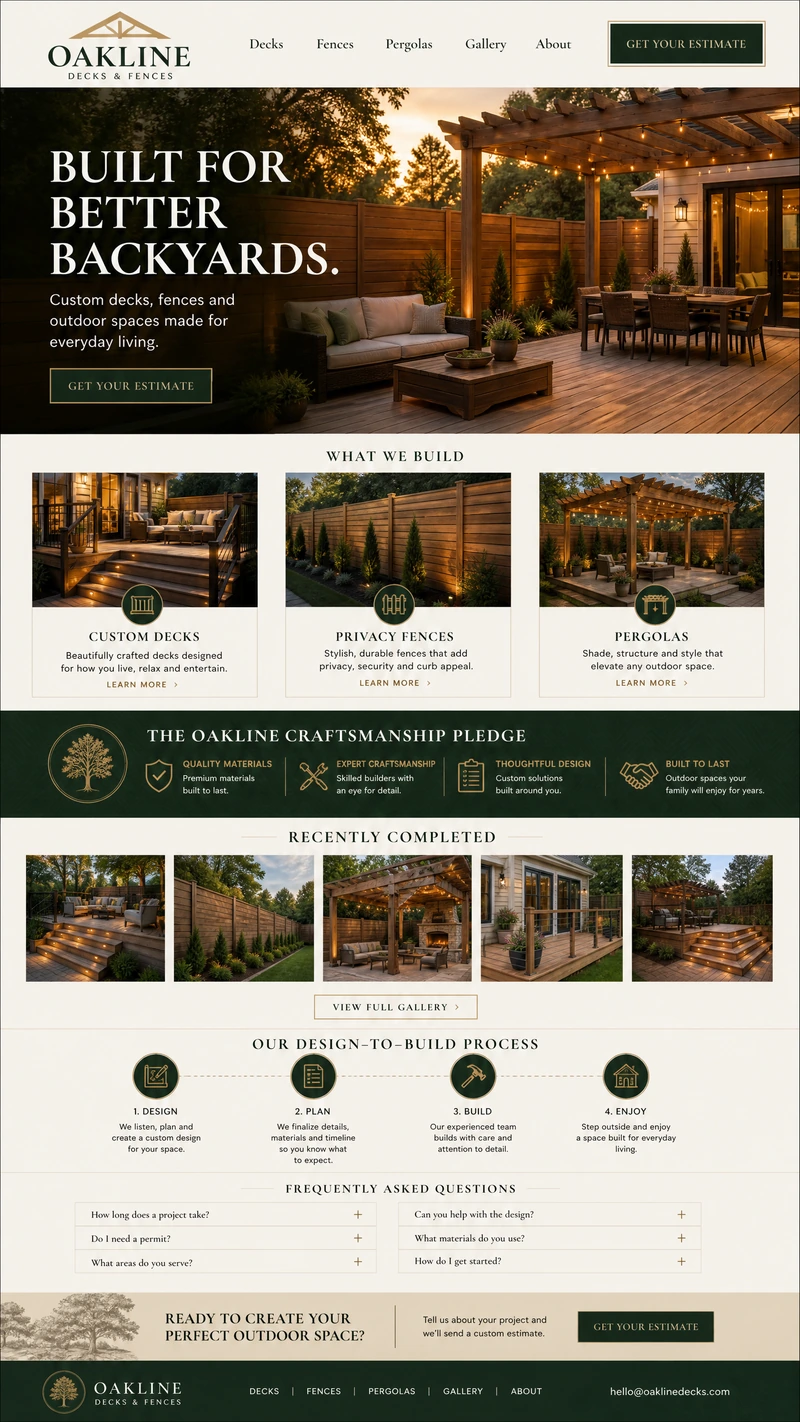
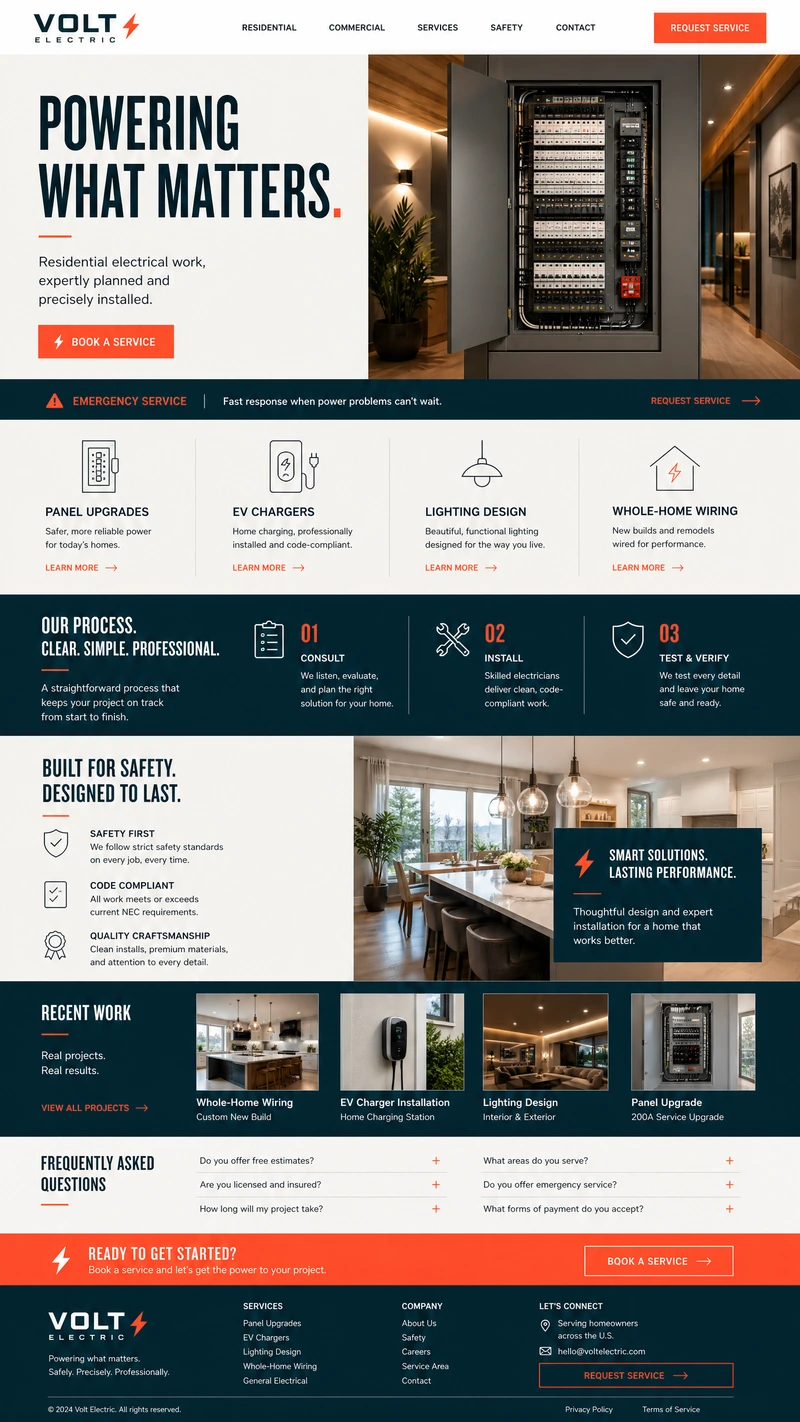
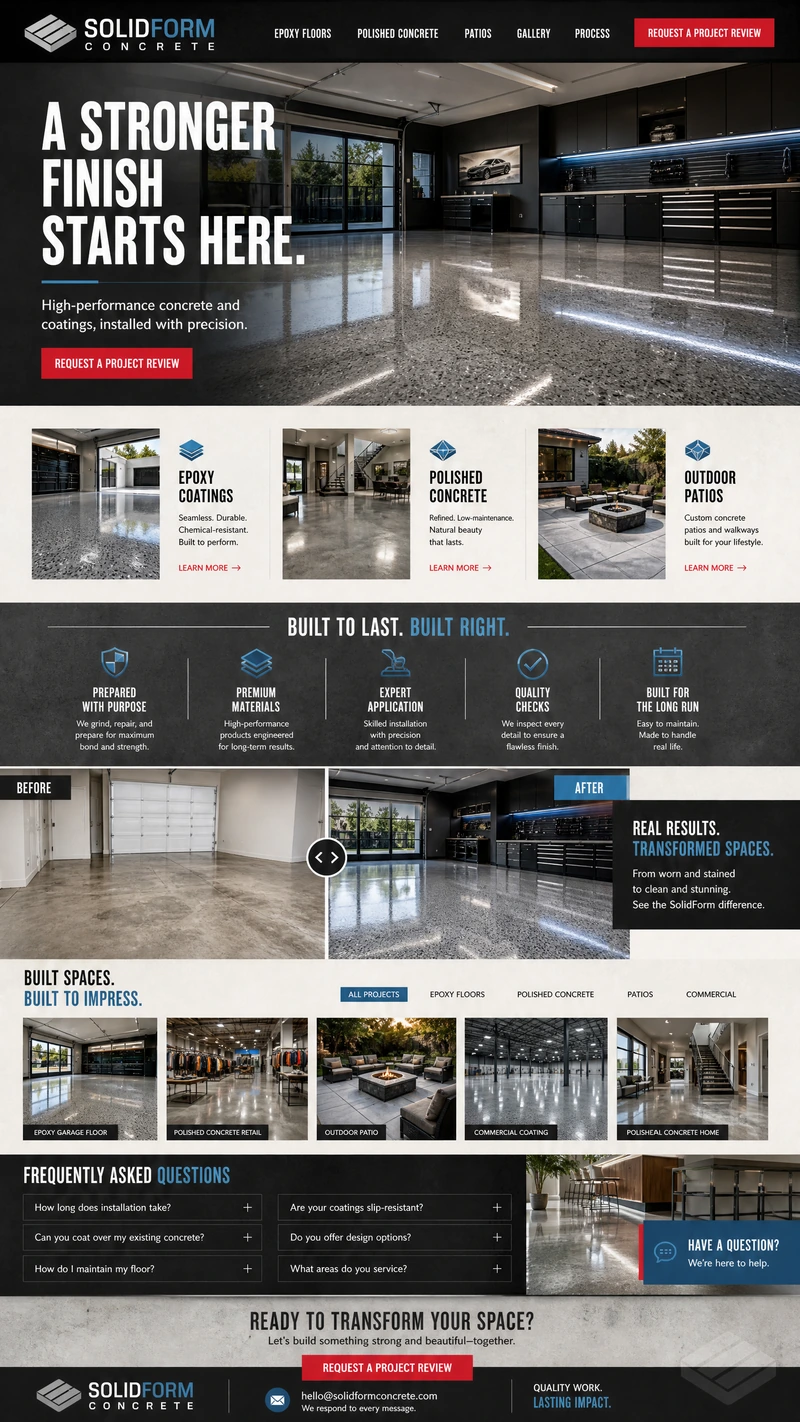
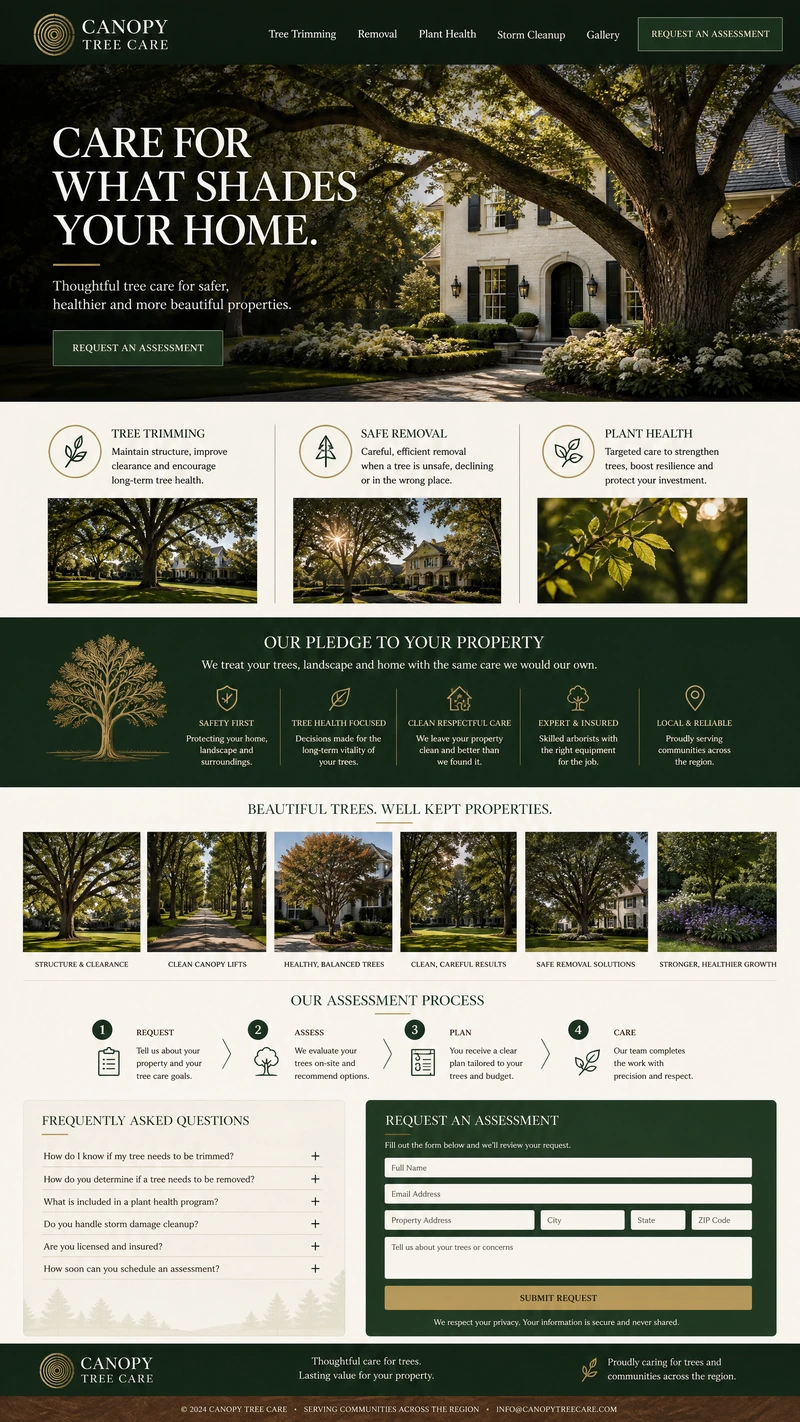
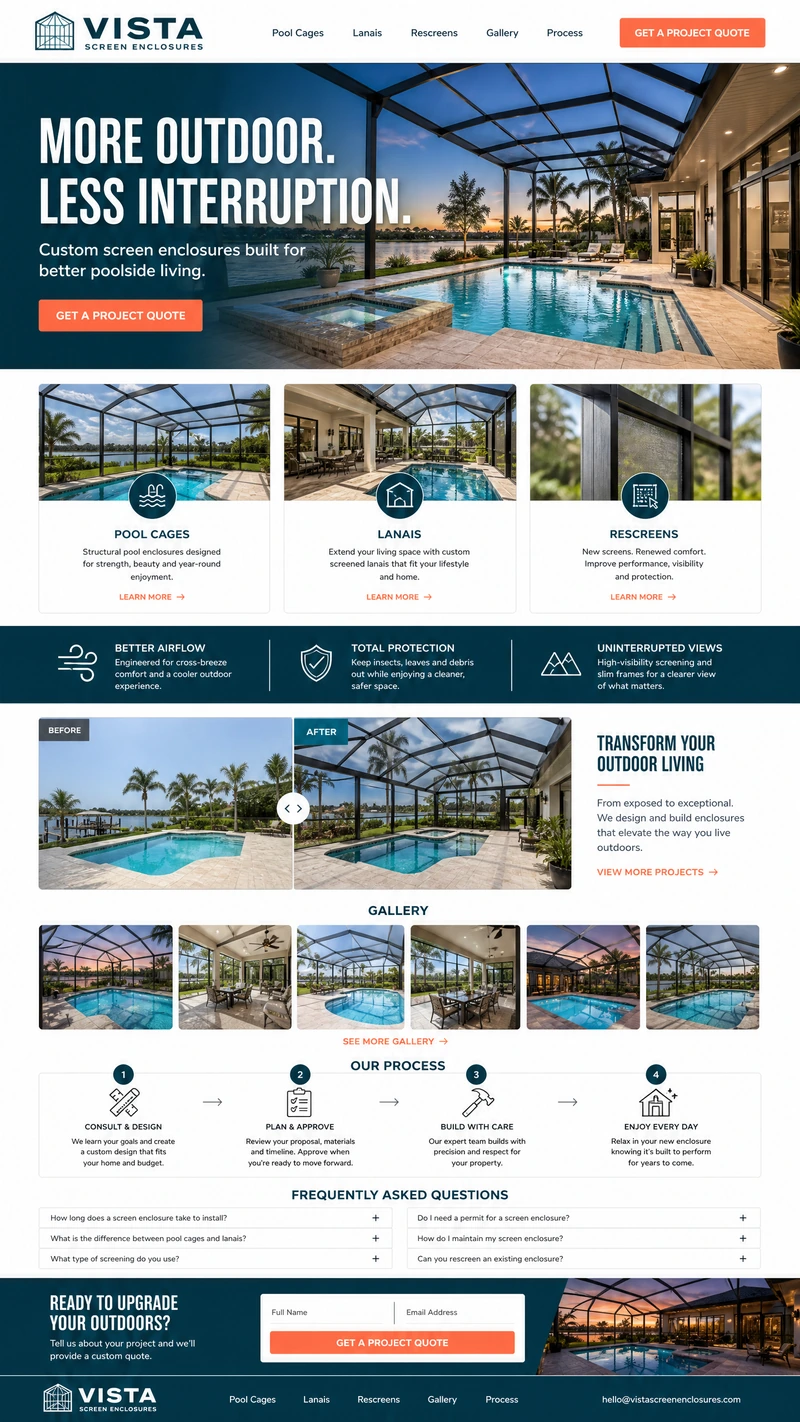
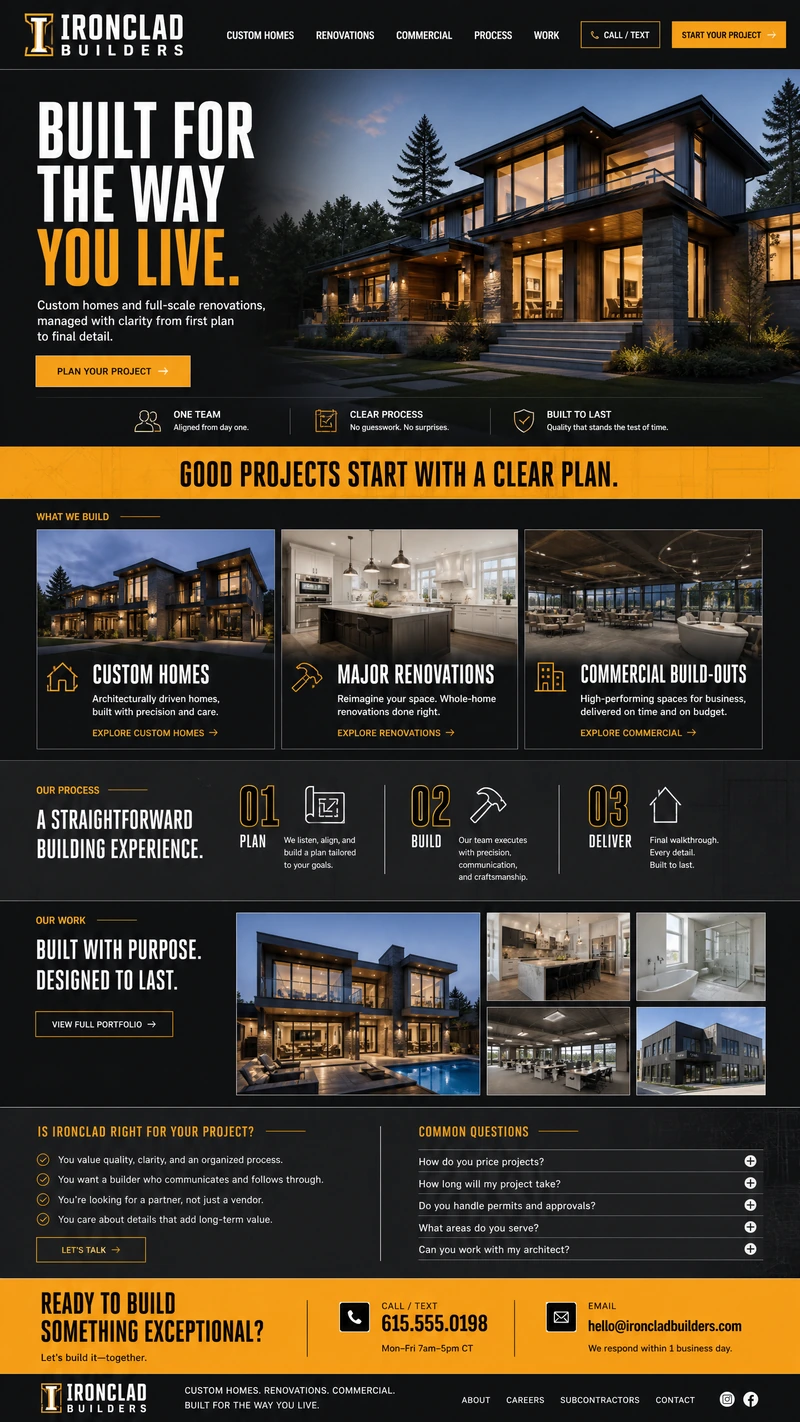
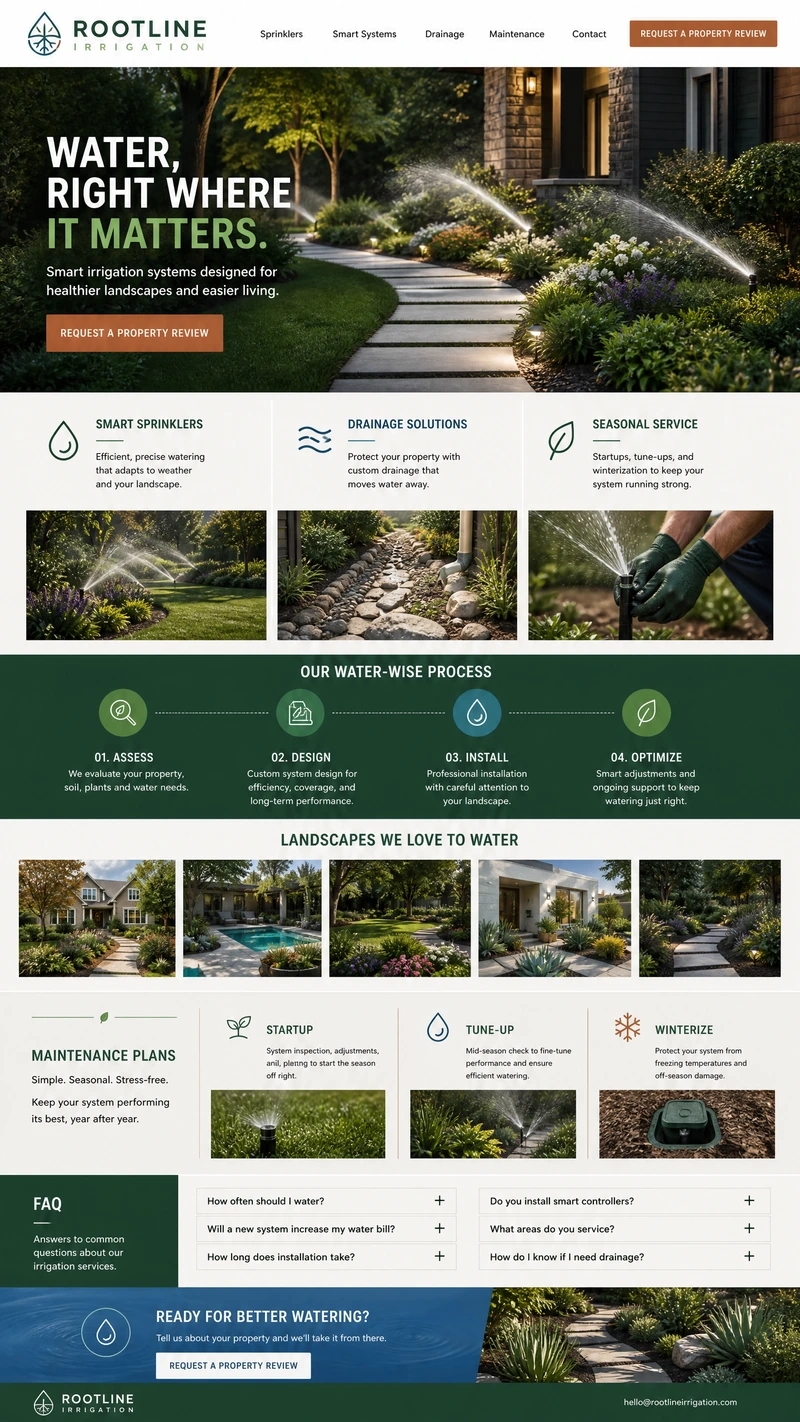
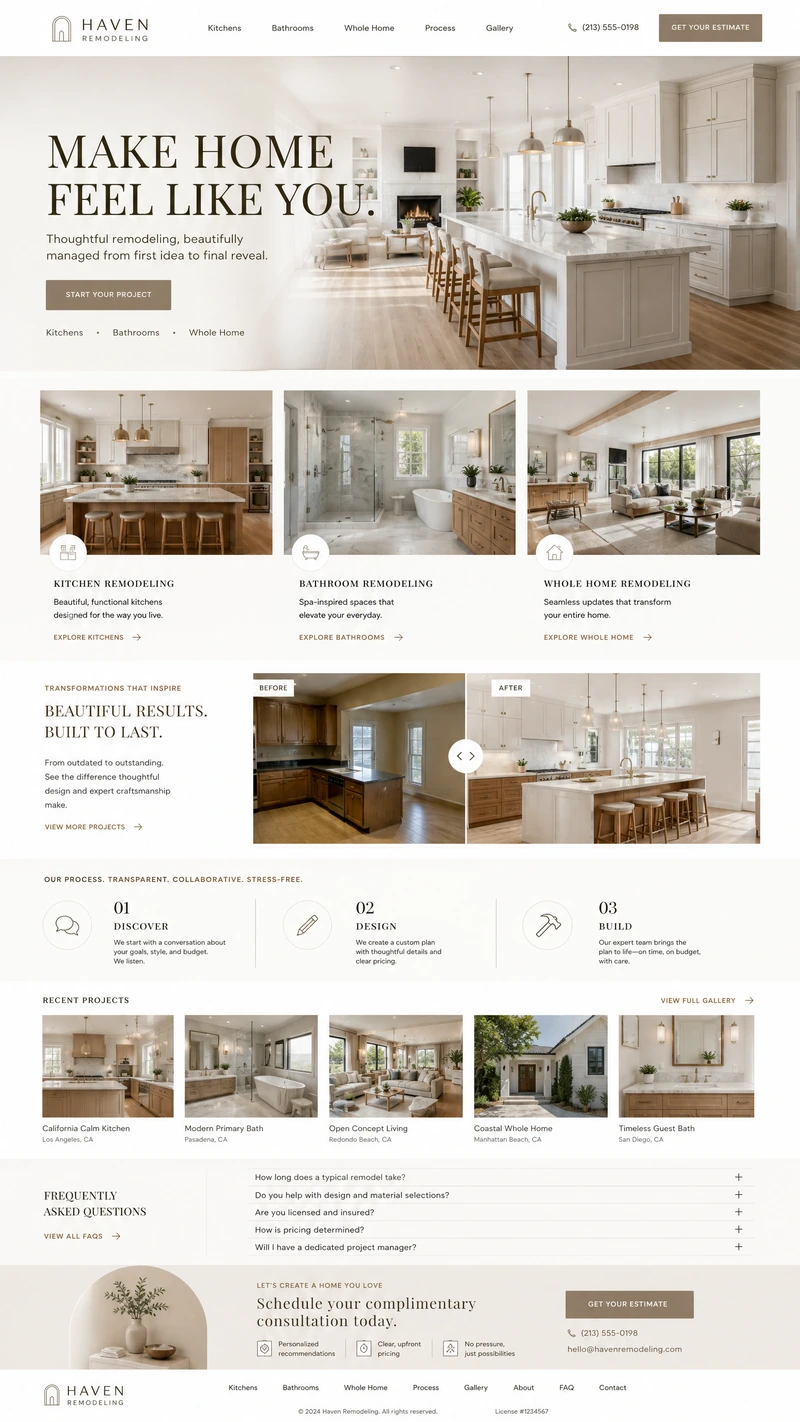
Mand Digital Website Design Collection. Website concepts designed by our studio across five directions. Your site is designed around your own business.
Wrong hours cost a restaurant more than a weak design ever will, so the practical details get as much care as the look of the site.
Your hours, address and phone number should say the same thing on the website, on your Google Business Profile and on the delivery apps. When they disagree, guests and search engines both lose confidence. We set them up in one clear place on the site and give you a short list of the other places to update when anything changes.
Photographs carry a lot of weight in this category, and they have to be yours. Real dishes, the dining room, the bar and the people who work there tell a guest what the evening will feel like. We build the site around the photos you have and can tell you which shots would help most if you are planning a shoot. We do not use stock food photography to stand in for your kitchen.
The catering or booking forms on your finished site are the ones your guests will use. To reach us, use the form at the bottom of this page.
People search for food close to where they are. A restaurant site that states its location, cuisine and dishes clearly in text gives search engines something real to match.
Restaurant SEO is mostly local groundwork: a menu search engines can read, the neighborhood and city written out, hours and address consistent with your Google Business Profile, and pages for catering or events if you offer them. The site is built with the technical fundamentals in place from the start, so that work has a solid base.
If you advertise a new location, a lunch special or catering for offices, each campaign works better with a page that says exactly what the ad promised. Ongoing SEO and paid campaigns are separate services from the website, scoped and quoted on their own. We do not promise covers or reviews; we describe the work and never guarantee rankings, orders or a return on ad spend.
Every proposal lists exactly what your project includes. For a restaurant, it usually covers the following, in a site ready to use the day it launches.
Domain and hosting are separate and are not paid to us. Your restaurant owns both, and the site is deployed to its account.
Every restaurant website is quoted on its own, after we understand how the restaurant runs. You get a written proposal with the scope, timeline and price before any work begins.
The proposal depends on what the site needs to carry: how long and how often your menu changes, how many locations you have, whether catering and events need their own pages, and how much photography is ready. With your briefing and materials in hand, we build a complete first draft so you can review the whole site at once, not page by page.
There is no mandatory monthly fee to us for the website. The domain and hosting are in the restaurant's name, and you can move the site whenever you choose.
You tell us about the restaurant: the food, the service style, how guests order and book, and what the current site gets wrong.
A written proposal listing the pages, features, timeline and price. Work starts only after you approve it.
Your current menu, photographs, logo, hours, and the links to your ordering and reservation services.
We plan the pages and write the copy from your briefing. The menu is entered exactly as you give it, and you check every price.
The full first draft, delivered on the timeline in your proposal.
You review the whole site and send your changes together. The number of revision rounds is set in your proposal.
Once you approve the final version, we deploy it to your hosting on your domain.
That is the whole process.
If it sounds right, the next step is a quote request. If you have a question first, the form is just below.
A readable menu, your hours, your address and parking, a phone number, and a clear way to order or book.
After that come the pages that depend on your business: catering, private events, each location, gift cards and the story of the place. The exact page list is set in your proposal.
Part of the website. A text menu reads well on a phone, updates easily and can be read by search engines.
A PDF is hard to read on a small screen and is often out of date because it is a separate file. If you want a printable version for catering or events, we add it next to the real menu, not instead of it.
Yes, through the ordering and reservation services you already use. The site links to them with clear buttons on every page.
We do not build our own ordering system. If you want something embedded rather than linked, we check what your provider allows during scoping and only include it if the proposal says so.
That can be part of the scope. We discuss how often your menu changes and set up editing that fits it.
For a menu that changes weekly, self-editing usually makes sense. For one that changes twice a year, updates through support may be simpler. The proposal states which one you are getting.
We set up your hours, address and phone on the site to match the details you confirm, and tell you which other listings to keep in step.
Managing your Google Business Profile is not part of a website project unless the proposal includes it, but the site is built so the two agree.
Yes. SEO is a separate service from the website, scoped and quoted on its own.
Every site we build has the technical fundamentals in place. Ongoing local SEO work is planned with you, and we never promise rankings, reservations or a number of orders.
Yes, as a separate digital advertising service, with a landing page that matches each campaign.
We agree the goal, the area and the budget with you before anything runs, and we describe the work rather than guaranteeing a cost per order or a return.
A short description of the restaurant, how many locations you have, how guests order and book today, and what you would change about your current site.
The form at the bottom of this page is enough to start. We reply with questions or a proposal, and there is no charge for that conversation.
Planned around your menu, your hours and the way guests order and book, with catering and event requests sent to your inbox.
Quoted for your business
A proposal built around your scope
This is the website proposal. SEO and advertising are separate services, quoted on their own.
Your website, your domain, your hosting. No mandatory monthly fee to us.
Also thinking about SEO or advertising for your restaurant?
Talk to our teamYour food, your service style, how guests order and book, and how many locations you run. We will tell you what the site should cover.